
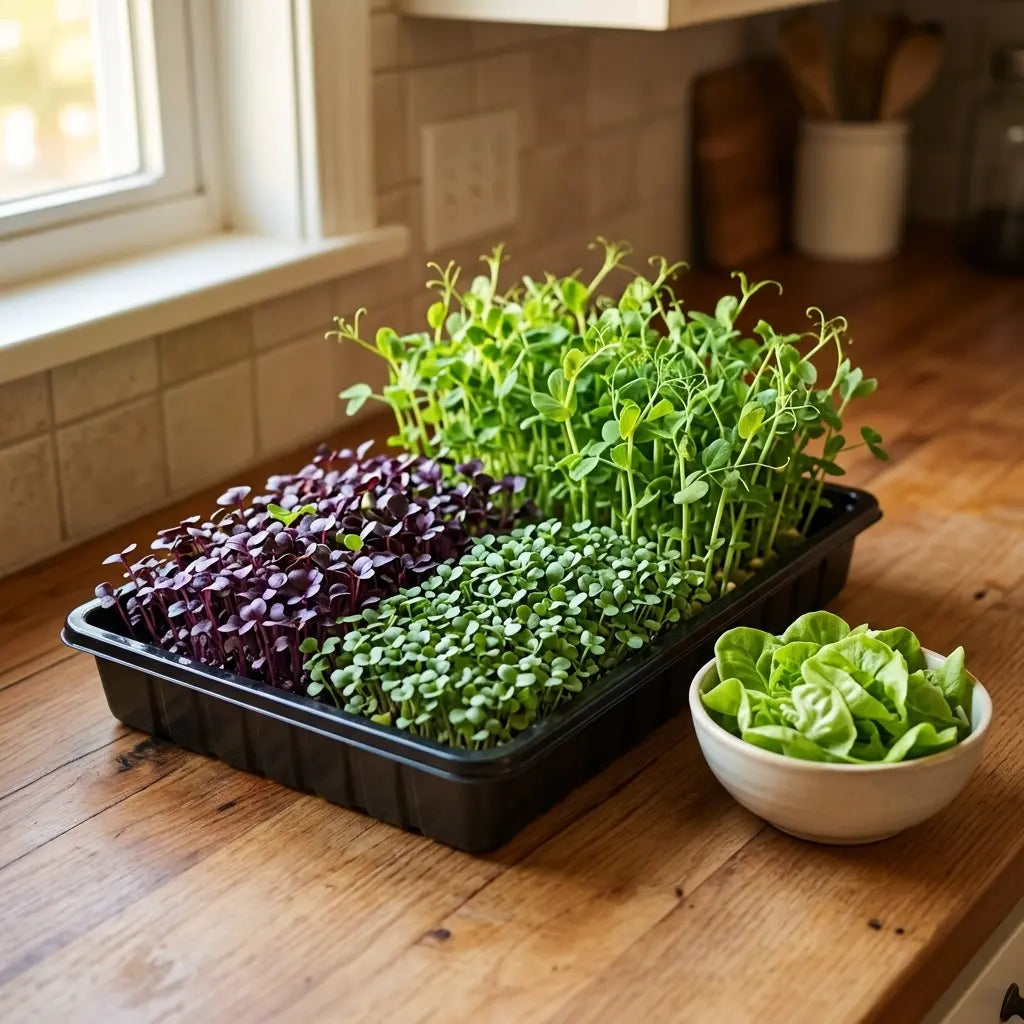
Lettuce nutrition has a reputation problem, and the data backs it up. Baby lettuce is the default green in most grocery store salad kits and sandwich toppings, but ounce for ounce it is mostly water. Microgreens, grown from the same seed families in many cases, tell a very different story once you look at the actual USDA numbers.
This is not a takedown of lettuce. It has a place in a meal and people will keep buying it. The question worth answering with real data is whether swapping some of it for microgreens is worth the effort, and by how much.
Everything below comes from USDA data, both the USDA FoodData Central entry for lettuce and a USDA Agricultural Research Service study that measured 25 microgreen varieties directly. The numbers are compared per ounce, since that is how most people actually eat both.
What Baby Lettuce Actually Offers, Nutritionally
According to USDA FoodData Central, a 1 ounce serving of butterhead baby lettuce, the type most common in grocery store clamshells, contains about 1 milligram of vitamin C, roughly 29 micrograms of vitamin K, and small amounts of vitamin A and folate. It is also about 96 percent water and roughly 4 calories per ounce, which is part of why it became the default base for salad kits in the first place. It is light, cheap to grow at scale, and holds up reasonably well in cold storage and transport.
None of that makes it a bad food. Lettuce is genuinely a fine source of vitamin K for its calorie cost, and it adds crunch and volume to a meal for almost nothing. The honest issue is density. There is simply not much packed into each bite, which is exactly what you would expect from a vegetable that is mostly water by weight.
Other common grocery lettuce types, romaine, iceberg, and red leaf, land in a similar range. Iceberg in particular is even more water-heavy than butterhead, which is why it consistently ranks near the bottom of nutrient density comparisons across the produce aisle.
That low density is the baseline every comparison in this article is measured against.
The USDA Study on Microgreens Nutrient Density
In a study published by the USDA Agricultural Research Service, researchers tested 25 different microgreen varieties for vitamin C, vitamin E, vitamin K, beta-carotene, and other carotenoids. On average, the microgreens tested contained about five times more vitamins and carotenoids than their mature, full-grown counterparts, by weight.

The study found real variation by variety. Vitamin C content ranged from about 20 to 147 milligrams per 100 grams of fresh weight across the 25 microgreens tested, and carotenoid content ranged from about 0.6 to 12.1 milligrams per 100 grams. Red cabbage microgreens tested highest for vitamin C, cilantro microgreens tested highest for carotenoids, and Garnet Red Amaranth Microgreens tested highest for vitamin K among the varieties studied.
That range matters. Not every microgreen variety is a nutritional knockout, but even the lower end of that range puts most microgreens ahead of baby lettuce on nutrient density, and the higher end is not close.
The USDA researchers were careful to note a real caveat: growing, harvesting, and handling conditions can meaningfully affect nutrient content. A microgreen tray grown under poor light or harvested too early will not automatically hit the top of these ranges. Consistency in how a tray is grown matters as much as which variety you pick.
Per Ounce Numbers at a Glance
Before the deeper breakdown, here is the short version of every figure in this article, all converted to a per ounce basis to match how people actually eat these foods.
- Baby lettuce: about 1 milligram of vitamin C per ounce, and about 29 micrograms of vitamin K per ounce.
- Microgreens: roughly 6 to 42 milligrams of vitamin C per ounce, depending on variety.
- Baby lettuce carotenoids: about 0.75 milligrams per ounce, mostly beta-carotene, lutein, and zeaxanthin.
- Microgreens carotenoids: roughly 0.17 to 3.43 milligrams per ounce, depending on variety.
- USDA's headline finding: microgreens averaged about five times more vitamins and carotenoids than mature greens, by weight, across the 25 varieties tested.
Why Nutrients Concentrate in Young Plants
The reason for the gap comes down to timing. Microgreens are harvested at the cotyledon stage or just after the first true leaves appear, usually 7 to 14 days after germination. At that point, the seed is pouring stored energy and nutrients into a small amount of tissue as fast as possible.
Mature lettuce is harvested 45 to 65 days after planting, by which point a large share of the plant's mass is structural. Cell walls, water storage, and fiber take up volume without adding much in the way of vitamins or carotenoids. The plant has grown much larger, but the nutrients have not grown at the same rate as the water content.
This is also why nutrient content varies so much by microgreen variety. Plants that concentrate more pigment and stored energy in their earliest leaves, like red cabbage and garnet amaranth, tend to test higher across the board than plants that grow more slowly or invest less in early pigmentation.
Vitamin C Per Ounce: Microgreens vs Baby Lettuce
Vitamin C is where the gap is largest, and easiest to do the math on. Baby lettuce delivers about 1 milligram of vitamin C per ounce. Using the USDA study's range of 20 to 147 milligrams per 100 grams for microgreens, that works out to roughly 6 to 42 milligrams per ounce, depending on variety.
Even a mild, low-scoring microgreen variety comes in around six times more vitamin C per ounce than baby lettuce. A high-scoring variety like red cabbage microgreens can run closer to 40 times more, in the same ounce for ounce comparison.
This is the clearest example of what nutrient density actually means in practice. You are eating less food by weight to get meaningfully more of the vitamin, rather than needing to eat a much larger bowl of lettuce to make up the difference.
Where Lettuce Actually Holds Its Own
An honest comparison has to include where lettuce is not embarrassed by the numbers. Vitamin K is one of them. At about 29 micrograms per ounce, baby lettuce is already a reasonably good source relative to its low calorie count, and it holds up fine against milder microgreen varieties.
Carotenoids are more nuanced. Baby lettuce contains roughly 0.75 milligrams of combined carotenoids per ounce, mostly beta-carotene, lutein, and zeaxanthin. That figure actually lands inside the microgreens study's carotenoid range, which means some milder microgreen varieties test similarly or even lower than a serving of lettuce.
The varieties at the top of the range, like cilantro microgreens, still test several times higher on carotenoids. But this is exactly why variety selection matters more than the blanket claim that all microgreens beat all lettuce on everything. For a full side-by-side across all 18 Aquager varieties, Microgreens Nutrition: A Complete Comparison of All 18 Varieties breaks down which ones lead on which nutrients.
How to Actually Add Microgreens to a Lettuce-Based Meal
The easiest approach is not a full replacement. Microgreens have a more concentrated flavor than baby lettuce, sometimes peppery, sometimes citrusy depending on variety, so a light topping goes further than an equal swap by volume.
A good starting ratio is about one part microgreens to four parts lettuce by volume, scattered on top rather than mixed in. That is usually enough to noticeably shift the nutrient content of the bowl without changing the texture people expect from a salad.
Add them last, after any dressing, and skip cooking them. Vitamin C in particular breaks down with heat, so microgreens deliver the most value eaten raw, ideally within a few minutes of being cut. Keep them refrigerated and use them within about a week of harvest or purchase for the best results.
Try the Variety USDA Data Ranked Highest
Garnet Red Amaranth Microgreens topped the USDA study's vitamin K measurements among the 25 varieties tested, and their deep red color signals a strong dose of anthocyanins on top of that. They grow from seed to harvest in about 10 to 12 days on a standard 10x20 tray.
They are also one of the easier microgreens to tell apart from lettuce on sight alone, which makes them a good starting variety if the goal is to actually notice a difference on the plate, not just on paper. The color alone is a visual reminder of how different the nutrient profile is.
A single seed and mat packet grows a full tray for about 3.99 dollars, and the seeds already come with an organic grow mat included, so there is no separate mat purchase to figure out.
Frequently Asked Questions
Is baby lettuce nutrient dense?
Not particularly. It is about 96 percent water, and while it does offer a reasonable amount of vitamin K, its vitamin C and carotenoid content are low compared to most microgreen varieties, according to USDA data.
How much more vitamin C do microgreens have than lettuce?
Based on USDA figures, baby lettuce has about 1 milligram of vitamin C per ounce, while microgreens range from roughly 6 to 42 milligrams per ounce depending on variety.
Which microgreen variety is the most nutritious?
It depends on the nutrient. The USDA study found red cabbage microgreens highest in vitamin C, cilantro microgreens highest in carotenoids, garnet amaranth microgreens highest in vitamin K, and green daikon radish microgreens highest in vitamin E.
Can microgreens replace lettuce in a salad?
They can replace some of it. Microgreens have a more concentrated flavor, so most people use them as a topping or a partial swap rather than a full one-to-one replacement by volume.
Do all microgreens beat lettuce on every nutrient?
No. Milder varieties can land close to lettuce on carotenoids specifically, even though nearly all varieties still beat it clearly on vitamin C. Variety selection matters.
Why does harvest timing make such a big difference?
Microgreens are cut just 7 to 14 days after germination, while the seed is still pouring stored energy into a small amount of tissue. Mature lettuce is harvested 45 to 65 days in, by which point much of its added mass is water and structural fiber rather than concentrated nutrients.
How much microgreens should I eat to notice a difference?
There is no official daily target, but even a small handful, about half an ounce to an ounce, added to a meal most days is enough to meaningfully shift your intake of vitamin C and, depending on variety, carotenoids as well.
Conclusion
The USDA data makes a pretty clear case. Baby lettuce is not nutritionally worthless, but it is mostly water with a modest vitamin K contribution. Microgreens, grown from many of the same plant families, consistently test several times higher in vitamin C and, depending on variety, in carotenoids as well.
You do not need to give up lettuce to see the benefit. Even topping a normal lettuce salad with a small handful of microgreens meaningfully shifts the nutrient math for that meal. If you want to see the full picture across every variety Aquager carries, Why Microgreens Are the Most Nutritious Vegetables You Can Eat and Microgreens Benefits: The 7 Most Nutritious Varieties, Ranked by Science are both worth a read.
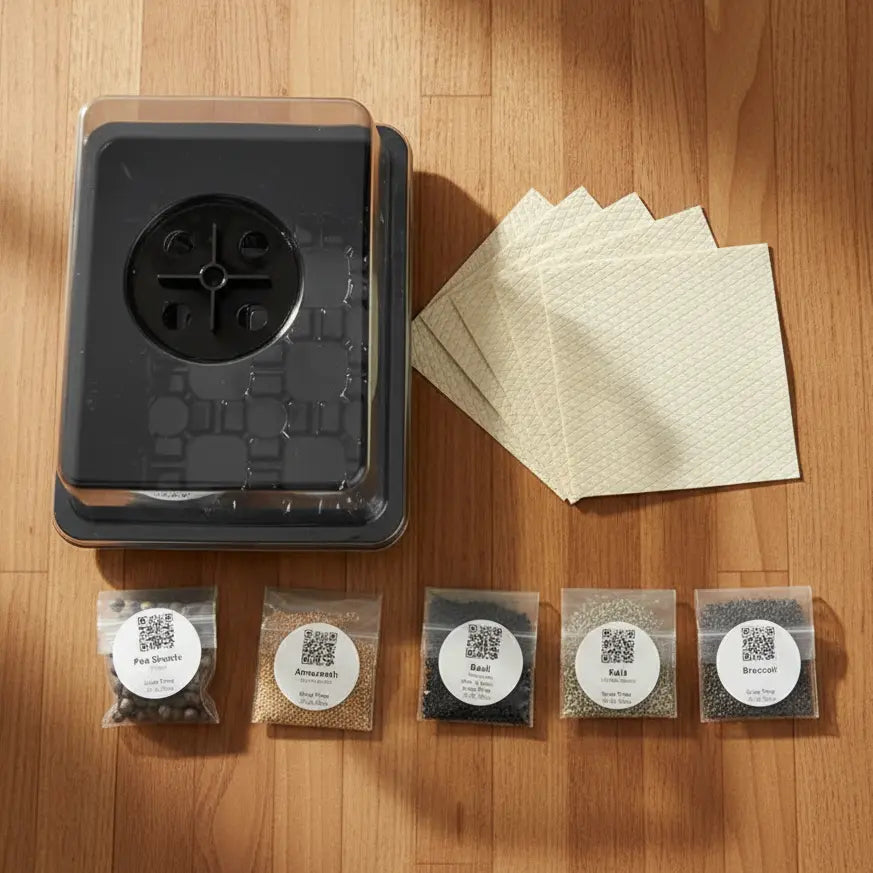
Growing your own is the easiest way to start making that swap. The Microgreens Starter Kit includes everything needed for your first two harvests, trays, dome, seed, and mat included.
















0 comments