
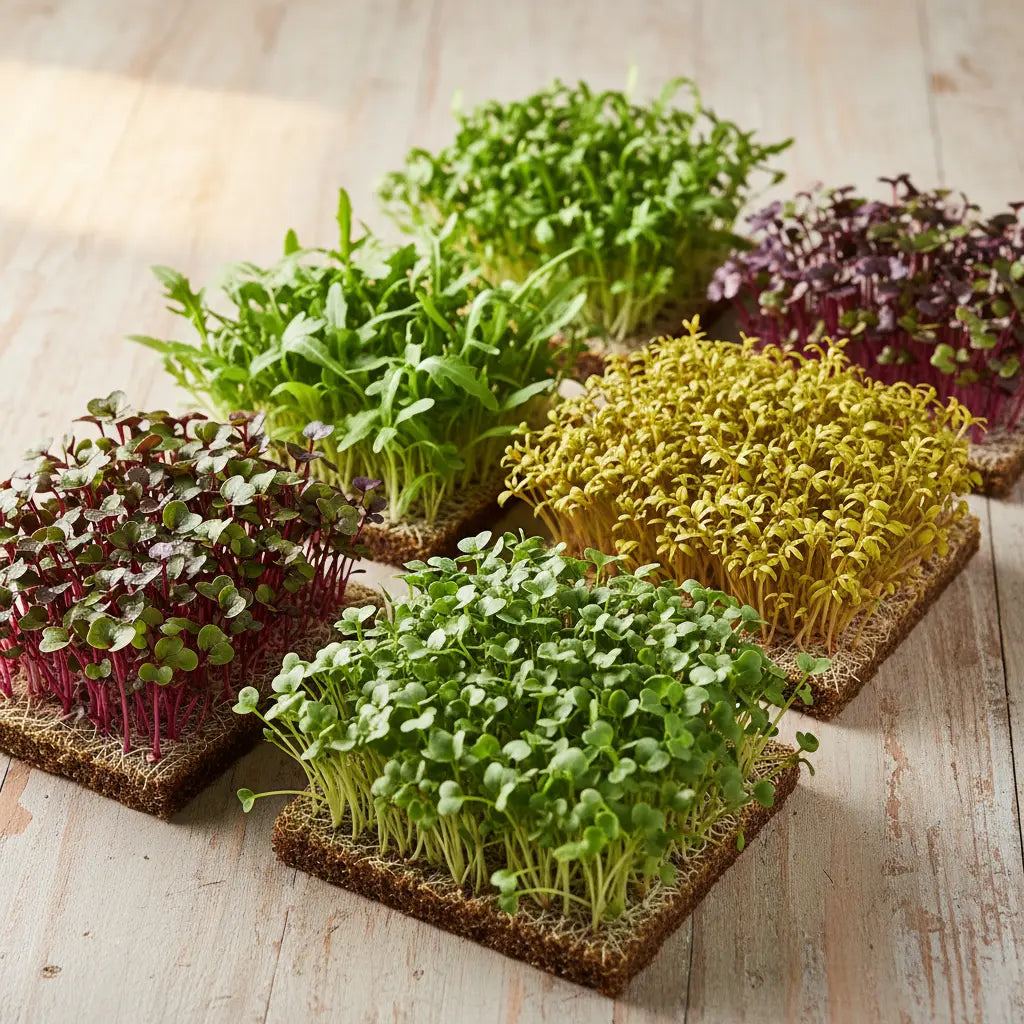
Most people searching microgreens vs vegetables assume growing full plants is the right place to start. It feels more complete, more productive, and closer to what you would grow outside.
But indoors, that approach is exactly why beginners struggle.
The issue is not effort. It is starting with something that takes too long and depends on too many variables. Full plants like herbs, tomatoes, or peppers require consistent light, stable watering, enough space, and weeks of patience before you see any results.
This delay is where frustration builds.
Most full plants take 30 to 90+ days before the first harvest. During that time, small mistakes compound. Too much water, not enough light, or slight environmental changes can slow growth or damage the plant. By the time you notice a problem, it has already been developing for days or weeks.
This makes indoor growing feel unpredictable.
Microgreens change that completely.
Instead of waiting months, microgreens are ready in 7 to 14 days. This short cycle creates immediate feedback. If something goes wrong, you do not lose months of progress. You reset and try again within days.
That difference alone dramatically increases success rates for beginners.
Space is another major factor. Full plants need room for roots and vertical growth. Indoors, this quickly becomes limiting. Microgreens grow densely in small trays, allowing you to produce a meaningful harvest in a very compact space.
Light requirements also favor microgreens. Full plants depend on strong, consistent light to mature properly. Microgreens require significantly less intensity because they are harvested early, which makes them much easier to grow inside a home.
The comparison becomes clear when you look at the fundamentals:
- Microgreens: harvest in 7–14 days
- Full plants: harvest in 30–90+ days
- Microgreens: compact trays, minimal space
- Full plants: larger containers and spacing
- Microgreens: fast reset after mistakes
- Full plants: slow recovery or total loss
This is why starting small matters. Microgreens reduce time, space, and risk at the same time. They allow you to learn the process, build consistency, and see results quickly.
If you want a simple breakdown of how to start and what setup works best for beginners, this page walks you through it step by step.
Starting with microgreens is not a limitation. It is the fastest way to succeed indoors and build a system that actually works.

Why Full Plants Fail Most Beginners Indoors
Most beginners do not fail because they lack effort. They fail because full plants are not designed for indoor conditions.
Full plants need time, space, and consistency. Indoors, all three are limited.
The biggest challenge is time. When a plant takes 30 to 90+ days to produce anything, every mistake becomes expensive. If you overwater in week two or place the plant in poor light, the effects may not show immediately. But by the time they do, growth has already slowed.
This delay creates a hidden problem. You are always reacting late.
Light is another major constraint. Most full vegetables require strong, consistent light for 10–14 hours per day to grow properly. A typical indoor window provides only a fraction of that intensity. As a result, plants stretch, weaken, and produce less.
Watering becomes more difficult as well. Larger plants use more water, but not always at a consistent rate. Soil can stay wet longer than expected indoors, which increases the risk of overwatering. At the same time, drying cycles are slower, so recovery takes longer.
Space adds another layer of complexity. Full plants need room for root systems and vertical growth. Indoors, this often leads to overcrowding or constant repositioning, both of which affect plant health.
These factors combine into a pattern that most beginners experience:
- Slow progress with no visible results for weeks
- Mistakes that take too long to correct
- Weak growth due to limited light
- Inconsistent watering cycles
- Limited space causing additional stress
Data shows that longer grow cycles significantly increase the chance of failure for beginners. The more time a plant needs to reach harvest, the more opportunities there are for something to go wrong.
This is why starting with full plants often feels discouraging. You invest time and effort, but results are delayed and unpredictable. Many people stop before they ever reach a successful harvest.
Microgreens avoid these problems by design. They do not depend on long cycles, large space, or perfect conditions. They simplify the process so beginners can focus on learning without long-term risk.
Why Microgreens Work So Well for Beginners
Microgreens solve the exact problems that make full plants difficult indoors. They are designed for speed, simplicity, and consistency, which is why they are the easiest way to start growing food at home.
The biggest advantage is time. Microgreens are ready in 7 to 14 days, compared to 30 to 90+ days for full plants. This means you see results almost immediately. Instead of waiting weeks to know if you are doing things correctly, you get fast feedback.
This short cycle changes everything. If something goes wrong, you do not lose months of effort. You adjust and try again within days. This dramatically reduces frustration and increases the chance of success.
Space is another major benefit. Microgreens grow densely in small trays, allowing you to produce a meaningful harvest in a very compact area. A single tray can yield a full serving of fresh greens without needing large pots or extra room.
Light requirements are also lower. Because microgreens are harvested early, they do not need the same intensity or duration of light as full plants. This makes them far more compatible with indoor environments where natural light is limited.
From a practical standpoint, the difference becomes very clear:
- Microgreens: 7–14 days to harvest
- Full plants: 30–90+ days to harvest
- Microgreens: small trays, minimal space
- Full plants: larger containers and spacing
- Microgreens: quick reset if something fails
- Full plants: long recovery or total loss
Another key factor is consistency. Microgreens grow uniformly and predictably. You are not managing long-term variables like flowering, fruiting, or extended nutrient cycles. This makes the process much easier to control.
This is why microgreens are often the recommended starting point for beginners. They allow you to build confidence, understand the basics, and experience success quickly. Once that foundation is built, scaling to larger plants becomes much easier.

How Starting Small Changes Your Results Completely
The biggest difference between microgreens and full plants is not just time or space. It is how quickly you succeed.
When you start with full plants, you are committing to a long cycle. You wait weeks before you know if you are doing things correctly. If something goes wrong, the feedback is delayed, and fixing it takes even longer. This creates a slow, frustrating learning process.
Microgreens completely change that experience.
Because they grow in 7 to 14 days, every cycle teaches you something. You plant, observe, adjust, and harvest within a short timeframe. This creates a fast learning loop where improvement happens quickly.
This is important because beginners do not just need instructions. They need feedback. The faster the feedback, the faster the progress.
Starting small also reduces risk. With full plants, a single mistake can cost you weeks of time. With microgreens, the cost of failure is minimal because you can restart almost immediately. This makes experimentation easier and removes the fear of doing something wrong.
Another major advantage is consistency. Microgreens follow a simple and repeatable process. You are not managing long growth phases or changing plant needs over time. This stability makes it much easier to build a routine that works.
The impact of this is significant:
- Faster feedback leads to faster learning
- Short cycles reduce the cost of mistakes
- Simple process improves consistency
- Quick wins build confidence
- Confidence leads to long-term success
This is why starting small is not just easier. It is more effective.
Once you experience consistent results with microgreens, everything else becomes easier. You understand watering, light, and timing in a practical way. Moving to larger plants later becomes a natural next step instead of a frustrating challenge.
If you want to start with a system that gives you fast results and a clear process, this page shows exactly how to do it.
Starting small is how you build momentum. And momentum is what turns indoor growing from frustrating into reliable.
What You Should Do If You’re Just Starting
If you are new to growing food indoors, the goal should not be to grow everything at once. The goal should be to succeed quickly and consistently.
Starting with full plants often does the opposite. It stretches the timeline, increases complexity, and makes it harder to understand what is actually working. This is why many beginners lose momentum before they ever get results.
Microgreens give you a different starting point.
They allow you to focus on the basics without long delays. You plant, water, observe, and harvest within 7 to 14 days. This creates a simple loop that is easy to repeat and improve. Instead of managing multiple variables, you are learning a clear and controlled process.
The key is to keep it simple:
- Start with one or two trays
- Use a consistent routine
- Focus on timing and observation
- Repeat the process every cycle
This approach builds confidence quickly. Once you see consistent results, you can decide whether to scale, experiment, or expand into larger plants.
Most people who succeed with indoor growing follow this exact path. They start small, learn fast, and build from there. They do not jump directly into complex setups or long grow cycles.
If your goal is to grow fresh food at home without frustration, this is the most reliable way to begin.
Starting small is not a shortcut. It is the most efficient way to get results and make indoor growing work long term.
FAQ: Microgreens vs Full Plants (Beginner Questions)
Many beginners still hesitate when choosing between microgreens and full plants. These questions usually come from wanting to start the “right” way but not knowing what actually works indoors.
Are microgreens less valuable than full vegetables?
No. Microgreens are harvested earlier, but they are still real plants and are often used for fresh, nutrient-dense meals. The key difference is growth stage, not value.
Do microgreens grow faster than vegetables?
Yes. Microgreens are ready in 7–14 days, while most vegetables take 30–90+ days. This makes them much easier for beginners to manage and learn from.
Can I grow enough food with microgreens?
Yes, especially for greens and toppings. Microgreens grow densely in small trays, allowing you to harvest frequently in a compact space.
Why do full plants fail more often indoors?
They depend on strong light, consistent watering, and longer timelines. Indoors, these conditions are harder to maintain, which increases the chance of mistakes.
Should I skip full plants completely?
No. Starting with microgreens helps you build confidence and consistency first. Once you understand the basics, moving to full plants becomes much easier.
Is it expensive to start with microgreens?
Not necessarily. Microgreens require minimal space and simple setups, which makes them one of the most accessible ways to begin growing food indoors.
Published: March 24th, 2026
Updated: March 24th, 2026
0 comments