
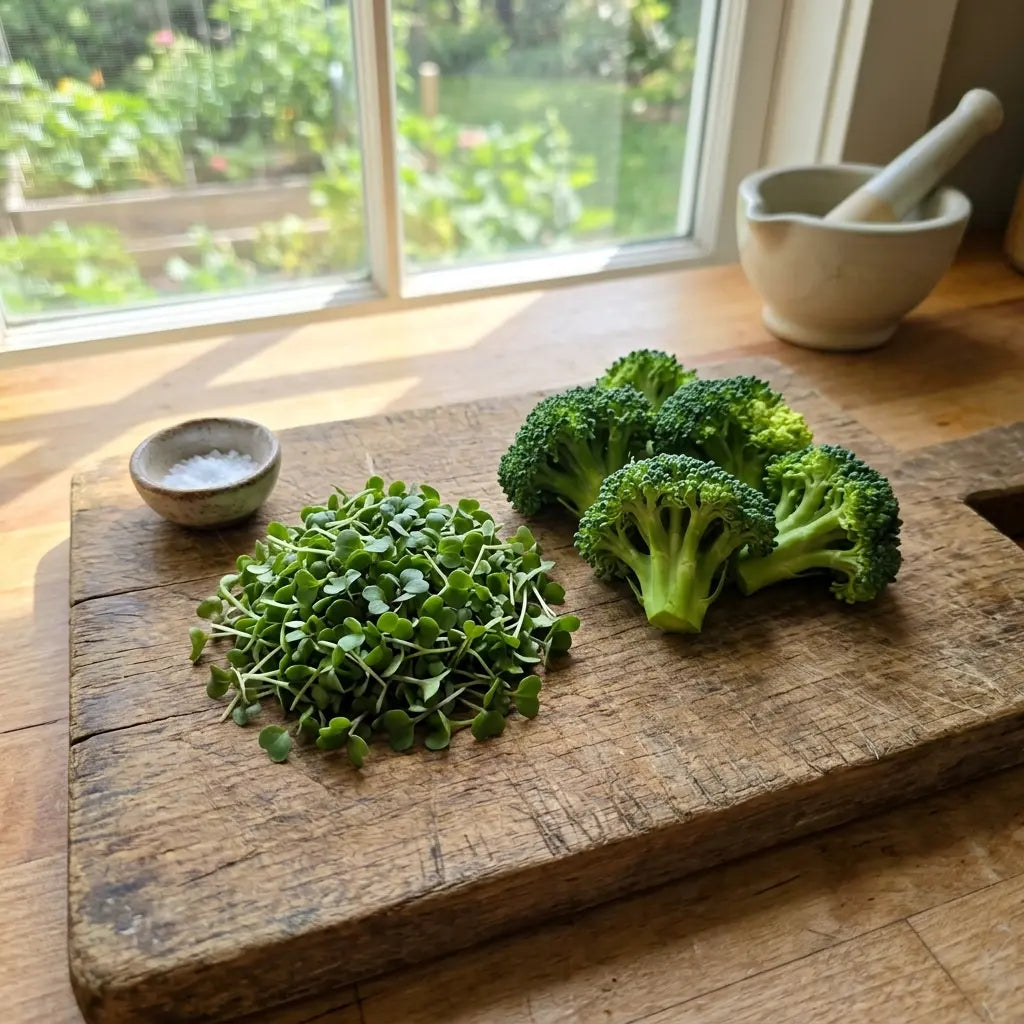
In 1997, researchers at Johns Hopkins University published findings that drew significant attention in nutrition science: broccoli sprouts, they found, contained 10 to 100 times more glucoraphanin, the precursor to sulforaphane, than mature broccoli. Since then, sulforaphane benefits have been documented in hundreds of clinical and laboratory settings, and broccoli microgreens have become one of the most discussed functional foods in health circles.
The problem isn't finding information about sulforaphane benefits. The problem is finding a reliable, affordable, fresh source. Supplement pills exist, but sulforaphane content varies dramatically by brand and degrades quickly after production. Broccoli sprouts from the store are inconsistently stocked, expensive, and often days past peak nutrition. Growing broccoli microgreens at home solves all of this: 10 days from seed to harvest, more than a week of fresh supply, and a per-serving cost that is a fraction of any supplement on the market.
Here's what the research actually says, why broccoli microgreens are the most efficient delivery mechanism, and how to get sulforaphane into your daily diet starting this week.
What Is Sulforaphane?
Sulforaphane is an isothiocyanate, a sulfur-containing compound produced when glucoraphanin (a glucosinolate stored in broccoli cells) combines with myrosinase (an enzyme also stored in broccoli cells, in separate compartments). This reaction is triggered by cell damage: chewing or cutting broccoli ruptures the compartments and initiates the conversion.
The practical implication: sulforaphane isn't pre-formed in the plant. It's created the moment you eat it. This is why cooking matters: myrosinase is heat-sensitive and degrades at temperatures above 140°F. Steaming briefly (3 to 4 minutes) preserves most of the enzyme; boiling or roasting destroys it, significantly reducing the sulforaphane your body actually absorbs.
For broccoli microgreens specifically, the conversion happens when you chew them raw: the optimal delivery method. No cooking required, no enzyme deactivation, maximum conversion.
What Does the Research Show About Sulforaphane Benefits?
The bulk of sulforaphane research is preclinical (cell and animal studies) and early-phase human trials. The findings are promising but not yet definitive medical conclusions, that caveat applies to everything below.
Detoxification and Phase 2 Enzymes. The most replicated finding is sulforaphane's role in upregulating Phase 2 detoxification enzymes in the liver, enzymes that help neutralize and eliminate carcinogens and environmental toxins. This was the focus of the original Johns Hopkins research. A 2014 study published in Cancer Prevention Research showed that broccoli sprout beverages significantly increased excretion of benzene and acrolein (air pollutants) in participants.
Anti-Inflammatory Effects. Sulforaphane activates Nrf2, a transcription factor that regulates the body's antioxidant response. When Nrf2 is activated, the cell produces its own antioxidant enzymes: glutathione, superoxide dismutase, catalase, rather than relying on dietary antioxidants alone. This mechanism has been studied in the context of chronic inflammatory conditions, with research suggesting sulforaphane may reduce markers of systemic inflammation.
Blood Sugar Regulation. A randomized controlled trial published in Science Translational Medicine (2017) found that a concentrated broccoli sprout extract significantly reduced fasting blood glucose in obese patients with type 2 diabetes also taking metformin. The mechanism involves Nrf2 activation in liver cells and improved insulin sensitivity.
Neuroprotective Properties. Emerging research suggests sulforaphane may cross the blood-brain barrier and activate Nrf2 pathways in neural tissue. Animal studies have shown protective effects against neuroinflammation. Human trials are ongoing.
Cardiovascular Health. Sulforaphane has been studied for its role in reducing LDL oxidation and arterial inflammation, two factors associated with cardiovascular risk. Evidence here is earlier-stage than the detoxification findings, but the mechanistic rationale is established.
None of these findings make broccoli microgreens a treatment for any condition. But the scientific interest is serious, the mechanisms are well-characterized, and the safety profile of eating broccoli microgreens is identical to eating broccoli.
Why Do Broccoli Microgreens Have More Sulforaphane Than Mature Broccoli?
When a broccoli seed germinates, it stores glucoraphanin in very high concentrations: a chemical defense mechanism for the young, vulnerable plant. As the plant matures, this concentration drops significantly as resources shift to structural development and reproduction.
Broccoli microgreens are harvested at 8 to 12 days, when this glucoraphanin concentration is at or near its peak. The 10-to-100x figure from the Johns Hopkins study refers to this developmental window. A handful of broccoli microgreens (approximately 30 grams) provides more glucoraphanin than you'd get from a full cup of mature broccoli.

For the complete growing guide, see: How to Grow Broccoli Microgreens at Home: The Complete Step-by-Step Guide.
Are Broccoli Microgreens Cheaper Than Sulforaphane Supplements?
Sulforaphane supplements sell for $40 to $80 per month for a daily dose. The sulforaphane content in capsule form is unstable, studies have found significant variability between label claims and actual content, particularly after months of storage.
Here's what growing broccoli microgreens at home costs: one pack of broccoli microgreen seeds is under $10. One pack grows a full tray in 10 days, producing 3 to 4 ounces of fresh microgreens. At an average daily consumption of 20 to 30 grams, that's roughly 3 to 5 days of daily servings, approximately $0.60 to $1.00 per day, compared to $1.30 to $2.70 per day for most sulforaphane supplements.
More importantly: the microgreens are fresh. You harvest and consume the same day. The glucoraphanin converts to sulforaphane the moment you eat it, with zero degradation from manufacturing, packaging, or months of shelf storage.
How Do You Add Broccoli Microgreens to Your Daily Diet?
The simplest approach is raw consumption, which preserves the myrosinase activity needed for sulforaphane conversion.
Smoothies. A handful of broccoli microgreens blended with banana, frozen berries, almond milk, and almond butter produces almost no detectable brassica flavor. This is the easiest daily method for people who don't love the taste raw.
Salad base or topping. Broccoli microgreens have a mild, earthy flavor that pairs well with grain bowls, mixed greens, and any dressing with some acidity or sweetness.
Avocado toast. Press a generous layer into mashed avocado before any other toppings. Lemon juice and flake salt bring out the earthy flavor.

Wraps and sandwiches. Broccoli microgreens replace sprouts in any wrap, they hold texture better and have a cleaner flavor.
The one thing to avoid: cooking above 140°F, which inactivates myrosinase and reduces sulforaphane conversion. Light wilting from warm eggs or a warm bowl is fine; high-heat cooking is not.
Frequently Asked Questions
How much sulforaphane do broccoli microgreens contain?
Research has documented 10 to 100 times more glucoraphanin per gram in broccoli sprouts and microgreens versus mature broccoli. A 30-gram serving (about a handful) is the dose used in most research studies.
Are broccoli microgreens the same as broccoli sprouts?
Related but different. Sprouts are grown in water and harvested at 3 to 5 days. Microgreens are grown on a substrate and harvested at 8 to 12 days with developed leaves. Both are high in sulforaphane precursors, some studies suggest microgreens may have slightly higher concentrations.
Can I get enough sulforaphane from regular broccoli?
Yes, if you eat large servings of lightly steamed or raw mature broccoli regularly. But broccoli microgreens provide more per gram, are easier to consume in small daily quantities, and require no cooking.
Do I need to eat them raw?
For maximum sulforaphane: yes. Myrosinase deactivates above approximately 140°F. Raw consumption or cold smoothies are optimal. Light warming (e.g., on warm eggs) preserves most activity.
Ready to Grow Your Own Sulforaphane Source?
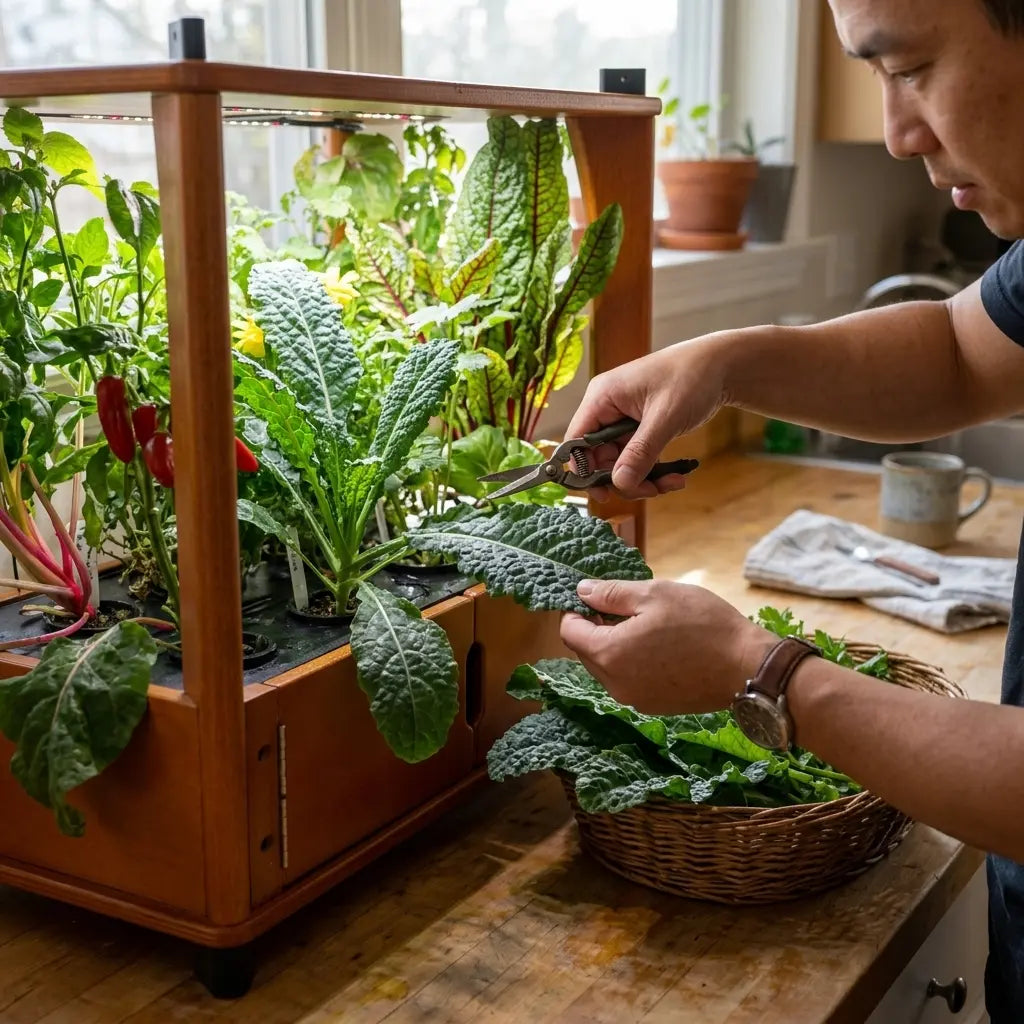
Broccoli microgreens sit at an unusual intersection: the subject of legitimate scientific research, available as a cheap daily food, and something you can grow on your kitchen counter in 10 days.
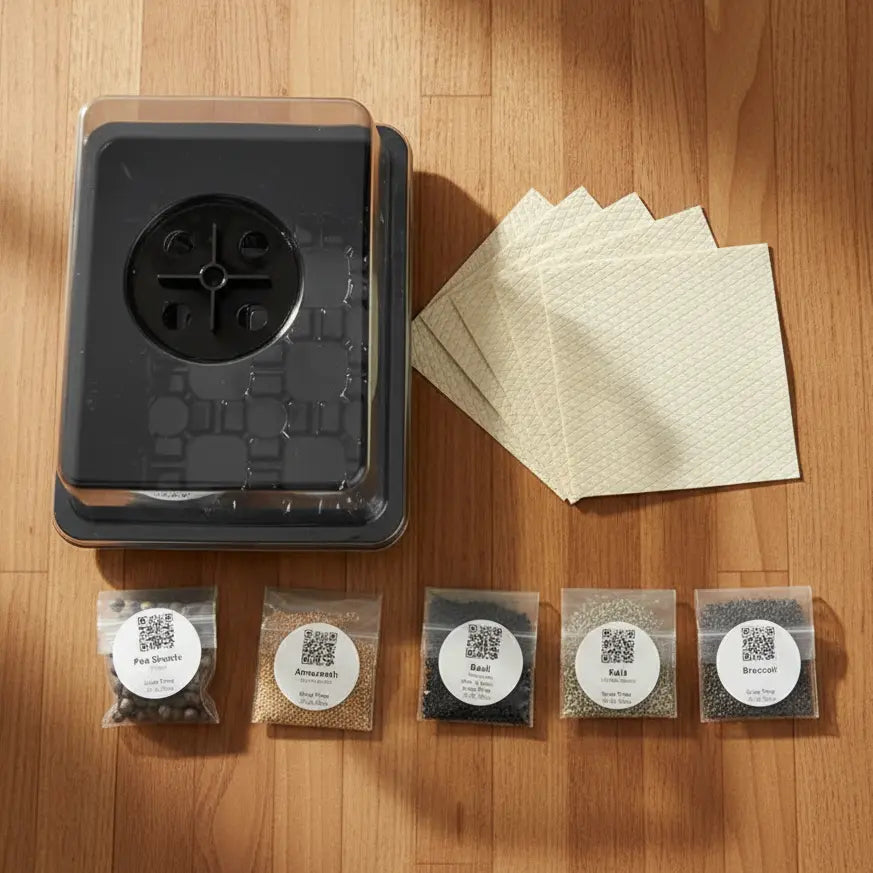
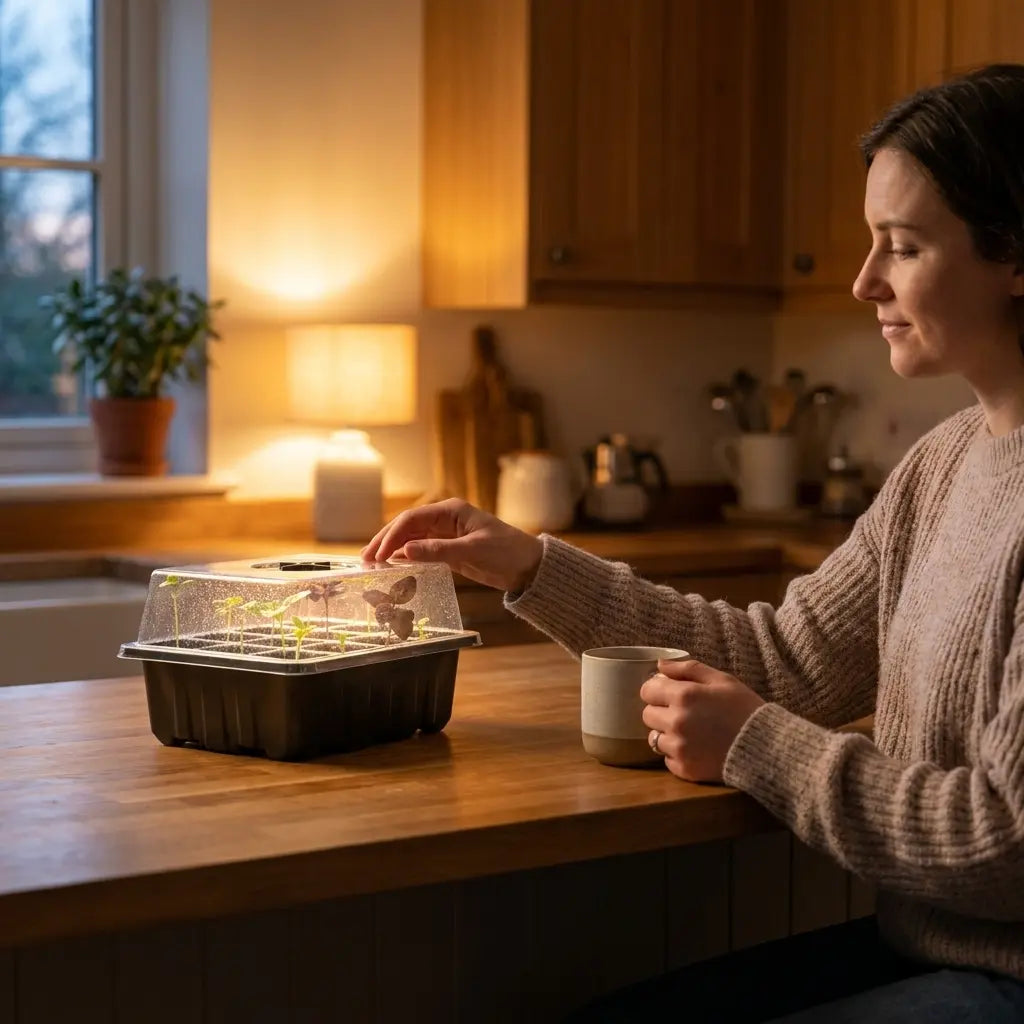
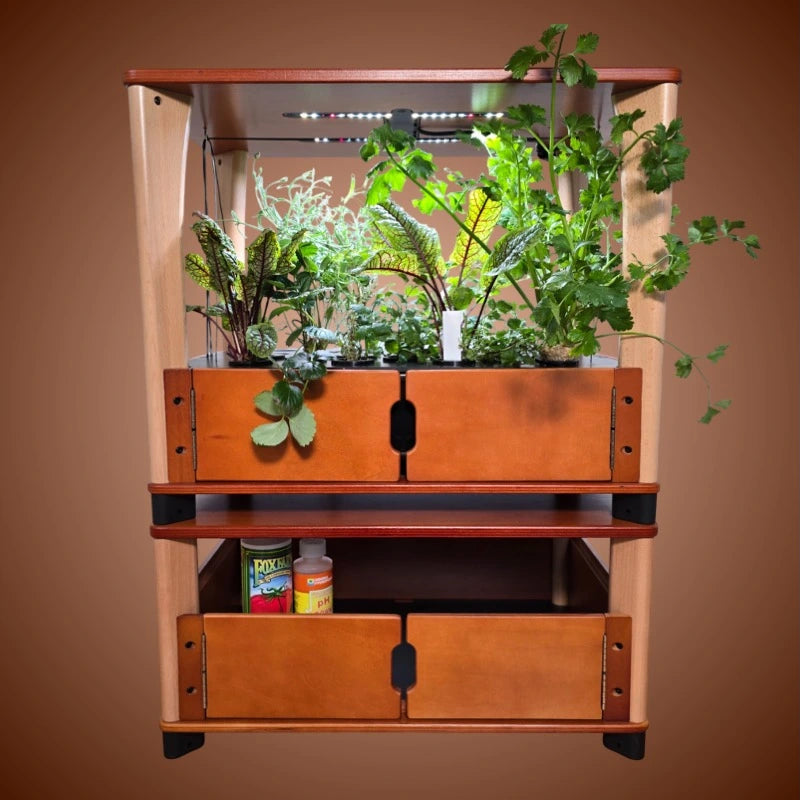
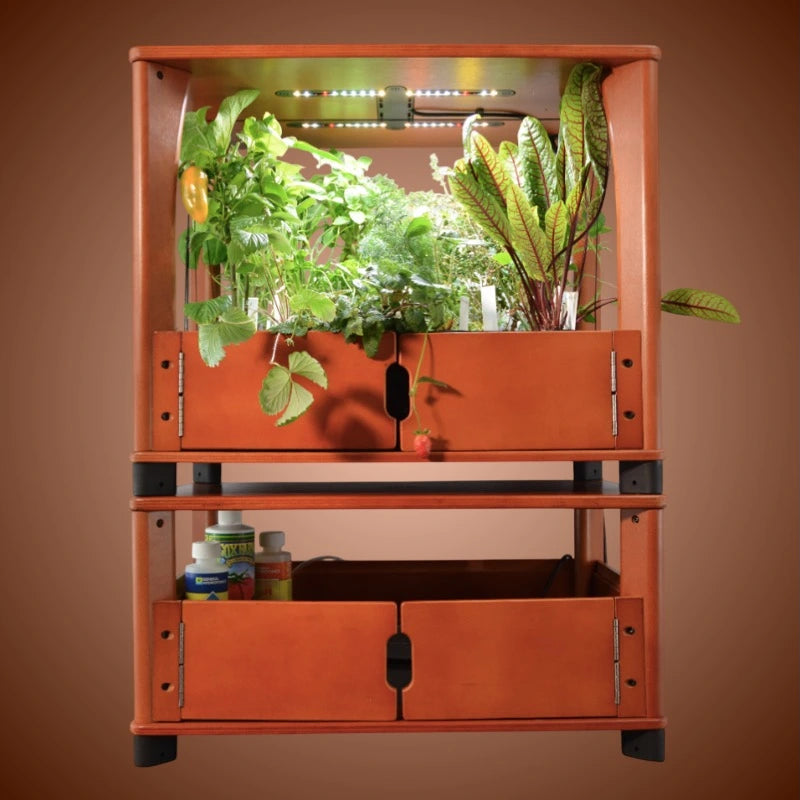
Broccoli microgreen seeds are under $10 a pack. The Aquager Microgreens Starter Kit gives you everything else. Your first tray is ready in 10 days, fresher, more affordable, and more reliable than any supplement alternative.
For a full variety comparison by nutrition, see: Microgreens Benefits: The 7 Most Nutritious Varieties, Ranked by Science.
Author: Aquager Team · Published: May 29, 2026 · Updated: August 25, 2026 · Reviewed: August 25, 2026 (Phase 3)












0 comments