
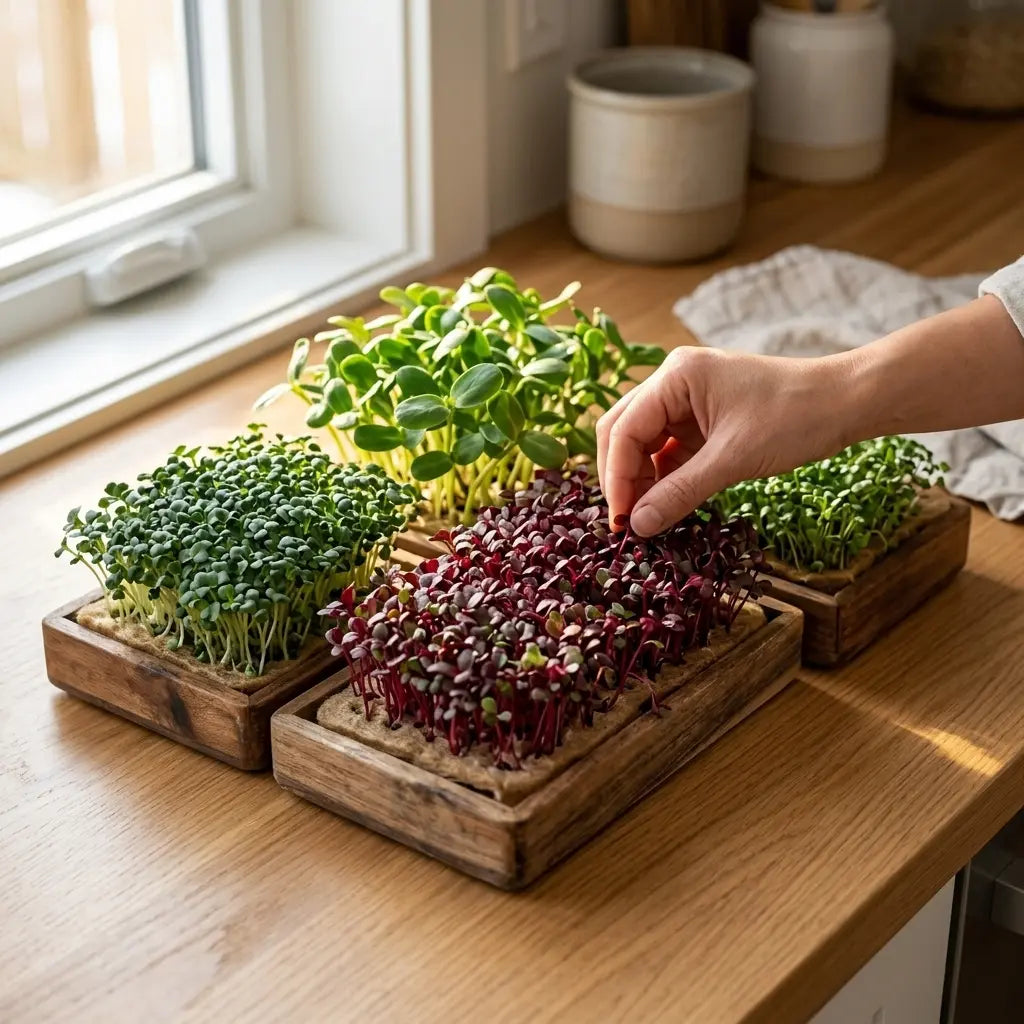
A 2012 study published in the Journal of Agricultural and Food Chemistry by researchers from the USDA Agricultural Research Service and the University of Maryland analyzed 25 microgreen varieties and found something striking: microgreens contained between 4 and 40 times the nutrient concentration of their full-grown counterparts.
The microgreens benefits aren't theoretical: they're measurable, documented, and variety-specific. Broccoli microgreens don't deliver the same compounds as sunflower microgreens. Kale targets different deficiencies than pea shoots. Knowing which variety to grow, and why, changes how effectively you can use them as a daily nutrition tool.
This guide ranks the 7 most nutritious microgreens by their key bioactive compounds: sulforaphane content, antioxidant capacity, protein profile, vitamins, and the specific mechanisms researchers believe make them beneficial. Every variety is one you can grow at home, and each links directly to its seed page. For a side by side breakdown of all 18 Aquager varieties, see our complete microgreens nutrition comparison.
Why Microgreens Outperform Mature Vegetables
When a seed germinates, it mobilizes everything stored in the endosperm to fuel its first leaves. That's the cotyledon stage, the point at which most microgreens are harvested. At this moment, the plant's nutrient concentration is at its peak: stored energy and micronutrients haven't yet been diluted across a full root system, stem, and leaf canopy.
The Xiao et al. (2012) study found that red cabbage microgreens contained 40 times more vitamin E and six times more vitamin C than mature red cabbage. Cilantro microgreens had three times more beta-carotene than mature cilantro. These aren't modest improvements: they represent a fundamentally different nutritional profile from the same plant.
This is why microgreens nutrition has attracted serious attention from dietitians, oncologists, and sports researchers. You're getting a concentrated dose of specific bioactive compounds: glucosinolates, betalains, flavonoids, carotenoids, in a form that is raw, bioavailable, and simple to add to any meal.
How These 7 Varieties Were Selected
The ranking below prioritizes varieties based on three criteria: peer-reviewed research on specific bioactive compounds (not just general vitamins), availability as home-grown microgreen seeds, and diversity of nutritional profiles. The goal is a selection that covers multiple mechanisms: cancer chemopreventives, antioxidants, complete proteins, and immune-supporting vitamins, so a rotation through all seven covers more metabolic ground than any single supplement.
7 Standout Microgreens and the Compound Behind Each One
#1 Broccoli Microgreens: The Sulforaphane King

Broccoli microgreens earn the top position because of one compound: sulforaphane. In a landmark 1997 study published in Science, Fahey, Zhang, and Talalay demonstrated that three-day-old broccoli sprouts contained 20 to 50 times more glucoraphanin, the sulforaphane precursor, than mature broccoli florets.
Sulforaphane is an isothiocyanate that activates the Nrf2 pathway, a cellular defense mechanism that upregulates phase 2 detoxification enzymes and antioxidant proteins. This is why sulforaphane has drawn sustained interest from cancer prevention researchers, cardiologists, and neurologists. It's a compound you cannot get in meaningful amounts from mature vegetables alone.
Broccoli microgreens have a mild, lightly earthy flavor with a gentle bite and work well in salads, grain bowls, eggs, and smoothies. To maximize sulforaphane conversion, eat them raw: heat denatures myrosinase, the enzyme that converts glucoraphanin into active sulforaphane.
Grow your own with the Broccoli microgreens kit, each kit includes an organic grow mat and produces a full harvest in 8 to 12 days.
#2 Kale Microgreens: Vitamin K and Glucosinolate Powerhouse

Kale microgreens rank second for their exceptional vitamin K content, strong glucosinolate profile, and meaningful concentrations of lutein and zeaxanthin, two carotenoids directly linked to eye health and macular degeneration prevention.
The Xiao et al. (2012) study found that kale microgreens had among the highest overall vitamin and carotenoid concentrations tested across all 25 varieties, with particularly strong vitamin K levels. Vitamin K is a fat-soluble vitamin essential for blood coagulation and bone metabolism that most adults consistently under-consume. Microgreens are one of the most concentrated available sources.
Like broccoli, kale is a Brassica, which means it also produces glucosinolates that convert to isothiocyanates and indoles in the body. The combination of direct vitamin content and bioactive compound concentration makes kale one of the most nutritionally efficient microgreens to add to a daily meal.
Grow the Kale Kalefetti Mix microgreens kit, a blend of red and green kale varieties that delivers both nutritional depth and visual color contrast on the plate.
#3 Amaranth Microgreens: Antioxidant Champion

Amaranth microgreens occupy a distinct nutritional lane from the Brassicas above. Their standout compounds are betalains, the same deep red-purple pigments found in beets, which research has linked to anti-inflammatory, hepatoprotective, and antioxidant activity.
A 2019 study in the journal Molecules found that amaranth microgreens demonstrated significantly higher antioxidant capacity than most common vegetable microgreens, attributed primarily to their betalain and phenolic compound content. The key principle: the darker the coloring, the higher the betalain concentration, and the higher the antioxidant activity. The Garnet Red variety, with deep crimson stems, carries the highest concentration of any available amaranth microgreen.
Amaranth microgreens also deliver meaningful protein content (unusual for a leafy green), along with vitamin C, calcium, and iron, making them a practical daily addition for plant-based eaters managing mineral intake.
Grow the Amaranth Garnet Red microgreens kit, one of the most visually striking harvests available, with deep crimson stems and green-tipped leaves that stand out on any plate.
#4 Sunflower Microgreens: Most Complete Protein Profile

Sunflower microgreens rank fourth for a unique reason: amino acid completeness. Unlike most plant proteins, which are deficient in one or more essential amino acids, sunflower microgreens contain all nine essential amino acids in meaningful quantities, making them one of the few plant sources of a nutritionally complete protein.
A 2021 comprehensive review of microgreens nutrition published in Nutrients noted that sunflower microgreens contain approximately 25 to 28g of protein per 100g dry weight, significantly higher than most common vegetables. In addition to protein, they're rich in vitamin E, folate, and zinc. Their caloric density relative to other microgreens also makes them genuinely satiating, a useful quality for high-protein diets or athletic recovery meals.
Grow the Sunflower microgreens kit, they produce thick, satisfying stems with a rich nutty flavor and are among the most productive varieties per tray by volume and weight.
#5 Pea Shoot Microgreens: Vitamin C and Lysine Leader

Pea shoot microgreens rank fifth for two reasons: outstanding vitamin C content, and lysine concentration. Lysine is an essential amino acid that most plant proteins are deficient in. Pea shoots are one of the rare plant sources where it's present in genuinely significant amounts, making them valuable for plant-based diets where lysine deficiency is a common gap.
The USDA nutrient database consistently places pea shoots among the highest vitamin C concentrations in the microgreen category, and the Xiao et al. (2012) study confirmed strong carotenoid content as well. A generous handful of pea shoots delivers more vitamin C than the equivalent weight of spinach, with a gentler, sweeter flavor that works in far more dishes.
Vitamin C is the body's primary water-soluble antioxidant, central to collagen synthesis, immune response, and iron absorption from plant foods. Pairing pea shoots with iron-rich ingredients, lentils, chickpeas, dark leafy greens, amplifies iron uptake from both.
Grow the Pea Shoots microgreens kit, one of the fastest-growing and highest-yielding varieties available, ready to harvest in 8 to 10 days with a sweet, clean flavor.
#6 Radish Microgreens: Anthocyanin and Isothiocyanate Combination

Radish microgreens deliver a two-pronged nutritional benefit: anthocyanins from the pigmented varieties, and isothiocyanates, compounds that share a mechanism with broccoli's sulforaphane, activating phase 2 detoxification pathways and showing anti-cancer properties in laboratory research.
A study published in Food Chemistry found that radish microgreens had among the highest anthocyanin concentrations measured across a broad panel of microgreens, with total antioxidant activity comparable by weight to commercial blueberries. The isothiocyanates, particularly sulforaphene and allyl isothiocyanate, add a layer of bioactive activity that makes radish microgreens more nutritionally complex than their mild mainstream profile would suggest.
As a bonus, radish microgreens are among the fastest growers in any lineup, typically ready in 7 to 10 days, with a bold, peppery flavor that adds intensity to any dish.
#7 Arugula Microgreens: Glucosinolates and Dietary Nitrates

Arugula microgreens close the ranking with a glucosinolate profile distinct from broccoli and kale. Their primary compound is erucin, an isothiocyanate precursor that research has shown to have similar chemopreventive activity to sulforaphane, though at somewhat lower potency. They also contain meaningful dietary nitrates, the same compounds found in beets that research associates with vasodilation, improved exercise performance, and cardiovascular health via nitric oxide production.
The Xiao et al. (2012) study found arugula microgreens to be a strong performer on vitamin K content as well, joining kale in the top tier for that specific nutrient. Their bold, peppery flavor means even a small handful delivers noticeable intensity, useful for dishes that need contrast.
Build Your Superfood Microgreens Mix
No single microgreen delivers every benefit above. The most effective approach, nutritionally and practically, is to run two or three varieties in parallel, rotating as each tray finishes so you always have something ready to harvest.
A mix of broccoli + amaranth + sunflower covers sulforaphane activation, antioxidant betalains, and complete protein in a single daily addition. Rotating in kale and radish adds vitamin K and anthocyanins. Pea shoots fill the lysine and vitamin C gaps. Together, these seven varieties cover more metabolic ground than most multivitamin formulas, at a cost of a few dollars per tray.
If you're starting fresh, the Microgreens Starter Kit provides the tray, dome, and organic grow mat in one order, so you can seed your first tray the same day it arrives. Each of the variety kits above is designed to work with it directly. Start with the two or three highest-priority varieties from the ranking and build your rotation from there.
For a full growing walkthrough, the complete guide to growing microgreens at home covers every step from seeding to harvest. If you're brand new to microgreens, microgreens for beginners is the right place to start. For the full 18-variety nutrition breakdown with a side by side comparison chart, see our complete microgreens nutrition comparison.
Frequently Asked Questions
Are microgreens actually more nutritious than regular vegetables?
Yes, and this is documented, not marketing. The Xiao et al. (2012) study published in the Journal of Agricultural and Food Chemistry measured nutrient concentrations across 25 microgreen varieties and found most contained 4 to 40 times higher nutrient concentrations than the mature leaves of the same plant. The mechanism is well understood: seedlings concentrate stored nutrients into their first leaves, creating a temporary density that disappears as the plant matures and distributes resources across its full structure.
Which microgreen has the most sulforaphane?
Broccoli microgreens by a wide margin. The 1997 Fahey et al. study in Science found that three-day-old broccoli sprouts contained 20 to 50 times more glucoraphanin than mature broccoli. Sulforaphane is released when glucoraphanin contacts the enzyme myrosinase, which happens during chewing, blending, or chopping. For maximum conversion, eat broccoli microgreens raw and chew them thoroughly.
What are the healthiest microgreens overall?
For overall nutritional breadth, a rotation of broccoli, kale, amaranth, and sunflower microgreens covers the widest range of documented bioactive compounds: sulforaphane, glucosinolates, betalains, complete protein, vitamin K, and fat-soluble antioxidants. No single variety covers all bases, which is why rotating through two or three at a time is more effective than relying on one.
Can I eat microgreens every day?
Yes, daily consumption is both safe and beneficial for most people. Most research indicates that even 25 to 50g per day provides meaningful exposure to the key bioactives. A generous handful (one to two ounces) of two different varieties daily is a practical and sustainable target.
Does cooking destroy the benefits of microgreens?
For varieties where the key benefit comes from sulforaphane or related isothiocyanates (broccoli, kale, radish, arugula), raw is significantly more effective than cooked. Heat above 70°C (158°F) denatures myrosinase, the enzyme required to convert glucosinolates into their active forms. For varieties where you're primarily after vitamins and antioxidant pigments (amaranth, sunflower, pea shoots), light cooking has a more modest impact.
Start Growing Your Superfood Mix Today
The research on microgreens benefits is unusually strong for a food: multiple peer-reviewed studies, documented mechanisms, and measurable compounds that distinguish specific varieties from each other and from their mature plant equivalents. What makes this practically useful is that the same concentration that makes microgreens nutritionally interesting also makes them fast to grow and simple to harvest.
A tray of broccoli microgreens produces a sulforaphane-rich harvest in under two weeks. Amaranth delivers antioxidant betalains within ten days. Pea shoots are often ready in eight. Stack these in rotation and you have a consistent daily supply of the most nutritious microgreens, at a fraction of the cost of supplements targeting the same mechanisms.
Start with the Broccoli microgreens kit for sulforaphane, add the Amaranth Garnet Red kit for antioxidant diversity, and use the Microgreens Starter Kit to set up the full growing system. For variety ideas that are beginner-friendly and hard to mess up, the 7 microgreens you can't mess up guide is a useful companion resource.

Author: Aquager Team · Published: May 27, 2026 · Updated: August 15, 2026 · Reviewed: August 15, 2026 (Phase 2 & 3)

















0 comments