
Sunflower microgreens are the only microgreen with a complete amino acid profile — meaning they contain all nine essential amino acids the human body cannot synthesize on its own. No other variety in the Aquager catalog matches this.
That’s the core nutritional case. Everything else — the zinc content, the vitamin E, the satisfying crunch, the nutty flavor — builds on top of it. If you’re looking for a whole-food protein source that you can grow in 10 days and add to any meal without blending powders or opening capsules, sunflower microgreens are the most direct answer available.
If you want to know how to grow them, our complete sunflower microgreens growing guide covers the full process. This post is focused on what makes them worth growing: the nutrition, the flavor, and three specific ways to use them.
What Makes Sunflower Microgreens Unique: The Amino Acid Advantage
Amino acids are the building blocks of protein. The body uses them to build and repair muscle tissue, produce enzymes and hormones, support immune function, and carry out nearly every structural and metabolic process that requires protein.
Of the 20 amino acids the body uses, nine are classified as essential — the body cannot make them and must obtain them from food. These are: histidine, isoleucine, leucine, lysine, methionine, phenylalanine, threonine, tryptophan, and valine.
A food with a “complete” amino acid profile contains all nine in meaningful quantities. Most plant-based foods are incomplete — they’re deficient in one or more essential amino acids, which is why plant-based protein nutrition typically requires combining sources. Animal proteins are generally complete; plant proteins generally are not.
Sunflower microgreens are a notable exception. The sunflower seed is unusually well-balanced across all nine essential amino acids — and the microgreen stage retains this profile. The result is a plant food that delivers complete protein nutrition in a form that requires no combination with other protein sources.
This is not a marginal distinction. For people tracking protein quality rather than just protein quantity — athletes, people on plant-based diets, anyone who thinks about muscle recovery nutrition — the difference between a complete and incomplete protein source is meaningful. For a broader comparison of how sunflower stacks up against the other 17 Aquager varieties, our complete microgreens nutrition comparison covers the full catalog.
The Full Nutrition Profile: Zinc Benefits, Vitamin E, and More
Beyond the amino acid profile, sunflower microgreens carry three nutrients particularly relevant for fitness and recovery.
Zinc is involved in over 300 enzymatic reactions, but for fitness nutrition its key roles are testosterone production, immune function, and protein synthesis. Zinc is required for the activity of DNA polymerase — the enzyme that replicates DNA during cell division, including the muscle cell repair that follows training. Sunflower seeds are one of the better plant-based sources of zinc, and this concentration carries into the microgreen.
The zinc benefits extend beyond the gym. Zinc supports the immune system’s front-line defense — it’s required for T-cell development and the activity of natural killer cells. During periods of heavy training, when immune function often takes a temporary dip, adequate zinc intake becomes particularly relevant.
Vitamin E is a fat-soluble antioxidant that protects cell membranes from oxidative damage. During intense exercise, reactive oxygen species (free radicals) are produced in large quantities. Vitamin E, as a fat-soluble antioxidant embedded in cell membranes, is specifically positioned to intercept these free radicals at their point of damage. Sunflower microgreens have notably high vitamin E content — consistent with the sunflower seed’s well-known status as one of the richest natural sources of tocopherols.
Iron and folate round out the fitness-relevant profile. Iron supports oxygen transport in the blood — relevant for endurance performance and general energy. Folate supports red blood cell production and DNA synthesis, aiding the cell division and repair processes that follow training stress.
Sunflower Microgreens for Muscle Recovery: The Fitness Case
The combination of complete amino acids, zinc, and vitamin E maps precisely onto three core pillars of recovery nutrition:
Protein synthesis — requires complete essential amino acids, particularly leucine (the primary trigger for mTOR activation and muscle protein synthesis). Sunflower microgreens contain leucine alongside all other essential amino acids.
Cellular protection from oxidative damage — vitamin E intercepts free radicals at the cell membrane level, specifically addressing the oxidative stress component of post-exercise inflammation.
Hormonal and immune support — zinc supports both testosterone and immune function, both of which take a hit after intensive training sessions.
For people who want to reduce supplement dependency and increase real-food nutrition, adding sunflower microgreens to a post-workout meal or smoothie provides genuine, bioavailable versions of the compounds that matter — in a form that requires no processing, packaging, or artificial flavoring.
The Flavor and Texture That Makes Them Worth Eating
Sunflower microgreens have a flavor profile that’s unlike any other variety in the catalog: distinctly nutty, mild, and slightly sweet, with none of the bitterness or sharpness you get from Brassica crops like broccoli, kale, or radish.
The texture is the other standout. Where most microgreens are delicate and feathery, sunflower microgreens are substantial. The stems are thick, the cotyledons are meaty, and the bite has a satisfying crunch that holds up in dressings and sauces rather than wilting immediately. This makes them one of the few microgreens that work genuinely well as a standalone snack — eaten plain, or with a light dip.
For people who want a microgreen that functions as an ingredient rather than just a garnish, sunflower is the top recommendation. A handful as a snack is nutritionally meaningful and genuinely satisfying in a way that a pinch of arugula or clover isn’t.
3 Ways to Use Sunflower Microgreens
Smoothie Bowl Topping
Sunflower microgreens are one of the best microgreen toppers for smoothie bowls because the nuttiness complements rather than competes with fruit flavors, and the crunch adds textural contrast to the smooth base.
Top an acai or banana smoothie bowl with a generous handful of sunflower microgreens, a drizzle of nut butter, and sliced banana. The protein and zinc in the microgreens make the bowl genuinely recovery-relevant — a post-workout bowl that actually earns the label.
Standalone Snack
This is the use case unique to sunflower microgreens. No other variety in the catalog stands on its own as a snack the way sunflower does. Eat them plain, dipped lightly in hummus or tahini, or tossed with a small amount of olive oil and flaky salt.
The crunch, the nuttiness, and the substantial texture make this feel like eating something — not like picking at a garnish. For people trying to swap processed snack foods for something with actual nutritional value, sunflower microgreens are one of the most realistic whole-food substitutes available.
Grain Bowl Protein Layer
Add a large handful of sunflower microgreens to a grain bowl as the primary protein component — the way you’d use crumbled feta or sliced chicken. A deliberate, substantial layer rather than a finishing sprinkle.
Works well with: farro or brown rice base, roasted chickpeas, cherry tomatoes, cucumber, and a lemon-tahini dressing. The sunflower microgreens provide protein and crunch; the chickpeas and grains provide carbohydrates; the tahini provides fat. Nutritionally complete, genuinely filling, and more interesting than a protein shake.
Grow Your Own in 10 Days
Sunflower microgreens take 10–12 days from seeding to harvest. A single 10×20 tray produces 3–4 oz of finished microgreens — higher than most varieties because the seeds and stems are larger and more substantial.
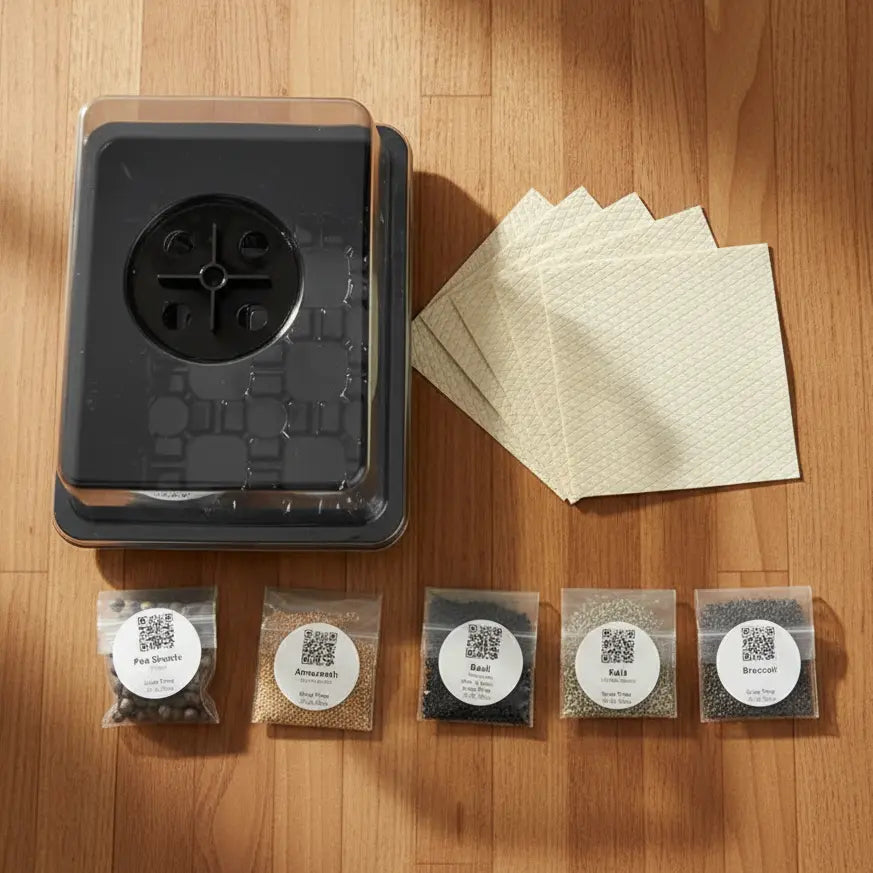
The Sunflower Black Oil Microgreens Seeds from Aquager include a grow mat in the pack. The large seeds make seeding intuitive, and sunflower handles slightly imperfect conditions well. The full growing process is covered step-by-step in our sunflower microgreens growing guide.
For the complete tray and dome setup alongside seeds, the Microgreens Starter Kit gives you everything in one package.
Frequently Asked Questions
Are sunflower microgreens actually high in protein?
By weight, sunflower microgreens are not as protein-dense as a protein powder or legume. What makes them nutritionally distinctive is protein quality — a complete amino acid profile with all nine essential amino acids. A 1 oz serving provides a meaningful contribution toward daily essential amino acid needs in a whole-food form with no processing or additives.
How do sunflower microgreens compare to pea shoots for protein?
Both are strong plant-based protein sources. Pea shoots are slightly higher in total protein and particularly high in folate. Sunflower microgreens have the complete amino acid advantage and significantly higher vitamin E. For most fitness goals, growing both on a rotating schedule provides better nutritional coverage than either alone.
Can I add sunflower microgreens to a protein shake?
Yes — they blend reasonably well. The nutty flavor holds up better in a shake than more assertive varieties like radish or mustard. A straightforward blend: sunflower microgreens, banana, oat milk, a tablespoon of nut butter, and a pinch of sea salt.
Do sunflower microgreens taste like sunflower seeds?
The flavor is related but lighter. Sunflower microgreens have the same nutty base note as raw sunflower seeds, but without the intensity or slight bitterness that raw seeds sometimes carry. People who find sunflower seed butter too strong often find the microgreen version more approachable.
How many sunflower microgreens should I eat per day?
There’s no established daily serving recommendation. Most people use 1–2 oz per day as a garnish, snack, or bowl topping. As a whole food, eat as much as suits your taste — sunflower microgreens have no known toxicity at normal dietary quantities.
Final Thoughts
Sunflower microgreens occupy a specific and important nutritional niche: the only microgreen with a complete amino acid profile, meaningful zinc, high vitamin E, and a flavor and texture substantial enough to stand on their own as a food rather than just a garnish.
For the fitness-oriented buyer looking for a whole-food supplement alternative, the case is direct. For the smoothie builder tired of powder, the grain bowl eater who wants real protein, or anyone who wants to eat something genuinely satisfying between meals — sunflower microgreens deliver in a way that few other microgreens do.
The Sunflower Black Oil Microgreens Seeds are ready in 10 days and include a grow mat. The Microgreens Starter Kit gives you the tray and dome to go with them.
Author: Aquager Team · Published: June 4, 2026 · Updated: September 12, 2026 · Reviewed: September 12, 2026 (Phase 2)
















0 comments