
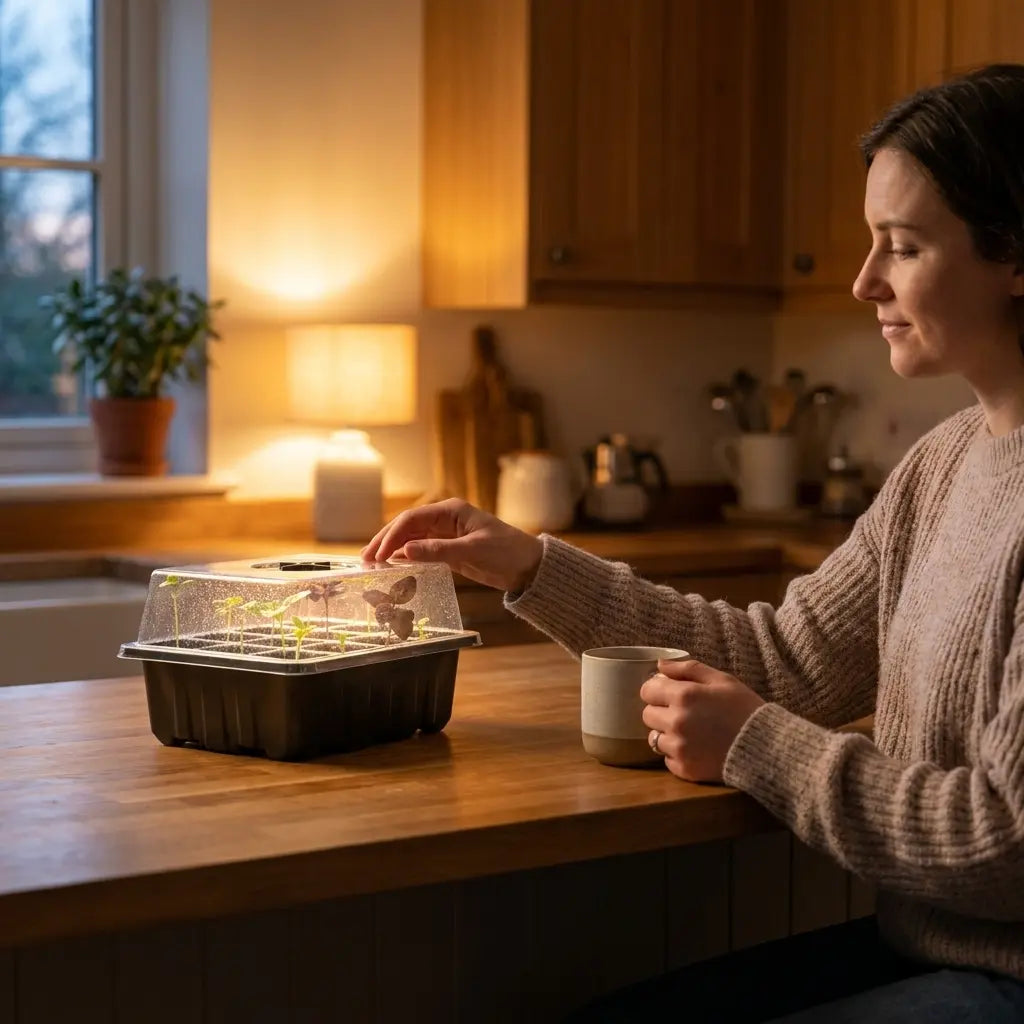
Cold and flu season is here, and many people want foods that support their immune system. Microgreens can help, because they pack vitamins and plant compounds into a small handful that you can grow on your counter in about one to two weeks.
Here is the honest part: no single food prevents colds, and microgreens are not medicine. What they can do is add vitamin C, vitamin A precursors, and sulforaphane to your meals on a steady basis. Steady, everyday intake is the goal.
This guide ranks the 4 best microgreens for immune support, shows what the research does and does not say, and gives you a simple weekly schedule to grow all four.
Which Microgreens Are Best for Immune Support?
The 4 best are broccoli, radish, kale, and clover. Together they cover sulforaphane, vitamin C, vitamin A precursors, and an easy mild green you can eat every day.
| Microgreen | Key nutrient | Harvest time | Easy way to eat it |
|---|---|---|---|
| Broccoli | Sulforaphane | 8 to 12 days | On soup, eggs, sandwiches |
| Radish Confetti Mix | Vitamin C | 5 to 8 days | Salads, tacos, avocado toast |
| Kale Kalefetti Mix | Vitamins A, C, and K | 8 to 12 days | Smoothies, grain bowls |
| Clover | Vitamins A, B, C, and E | 5 to 7 days | Sandwiches, wraps |
1. Broccoli: Sulforaphane for Everyday Defense
Broccoli microgreens are the top pick because they are a strong source of sulforaphane, a plant compound researchers study for its role in the body's antioxidant defenses. In a 2023 study in the journal Foods, 11 healthy adults ate one 16 gram serving (about half an ounce) of fresh broccoli microgreens, and all of them showed sulforaphane metabolites in their urine. Heat may reduce the enzyme that helps your body make sulforaphane, so add them to hot dishes at the end. For gift ideas for someone who eats clean, see healthy gifts for people who eat clean.
Get the full science in our broccoli microgreens sulforaphane guide. When you are ready to plant, Broccoli Microgreens Seeds are $7.99 and include an organic grow mat.

2. Radish: The Fastest Way to Add Vitamin C
Radish microgreens are ready in about 5 to 8 days, which makes them the quickest way to add vitamin C to your plate. Vitamin C plays a role in normal immune function, and adults need 75 mg (women) to 90 mg (men) per day, according to the National Institutes of Health. The Confetti Mix also adds red and purple stems and a peppery bite to salads, tacos, and avocado toast.
See the full nutrition breakdown in Radish Microgreens Benefits, or start with Radish Confetti Mix Microgreens Seeds, $7.99 with a grow mat included.

3. Kale: Vitamins A, C, and K in One Tray
Kale microgreens add a mix of vitamins A, C, and K with a mild, earthy taste. Vitamin A is involved in immune function, and kale supplies it as beta-carotene, which your body converts to vitamin A. The Kalefetti Mix grows a multi-color tray in 8 to 12 days and blends easily into smoothies and grain bowls.
Want more detail? Read Kale Microgreens Benefits. Then grab Kale Kalefetti Mix Microgreens Seeds, $7.99 with a grow mat included.

4. Clover: The Easiest Microgreen to Eat Every Day
Clover is very mild and slightly sweet, so it disappears into sandwiches, wraps, and salads. Our clover seeds are listed as a source of vitamins A, B, C, and E, and the tray is ready in just 5 to 7 days. The best immune routine is the one you actually keep, and clover makes that simple.
Try Clover Microgreens Seeds for a gentle everyday green. They are $7.99 and include an organic grow mat.

What Does the Research Say About Microgreens and Immune Health?
Research shows that microgreens are nutrient dense, but it does not show that any food prevents colds.
A University of Maryland and USDA study of 25 microgreens found that they had 4 to 40 times more nutrients, such as vitamins C, E, and K and beta-carotene, than their mature counterparts. University of Maryland summary.
The National Institutes of Health notes that in the general population, regular vitamin C intake does not appear to reduce the risk of catching a cold, though it may modestly shorten colds (by about 8% in adults). NIH vitamin C fact sheet.
The sulforaphane study mentioned above was small, with 11 adults, so treat it as early evidence. Think of microgreens as one part of a healthy routine that also includes sleep, movement, and handwashing. Read the study in Foods.
How Much Should You Eat?
A small handful, about half an ounce (15 grams), of one variety is a good daily serving. The broccoli study above used 16 grams. Rotate the four varieties through the week so you get different nutrients and flavors.
- Broccoli: stir into soup at the end, or pile onto eggs and sandwiches.
- Radish: sprinkle over salads, tacos, and avocado toast.
- Kale: blend into smoothies or fold into grain bowls.
- Clover: tuck into wraps and sandwiches.

How Do You Grow All Four on a Weekly Schedule?
Plant two trays one week and two the next, and you will always have something ready to harvest. Here is a simple rotation:
- Week 1: Plant broccoli (ready in 8 to 12 days) and radish (ready in 5 to 8 days).
- Week 2: Plant kale (8 to 12 days) and clover (5 to 7 days).
- Week 3: Cut the radish and broccoli, then replant both. Repeat.
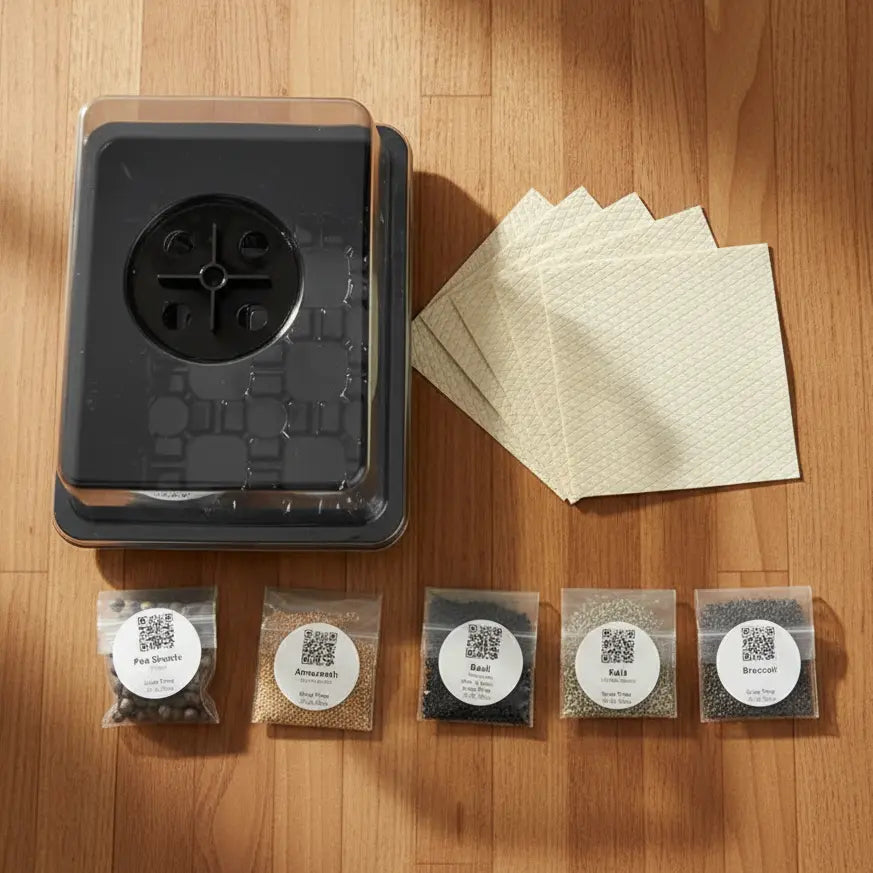
The Microgreens Starter Kit ($29.99) has two trays, a humidity dome, organic grow mats, and starter seeds including broccoli, kale, pea shoots, and lemon basil. Add radish and clover seed packs ($7.99 each, grow mat included) to complete the rotation.
For help with lighting and setup in cold months, see How to Grow Microgreens in Fall and Winter. To get the timing right, read How to Harvest Microgreens the Right Way.
Frequently Asked Questions About Microgreens and Immune Support
Are microgreens a better source of vitamin C than supplements?
No, not for vitamin C itself. The National Institutes of Health says the ascorbic acid in supplements is absorbed as well as the vitamin C in food. Microgreens add fiber, other vitamins, plant compounds, and fresh flavor, so many people choose them as a food-first option. Ask your doctor before taking high-dose supplements.
Can microgreens prevent colds?
No food can prevent colds. Microgreens add vitamin C, vitamin A precursors, and sulforaphane to your diet, which support normal immune function as part of an overall healthy routine. For medical advice, talk with your healthcare provider.
Which immune-support microgreen should I start with?
Start with broccoli. It is the best studied of the four for sulforaphane and grows reliably in 8 to 12 days. Add radish next for a fast 5 to 8 day harvest.
Can children eat these microgreens?
Most children can eat them. Kale and clover are mild, while radish is spicy, so some kids prefer to skip it. Use clean trays and fresh mats, rinse the greens before serving, and check with your pediatrician if your child has food allergies.
How long does it take to grow immune-support microgreens?
Most are ready in 5 to 12 days: clover takes 5 to 7, radish 5 to 8, and broccoli and kale 8 to 12. Cooler rooms can add a day or two.
Start Your Immune-Support Rotation This Week
Seeds planted today are ready to eat in about one to two weeks. Start with broccoli and radish, add kale and clover next week, and keep a small handful on your plate each day.
The Microgreens Starter Kit gives you trays, a dome, mats, and starter seeds, so you can plant right away. This article is for general information and is not medical advice.
Author: Aquager Team · Published: June 4, 2026 · Updated: October 11, 2026 · Reviewed: October 10, 2026 (Phase 2 and 3)












0 comments