
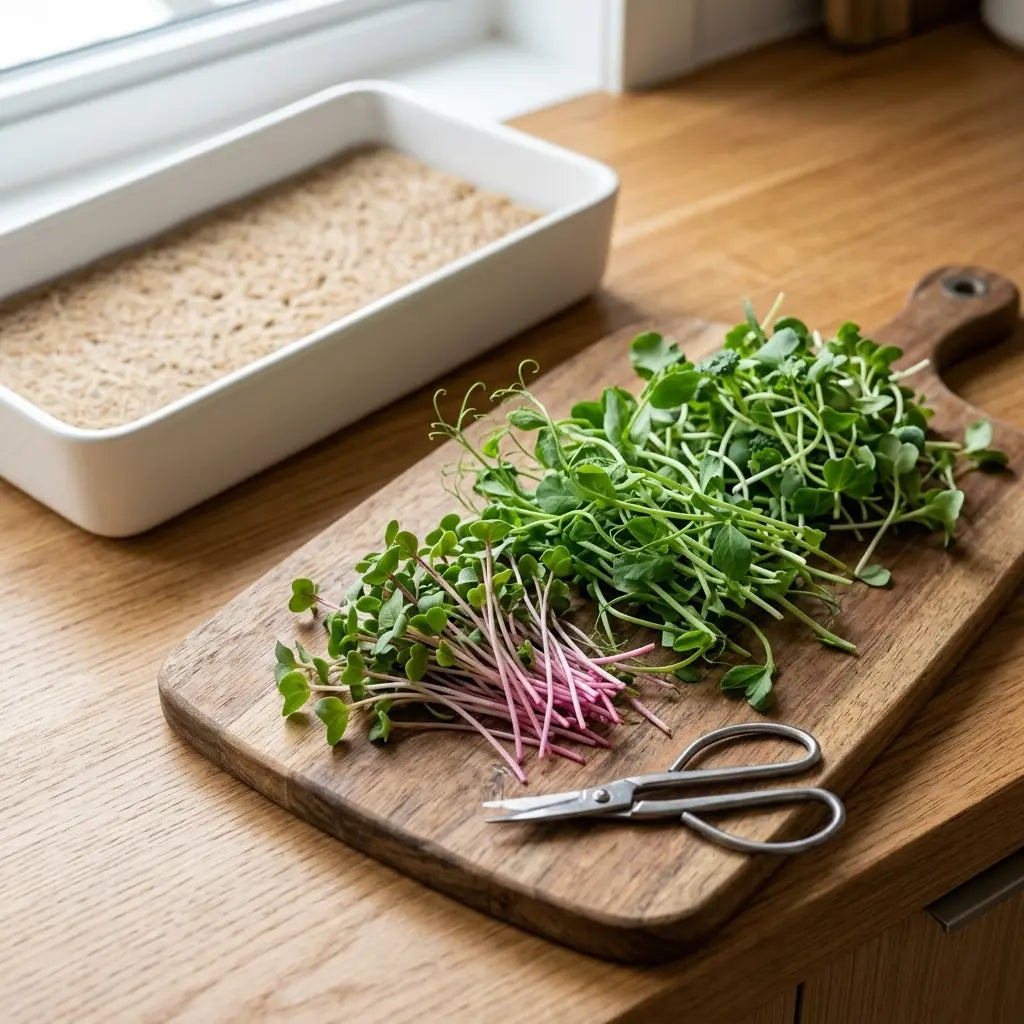
Most Thanksgiving appetizer boards look the same: the same aged cheddar, the same cured meats, the same grapes. A handful of fresh microgreens changes that, because they add color, crunch, and a peppery or sweet bite that nothing else on the board has.
This guide shows what you need, which five microgreens work best, how to build the board in five steps, and the dates to plant them so they are ready on Thursday, November 26.
What Do You Need to Build a Microgreens Charcuterie Board?
You need a board, three or four aged cheeses, two or three cured meats, crackers, fruit, and five kinds of fresh microgreens. The microgreens are the one ingredient guests cannot buy at the grocery store, because you grow them yourself on a windowsill in the weeks before the holiday.
- A large board or a sheet pan lined with parchment (a dark surface makes the greens stand out)
- 3 or 4 aged cheeses, such as gruyère, aged cheddar, manchego, or pecorino
- 2 or 3 cured meats, such as prosciutto, bresaola, or salami
- Crackers or sliced bread
- Fruit and extras, such as grapes, figs, apple slices, honey, or jam
- Five kinds of microgreens: radish, pea shoots, amaranth, sunflower, and arugula
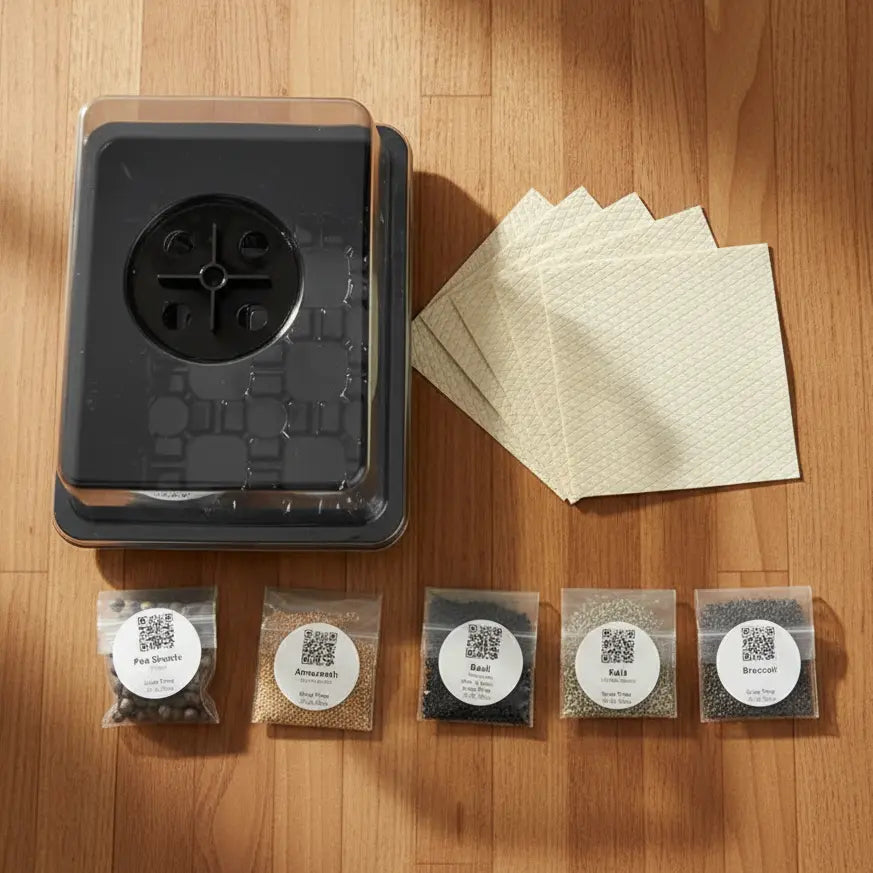
The microgreens are the only item you need to plan ahead. The Aquager Microgreens Starter Kit ($29.99) includes two trays, a humidity dome with an adjustable vent, organic grow mats, and seeds for lemon basil, kale, pea shoots, and broccoli, so the pea shoots for your board are covered. Add radish, arugula, sunflower, and amaranth as $7.99 seed packs, and each pack includes its own organic grow mat.
Which Microgreens Work Best on a Charcuterie Board?
Radish, pea shoots, amaranth, sunflower, and arugula work best. Radish and arugula add pepper that cuts through rich cheese and meat, pea shoots fill gaps with mild sweetness, sunflower adds a nutty crunch, and amaranth adds deep red color. The table shows where each one goes and when to plant it.
| Variety | Flavor | Where it goes | Grow time | Yield per tray | Plant by (for Nov 26) |
|---|---|---|---|---|---|
| Radish Confetti Mix | Peppery, spicy | Next to aged hard cheeses | 10 to 15 days | 20 g | Nov 11 |
| Pea shoots | Sweet, mild | Base layer to fill gaps | 7 to 14 days | 30 g | Nov 12 |
| Amaranth Garnet Red | Mild, earthy | One focal cluster at the center | 16 to 25 days | 5 g | Nov 1 |
| Sunflower | Nutty, crunchy | Beside the nuts | 7 to 21 days, plus a 48 to 72 hour soak | 22 g | Nov 2 (start the soak) |
| Arugula | Peppery, nutty | Beside the cured meats | 15 days | 21 g | Nov 11 |
Each variety has its own seed pack: Radish Confetti Mix, Pea Shoots Field, Amaranth Garnet Red, Sunflower Black Oil, and Arugula. Grow times and yields come from each seed pack page. Not sure how hot each peppery green is? See which spicy microgreen has the most heat.
How Do You Build a Microgreens Charcuterie Board Step by Step?
Build the board in a set order: the biggest pieces first and the microgreens last. Start with cheeses, then meats, crackers, and fruit, and finish with the microgreens in the last 30 minutes before guests arrive. This order is what makes the board look effortless and keeps the greens crisp.
1. Anchor the Board with Cheeses
Place your largest cheeses first and space them so each one has its own zone. Choose three or four kinds. Everything else on the board builds around them.
2. Layer in the Cured Meats
Fold or roll the meats between the cheese zones. Mix thin slices like prosciutto with chunky salami rounds so the eye keeps moving across the board.
3. Add Crackers and Bread
Tuck crackers along the edges and into open spots. Leave small gaps on purpose, because you will fill them with microgreens.
4. Place the Fruit and Extras
Fill the small pockets with grapes, figs, apple slices, honey, or jam. Odd numbers, such as three fig halves, look more natural than even ones.
5. Finish with the Microgreens
Add the microgreens last, in the final 30 minutes before guests arrive. Start with pea shoots and sunflower to fill gaps and add height. Then add small clusters of radish and arugula, and put one cluster of amaranth at the focal point.
How Do You Style the Board So It Looks Great in Photos?
Use a dark board, build in height, and group the microgreens by color. A dark walnut, slate, or black ceramic surface makes the greens stand out, and loosely folded meats and stacked crackers keep the board from looking flat. Cut the microgreens that morning for the best color.
- Build in height: stack crackers upright and let pea shoot tendrils drape over the edge.
- Group by color: amaranth red at the center, radish near the hard cheeses, and pea shoots near the lighter meats.
- Cut that morning: use clean scissors about half an inch above the mat, then rinse gently and pat dry.

If you cut early, see how to store microgreens after harvest. For more autumn varieties, read the Fall Microgreens Growing Guide.
How Do You Grow the Microgreens Before Thanksgiving?
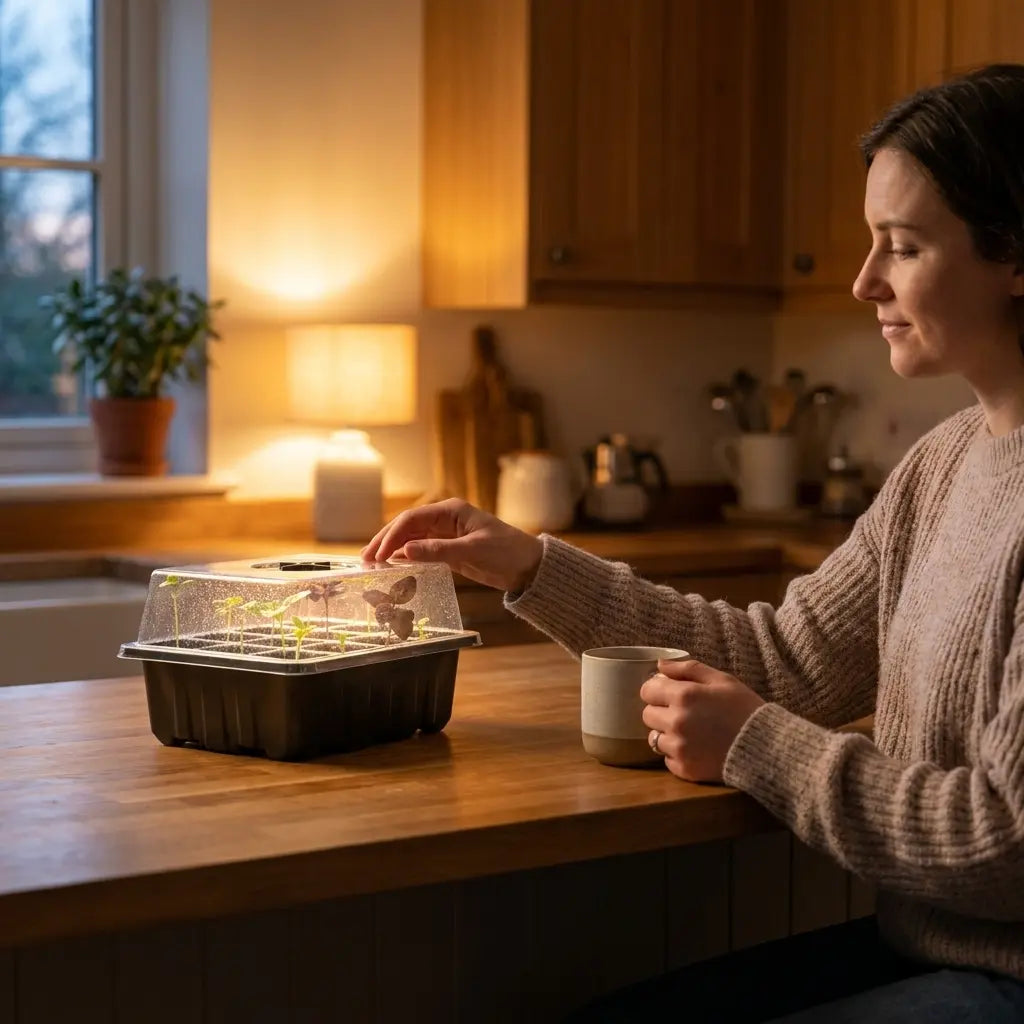
Plant amaranth by November 1, sunflower by November 2, radish and arugula by November 11, and pea shoots by November 12. Each tray takes about five minutes to start: wet a grow mat in the tray, scatter the seeds, cover with the dome, and move the tray to light once the shoots are 1 to 2 inches tall.

Water from the bottom of the tray to help prevent mold. If you see white fuzz, read our guide to preventing and fixing microgreens mold. For the full day-by-day timeline, see how to grow microgreens for Thanksgiving, and if you are new to growing, start with How to Grow Microgreens at Home. The Microgreens Starter Kit gives you the trays, dome, and mats to begin right away.
Frequently Asked Questions
How far ahead can I prep a microgreens charcuterie board?
Build the base 2 to 4 hours ahead and refrigerate it covered. Add the microgreens in the last 30 minutes before serving so they stay crisp and bright. Cut the microgreens fresh that morning, and keep the board cool until your guests arrive.
Which cheeses go best with peppery microgreens like radish and arugula?
Aged hard cheeses such as gruyère, aged cheddar, manchego, and pecorino work best, because their salt and fat balance the heat of peppery greens. Keep mild, soft cheeses like brie in a separate zone, since strong greens can overwhelm them.
Do I need to wash microgreens before putting them on the board?
Rinse them gently under cold water and pat them dry with a paper towel before plating. This removes loose seed hulls and perks up the leaves. Do it right after you cut them, then add them to the board shortly before serving.
Can I use this board idea for Christmas or New Year's Eve?
Yes. Amaranth and pea shoots give a natural red and green Christmas look. Count back from the slowest grow time for your serving date, such as up to 25 days for amaranth. Our holiday microgreens recipes list plant-by dates for each holiday.
How many microgreens do I need for a large group?
A board needs only a small handful of each variety, so one tray per variety is plenty. A tray yields about 30 g of pea shoots, 22 g of sunflower, 21 g of arugula, 20 g of radish, or 5 g of amaranth. For a big crowd, use a sheet pan lined with parchment.
What if I miss the plant-by date?
Plant a faster variety. Clover is ready in 5 to 7 days, so you can plant it as late as November 19 and still cut it on Thanksgiving morning. Pea shoots take 7 to 14 days, so plant them by November 12 at the latest.
Ready to Build Your Thanksgiving Appetizer Board?
Mark November 1 and 2 for amaranth and sunflower, and November 11 and 12 for radish, arugula, and pea shoots. Cut them on Thursday morning, build the board in five steps, and your table has an ingredient no store-bought board can match. For ideas beyond the appetizer table, see our guide to the best microgreens for Thanksgiving garnish.
Author: Aquager Team · Published: June 7, 2026 · Updated: October 11, 2026 · Reviewed: October 11, 2026 (Phase 2 and 3)












0 comments