
The tomatoes have peaked. The basil is bolting. The first cool morning of the season arrives, and with it, the end of your outdoor autumn harvest. But your kitchen counter doesn't have to follow the garden's schedule.
Several microgreen varieties fit fall perfectly. Steady indoor heat and the shift to warming autumn cooking both suit them. And with a grow cycle of just 8 to 14 days, you can have a fresh harvest ready before the outdoor garden has fully wound down.
This guide covers the five best microgreens for fall, each profiled with flavor notes, grow time, and specific autumn cooking pairings, from dill on potato soup to cilantro on butternut squash tacos to borage in harvest cocktails.

Here is the quick comparison before the details:
| Variety | Flavor | Days to harvest | Best fall dish | Seed price |
|---|---|---|---|---|
| Kale Kalefetti Mix | Mild, slightly earthy | 8 to 12 | Lentil soup, smoothies | $7.99 |
| Dill | Classic dill, slightly anise-like | 10 to 14 | Potato soup | $7.99 |
| Cilantro | Citrusy, herbal | 10 to 14 | Chili, squash tacos | $7.99 |
| Kohlrabi Purple | Mild, slightly sweet | 8 to 10 | Any soup, grain bowls | $7.99 |
| Borage | Mild cucumber | 12 to 14 | Harvest cocktails | $7.99 |
Why Fall Is One of the Best Times to Grow Microgreens Indoors
Most people discover microgreens in spring or summer, the obvious growing seasons. But fall is arguably a better time to start.
Most microgreens grow best between 68 and 74°F, according to Utah State University Extension, and a heated fall home sits right in that range. That steady temperature is easy to hold on a counter or shelf, so trays germinate evenly with very little fuss.
The other shift is culinary. Fall cooking moves away from raw salads and cold dishes toward soups, grain bowls, roasted vegetables, and warming one-pot meals. Microgreens are exactly the fresh finishing element these dishes need, a handful of dill on potato soup, cilantro on lentil stew, kale in a smoothie when outdoor produce disappears.
For a look at which varieties grow fastest for any season, see our guide to the fastest-growing microgreens.
5 Best Microgreens for Autumn Cooking
Each variety below covers: flavor, grow time, and where it shines in fall meals.
1. Kale Kalefetti Mix: The Everyday Autumn Green

Flavor: Mild and very slightly earthy, far gentler than mature kale with none of the bitterness or toughness. Most people find it almost neutral raw.
Grow time: 8 to 12 days
Cold tolerance: Excellent
Kale microgreens are the fall kitchen workhorse. Their mild flavor means they disappear into smoothies without changing the taste, add nutritional density to grain bowls without dominating, and provide a finishing layer on soups and scrambled eggs that nobody questions.
The Kalefetti mix, a blend of multiple kale varieties, produces striking multi-colored stems in deep red, green, and purple at harvest. It's the most visually autumnal microgreen in the lineup, and the colors hold even after cutting. For the nutrition side, see our guide to kale microgreens benefits.
Autumn pairing ideas: morning smoothies, lentil soup garnish, roasted vegetable grain bowls, egg scrambles, butternut squash soup.
Kale Kalefetti Mix Microgreens Seeds, $7.99, organic grow mat included. Kale seeds also come in the Microgreens Starter Kit.
2. Dill: The Soup Season Essential

Flavor: Classic dill, delicate, slightly anise-like, aromatic. More intense than dried dill, milder than full fronds. Immediately recognizable.
Grow time: 10 to 14 days
Cold tolerance: Good at normal room temperatures
If there is one microgreen built for autumn, it's dill. Its flavor fits virtually every warm fall dish: potato soup, roasted beet salad, lentil soup, smoked fish, deviled eggs, roasted carrots. It's also one of the easiest microgreens to introduce to people who've never tried them, the familiar flavor creates instant acceptance.
Dill takes a few days longer to germinate than most varieties, but the harvest is worth it: a feathery, delicate texture that looks extraordinarily good as a finishing garnish on a dark winter soup bowl.
Autumn pairing ideas: potato soup, lentil soup, roasted beet salad, cream cheese and smoked salmon, deviled eggs, roasted root vegetables.
Dill Microgreens Seeds, $7.99, organic grow mat included.
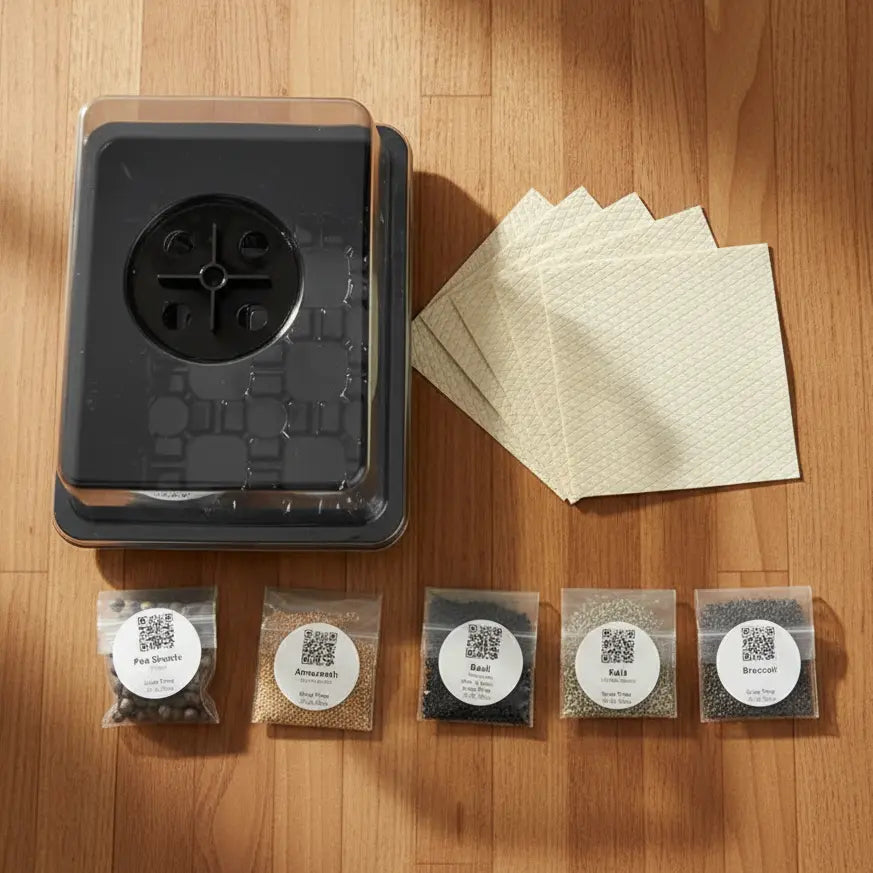
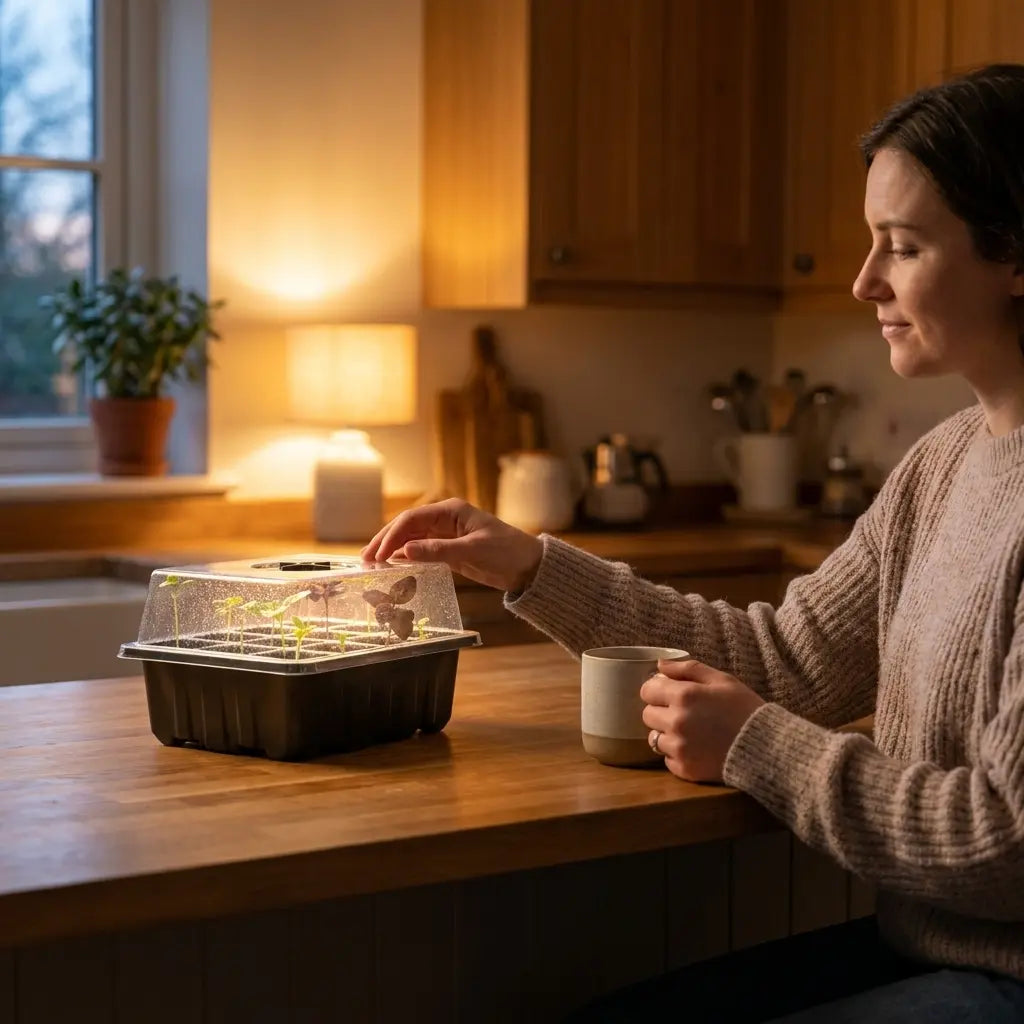
Growing any of these takes a tray, a humidity dome, and an organic grow mat. The Microgreens Starter Kit includes two trays, the dome, a mat, and seeds, so you can plant your first tray the day it arrives.
3. Cilantro: Fresh Flavor in Under Two Weeks

Flavor: True cilantro, citrusy, herbal, intensely fresh. The flavor that defines Mexican, South Asian, and Caribbean cooking.
Grow time: 10 to 14 days
Cold tolerance: Good, cilantro is a cool-season herb
Cilantro frustrates outdoor gardeners in warm weather, because full plants bolt to seed before you can use them. Cilantro microgreens skip that problem: you cut them at 10 to 14 days, long before bolting is possible. That lets you grow cilantro on a continuous cycle all year and harvest exactly what you need for the chili, the black bean soup, or the roasted squash tacos on the menu that week. For the full growing steps, see our cilantro microgreens growing guide.
Autumn pairing ideas: autumn chili topping, black bean soup, butternut squash tacos, roasted sweet potato bowls, grain salads with warm spices, curried lentils.
Cilantro Monogerm Microgreens Seeds, $7.99, organic grow mat included.
4. Kohlrabi Purple: The Mild, Versatile Workhorse

Flavor: Mild, slightly sweet, very gently cabbage-like. One of the most neutral microgreen flavors, adds texture and nutrition without announcing itself.
Grow time: 8 to 10 days
Cold tolerance: Excellent, brassicas handle cooler rooms well
Kohlrabi microgreens are the quiet achievers of the fall lineup. Because the flavor is so mild, they work in anything: soups, sandwiches, wraps, smoothies, grain bowls, and morning eggs. They're also the best variety for households with picky eaters, the mildness means nobody notices they're there until you point it out.
The purple stems add visual depth to autumn dishes, making a plain bowl of soup look intentional and composed.
Autumn pairing ideas: any soup as a garnish, roasted vegetable bowls, autumn grain salads, avocado toast, lunchbox wraps, side salads.
Kohlrabi Purple Microgreens Seeds, $7.99, organic grow mat included.
5. Borage: The Hidden Gem for Autumn Entertaining

Flavor: Mild cucumber, refreshing, slightly floral, and clean. Unique in the microgreens world.
Grow time: 12 to 14 days
Cold tolerance: Good at standard room temperature
Borage microgreens are underused and genuinely distinctive. Their cucumber flavor slots naturally into two autumn niches that other microgreens don't cover well: herbal drinks and fall entertaining appetizers. A sprig in a harvest cocktail, a sparkling mocktail, or on a cheese board makes a genuine impression.
They also work as a garnish on roasted beet and goat cheese salad, where the mild cooling note contrasts nicely with earthy, warming fall flavors.
Autumn pairing ideas: harvest cocktails and mocktails, sparkling water, cucumber and cream cheese canapés, beet and goat cheese salad, autumn cheese boards.
Borage Microgreens Seeds, $7.99, organic grow mat included.
How to Run a Fall Microgreens Rotation
The setup is simple. Each variety grows in its own tray. Start a new tray every 7 to 10 days and you'll have a fresh variety to harvest approximately once a week through the season.
A practical fall rotation: plant Kale on Monday. Plant Dill the following Monday. Plant Cilantro the Monday after. By Week 3, your kale is ready to harvest, and your rotation is running continuously. From that point forward, you have a fresh harvest every few days without any extra effort.
Most fall varieties complete their grow cycle in 8 to 14 days, which means one tray started this week reaches harvest before the end of the month. See our guide to hydroponic microgreens for more on the no-soil growing method that makes this setup clean and low-maintenance.
What Do You Need to Start a Fall Microgreens Setup?
Getting started for fall takes one kit and a couple of seed packs. The Microgreens Starter Kit from Aquager includes two trays, a humidity dome, an organic grow mat, and seeds for lemon basil, kale, pea shoots, and broccoli microgreens, everything needed for a clean, countertop-friendly setup for $29.99.

Because the kit already includes kale seeds, adding Dill and Cilantro covers all three main autumn cooking occasions: smoothies and everyday greens, soup and warm dish garnishes, and bold flavor for spiced cooking. Dill and Cilantro are $7.99 each, with a grow mat included per order.
The kit plus Dill and Cilantro comes to about $46, which gets you three varieties and two trays ready to run on a staggered schedule. For more on the nutritional reasons to add microgreens to your fall diet, see our guide to the most nutritious microgreen varieties.
Frequently Asked Questions
Do microgreens really grow well in fall?
Yes. Most microgreens grow best at 68 to 74°F, and a heated fall home stays in that range, so all five varieties in this guide do well indoors in fall. The steady temperature of a heated home is a genuine advantage.
How much light do microgreens need when days get shorter?
A south-facing window with 4+ hours of indirect daylight is sufficient for most varieties through a 10 to 14 day grow cycle. A basic LED grow light on a 12-hour daily timer is an effective supplement for north or east-facing rooms where natural light is limited.
Which fall microgreen is best for soup?
Dill is the most versatile for autumn soups, it pairs naturally with potato, lentil, carrot, and roasted vegetable preparations. Cilantro works in spiced and bean-based soups. Kale microgreens are a mild, nutritious garnish that works on any broth-based dish. For soup-by-soup matches, see our fall soup microgreens pairing guide.
Can I grow multiple varieties at the same time?
Yes. Each variety grows in its own tray. Running three to five trays on staggered start dates gives you a different fresh variety ready to harvest every few days through the season without any added complexity.
Do fall microgreens need different care than summer microgreens?
Minimal differences. In fall, indoor heating systems can dry out grow mats faster than expected, check moisture twice daily during the first few days after seeding. Otherwise the same tray, dome, and watering routine applies year-round.
Keep Your Kitchen Counter in Season All Autumn
The outdoor garden winds down in September. The indoor microgreens counter doesn't.
Dill for your soups. Cilantro for your chili. Kale for your smoothies. Kohlrabi for a mild, beautiful garnish on anything. Borage for the harvest cocktail that impresses guests without any effort.
Start one tray this week and your first autumn harvest will be ready in under two weeks. Add a second variety the following week, and by early November you'll have a full rotation running.
The Microgreens Starter Kit has everything you need to start. Pick up Dill or Cilantro seeds alongside it and your first fall harvest will be ready before the end of the month.
Author: Aquager Team · Published: May 30, 2026 · Updated: October 10, 2026 · Reviewed: October 10, 2026 (Phase 3)












0 comments