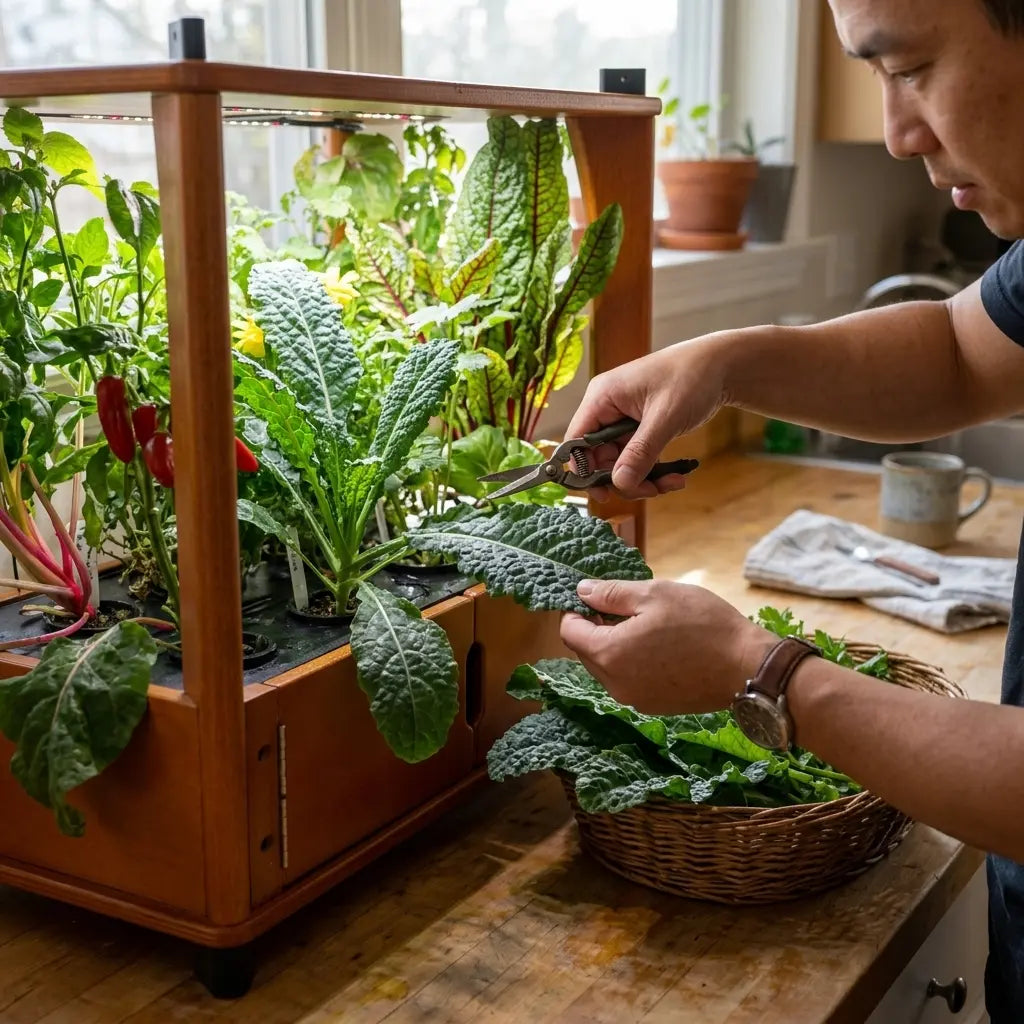
Hydroponic Systems for Beginners
Hydroponic systems grow plants without soil by delivering water, nutrients, and oxygen directly to the roots, which makes them one of the easiest ways for beginners to grow food indoors.
Instead of relying on soil quality, outdoor space, or perfect watering habits, hydroponics creates a controlled indoor environment where plants receive exactly what they need to grow. This page explains what hydroponic systems are, how they work, and why they are often easier for beginners than traditional soil gardening.
What Is a Hydroponic System for Beginners?
A hydroponic system is a method of growing plants without soil. Plants are supported in small grow cups or grow mediums while their roots access nutrient-rich, oxygenated water below.
Rather than soil acting as the middleman, hydroponics delivers essentials directly to the roots, removing many common indoor growing problems.

How Hydroponic Systems Work
Every hydroponic system—simple or advanced—does three fundamental things:
-
Supports the plant
The plant stays upright while roots grow downward. -
Supplies water and nutrients consistently
Roots receive steady access instead of drying out or flooding. -
Provides oxygen and light
Oxygen prevents root stress, while grow lights replace inconsistent sunlight.
This direct and predictable delivery is why hydroponic systems perform better indoors than soil. If indoor plants have struggled in the past, understanding why indoor plants fail helps explain why hydroponics works better.
Why Hydroponic Systems Are Easier for Beginners
Traditional indoor gardening assumes several things go right at the same time:
- Soil drains properly
- Watering is timed perfectly
- Sunlight is sufficient
- Roots receive enough oxygen
Hydroponic systems remove most of these assumptions.
For beginners, that means:
- No guessing when to water
- No compacted or poor-quality soil
- Fewer pests indoors
- No dependence on windows or seasons
Instead of managing soil behavior, beginners manage simple inputs—water level, light schedule, and occasional nutrient refills.

Common Types of Hydroponic Systems (Beginner Overview)
You don’t need to memorize system types, but understanding the basics helps. When people search for the best hydroponic systems for beginners, they usually mean simple setups that deliver water, nutrients, and oxygen consistently without complicated equipment.
Passive systems
- Use wicks or gravity
- Fewer moving parts
- Lower maintenance
- Slower growth
Aerated water systems
- Roots sit in oxygen-rich water
- Faster, healthier growth
- Very beginner-friendly
- Common in home setups
Circulating systems
- Water is pumped continuously
- Higher output
- More complexity
Most beginners succeed fastest with stable, aerated systems that prioritize reliability over maximum yield.
What Can Beginners Grow with Hydroponics?
Hydroponic systems work especially well indoors for:
- Leafy greens
- Herbs
- Microgreens
- Compact vegetables
These plants grow quickly, don’t require pollination, and thrive in controlled environments, which is why many people explore whether hydroponics is worth it at home once they see consistent results.
Why Beginners Fail Less with Hydroponics
Most plant failures happen for reasons unrelated to effort:
- Inconsistent watering
- Poor soil oxygenation
- Inadequate light
- Root stress
Hydroponic systems are designed to prevent these problems by default, rather than asking beginners to diagnose them later.
That prevention—not automation—is the real advantage.
When Hydroponic Systems Make Sense
Hydroponics is a strong fit if you:
- Live in an apartment or condo
- Want predictable indoor results
- Don’t have outdoor growing space
- Prefer clean, low-mess growing
It may not be ideal if you:
- Enjoy outdoor soil gardening
- Want large seasonal harvests
- Prefer hands-on soil work
For indoor growing, hydroponics is often the simplest path, not the most complex one.
A Practical Next Step for Beginners
Many beginners start by growing plants in a small nursery and then replanting them into a larger hydroponic system once roots develop. This staged approach reduces early mistakes and builds confidence.
Aquager’s Hydroponic Home Farm follows this exact logic—designed for people who want reliable indoor food without needing gardening experience.
Related Reading
Last updated: March 16, 2026