Is Hydroponics Worth It at Home in 2026?
For many households, hydroponics is worth it because it replaces the most unpredictable parts of traditional gardening—soil, weather, and outdoor space—with a controlled indoor environment. Instead of depending on seasonal conditions or perfect soil structure, hydroponic systems deliver water, oxygen, nutrients, and light directly to plant roots in a stable and repeatable way.
This shift is what allows people to grow food reliably indoors. In a typical apartment or house, growing plants in soil depends heavily on windows, sunlight intensity, and careful watering habits. Even when instructions are followed correctly, small mistakes can lead to root rot, mold, nutrient deficiencies, or weak plant growth. Hydroponics removes many of these failure points by designing the growing environment around the needs of the plant rather than around the limitations of soil.
As a result, hydroponics often makes indoor growing more predictable. Plants receive consistent moisture, oxygen reaches the roots continuously, and artificial lighting provides the exact spectrum and timing plants need for photosynthesis. Because these variables are controlled, plants tend to grow faster and more consistently than they do in typical indoor soil pots.
For beginners, this reliability is one of the biggest advantages. Many people try indoor gardening, lose several plants, and eventually give up because the process feels unpredictable. Hydroponics changes that experience by turning plant care into a simple monitoring routine instead of constant troubleshooting.
Another reason hydroponics can be worthwhile is space efficiency. Indoor systems can grow multiple plants in a compact footprint while stacking light and growing zones vertically. This makes it possible to produce herbs, greens, and other crops in kitchens, apartments, or homes without a garden or balcony.
Because of this efficiency, hydroponics is often used to grow foods that are frequently purchased fresh—such as basil, lettuce, and microgreens. These crops grow quickly, require little space, and can be harvested repeatedly throughout the month.
For people who want to try indoor growing without dealing with soil preparation, fertilizers, or planting mistakes, some start with pre-seeded nurseries before transitioning to a full hydroponic system. Systems like the Grab & Grow Kit allow beginners to start plants with minimal setup, while larger indoor systems such as the Hydroponic Home Farm provide a permanent environment for year-round growing.
Understanding whether hydroponics is worth it ultimately depends on expectations. For most households, the question is not whether hydroponics can produce food—it clearly can—but whether it offers a simpler, more reliable way to grow plants indoors compared with traditional soil gardening.
The sections below break down exactly how hydroponics compares to indoor soil gardening in terms of effort, cost, reliability, and long-term results.
What “Worth It” Actually Means for Growing Food at Home
When people ask whether hydroponics is worth it, they are rarely asking about maximum yield or perfect efficiency. For most households, “worth it” means something much simpler: the growing system consistently produces healthy plants with a reasonable amount of effort.
Indoor growing is often judged by four practical factors: whether plants survive, whether the food is usable, how much effort the system requires, and whether results feel predictable. If any of these fail repeatedly, the growing method quickly stops feeling worthwhile regardless of how inexpensive it seemed at the beginning.
Understanding these four factors helps explain why many people struggle with indoor soil gardening and why hydroponics often produces more reliable results in a home environment.
1 Plant Survival Rate
The most basic measure of success is whether plants stay alive long enough to grow into usable food.
In indoor soil gardening, plant survival depends on several variables that are difficult to balance: soil moisture, aeration, lighting, drainage, and temperature. Even small mistakes—such as watering too frequently or placing plants in insufficient light—can cause roots to weaken or rot.
Hydroponic systems reduce these risks by stabilizing the root environment. Instead of relying on soil to manage water and oxygen levels, hydroponics delivers both directly to the roots. This controlled environment significantly improves the survival rate of herbs, greens, and seedlings grown indoors.
2 Usable Food Production
Growing plants successfully is only part of the equation. For a system to feel worthwhile, the plants also need to produce usable food.
Many indoor soil plants survive but grow slowly, remain small, or produce weak leaves because they lack sufficient light or nutrients. As a result, the harvest can be minimal.
Hydroponics often improves production because plants receive consistent lighting and nutrient delivery. This allows herbs like basil or leafy greens like lettuce to grow faster and reach harvestable size more reliably than they would in a typical windowsill pot.
3 Effort and Maintenance
Another key factor in determining value is how much work the system requires.
Indoor soil gardening can involve frequent watering, adjusting soil moisture, repotting plants, dealing with soil pests, and cleaning spills or drainage trays. These tasks may seem small individually but can add up quickly.
Hydroponic systems simplify maintenance by centralizing water and nutrients into a single reservoir. Instead of watering multiple pots individually, growers typically check water levels periodically and refill nutrients when needed. Because soil is not used, the growing environment is also cleaner and easier to manage indoors.
4 Predictability of Results
Perhaps the most important factor is predictability. People are far more likely to continue growing food at home when the process produces consistent results.
Traditional indoor gardening often feels unpredictable because plant success depends heavily on sunlight availability, seasonal changes, and soil behavior. The same care routine may work one week and fail the next.
Hydroponics reduces this variability by creating a controlled environment. Artificial lighting ensures plants receive the same amount of light every day, while oxygenated water and balanced nutrients stabilize root health. This consistency makes it easier for beginners to learn and repeat successful growing cycles.
What Hydroponics Changes Indoors
Indoor soil gardening struggles because it relies on natural processes that are difficult to recreate inside a home. Soil structure, airflow, drainage, and sunlight all play major roles in plant health outdoors, but indoors these factors are limited or inconsistent.
Hydroponics approaches plant growth differently. Instead of relying on soil to regulate water, oxygen, and nutrients, hydroponic systems deliver these elements directly to the plant roots in a controlled environment.
This shift is what makes hydroponics more reliable for indoor growing. Rather than adjusting watering schedules, soil mixtures, and plant placement repeatedly, hydroponic systems stabilize the most important variables for plant growth.
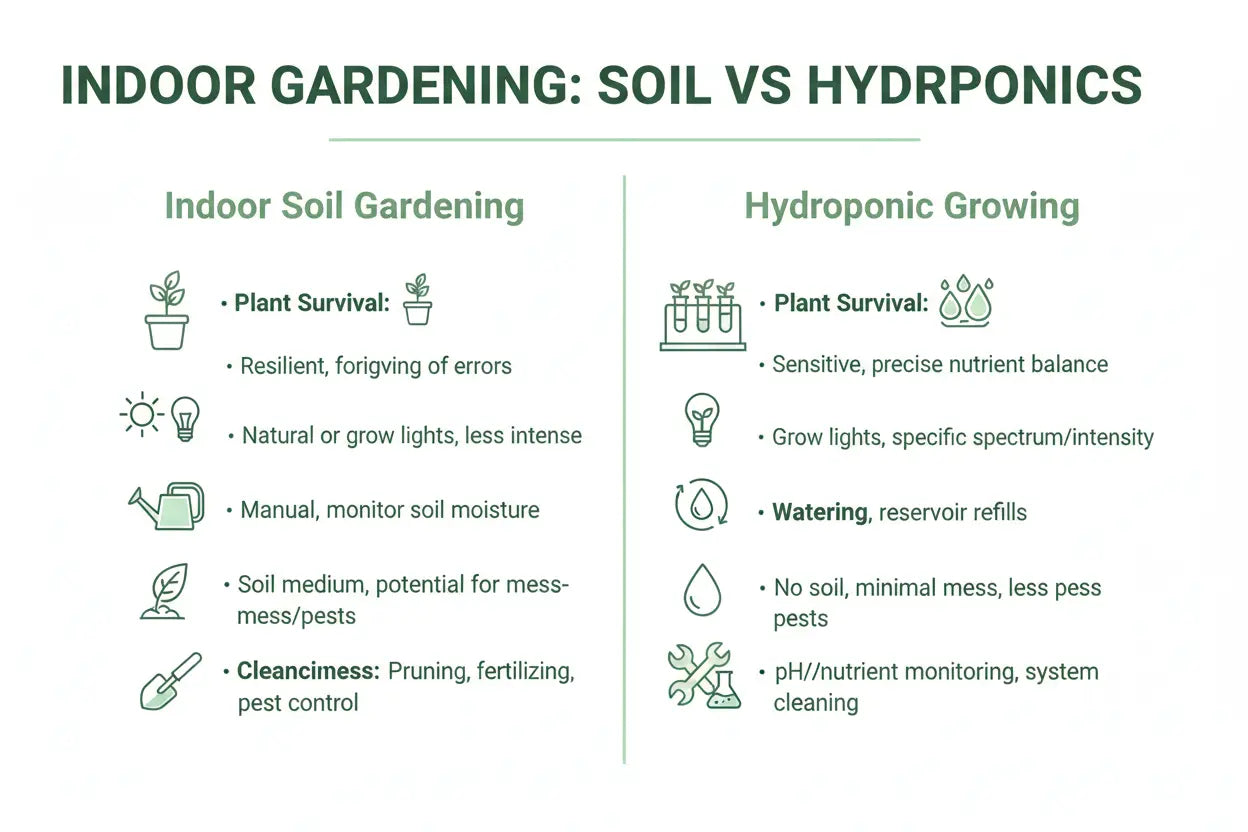
Several key changes explain why hydroponics works well indoors.
Direct Water Delivery to Roots
In soil gardening, water must move through layers of soil before reaching plant roots. If the soil drains too quickly, roots may dry out. If it retains too much water, roots can lose access to oxygen.
Hydroponic systems bypass this issue by delivering water directly to the root zone. The roots receive consistent moisture without being trapped in saturated soil. This balance allows plants to absorb water efficiently while maintaining healthy root function.
Continuous Oxygen Availability
Plant roots require oxygen to convert nutrients into energy for growth. In soil systems, oxygen depends on air pockets between soil particles, which can disappear when soil becomes compacted or overly wet.
Many hydroponic systems maintain oxygen levels in the water using aeration methods such as air pumps and air stones. These systems continuously introduce oxygen into the root environment, allowing plants to grow without the limitations that compacted soil can create.
Consistent Artificial Lighting
One of the biggest limitations of indoor gardening is light. Window sunlight can vary dramatically depending on season, building orientation, and weather conditions.
Hydroponic systems often use LED grow lights designed to deliver the wavelengths plants need for photosynthesis. Because these lights operate on timed cycles, plants receive the same amount of light every day regardless of outdoor conditions.
This consistency allows plants to grow year-round, even in spaces with limited natural sunlight.
Balanced Nutrient Delivery
In soil gardening, nutrients depend on the composition of the soil and how quickly they dissolve into water. Nutrient availability can vary widely depending on soil quality and watering patterns.
Hydroponic systems dissolve nutrients directly into the water reservoir, making them immediately accessible to plant roots. This balanced nutrient environment allows plants to grow efficiently without depending on soil chemistry.
Summary: How Hydroponics Stabilizes Indoor Growing
Hydroponics replaces several unpredictable aspects of indoor gardening with controlled systems.
Soil Gardening
- Roots depend on soil structure for oxygen
- Water distribution varies across the pot
- Light depends on windows and seasons
- Nutrient availability depends on soil quality
Hydroponics
- Oxygen delivered directly to roots
- Water consistently available
- LED lighting provides stable plant energy
- Nutrients balanced in the water reservoir
By stabilizing these variables, hydroponic systems make indoor growing more predictable and easier to maintain.
Hydroponics vs Indoor Soil Gardening
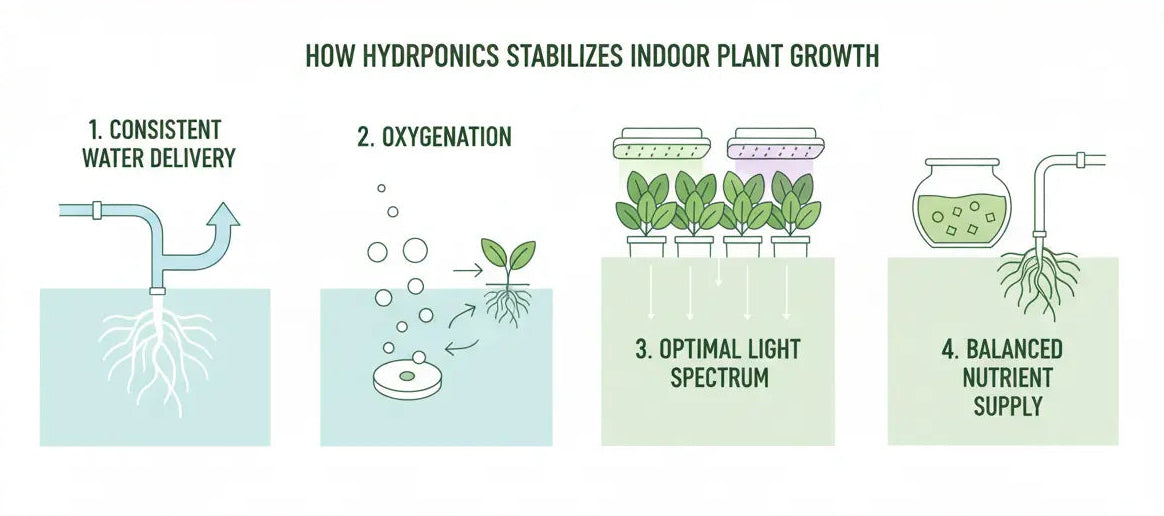
When deciding whether hydroponics is worth it at home, the most useful way to evaluate it is by comparing it directly with traditional indoor soil gardening. Both methods allow plants to grow indoors, but they rely on very different systems to support plant health.
Soil gardening depends on recreating outdoor conditions in a container: soil structure must remain aerated, moisture must stay balanced, and plants must receive enough sunlight through windows. Because several variables interact at once, small imbalances can quickly affect plant growth.
Hydroponics approaches indoor growing from an engineering perspective. Instead of relying on soil to regulate water, oxygen, and nutrients, hydroponic systems manage these factors directly through controlled water reservoirs, aeration, and artificial lighting.
The result is that the two methods differ significantly in reliability, maintenance, and efficiency.
Reliability of Plant Growth
Indoor soil gardening often produces inconsistent results because soil conditions change over time. Soil compacts, moisture levels fluctuate, and natural sunlight varies throughout the year.
Hydroponic systems maintain a more stable environment. Roots remain in a consistently oxygenated solution, water availability stays constant, and lighting can be controlled precisely using LED grow lights. This stability helps plants grow more predictably indoors.
Maintenance and Daily Effort
Soil gardening typically requires individual attention to each plant. Growers must check soil moisture frequently, adjust watering schedules, and occasionally replace soil or repot plants.
Hydroponic systems centralize these tasks into a single water reservoir. Instead of watering multiple pots separately, growers usually monitor water levels and refill nutrients periodically. This reduces the number of daily adjustments required to maintain healthy plants.
Cleanliness Indoors
Another difference is how each method fits into indoor spaces.
Soil gardening can create small but frequent messes—soil particles, drainage trays, and occasional spills during watering. For people growing plants in kitchens or living spaces, this can become inconvenient over time.
Hydroponic systems operate without soil, which keeps indoor environments cleaner. Plants grow in trays or holders while their roots remain in water, reducing the chance of soil spills or pests.
Space Efficiency
Indoor soil pots often require more horizontal space because each plant grows in a separate container.
Hydroponic systems can grow multiple plants within a single unit and often use vertical layouts with stacked lighting. This allows several herbs, greens, or seedlings to grow within a compact footprint on a counter, shelf, or dedicated indoor growing station.
Is Hydroponics Expensive for Home Use?
Cost is often the first concern people have when considering hydroponics. At a glance, hydroponic systems may appear more expensive than traditional indoor gardening because they include equipment such as LED grow lights, water reservoirs, and plant supports. However, evaluating cost requires looking at both the initial setup cost and the long-term cost of producing food at home.
In many cases, the long-term economics of hydroponics become clearer when comparing the cost of fresh produce, repeated plant losses in soil gardening, and the productivity of indoor hydroponic systems.
Initial Cost Comparison
Traditional indoor soil gardening usually starts with relatively low upfront costs. A typical beginner setup might include pots, soil, and seeds.
Typical starting costs for indoor soil gardening:
- Plant pots: $10–$30
- Potting soil: $10–$20 per bag
- Seeds or seedlings: $5–$20
This means a basic indoor soil setup may start around $30–$70.
Hydroponic systems generally require a higher initial investment because the system replaces many natural variables with controlled equipment.
Typical hydroponic starter system components include:
- Hydroponic unit or growing structure
- LED grow lights
- Reservoir and plant holders
- Nutrient solution
Small home hydroponic systems typically range from $150–$400, depending on size and features.
At first glance, this price difference can make hydroponics appear significantly more expensive. However, the comparison changes when long-term costs and food production are considered.
Hidden Costs of Indoor Soil Gardening
Indoor soil gardening often involves recurring purchases that are easy to overlook. Plants that struggle indoors frequently need to be replaced, and soil must occasionally be refreshed.
According to horticulture extension studies and consumer gardening surveys, overwatering and poor indoor conditions cause approximately 50–60% of houseplant losses among beginners. Each failed plant represents additional costs for new soil, seeds, or seedlings.
Typical recurring soil gardening costs may include:
- Replacement plants or seeds: $10–$40 per season
- Additional soil and amendments: $15–$30 per season
- Replacement pots or trays: $10–$20
Over the course of a year, indoor gardeners can easily spend $60–$150 replacing plants or supplies, especially when learning how to balance watering and light conditions.
Grocery Cost Comparison
Another way to evaluate hydroponics is by comparing the cost of growing herbs and greens at home with grocery store prices.
Fresh herbs are among the most expensive items relative to their weight. In the United States, grocery store herbs typically cost:
- Basil: $3–$5 per small bundle
- Parsley or cilantro: $2–$4 per bundle
- Microgreens: $4–$8 per small container
Because these plants are delicate, they often wilt within a few days after purchase, which leads to frequent repurchasing.
In contrast, a single healthy basil plant grown indoors can produce multiple harvests over several weeks or months. This allows a household to harvest small amounts when needed instead of repeatedly purchasing fresh herbs.
For example:
- One basil plant may produce 20–30 harvests of leaves over its life cycle
- Microgreens can grow from seed to harvest in 7–14 days
- Leafy greens such as lettuce can be harvested repeatedly over 4–6 weeks
These short growth cycles make herbs and greens some of the most cost-effective foods to grow hydroponically.
Electricity Costs for Indoor Hydroponics
Another concern is electricity usage for grow lights. Modern LED grow lights are designed to be energy efficient.
A typical small hydroponic system using 20–40 watts of LED lighting running 12–16 hours per day consumes approximately: 7–20 kWh of electricity per month
At an average U.S. electricity cost of about $0.15 per kWh, this equals roughly: $1–$3 per month in electricity
This relatively small energy cost is one reason LED-based hydroponic systems have become popular for indoor growing.
Long-Term Cost Perspective
When both grocery savings and reduced plant losses are considered, hydroponic systems often become more economical over time.
For households that frequently purchase herbs or microgreens, the cost of grocery purchases alone can exceed the cost of a hydroponic system within a year.
For example:
- Buying fresh basil weekly at $4 per bundle costs about $208 per year
- A hydroponic system producing herbs continuously can reduce or eliminate these purchases
Because hydroponic systems reuse the same structure for multiple growing cycles, the primary recurring costs usually become seeds and nutrients, which are relatively inexpensive.
A Practical Way to Start Without Large Costs
For beginners who want to experiment with indoor growing before investing in a larger system, starting small can be a practical approach.
Pre-seeded systems like the Grab & Grow Kit allow beginners to grow herbs or microgreens with minimal setup and without dealing with soil preparation. Once people become familiar with the process and see consistent results, many expand into a larger system designed for continuous indoor food production, such as the Hydroponic Home Farm.
This gradual approach allows people to evaluate whether hydroponics is worthwhile for their household before committing to a full indoor growing system.

Before
After
Does Hydroponics Take a Lot of Time?
Most home hydroponic systems require very little maintenance once plants are growing. Because water, nutrients, and lighting are controlled within the system, daily plant care is replaced by simple monitoring. Typical time requirements:
- Water check: ~1 minute every 2–3 days
- Refill reservoir: ~2–3 minutes per week
- Add nutrients: ~3 minutes every 2–3 weeks
- Harvest plants: ~2–4 minutes per harvest
In total, most small hydroponic systems require about 5–10 minutes of maintenance per week. Plants also grow quickly indoors:
- Microgreens: 7–14 days
- Herbs (basil, parsley): 3–4 weeks
- Leafy greens: 4–6 weeks
Because maintenance is minimal and growth cycles are short, hydroponic systems can produce fresh herbs and greens with only a few minutes of weekly care.
Who Hydroponics Is Worth It For
Hydroponics is especially valuable for households that want a reliable way to grow fresh food indoors without depending on outdoor gardens, ideal weather, or perfect window sunlight.
Because hydroponic systems control water, oxygen, nutrients, and lighting, they remove many of the variables that make indoor soil gardening difficult. This makes them particularly useful for beginners and people living in urban environments. Hydroponics tends to work best for:
- Apartment residents without access to outdoor garden space
- Busy households that want low-maintenance food growing
- People who struggle to keep indoor plants alive
- Urban homes with limited sunlight
- Anyone who regularly buys fresh herbs or leafy greens
Fresh herbs such as basil, parsley, and cilantro are among the most frequently purchased grocery items and often cost $3–$5 per small bundle in U.S. grocery stores. Because hydroponic systems allow repeated harvesting from the same plant, a single healthy herb plant can produce multiple harvests over several weeks.
For many beginners, the easiest way to start is with a simple controlled nursery system that requires minimal setup. Pre-seeded systems such as the Grab & Grow Kit allow new growers to start herbs or microgreens quickly, while larger systems like the Hydroponic Home Farm are designed for continuous indoor production of herbs, vegetables, fruits, flowers, and microgreens throughout the year.
For households that want fresh ingredients available directly in the kitchen, hydroponics can provide a simple and reliable way to grow food indoors.
When Hydroponics May Not Be Worth It
Although hydroponics works very well for indoor growing, it is not the best solution for every situation. Some households may benefit more from traditional outdoor gardening, especially when space and climate conditions already support plant growth naturally. Hydroponics may be less necessary for people who:
- Have a large outdoor garden with adequate sunlight and soil
- Prefer traditional soil gardening and hands-on cultivation
- Want to grow large seasonal crops such as corn, pumpkins, or potatoes
- Live in climates where outdoor growing is possible most of the year
Outdoor soil gardens can produce larger harvests when there is enough space, natural sunlight, and suitable weather. In these environments, traditional gardening can often grow crops at a lower cost because plants rely on natural rainfall, sunlight, and soil ecosystems.
However, even outdoor gardeners often encounter limitations during colder months. In many regions of the United States, the outdoor growing season lasts only 5–7 months per year, depending on climate zone. During winter and early spring, outdoor food production may stop entirely.
Hydroponic systems are often used indoors during these months to continue producing herbs and leafy greens year-round. Because indoor hydroponics does not depend on outdoor temperatures or seasons, plants can grow continuously throughout the year.
For households without outdoor space—or for those who want consistent indoor food production regardless of weather—hydroponics often becomes a practical complement to traditional gardening rather than a replacement for it.
A Practical Way to Decide
For many households, the easiest way to determine whether hydroponics is worth it is to start small and observe how plants grow in a controlled indoor environment.
Instead of investing in a full system immediately, beginners often begin with a small growing setup and expand once they see consistent results. A typical progression looks like this:
Step 1 — Start Small
Begin with a simple nursery or pre-seeded growing system to learn the basics of watering and plant monitoring.
Step 2 — Observe Growth Cycles
Watch how quickly plants grow and how often they can be harvested. Microgreens typically reach harvest in 7–14 days, while herbs like basil can produce usable leaves in about 3–4 weeks.
Step 3 — Expand to Continuous Growing
Once the process becomes familiar, many households transition to a larger indoor system designed for year-round growing of herbs, leafy greens, vegetables, fruits, and flowers.
This gradual approach reduces risk and allows people to see how hydroponic growing fits into their daily routine before committing to a larger system.
For beginners who want to try growing plants without soil or complicated setup, starting with a simple pre-seeded system like the Grab & Grow Kit can provide a quick introduction. As experience grows, larger systems such as the Hydroponic Home Farm allow continuous indoor production of fresh ingredients directly in the kitchen.
FAQ section
Is hydroponics cheaper than buying vegetables?
Yes—fresh herbs like basil cost $3–$5 per grocery bundle, while a single indoor basil plant can produce 20–30 harvests over 2–3 months, reducing repeated purchases.
Does hydroponics use a lot of electricity?
No—most home systems use 20–40W LED lights, costing roughly $1–$3 per month at the average U.S. electricity rate of $0.15/kWh.
Can hydroponics grow vegetables indoors year-round?
Yes—because LED lighting and nutrients are controlled, plants such as lettuce (4–6 weeks), basil (3–4 weeks), and microgreens (7–14 days) can grow indoors all year.
Is hydroponic food healthy?
Yes—studies show hydroponic vegetables can have equal or higher nutrient levels compared with soil-grown crops when light and nutrients are optimized.
How much food can you grow in a home hydroponic system?
Small indoor systems typically grow 4–12 plants at once, allowing continuous harvests of herbs and greens every 1–4 weeks depending on the crop.
Is hydroponics difficult for beginners?
No—most home systems require only 5–10 minutes of maintenance per week once plants are established.