
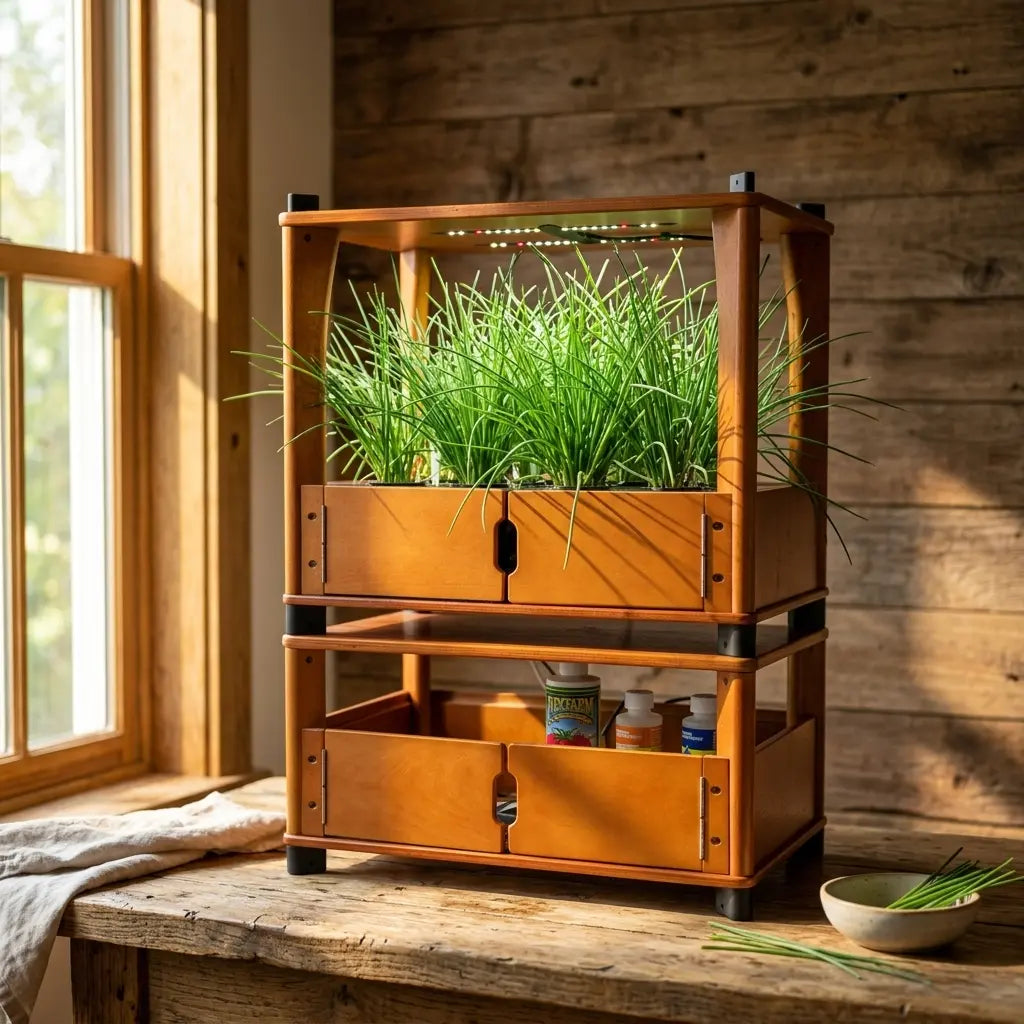
If you have never grown an herb before and want one that is genuinely difficult to kill, chives are the answer. Few plants forgive as many beginner mistakes as chives do.
People who grow chives indoors quickly notice something else too: cutting the plant back doesn't set it back. It just keeps producing new stems, sometimes for well over a year from a single planting.
This guide covers why chives are such a forgiving entry-level herb, how the cut-and-come-again cycle actually works, and everything needed to grow a steady, low-maintenance supply indoors.
Why Chives Are the Easiest Herb to Grow Indoors
Chives tolerate a wider range of light, water, and temperature conditions than most kitchen herbs, which is exactly why they are such a common recommendation for first-time growers.
Where herbs like rosemary or basil punish inconsistent care fairly quickly, chives are noticeably more forgiving of a missed watering or a slightly dim windowsill without going into visible decline.
This does not mean chives are indestructible or that care doesn't matter at all. It means the margin for error is wider, which is exactly what makes them a good herb to actually learn on.
Chives are also relatively pest and disease resistant compared to many kitchen herbs, adding another layer of forgiveness for someone still learning to spot early warning signs of trouble.
This combination of tolerance for inconsistent light, water, and general neglect is exactly why chives are so frequently recommended as the first herb for someone who has never grown anything indoors before.
Chives vs. Green Onions: Clearing Up the Confusion
Chives and green onions are frequently confused at the grocery store, and understandably so, since both have thin, hollow green stems and a mild onion-family flavor.
Green onions, also called scallions, are harvested young onion plants, including a small white bulb at the base, while chives are a distinct species grown purely for their thin leaves without a bulb harvest.
Chives also have a noticeably more delicate flavor than green onions, which is part of why chives are typically used as a finishing garnish rather than a cooked ingredient.
What Makes Chives a True Cut-and-Come-Again Crop
Chives grow from a small underground bulb cluster that continuously sends up new hollow green shoots, which is the biological reason cutting the plant doesn't stop its production.
Snipping chives near the base signals the plant to redirect energy into growing new shoots from that same bulb cluster, rather than ending the plant's growth cycle the way harvesting can with some other herbs.

A well-maintained chive plant can keep this cycle going for well over a year, and often much longer, from a single original planting, which is unusual among common kitchen herbs.
Chives are also a true perennial, meaning the plant itself persists year after year rather than needing to be replanted each season the way some herbs do outdoors.
Dividing and Propagating Established Chives
As a chive plant matures, its bulb cluster naturally multiplies, eventually forming a dense clump that can be divided into multiple separate plants without starting new ones from seed.
Dividing a clump every year or two, once it becomes noticeably dense, keeps individual plants vigorous and gives a free way to expand a chive planting or share starts with someone else.
To divide, gently separate a section of the bulb cluster with its roots intact and replant it in its own growing medium, where it typically establishes and resumes growth within a couple of weeks.
Chive Germination and Getting Started
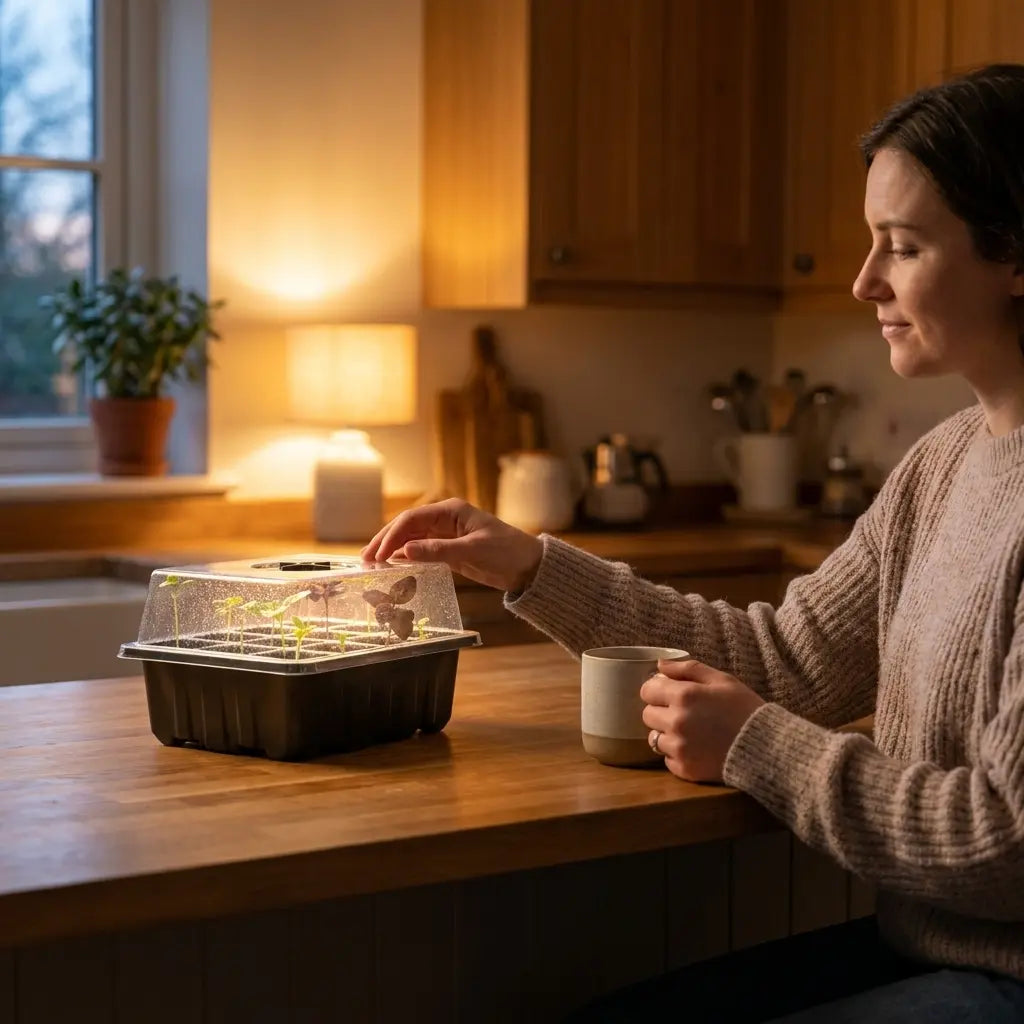
Chive seeds germinate in about 10 to 14 days under normal indoor conditions, a fairly average timeline compared to faster herbs like basil and slower ones like parsley.
Keeping the growing medium consistently moist during this window supports even germination, though chives are generally less fussy about this than more sensitive seeds.
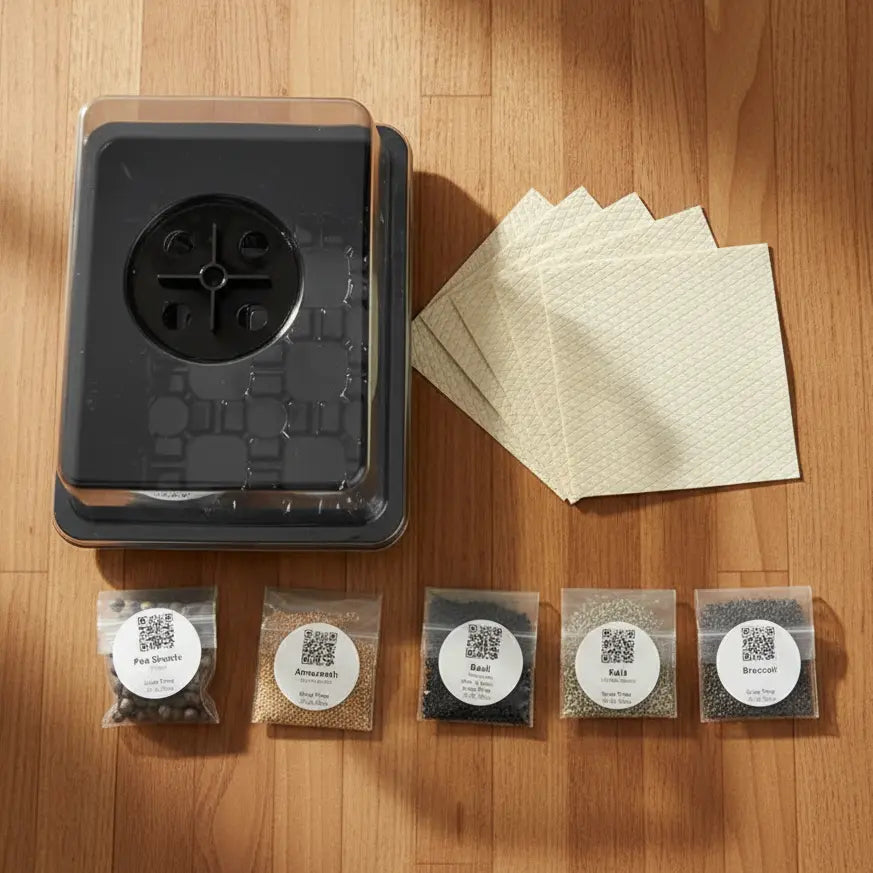
Pre-seeded organic grow mediums simplify this stage further, since the seed is already placed at an appropriate depth in a medium designed to hold moisture evenly.
Setting Up Chives to Grow Indoors
Chives do well with 6 hours of light daily, tolerating partial shade better than most herbs, though more consistent light does produce noticeably fuller, more vigorous growth.
A standard well-draining growing medium suits chives fine. They are not particularly sensitive to minor swings in moisture the way herbs like rosemary are.
Normal indoor room temperature works well for chives without any special adjustment, which is part of why they require so little day-to-day thinking once established.
Chives also tolerate a wider humidity range than many herbs, making them a reasonable choice for spaces where more sensitive plants like basil sometimes struggle with dry indoor winter air.
Choosing Between Soil and Hydroponic Setups for Chives
Chives grow readily in either traditional potting soil or a hydroponic system, and their forgiving nature means neither method requires much special adjustment to succeed.
In soil, a standard well-draining potting mix works fine. Chives are not particularly sensitive to the specific soil composition the way some herbs are.
A hydroponic setup offers the same low-maintenance advantage chives already have in soil, just with more consistent watering handled automatically by the reservoir rather than manual attention.
Positioning Chives Alongside Other Herbs
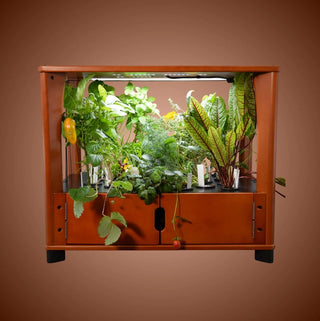
Chives pair easily with other beginner-friendly herbs like basil or parsley in the same growing setup, since their light and water needs overlap closely enough to share a system without much fuss.
Because chives tolerate a bit less light than sun-hungry herbs, they can occupy a slightly dimmer spot in a mixed herb setup without falling behind the way a more demanding plant might.
Grouping chives with other cut-and-come-again herbs also builds a natural harvesting rhythm, since several plants become ready for a light trim around the same intervals.
Step-by-Step: Growing Chives From Seed
Plant chive seeds at a shallow depth in a moist, well-draining growing medium, keeping the medium consistently damp through the 10 to 14 day germination window.
Once seedlings emerge, position them under at least 6 hours of light daily and continue regular watering as the thin, grass-like shoots develop and thicken.
By around 60 days from seed, a chive plant typically reaches a size ready for its first light harvest, developing enough shoots to support ongoing cutting.
Growing an Entry-Level Herb the Easy Way
The Aquager Chives (Staro) Seeds come with pre-seeded organic grow mediums, removing the depth and spacing guesswork that trips up a lot of first-time seed starters.
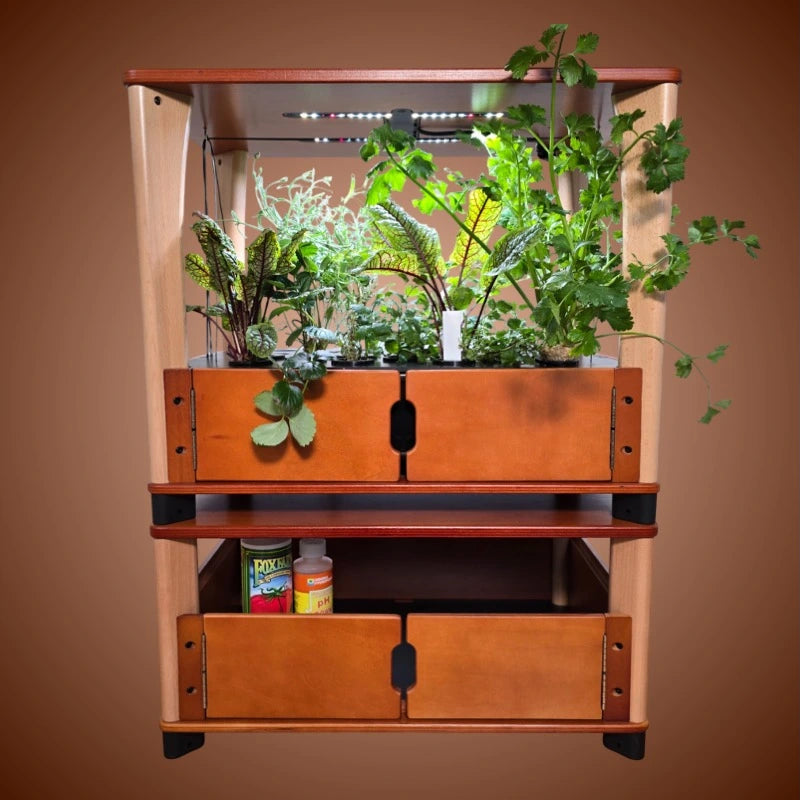
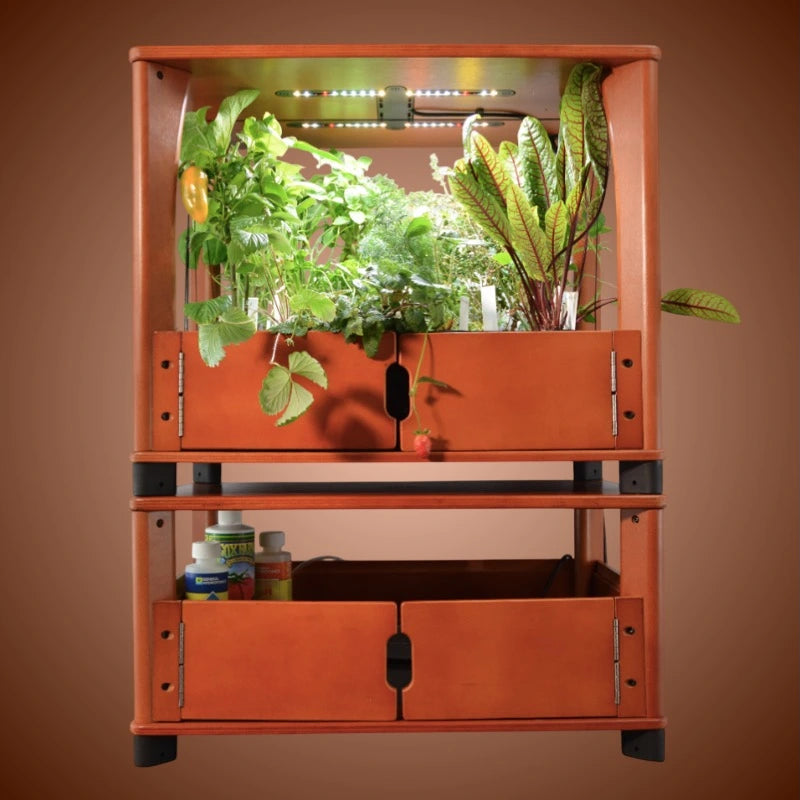
Growing chives in an Aquager Home Farm keeps light and water consistent without much day-to-day attention, which suits chives' famously low-maintenance nature well.
How to Harvest Chives Without Killing the Plant
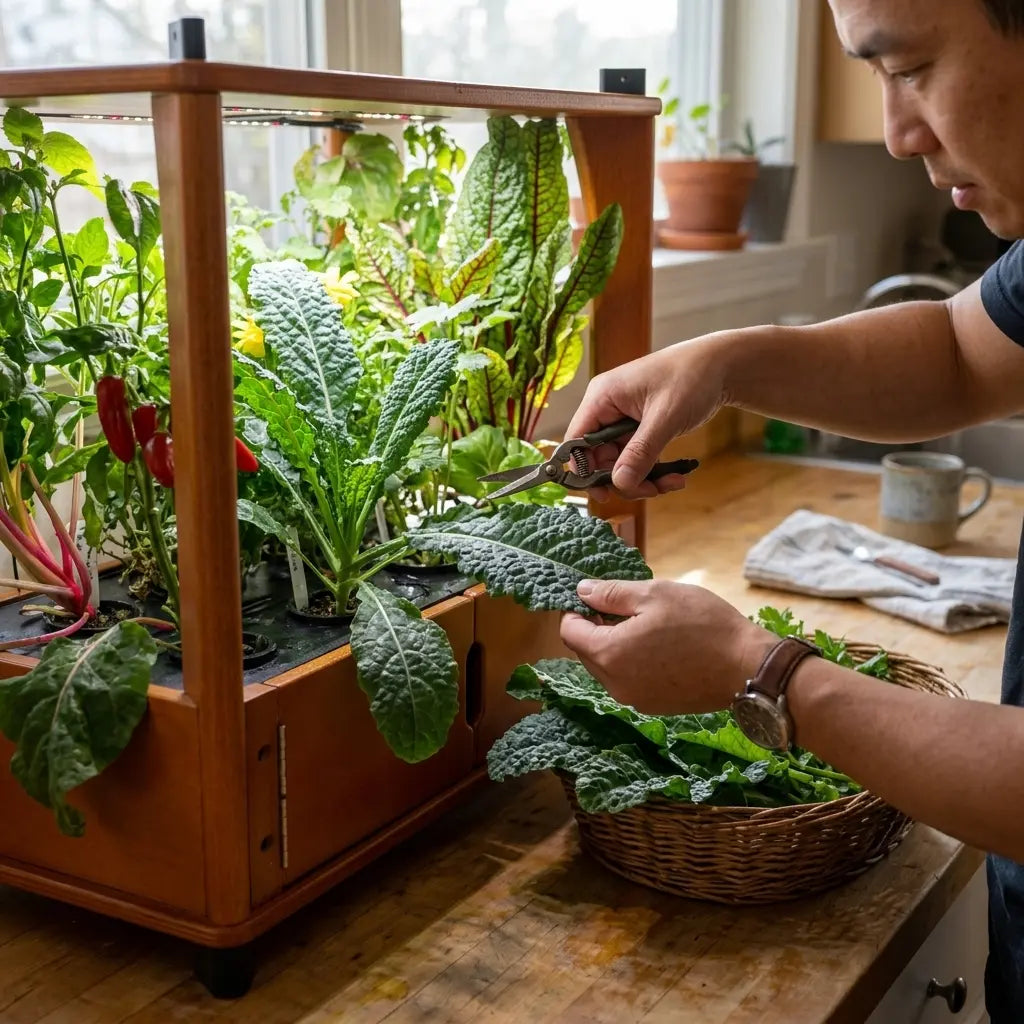
Cut chive stems about an inch or two above the base, rather than pulling or cutting at soil level, which protects the bulb cluster the new growth comes from.

Harvesting outer, mature stems rather than cutting the entire plant down at once keeps the plant continuously productive rather than forcing it to fully regrow from nothing each time.
New growth typically appears within one to two weeks of a harvest, making chives one of the faster herbs to bounce back after cutting.
Common Chives Growing Mistakes
Cutting stems too close to the soil or growing medium, rather than leaving an inch or two above the base, can damage the bulb cluster and slow regrowth.
Overwatering, while less punishing for chives than for more sensitive herbs, can still eventually cause issues if the growing medium never gets a chance to dry out even slightly between waterings.
Letting chives flower without ever harvesting can shift the plant's energy toward seed production rather than leaf growth, gradually reducing how many usable stems it produces.
Skipping division for several years as a clump becomes overly dense can eventually reduce vigor, since a crowded bulb cluster competes with itself for space and resources.
Assuming chives need the same intensive light schedule as sun-hungry herbs like rosemary leads some growers to over-invest in supplemental lighting that chives simply don't require to thrive.
Using Fresh Chives in the Kitchen
Chives have a mild onion-like flavor that works well snipped fresh over eggs, baked potatoes, soups, and salads, generally added at the end of cooking rather than during it.
Because chives lose some of their delicate flavor with heat, adding them as a finishing touch rather than cooking them for a long time preserves more of their character.
Chive blossoms, the small purple flowers chives produce if left unharvested, are also edible and add a mild onion flavor along with color to salads, though allowing frequent flowering does reduce leaf production over time.
Fresh chives freeze well when chopped and stored in a small amount of water in an ice cube tray, giving a convenient way to preserve a larger harvest rather than letting excess go to waste.
Because a single well-maintained plant produces so consistently, most home cooks find they can snip fresh chives directly into a dish right before serving rather than planning ahead around a store-bought bunch going bad.
Growing Chives Indoors FAQ
Are chives really that hard to kill?
Chives tolerate a wider range of light, water, and care mistakes than most herbs, which is why they are commonly recommended as a first herb for beginners.
How long does chive germination take?
About 10 to 14 days under normal indoor conditions, a fairly average timeline compared to other common kitchen herbs.
How often can I harvest chives?
Every couple of weeks once established, cutting outer mature stems about an inch above the base rather than trimming the entire plant down at once.
Do chives really keep producing for over a year?
Yes. Chives are a true perennial that regrow from an underground bulb cluster, and a well-maintained plant can keep producing for well over a year from a single planting.
How much light do chives need indoors?
At least 6 hours daily for best results, though chives tolerate partial shade better than most herbs without going into serious decline.
Why did my chives stop producing as much?
Letting the plant flower without regular harvesting can shift its energy toward seed production, which gradually reduces new leaf growth over time.
What's the difference between chives and green onions?
Green onions are harvested young onion plants that include a small bulb, while chives are a separate species grown only for their thin, mildly flavored leaves without a bulb harvest.
Do I need to divide my chive plant eventually?
Yes, roughly every year or two once the bulb cluster becomes noticeably dense, which keeps the plant vigorous and can also be used to start new plants.
Can chives grow in soil, or do they need hydroponics?
Chives grow well in either. Their forgiving nature means neither method requires much special adjustment compared to more demanding herbs.
Are chive flowers edible?
Yes, chive blossoms are edible and add a mild onion flavor to salads, though letting a plant flower frequently does reduce its leaf production over time.
An Herb That Rewards Very Little Effort
Chives earn their reputation as the easiest herb to grow indoors honestly, tolerating the kind of inconsistent care that would set back more demanding herbs.
Our list of the easiest herbs to grow indoors covers how chives compare to other beginner-friendly options, and our guide to growing herbs indoors year-round covers the broader setup principles this guide builds on.
For anyone building out a full indoor herb rotation, our guide to growing basil indoors is a good next stop alongside chives.
A single chive planting, cut regularly and cared for loosely, can genuinely keep a kitchen stocked with fresh herb for well over a year.
Author: Aquager · Published: July 10, 2026 · Updated: July 10, 2026












0 comments