
Mint has a reputation problem. Ask any gardener what happens when you plant mint directly in a garden bed, and you will hear a story about it swallowing an entire flower border within a season.
That reputation is earned, but it is also almost entirely an outdoor problem. Grow mint in an open bed and its spreading roots run wherever they please. Grow mint in an individually contained pod, and that same spreading habit has nowhere to go.
This guide covers why mint takes over outdoors, why individual containment solves the problem indoors, and how to grow spearmint, peppermint, chocolate mint, and apple mint without any of them turning into a takeover situation.
None of this means mint is a difficult herb. It is actually one of the easier plants to grow well, once the containment piece of the equation is understood and set up correctly from the start.
Why Mint Has an Invasive Reputation Outdoors
Mint spreads through underground stems called rhizomes and above-ground runners called stolons, both of which can put down new roots and shoot up new plants wherever they touch soil.
In an open garden bed, there is nothing stopping those rhizomes from running sideways in every direction, which is exactly what turns one mint plant into a patch, and eventually a patch into most of a garden.
This is a structural feature of how mint grows, not a sign of a poorly maintained garden. Even careful gardeners end up with mint everywhere once it is planted directly in open ground.
Experienced gardeners have known about this for generations, which is why the classic advice for growing mint outdoors is to always plant it in a buried pot with the rim above ground, effectively creating a barrier the rhizomes cannot cross. The advice works, but it is really just a more improvised version of the containment principle this guide covers in a proper indoor system.
Mint's spreading habit evolved because it is genuinely good at colonizing disturbed, moist ground in the wild. That same trait that makes mint an ecological survivor is exactly what makes it unpredictable in a mixed garden bed where other plants are competing for the same space.
Why Individual Containment Changes Everything Indoors
The entire invasive problem depends on mint's rhizomes and stolons having open soil to run through. Remove that open soil, and the spreading mechanism has nothing left to work with.
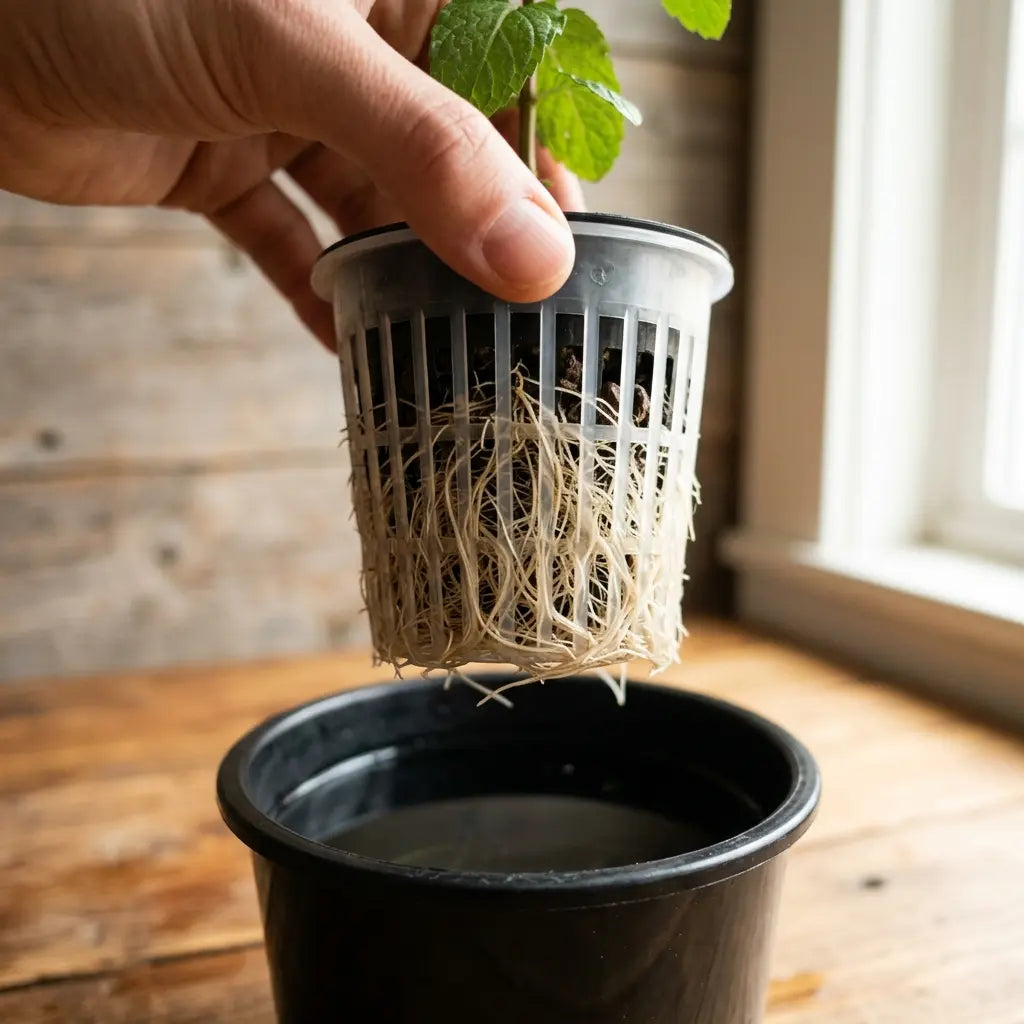
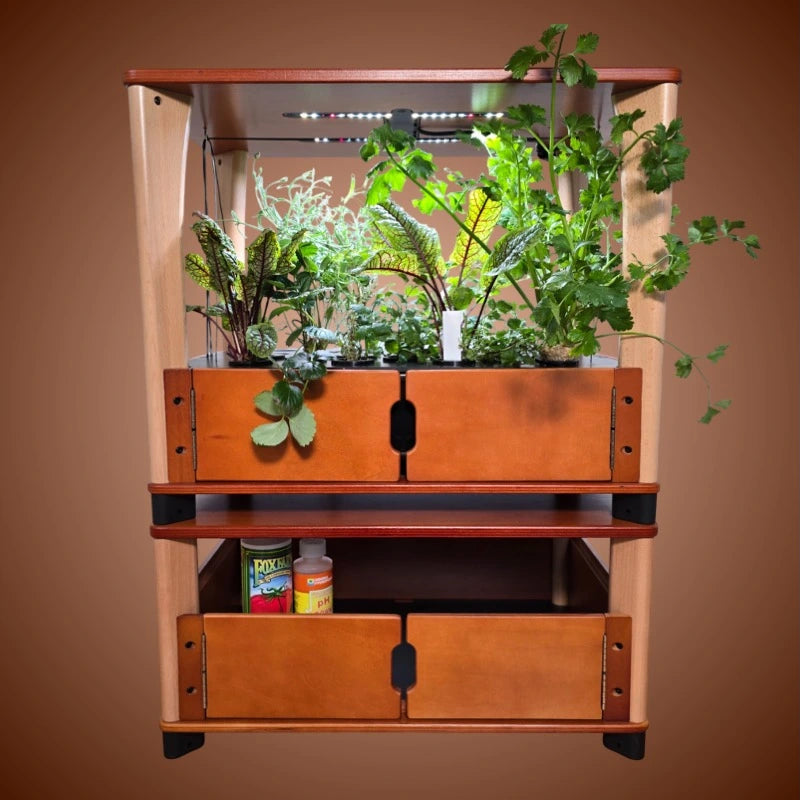
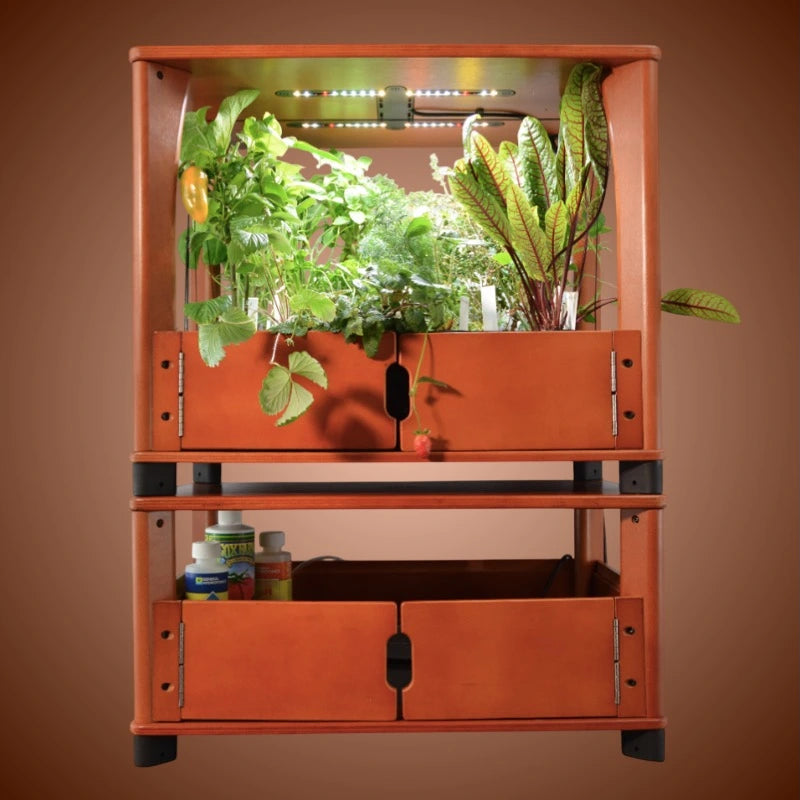
An individual net pot does exactly this. Each mint plant grows in its own small, enclosed growing medium with mesh walls, physically separated from every other plant's growing space in the system.
The Aquager Net Pots hold each mint plant in its own contained cell, so a rhizome that would normally travel a foot or more through open garden soil instead reaches the mesh wall of its own pot and stops.
This is a genuinely different situation from a container sitting on open ground outdoors, where a rhizome can occasionally still escape through a drainage hole or over a low rim. A net pot suspended in a hydroponic reservoir has no soil contact at all beyond its own enclosed growing medium.

Aquager does not currently sell mint seed directly, so growing mint this way means starting from a cutting or seed sourced elsewhere. The containment principle works the same regardless of where the starting plant material comes from.
This also means a hydroponic system with multiple net pots can safely host several mint varieties side by side, something that would be a bad idea in an open garden bed where the varieties would eventually tangle together and cross-pollinate in flavor if not in genetics.
Unlike an outdoor buried-pot method, which still risks a rhizome eventually finding its way over the rim during a particularly vigorous growing season, a net pot suspended in a hydroponic reservoir has no soil path to escape through at all, above or below.
Meet the Four Mint Varieties
All four of these varieties share the same spreading growth habit and respond to containment the same way, but each brings a distinct flavor worth knowing before choosing which to grow first.
Spearmint
Spearmint is the mildest and most familiar mint flavor, the one most people associate with mint gum and classic mojitos. It is also one of the more vigorous spreaders, making containment especially worthwhile.
In the kitchen, spearmint's mild sweetness makes it the most versatile of the four, working equally well muddled into drinks, tossed into a fruit salad, or steeped for a simple herbal tea.
Peppermint
Peppermint has a sharper, more intense menthol flavor than spearmint, thanks to a higher concentration of menthol in its oils. It works well in tea and desserts where a stronger mint presence is wanted.
Peppermint tends to grow slightly more upright than spearmint, though it is every bit as capable of spreading through rhizomes if given open soil, so the same containment approach applies without exception.
Chocolate Mint
Chocolate mint is a peppermint variety with a genuinely noticeable cocoa undertone alongside its minty flavor, making it a popular choice for desserts and after-dinner drinks without needing any actual chocolate.
Its dark green leaves, sometimes with a faint reddish tint along the stems, also make it one of the more visually distinctive mints, which helps when multiple varieties are growing in pots side by side.
Apple Mint
Apple mint has fuzzy, rounded leaves and a softer, fruitier flavor than spearmint or peppermint. It tends to be slightly less aggressive as a spreader, though it still benefits from the same containment approach.
Apple mint pairs particularly well with fruit-based dishes and drinks where a more delicate mint presence is wanted rather than the sharper bite of peppermint.
Setting Up Mint for Containment
Give each mint variety its own dedicated net pot rather than combining varieties in one growing cell. This keeps flavors from cross-influencing each other and makes it obvious which variety is which when harvesting.
Starting from a rooted cutting rather than seed gets a contained mint pot productive faster, since mint cuttings typically root and establish within one to two weeks, while seed-started mint takes noticeably longer to reach a usable size.
Labeling each pot by variety, especially once chocolate mint, peppermint, and spearmint are all growing side by side, saves the guesswork of trying to identify a mint variety by leaf shape alone once several are established.
Trim mint regularly rather than letting it grow unchecked within its pot. Even contained mint benefits from frequent cutting, both to keep the plant productive and to prevent it from becoming a dense, woody tangle inside its own cell.
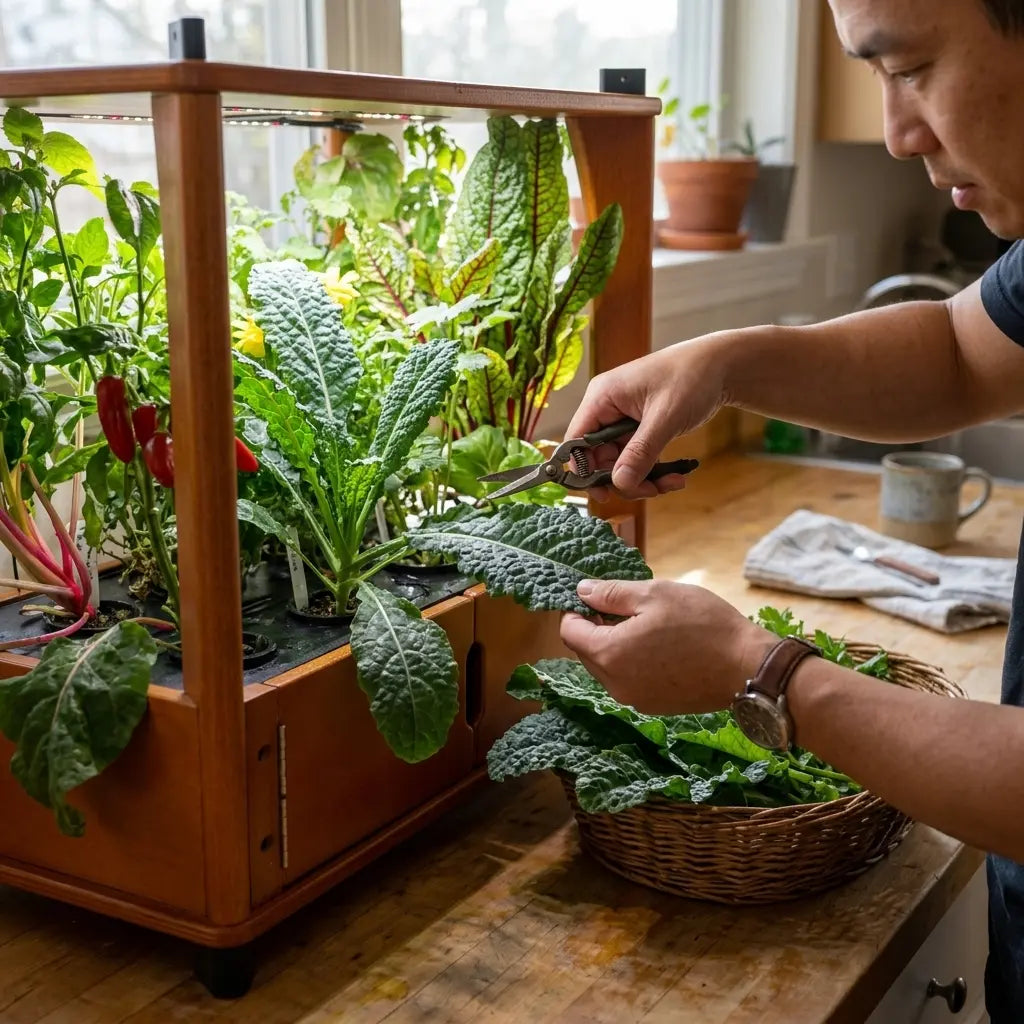
The Aquager Pruning Shears make quick, clean cuts easy, and a regular trim is really the only maintenance mint needs once it is safely contained in its own pot.
Positioning contained mint pots away from any open soil-based plants nearby, if the growing setup includes any, avoids the rare case of a stem drooping over the pot's edge and rooting where it touches soil outside the container.
Harvesting and Using Contained Mint
Harvest mint by pinching or cutting stems just above a leaf pair rather than stripping individual leaves off, which encourages the same kind of branching response pruning produces in other herbs.
Because contained mint stays productive with regular trimming rather than needing to be dug up and divided the way an outdoor patch eventually does, a well-maintained pot of mint can produce for a long stretch without ever needing to be replanted.
Fresh mint loses its brightest aroma within a day or two of cutting, similar to other tender herbs, so harvesting shortly before use captures noticeably more flavor than mint that has been sitting cut for several days.
Extra mint that cannot be used fresh right away holds up reasonably well when air-dried in small bunches, though like most herbs it trades some of its brightest aroma for a longer shelf life once dried.
Common Mistakes When Containing Mint
Letting a stem droop outside its net pot and touch a neighboring pot, growing medium, or open soil defeats the entire point of containment, since that is exactly the contact point mint needs to root somewhere new.
Skipping regular trims allows mint to grow into a dense, overgrown mass inside its own pot, which does not create an invasive problem but does reduce productivity and make the plant harder to harvest from cleanly.
Assuming one net pot can indefinitely support several different mint varieties without any management is optimistic. The varieties will compete inside a shared cell in ways that are avoided entirely by giving each its own pot.
Placing a contained mint pod directly beside an outdoor container garden, rather than a fully indoor hydroponic setup, reintroduces some of the same risk this whole guide is meant to avoid, since a stem that reaches over the rim onto nearby open soil behaves exactly as it would in a garden bed.
Growing Mint Indoors FAQ
Will mint really take over my whole hydroponic system?
Not if each variety has its own individual net pot. Mint's spreading roots need open soil to travel through, and a mesh-walled container removes that pathway entirely.
Can I grow multiple mint varieties in the same pot?
It is possible, but flavors and growth rates can blend and compete, so a separate pot per variety generally gives better results and easier harvesting.
How often should I trim contained mint?
Every one to two weeks keeps mint productive and prevents it from becoming an overgrown, woody tangle inside its pot.
Is mint difficult to grow for a beginner?
No, mint is actually one of the easier herbs to grow. Its reputation for being unmanageable is really about outdoor spreading, not indoor difficulty.
Where can I get a mint cutting or seed to start with?
A cutting from an existing mint plant roots easily in water within a week or two, and mint seed is also widely available from garden retailers if starting from seed is preferred.
Do all four mint varieties need the same care?
Yes, all four respond to the same containment approach and general care, though flavor and slightly different growth vigor are the main things that vary between them.
Can contained mint still flower and go to seed?
Yes, and flowering mint is still perfectly safe in a contained pot, though flavor tends to become slightly more bitter once a plant shifts energy toward flowering rather than leaf growth.
Growing Mint Without the Takeover
Mint's invasive reputation is real, but it is a reputation earned in open garden beds, not inside individually contained growing pods.
Our guide to growing herbs indoors year round covers the broader setup this containment approach fits into, and our list of the easiest herbs to grow indoors is a good next stop if mint is your first contained herb.
For more on why the net pot and cover system matters beyond just mint, our guide to hydroponic net pot covers explains the rest of what that same containment structure does for a growing system.
Anyone who has avoided mint because of its reputation is really avoiding an outdoor problem that does not carry over to a properly contained indoor setup. The flavor payoff, especially with a variety like chocolate mint or fresh spearmint, is hard to replicate with anything store-bought.

A single contained mint pod is genuinely low maintenance once it is set up correctly, and the only real habit worth building is a regular trim, not constant vigilance against a takeover that individual containment already prevents.
Author: Aquager · Published: July 7, 2026 · Updated: July 7, 2026












0 comments