
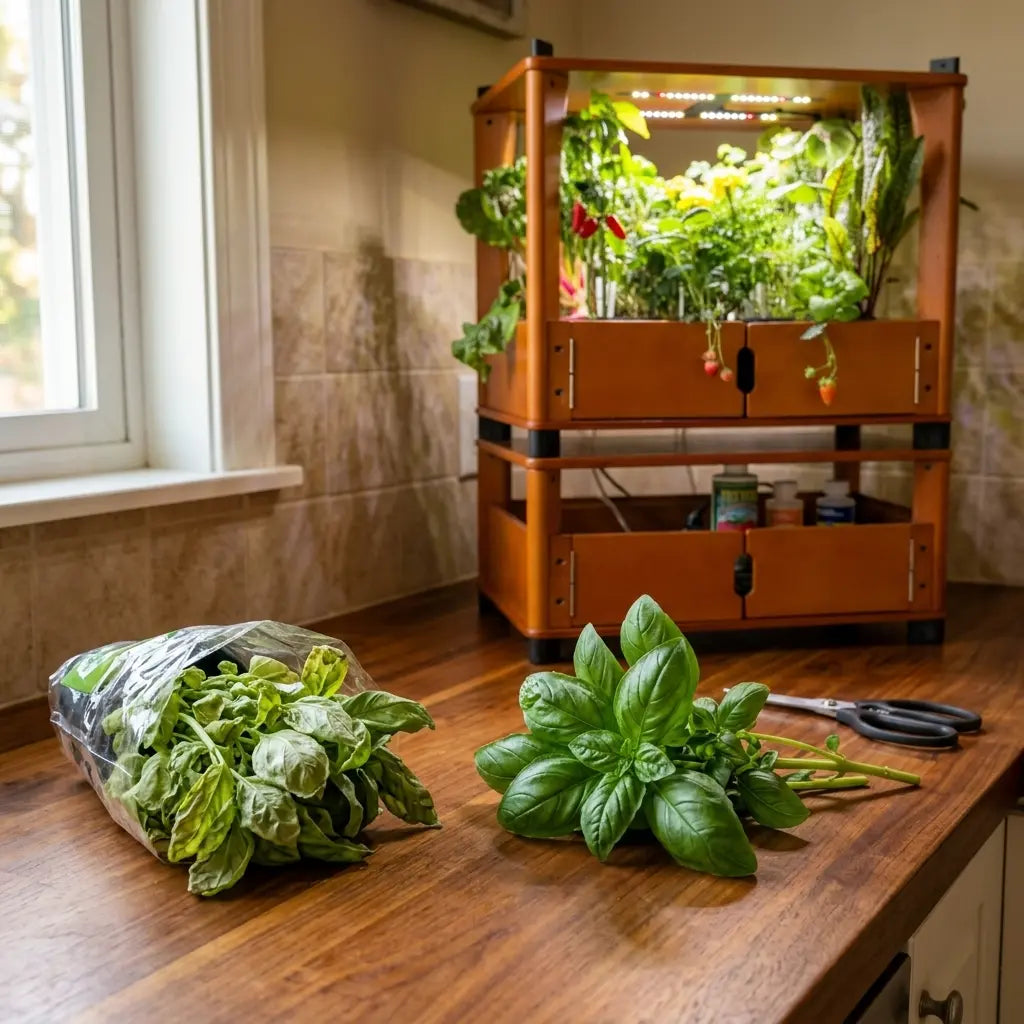
Fresh basil from the store rarely tastes like the basil growing on a countertop plant. Most people assume this is just about a few extra days of travel time, but the real gap is much larger and much faster than that.
Basil's signature flavor comes from volatile aromatic oils sitting in tiny glands on the surface of its leaves. These oils start breaking down the moment a leaf is cut, and by the time store-bought basil reaches a shopper's kitchen, a large share of that flavor is already gone.
This post covers the science behind why that happens, what actually occurs to basil between harvest and the store shelf, and a simple blind taste test anyone can run at home to see, or rather taste, the difference for themselves.
None of this requires taking anyone's word for it. The whole point of the taste test later in this guide is that the claim can be checked directly, with two basil samples and about ten minutes.
The Science: Why Basil's Flavor Fades So Fast
Basil's flavor and aroma come from volatile compounds like linalool and eugenol, stored in small oil glands on the leaf surface. These compounds are called volatile because they evaporate readily at room temperature, which is exactly what gives basil its strong smell when a leaf is bruised or torn.
That same volatility is what works against basil after harvest. Once a stem is cut, the plant can no longer replenish those oils, so every hour that passes is an hour of net loss rather than renewal.
Research on post-harvest herb quality has found that basil can lose somewhere between 40 and 70 percent of its volatile oil content by the time it reaches a shopper, depending on how long the supply chain takes and how the basil was handled along the way.
Three factors accelerate this loss more than anything else: heat, light exposure, and physical bruising. Each of these speeds up the rate at which oil molecules escape from the leaf surface into the surrounding air, which is why basil handled roughly during harvest and packing tends to taste flatter even when the timeline is otherwise similar.
Oxidation adds a second layer to the problem. Once cut, basil leaves are also exposed to oxygen in a way they were not while still attached to a living plant, and some of the same compounds responsible for basil's aroma react with that oxygen and break down into less flavorful byproducts over time.
What Happens to Basil Between Harvest and the Store Shelf
Commercial basil typically travels through several stages before reaching a store shelf: harvest, initial cooling, packing, transport, distribution center storage, and finally the store's own shelf life before purchase.
Each of those stages adds time, and basil is unusually sensitive to that added time compared to sturdier herbs like rosemary or thyme, since its oil glands sit closer to the leaf surface and its leaf tissue is thinner and more delicate.
Refrigeration, which helps most produce, is actually a mixed bag for basil specifically. Cold temperatures slow some spoilage but can also cause chilling injury in basil, leading to dark spots and accelerated oil breakdown rather than preserving flavor the way it does for hardier greens.
A rough timeline for commercially grown basil might look like same-day harvest and initial cooling, one to two days in transport to a distribution center, another day or two before it reaches a store shelf, and then however long it sits in the store and in a shopper's refrigerator before use. Even a relatively efficient supply chain often adds up to five or more days between cutting and cooking.
Bruising during handling compounds all of this. Basil leaves are thin and delicate, and the same packing and shipping process that works fine for sturdier produce can crush or tear basil leaves, rupturing oil glands early and releasing their contents before the basil is ever used.
Hydroponic Basil vs Store-Bought: What Actually Changes
The core difference between hydroponic basil and store-bought basil is not really about growing method. It is about harvest-to-plate time, and hydroponic countertop growing happens to compress that time to almost nothing.
| Factor | Store-Bought Basil | Home-Grown Hydroponic Basil |
|---|---|---|
| Harvest to use | Several days to over a week | Minutes |
| Cold chain exposure | Yes, often multiple times | None |
| Volatile oil retention | Often 30 to 60 percent remaining | Close to 100 percent |
| Variety selection | Usually one generic type | Genovese, Thai, lemon, holy, and more |
Growing a specific variety bred for flavor intensity, like Aquager's Genovese Aroma basil, adds another layer on top of the freshness advantage, since Genovese basil is specifically selected for a strong, classic basil oil profile rather than shelf stability.
Commercial basil growers, understandably, often prioritize traits that survive shipping well over traits that maximize flavor intensity, since a basil crop that wilts or bruises easily in transit is a bigger business problem for them than a slightly milder aroma. A home grower does not have to make that trade-off at all.

Why This Difference Actually Matters in Cooking
Basil's flavor loss is not evenly distributed across every use. Dishes where basil is cooked for a long time, like a simmered tomato sauce, hide flavor loss reasonably well since the basil was never going to taste sharp and bright either way.
Dishes that showcase raw or barely cooked basil are where the difference becomes obvious. Fresh pesto, a caprese salad, or basil torn over a finished dish right before serving all rely on that bright, aromatic oil content being intact, which is exactly what degrades fastest after harvest.
This is also why chefs and home cooks who care most about basil flavor tend to be the ones most enthusiastic about growing their own, since the payoff shows up specifically in the dishes where basil is doing the most work.
Is This Really Just Marketing, or Is There Something to It
It is a fair question to ask whether "fresher tastes better" is just an obvious, unfalsifiable claim rather than something worth actually testing. Plenty of freshness claims in food marketing do not hold up to scrutiny.
Basil's case is different because the mechanism is specific and measurable rather than vague. Volatile oil content can be measured directly, and the 40 to 70 percent decline figure comes from actual post-harvest quality research rather than a general assumption about fresh food being better.
The blind taste test in the next section exists precisely because a specific, testable claim should be testable at home, not just taken on faith. Anyone skeptical of the science can settle the question in ten minutes with two basil samples and a blindfolded tasting.
How to Run Your Own Blind Taste Test at Home
A blind taste test is a simple, convincing way to actually notice this difference rather than just reading about it. The setup takes only a few minutes and does not require any special equipment.
Cut a small amount of fresh basil right before the test, and set out an equivalent amount of store-bought basil that has been sitting for at least a couple of days. Chop both finely so neither is identifiable by leaf shape or size.
Place each sample on a separate, unmarked plate, labeled only with a letter or number that someone else assigns, so the person tasting has no way to know which is which. Taste each sample plain, then rinse with water between samples.
Rate each sample on aroma when crushed, intensity of flavor, and any bitterness or dullness noticed. Reveal which sample was which only after both have been rated, to avoid any bias creeping into the scoring beforehand.
For a more dramatic version of this test, try it with basil used in an actual dish rather than plain, such as a simple pesto or a caprese-style tomato and basil plate. The difference tends to be even easier to detect once the basil is paired with other ingredients rather than tasted completely on its own.
Running the test with a friend or family member scoring blind, rather than tasting and judging it alone, removes any unconscious bias from already knowing which sample is which, and tends to make for a more convincing result overall.
Growing Your Own for This Kind of Freshness
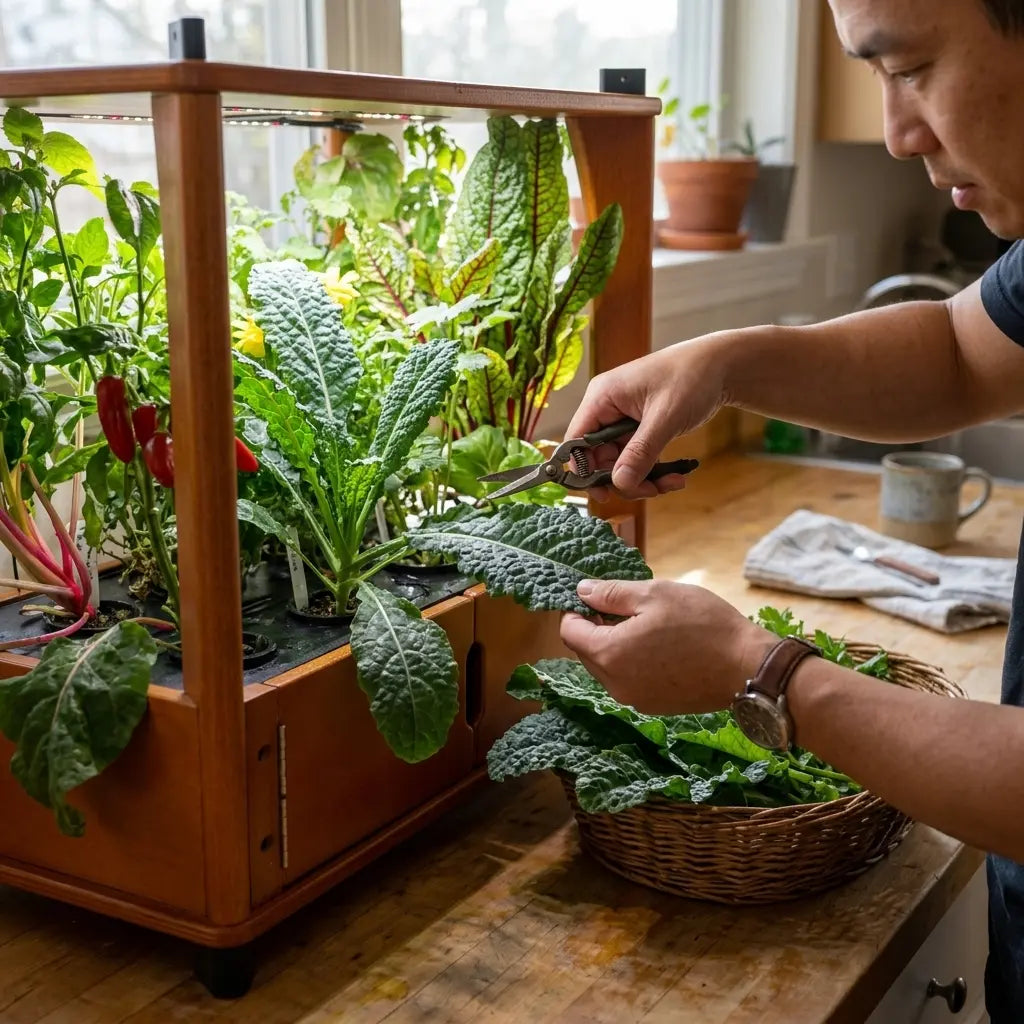
Getting basil that tastes like the science above describes really just comes down to closing the gap between harvest and use, which a countertop growing setup does automatically.
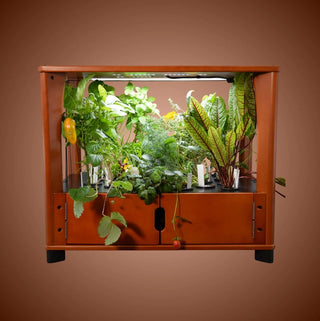
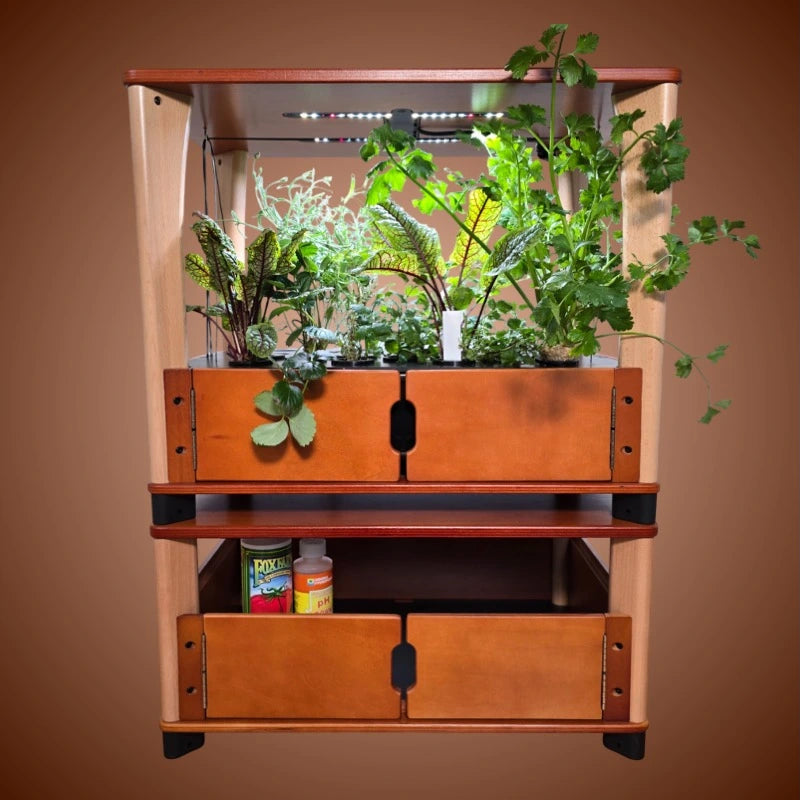
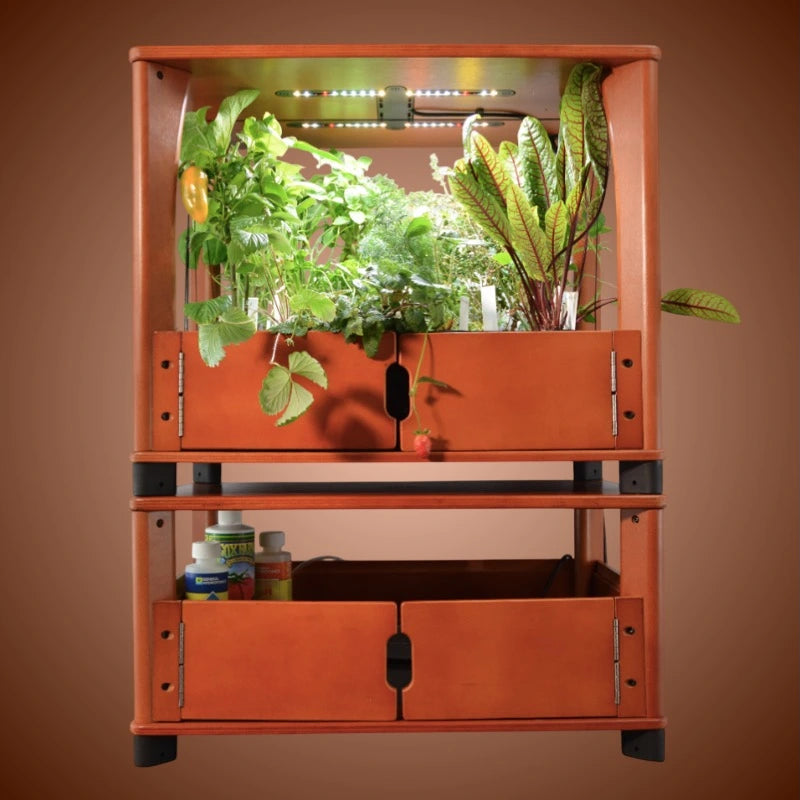
The Aquager Home Farm bundle keeps a steady supply of basil and other herbs within arm's reach, so a recipe calling for fresh basil can be harvested seconds before it is used rather than pulled from a bag that has already been sitting for days.
Growing multiple basil varieties side by side, rather than a single type, also makes it easier to match a variety's specific flavor profile to a specific dish, something that is rarely an option with the single generic basil type typically available at a grocery store.
Fresh Basil Flavor FAQ
Does basil really lose that much flavor after harvest?
Yes. Studies on post-harvest herb quality have found volatile oil losses in the 40 to 70 percent range by the time commercially grown basil reaches a shopper.
Why does refrigeration not fix the problem?
Basil is prone to chilling injury, so while cold storage slows some spoilage, it can also damage leaf tissue and accelerate the very oil breakdown it is meant to prevent.
Is dried basil ever a good substitute for fresh?
Dried basil retains a different, more muted flavor profile since drying removes most of the same volatile oils that make fresh basil taste bright and aromatic.
Which basil variety has the strongest flavor?
Genovese basil is generally considered the classic, most aromatic culinary variety, though Thai and holy basil offer distinct, equally strong flavor profiles suited to different dishes.
How long does harvested basil keep its flavor at home?
Flavor begins declining within hours of cutting, so using basil the same day it is harvested captures noticeably more of its aroma than basil stored for even a day or two.
Does this same flavor loss happen to other fresh herbs?
Yes, though the degree varies. Delicate herbs like cilantro and mint lose flavor almost as quickly as basil, while sturdier herbs like rosemary and thyme hold their oils longer after harvest.
Can I slow down flavor loss in cut basil at home?
Keeping cut basil at room temperature in a glass of water, rather than refrigerated in a bag, slows flavor loss somewhat, though nothing fully replaces using it the same day it was cut.
Tasting the Difference for Yourself
Basil's flavor is a race against time from the moment it is cut, and store-bought basil simply loses more of that race than basil harvested seconds before use.
Our complete guide to growing basil indoors covers everything needed to get a plant established, and our guide to making fresh pesto is a good next stop for putting freshly harvested basil to use right away.
For anyone curious just how much basil a small home setup can actually produce, our study on basil yield at home breaks down real numbers from a 24 to 96 plant system.
None of this means store-bought basil is unusable. It works perfectly well in long-simmered sauces and dishes where basil is a supporting flavor rather than the star. The difference matters most in the dishes where basil's aroma is the whole point.

The blind taste test described above takes ten minutes and settles the question better than any amount of reading about volatile oils. Most people who try it never go back to store-bought basil afterward.
Author: Aquager · Published: July 7, 2026 · Updated: July 7, 2026












0 comments