
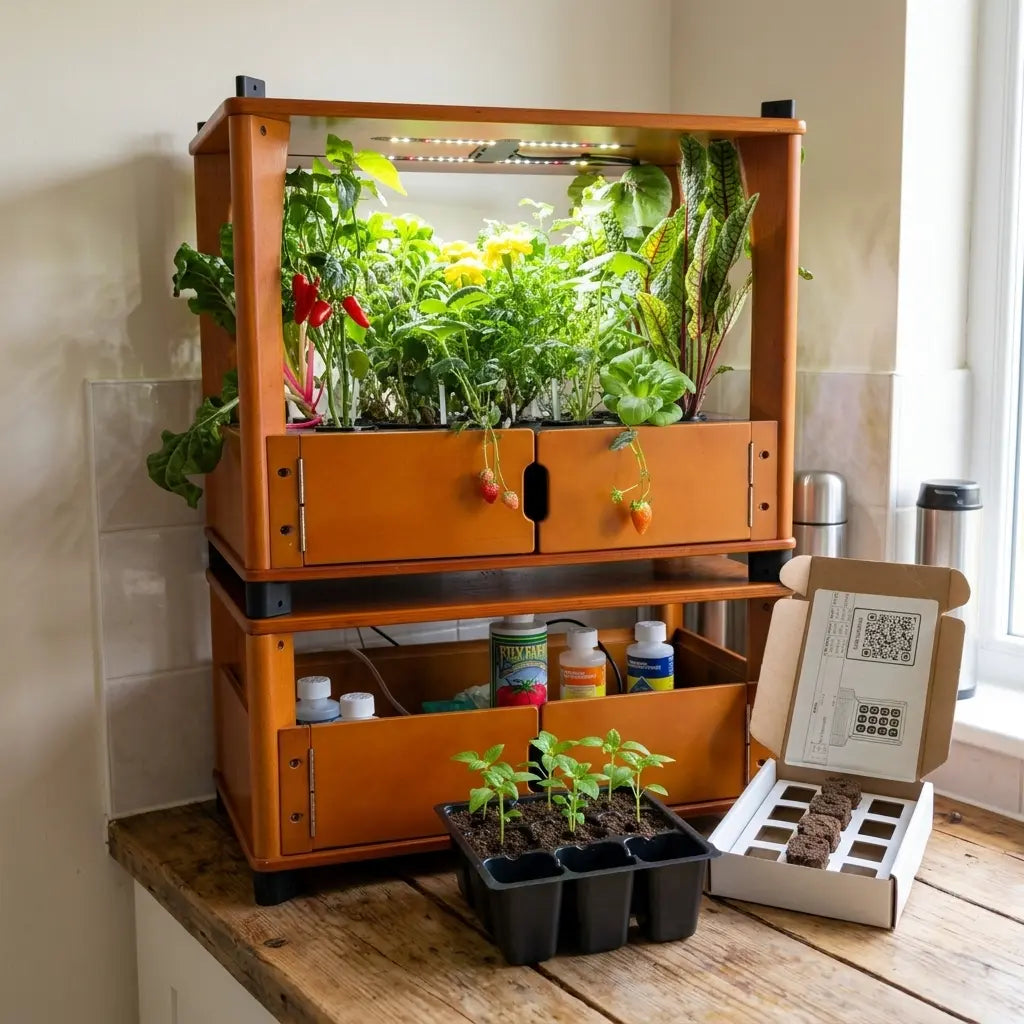
Every herb falls into one of two camps, and knowing which camp before you start saves a lot of wasted effort. Some herbs live their entire useful life in a single season and only ever come from seed. Others are woody perennials that root easily from a cutting if you already have access to one.
Neither path is better in general. The right one depends entirely on which herb you are growing and whether you have a mother plant to take a cutting from in the first place.
This guide sorts the common kitchen herbs into both camps, covers how to propagate rosemary and other woody herbs from a cutting, and explains why seed remains the more practical starting point for most home growers regardless of which camp a herb falls into.
The distinction matters most in the first week of trying. Attempting to root a cutting from a herb that genuinely cannot support it wastes time that could have gone toward a seed that was always going to work, and the reverse is just as true for someone who already has a mature rosemary plant sitting on a windowsill.
Here is the quick-reference version before getting into the detail on each herb:
| Herb | Best Method | Typical Time |
| Parsley, dill, chervil, fennel, borage | Seed only | 2-4 weeks to establish |
| Celery, watercress | Seed (store-bought regrowth is short-term only) | 2-4 weeks to establish |
| Rosemary, sage, thyme | Cutting if a mother plant is available, otherwise seed | 3-4 weeks to root |
| Oregano, marjoram | Cutting or seed | 3-4 weeks to root |
| Lemon balm, catnip | Cutting or seed | 2-3 weeks to root |
| Lavender | Cutting (slower) or seed | 4-6 weeks to root |
| Basil | Either, works well both ways | 2-3 weeks either method |
| Chives | Seed, or division of an existing clump | 2-4 weeks from seed |
Herbs That Only Come From Seed
Annual and biennial herbs complete their entire life cycle in one growing season and do not develop the kind of woody stem tissue that roots reliably from a cutting. Parsley, dill, chervil, fennel, celery, watercress, and borage all fall into this category.
Trying to root a cutting from any of these rarely works, and even on the rare occasion it does, the resulting plant has little time left in its life cycle to justify the effort compared to simply starting fresh from seed.
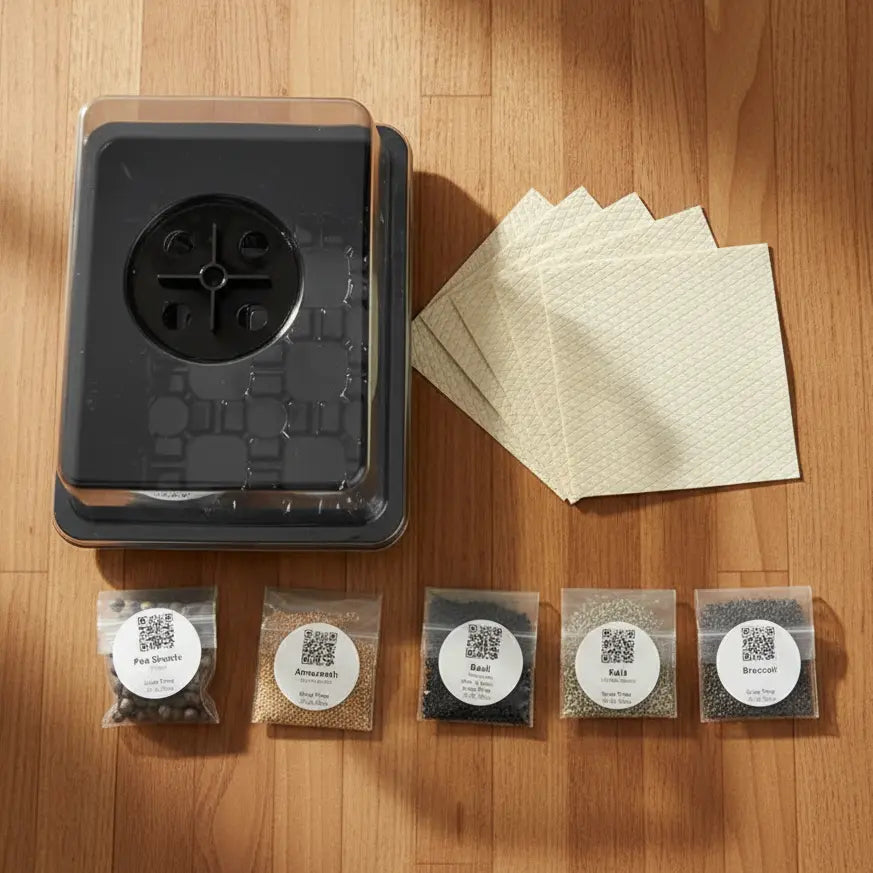
The Aquager Parsley (Giant of Italy) and Aquager Dill (Ella) both come pre-seeded in organic grow mediums, which is the only realistic starting point for either herb.
Celery and watercress deserve a specific mention, since both are sometimes regrown from a store-bought base in water, a different trick entirely from stem cutting propagation. That regrowth method works for a few weeks of small leaf production but never produces a plant as productive as one started properly from seed.
Why Some Herbs Root and Others Never Do
The difference comes down to stem tissue. Woody perennials build up a layer of lignin in their stems as they mature, and that same tissue that makes the stem sturdy also happens to hold the dormant cells capable of forming new roots when the stem is cut and given the right moisture and warmth.
Annuals and biennials never develop that woody structure. Their stems stay soft and herbaceous for their entire life cycle, which is efficient for a plant that only needs to survive one season, but it means a cut stem has nothing to fall back on. It either flowers and sets seed on schedule or it rots, with no in-between rooting stage available.
This is also why age matters within the cuttings camp itself. A cutting taken from new, still-soft spring growth on a rosemary plant roots faster than one taken from old, heavily lignified wood near the base, even though both come from the same plant.
Herbs That Propagate Easily From Cuttings
Woody perennial herbs and several of their aromatic relatives are a different story. Rosemary, sage, oregano, thyme, marjoram, lemon balm, catnip, and lavender all root from a healthy stem cutting given enough time and the right conditions.
This is where cuttings genuinely make sense: if a neighbor, friend, or family member already has a mature rosemary or sage plant, taking a cutting is often faster than waiting on a full germination cycle.
Lemon balm and catnip both root just as easily as their more aggressive aromatic cousins, often within two to three weeks in a glass of water. Oregano and marjoram, close relatives to each other, propagate almost identically, typically rooting in three to four weeks.
Lavender is the outlier in this group. It roots from cuttings, but noticeably more slowly and less reliably than rosemary or sage, and often benefits from a rooting hormone that the others do not strictly need.
How to Propagate Rosemary From a Cutting
Rosemary is the herb most people ask about first, and for good reason. A four to six inch cutting from a non-flowering stem, with the lower leaves stripped off, roots reliably in water or a moist growing medium within three to four weeks.
Keep the cutting in bright, indirect light and change the water every few days if rooting in water rather than soil or a grow medium. Once roots reach about an inch long, the cutting is ready to move into its permanent growing spot.

Sage, oregano, and thyme all follow a broadly similar process, though thyme in particular can take a bit longer to establish visible roots than rosemary does.
Rooting in a moist growing medium rather than water tends to produce a slightly sturdier root system, since the roots develop under conditions closer to where they will eventually grow, but water rooting remains popular for how easy it makes checking progress along the way.
Common Cutting Mistakes That Prevent Rooting
Taking a cutting from a flowering stem is the single most common reason a rosemary or sage cutting fails. A flowering stem has already shifted its energy toward reproduction rather than growth, and it roots far less reliably than a cutting taken from a non-flowering side shoot.
Leaving too many leaves on the cutting is a close second. Every leaf left below the waterline continues to lose moisture and eventually rots, which fouls the water and can kill the cutting before it ever has a chance to root. Stripping the lower two-thirds of leaves before placing the stem in water or medium solves this.
Letting the water go stagnant is the third common failure point. Water that sits unchanged for a week or more develops bacteria that attack the cut end directly, which is why changing the water every two to three days matters more than most people expect for something that looks this simple.
The One Herb That Does Neither
Chives are a genuine exception. As a clumping perennial, chives propagate best by dividing an established clump at the root rather than rooting a cut stem, which is a different technique from both seed starting and traditional cutting propagation.
For most home growers without an existing clump to divide, the Aquager Chives (Staro) grown from seed is the more practical starting point regardless.
Division works because chives grow as a cluster of individual bulbs rather than a single stem, so separating a portion of an established clump, roots and all, produces an instant, already-established new plant. It is a genuinely different technique from encouraging a cut stem to grow its own new roots from nothing.
Why Seed Still Wins for Most Home Growers
Cutting propagation sounds appealing, but it has a real prerequisite most people overlook: you need a healthy mother plant to take a cutting from in the first place. Without one, cuttings are not actually an option no matter how easily a given herb roots.
Seed starting has no such requirement. A pre-seeded basil or sage grow medium gets a new grower to a full plant without needing to know anyone who already grows one.

Basil is worth calling out specifically here, since it is one of the few herbs that genuinely works well both ways. It grows readily from seed and also roots easily from a cutting placed in water, which makes it a reasonable herb to practice cutting propagation on once you already have an established plant going.
Seed also has a practical advantage cuttings cannot match: a single seed packet or pre-seeded grow medium produces a genetically fresh, disease-free plant, while a cutting carries over anything the mother plant was already dealing with, pests, disease, or simply a weaker growth habit passed along unchanged.
Seed vs Cuttings FAQ
Can rosemary be grown from seed instead of a cutting?
Yes, though rosemary seed germinates slowly and less reliably than a cutting from an established plant. Most experienced growers prefer cuttings for rosemary specifically when a mother plant is available.
Note that pre-seeded rosemary products, like Aquager's, use professionally sourced seed selected for reliable germination, which addresses the main reason home gardeners avoid growing rosemary from seed on their own.
Why can't herbs like parsley or dill be grown from cuttings?
As annuals and biennials, they lack the woody stem tissue that roots reliably, and their short life cycle leaves little time to benefit from the slower rooting process even when it partially works.
How long does it take to root a rosemary cutting?
About three to four weeks in water or a moist growing medium, kept in bright, indirect light.
Is basil grown from seed or cuttings?
Either works well. Basil germinates readily from seed and also roots easily from a cutting placed in water, making it one of the few herbs that genuinely belongs in both categories.
What is the fastest way to start a herb garden with no existing plants to take cuttings from?
Starting from seed. A pre-seeded grow medium removes the need for a mother plant entirely, which matters for any of the perennial herbs that would otherwise require a cutting.
Do chives propagate the same way as rosemary or sage?
No. Chives propagate by dividing an established clump at the root rather than rooting a cut stem, a distinct technique from the cutting method used for rosemary and sage.
Why did my rosemary cutting turn black and rot instead of rooting?
This almost always traces back to a flowering stem, too many leaves left below the waterline, or water that was not changed often enough. Starting over with a non-flowering side shoot, stripped of its lower leaves, and changing the water every two to three days resolves it in most cases.
Can you speed up rooting with a rooting hormone?
Yes, particularly for lavender, which roots more slowly and less consistently than rosemary or sage. A rooting hormone is optional for the easier woody herbs but often worth using on lavender specifically.
Choosing the Right Starting Point
The decision comes down to two questions: does the herb you want actually root from a cutting, and do you have access to a plant to take one from. If either answer is no, seed is not a fallback option, it is simply the correct starting point.
Even for herbs that root well from cuttings, seed remains the more accessible path for most home growers, since it does not depend on knowing someone with an established plant already growing.
A practical way to decide is to ask which constraint applies to you right now. If you have a friend, neighbor, or family member with a mature rosemary, sage, or thyme plant, a cutting is usually the faster route to a full-size herb. If you don't, or if the herb you want is an annual like parsley, dill, or basil grown purely for salad-sized leaves quickly, seed is the only sensible answer.
For more on getting any of these herbs from seed to first harvest, our full grow time catalog covers grow times and conditions for every variety mentioned here, and our beginner's guide to setting up hydroponics is the right next stop for anyone starting from scratch.
Author: Aquager · Published: July 5, 2026 · Updated: July 5, 2026












0 comments