
Not every vegetable belongs on a beginner's first tray. Some are forgiving enough to survive a missed watering and a little neglect, while others demand a level of attention that only makes sense once the basics feel automatic.
This ranking sorts eight vegetables from easiest to most advanced, weighing three things: how forgiving the plant is, how long it takes to reach harvest, and how useful the harvest actually is in the kitchen once it arrives.
None of these require outdoor space. A grow light and a small indoor setup are enough to grow all eight, with the ranking itself doubling as a roadmap for which ones to start with and which to work up to.
The gap between the easiest and hardest vegetable here is bigger than most rankings admit. Arugula and peppers can technically live in the same 24-plant farm at the same time, but treating them as equally difficult is exactly the kind of mistake that discourages a first-time grower before they get anywhere.
How This Ranking Works
Ease accounts for how much a vegetable tolerates inconsistent watering, temperature swings, or a missed check-in, since that forgiveness matters more to a first-time grower than any other factor.
Harvest time is the number of days from a pre-seeded grow medium to a usable first harvest. Faster vegetables build confidence early, while slower ones ask for more patience before any payoff.
Usefulness weighs how often the harvest actually gets used in real cooking, since a vegetable that is easy to grow but rarely eaten is a weaker choice than one that is slightly harder but ends up in dinner every week.
1. Arugula: The Easiest Starting Point
Arugula is the fastest vegetable on this list, typically ready in 40 days, and one of the most forgiving. It tolerates a wide range of light and temperature without bolting or losing flavor.
Its peppery, nutty leaves work in salads, on pizza, and as a sandwich topping, which means the harvest gets used immediately rather than sitting in a refrigerator drawer. The Aquager Arugula (Astro) is bred specifically for quick, slow-bolting growth, making it the easiest single vegetable to start with.
Arugula is also a reasonable choice for testing a new grow light setup, since its fast turnaround means a lighting mistake shows up and gets corrected within weeks rather than months.
2. Spinach: Fast and Nutrient-Dense
Spinach matches arugula's 40-day grow time and is nearly as forgiving, with a slow-bolting habit that holds up well even when conditions are not perfect.
It works raw in salads, blended into smoothies, or wilted into a quick saute, giving it more everyday versatility than arugula for anyone who cooks often. The Aquager Spinach (Space) variety is bred to resist bolting longer than standard spinach.
Growing spinach and arugula side by side is a common first pairing, since both finish in the same 40-day window and neither demands meaningfully different care from the other.
3. Bok Choy: Beginner-Friendly With Real Payoff
Bok choy takes about 50 days and tolerates both heat and cold better than most leafy greens on this list, staying slow to bolt across a wider range of conditions.
Its crisp stems and mild-sweet leaves show up in stir-fries, soups, and stews, making it one of the more genuinely useful vegetables here rather than a salad-only green. The Aquager Bok Choy (Little Shanghai) stays compact, which suits a smaller indoor tray well.
Bok choy's tolerance for both heat and cold makes it one of the more resilient choices on this entire list, not just among the beginner tier, which is why it consistently comes up as a first recommendation for new indoor growers.
4. Tatsoi: An Easy, Underrated Choice
Tatsoi reaches harvest in about 45 days and is genuinely cold-resistant, actually sweetening after cooler exposure rather than suffering from it.
Its buttery, mild leaves work raw in salads or quickly sauteed, and the spoon-shaped rosettes are attractive enough to double as a garnish. Tatsoi rarely gets the attention arugula or spinach do, but it belongs in the same easy tier for anyone willing to try something less familiar.
These four beginner vegetables share a common trait worth naming directly: all of them are cut-and-come-again crops, meaning a single planting can be harvested repeatedly over several weeks rather than pulled all at once. That makes the first month of growing noticeably more forgiving, since a slightly early or late harvest rarely ruins the plant.
5. Kale: Slower, but Worth the Wait
Kale takes about 60 days, a real step up from the first four vegetables, though it remains forgiving and cold-hardy once established.
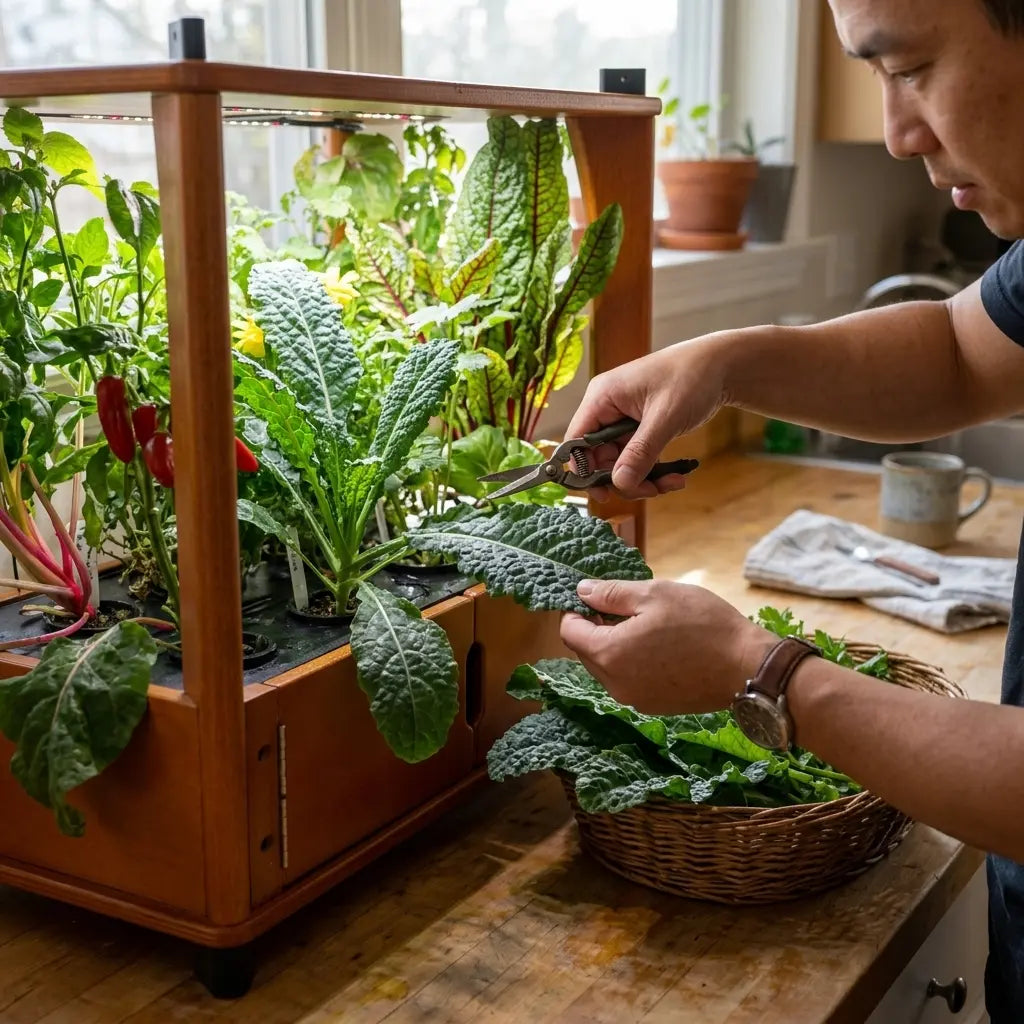
Its earthy, robust leaves hold up to smoothies, saute, soups, and kale chips, which makes it one of the more versatile vegetables on this list despite the longer wait. Both the Frise Rouge and Mamba varieties are equally reliable, with the choice mostly coming down to color and leaf texture preference.
6. Chard: Similar Timeline, Different Flavor
Chard also takes about 60 days and shares kale's cold tolerance and cut-and-come-again harvest style, allowing repeated picks from a single planting over several weeks.
Its mild, spinach-like flavor works in salads, pastas, and soups, and the colorful stems, red in the Firebird variety or golden in the Gold variety, add visual interest that kale does not. Chard and kale sit at roughly the same difficulty level, so the choice between them is mostly about taste.
Both kale and chard mark a useful transition point in this ranking. They are still forgiving enough for a beginner to handle, but the 60-day wait is a real preview of the patience the last two vegetables on this list actually demand.
7. Celery: Slow and More Demanding
Celery is where this ranking shifts into advanced territory, typically taking about 80 days, twice as long as the beginner tier. Aquager's cutting celery variety skips the blanching and fussy watering that stalk celery traditionally requires, but the longer timeline alone demands more patience than anything above it.
Its concentrated flavor works well in soups, stocks, and juicing, and the leafy tops are usable in ways supermarket celery rarely offers. The Aquager Celery (Cutting) variety is the more forgiving way into growing celery at all, but it is still a longer commitment than the six vegetables above it.
Unlike the beginner tier, celery does not offer much of a repeated cut-and-come-again harvest. Most of the payoff arrives at once, closer to a single larger harvest than the rolling picks arugula or chard provide, which is worth knowing before committing an entire 80-day grow slot to it.
8. Peppers: The Advanced Tier
Peppers top this ranking's difficulty scale for a specific reason beyond their 70 to 80 day grow time: indoor peppers need to be hand-pollinated, since there is no wind or bees to move pollen between flowers the way there would be outdoors.
That single extra step, brushing each flower briefly with a small brush, is what actually separates peppers from every other vegetable on this list rather than the grow time alone. A pollination brush makes the process quick once it becomes routine.
Missing this step is the single most common reason indoor peppers flower but never actually set fruit, which is worth knowing before assuming a pepper plant is simply not going to produce. A few seconds of hand-pollination per flower, done every couple of days while the plant is flowering, is usually all it takes.

The payoff is real. The Early Jalapeno and Bell Pepper varieties both take about 80 days, while the Lunchbox Mix is the fastest pepper at 70 days and the sweetest, making it a slightly gentler entry point into growing peppers than jalapeno or bell.
Anyone who has worked through the six vegetables above already has most of the skills peppers require. The only genuinely new step is pollination, which makes peppers less a test of general growing ability and more a single specific technique layered on top of skills already built.
Building a Tray That Spans the Ranking
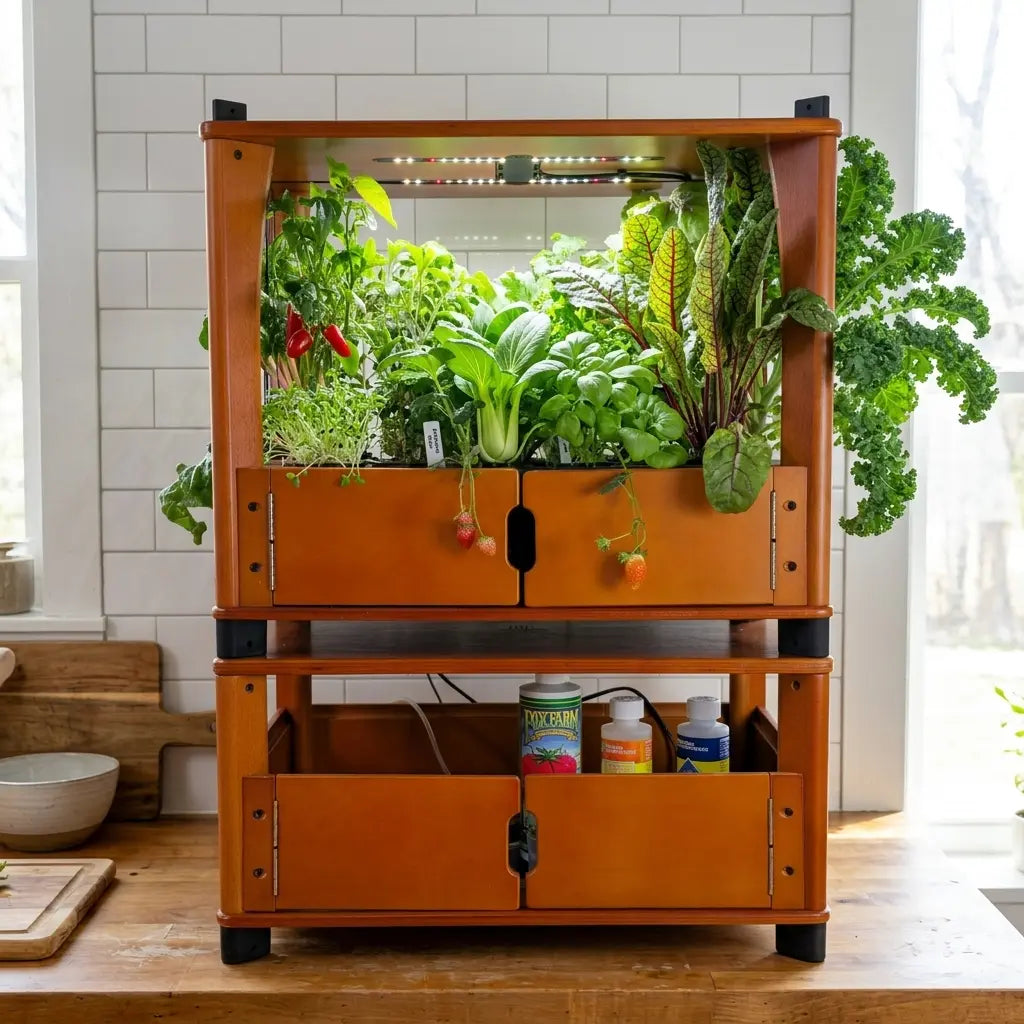
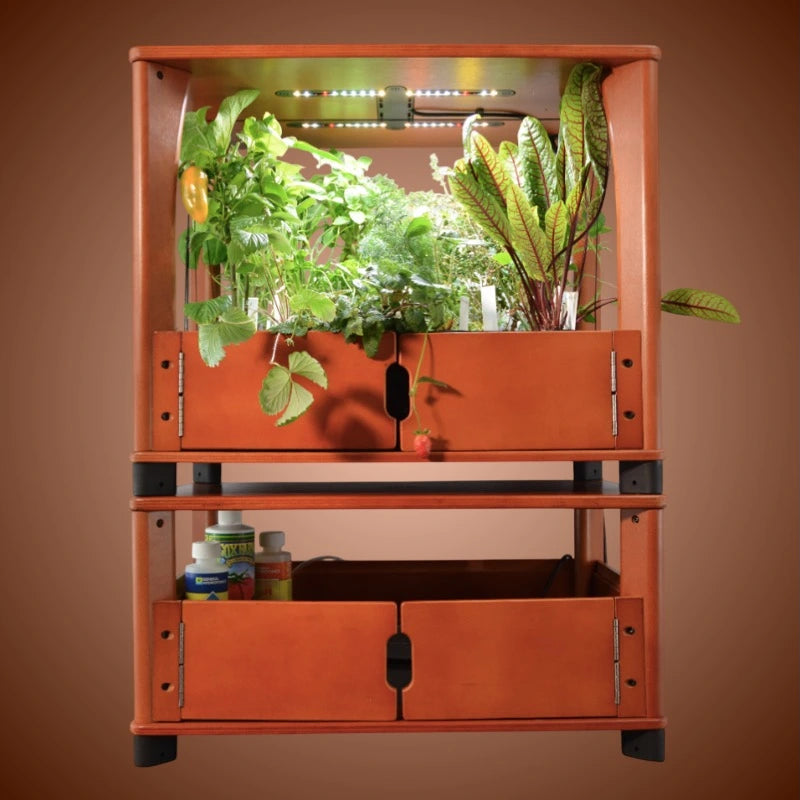
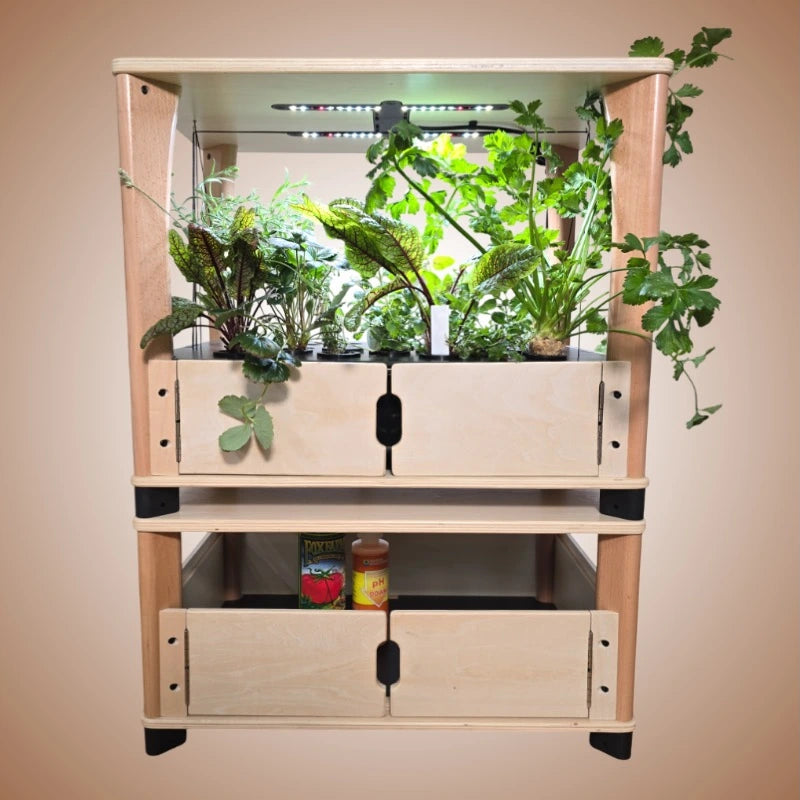
A single Aquager Home Farm runs 24 plants at once, enough room to mix vegetables from several tiers of this ranking in the same setup. Pairing a fast arugula or spinach planting with a slower kale or celery means an early harvest while the patient vegetables work in the background.
Full spectrum LED grow lights built into the farm remove one variable entirely, since every vegetable on this list gets consistent light regardless of a window's direction or the season outside.
If you are new to indoor growing altogether, our beginner's guide to setting up hydroponics covers the basics before ranking difficulty even becomes a factor, and our full grow time catalog lists exact timelines for every variety mentioned here.
Best Indoor Vegetables FAQ
What is the easiest vegetable to grow indoors under lights?
Arugula, ready in about 40 days and tolerant of a wide range of conditions without bolting or losing flavor.
Why are peppers considered the most advanced vegetable to grow indoors?
Peppers need hand-pollination indoors, since there is no wind or bees to move pollen between flowers, an extra step none of the other vegetables on this list require.
How much harvest time difference is there between the easiest and hardest vegetables here?
Arugula and spinach reach harvest in about 40 days, while celery and peppers take 70 to 80 days, roughly double the time.
Can I grow all eight of these vegetables in the same system?
Yes. A single Aquager Home Farm runs 24 plants at once, enough to mix several tiers of this ranking in one setup.
Do kale and chard need different care than arugula and spinach?
Not meaningfully. Both pairs are cold-tolerant and forgiving, the main difference is the longer 60-day grow time for kale and chard versus 40 days for arugula and spinach.
Is celery worth growing given how long it takes?
Yes, for the flavor advantage alone. Aquager's cutting celery variety is more forgiving than traditional stalk celery, and the concentrated flavor and usable leafy tops make the wait worthwhile for soups and stocks.
What vegetable should I plant first if I have never grown anything indoors?
Arugula or spinach, since both finish in about 40 days and tolerate a wide range of light and watering conditions without major consequences.
Does a grow light matter more for the harder vegetables on this list?
Consistent light matters across the whole ranking, but slower vegetables like celery and peppers have more time for a lighting inconsistency to compound into a real problem, which makes reliable light more important the further down this list you go.
Start Easy, Grow Into the Rest
This ranking is really a roadmap. Starting with arugula or spinach builds the habits that make bok choy, tatsoi, kale, and chard straightforward, and those habits are exactly what makes celery and peppers approachable rather than intimidating once you get there.
Working through all eight in order also builds a genuinely varied kitchen garden rather than a single crop repeated on a loop. By the time peppers are producing, there is already a rotation of faster greens cycling through the rest of the farm, which is a more useful outcome than mastering one vegetable in isolation.

None of these eight vegetables require anything more than a grow light and a small indoor setup, and the same Aquager Home Farm handles the entire ranking from the fastest arugula to the most advanced pepper.
Author: Aquager · Published: July 5, 2026 · Updated: July 5, 2026












0 comments