
There’s a specific feeling that arrives at Labor Day weekend. It’s not quite nostalgia — more like awareness. The tomatoes are at their peak. The corn is exactly right. The days are still long enough for a proper cookout, and there’s something in the air that says this is the last one like this until next summer.
That feeling is the reason Labor Day food always tastes better than it should. It’s also the reason it’s worth doing it right.
Six herbs. Six pairings. All of them grown at home, harvested the day you need them. Here’s how to make this weekend’s cookout the one people talk about in October.
1. Cilantro — Grilled Corn and Guacamole
There is no dish on a summer cookout table that cilantro doesn’t improve. It’s the herb that makes guacamole taste like guacamole instead of mashed avocado. It’s the thing you pile onto elote that makes it actually fun to eat. And because it’s punchy and bright, a small amount of freshly harvested cilantro transforms dishes that would otherwise feel heavy in the August heat.
The pairing: Strip fresh cilantro leaves and the tender stems — they have as much flavor as the leaves — and mix directly into guacamole at the last minute. For grilled corn, make a quick crema, brush it on the hot cobs, and scatter cilantro leaves generously before the lime juice goes on.
Why it works: Cilantro has a sharp, citrus-forward flavor that cuts through fat and richness. On guacamole, it provides the contrast that makes each bite interesting instead of monotonous.
The growing note: Cilantro bolts in heat — which is why it’s one of the most frustrating herbs to grow outdoors in summer. In a climate-controlled hydroponic farm, it stays in the vegetative stage longer and produces consistently. See our guide on growing cilantro indoors without it bolting.
→ Cilantro Seeds — $7.99
2. Basil — Caprese and Flatbreads
Basil is the herb that makes everything around it smell like summer. Pulled from the plant and torn — never cut with a knife, which bruises the cells and turns the edges brown — fresh basil has an intensity that no dried or pre-packaged version can approach.
The pairing: A classic caprese with peak-season tomatoes, fresh mozzarella, and torn basil needs nothing beyond good olive oil and flaked salt. For flatbreads off the grill, scatter whole basil leaves immediately after they come off the heat — the residual warmth releases the essential oils without wilting the leaves.
Why it works: Basil’s aromatic oils are volatile — they dissipate within minutes of being cut. Herbs harvested five minutes before serving smell dramatically more intense than herbs harvested an hour earlier, and exponentially more than anything shipped in a plastic sleeve from a grocery store.
The growing note: Basil is the one herb that genuinely needs consistent warmth and light to produce well. The hydroponic farm’s full-spectrum lighting and nutrient delivery makes it the most productive basil you’ve ever grown. For the full guide, see: How to Grow Basil Indoors — Complete Guide (2026).
→ Basil Genovese Seeds — $7.99
3. Dill — Potato Salad and Salmon Burgers
Dill is the most underused fresh herb at summer cookouts — probably because people only know it as the dried version in a jar, which bears almost no resemblance to fresh dill. Fresh dill is bright, anise-adjacent, and has a clean flavor that works differently from any other herb in this list.
The pairing: Add chopped fresh dill to potato salad at the last minute before serving — it provides the herbal freshness that makes mayo-based salads taste lighter and more interesting. For salmon burgers or grilled salmon, scatter dill fronds directly on the cooked fish before plating.
Why it works: Dill’s feathery texture and delicate flavor means it gets completely overwhelmed when dried. Fresh dill has an entirely different character — bright, herbal, and slightly sweet — that makes it the right herb for lighter summer proteins and creamy preparations.
The growing note: Dill grows quickly on the farm and can be harvested within 3 to 4 weeks. Harvest fronds regularly to prevent bolting and encourage continued growth.
→ Dill (Ella) Seeds — $7.99
4. Oregano — Marinades and Kebabs
Dried oregano is fine. Fresh oregano is a completely different ingredient. It’s more resinous, more peppery, and more aromatic than the dried version — and it has the structural integrity to handle actual heat, which most delicate herbs don’t.
The pairing: A simple marinade of fresh oregano, olive oil, garlic, lemon zest, and black pepper works on chicken, lamb, and beef — especially kebabs, where the herbs get pressed against the surface of the meat and char slightly. Let the marinade sit for at least 30 minutes; the oregano oils penetrate the protein.
Why it works: Oregano’s high essential oil content — carvacrol and thymol — is heat-stable, which means oregano is one of the few fresh herbs that can go on the grill without losing its impact. It stands up to direct heat in a way that basil or dill cannot.
The growing note: Greek oregano is the most flavorful variety and grows well hydroponically. It’s a compact, easy plant that benefits from regular pinching to maintain bushy growth.
→ Oregano (Greek) Seeds — $7.99
5. Chives — Baked Potatoes and Everything Else
Chives are the herb that finishes things. They don’t anchor a dish — they complete it. A baked potato without chives is fine. A baked potato with fresh chives, sour cream, and flaked salt is something you’d order at a restaurant.
The pairing: Snip fresh chives directly onto baked potatoes, loaded potato skins, or potato wedges straight off the grill. They also work on corn on the cob alongside cilantro, on deviled eggs, and scattered across any dip or spread that needs a visual and flavor finish.
Why it works: Chives have a mild onion flavor that adds complexity without heat or heaviness. They’re the safe choice — the herb that almost everyone likes — which makes them the right finishing element for shared dishes at a cookout where you’re feeding multiple palates.
The growing note: Chives are one of the fastest herbs on the farm — 3 to 4 weeks to first harvest — and regrow quickly after cutting. One established plant produces enough for weekly use indefinitely.
→ Chives (Staro) Seeds — $7.99
6. Thyme — Grilled Chicken
Thyme is the savory backbone herb — the one that makes grilled chicken taste like it came from a restaurant and not a backyard. It’s subtle enough to work as a background flavor and distinctive enough that you’d miss it if it weren’t there.
The pairing: Mix fresh thyme leaves stripped from the stems with softened butter, garlic, and lemon zest. Rub this under the skin of a spatchcocked chicken before grilling, or press it onto bone-in thighs. The butter bastes the chicken as it cooks; the thyme infuses through the fat.
Why it works: Thyme has a woody, savory flavor that complements the caramelization of grilled chicken in a way that brighter herbs like basil or cilantro don’t. It’s the herb that reads as correct on poultry — deeply familiar and satisfying.
The growing note: Summer thyme grows quickly and handles the late-August heat well. It’s one of the easiest herbs on the farm and can be harvested continuously once established.
→ Thyme (Summer) Seeds — $7.99
Grow All Six at Home — Starting This Week
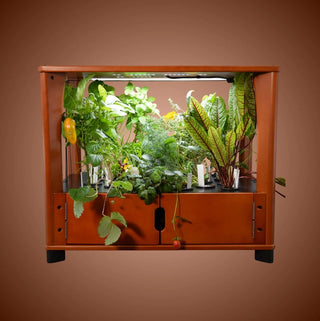
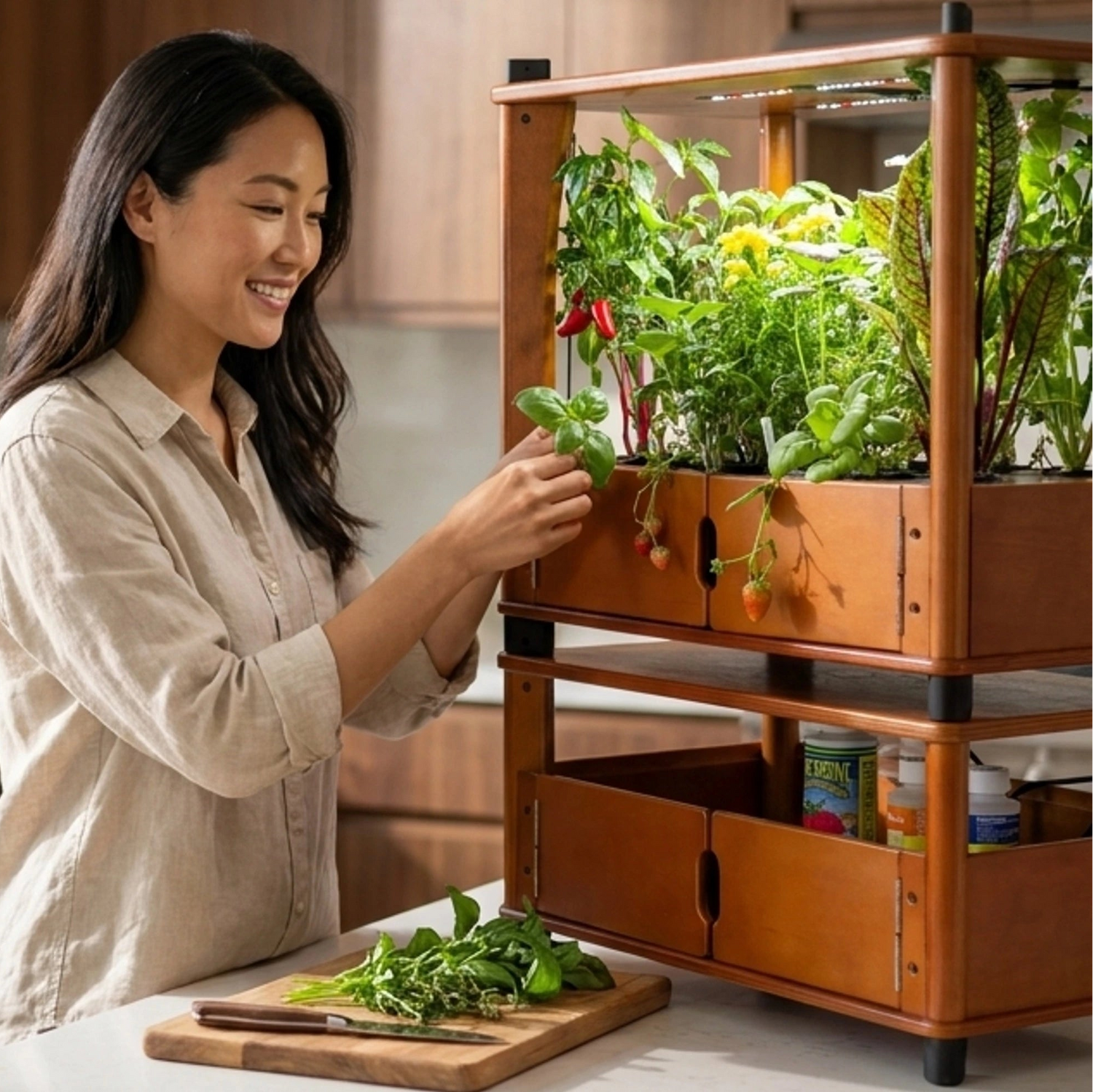
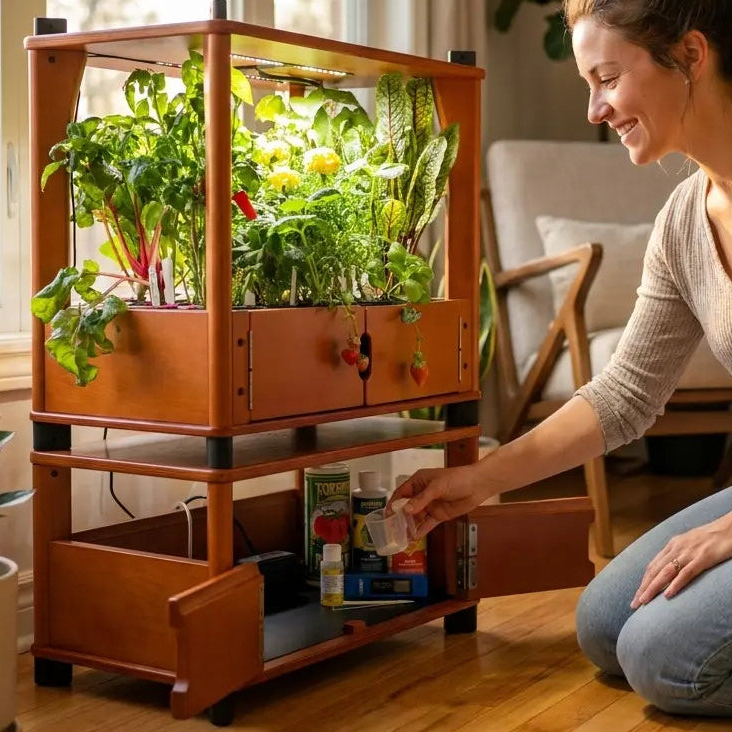
All six of these herbs grow simultaneously on the Aquager Hydroponic Home Farm — which holds 24 plants, so a six-herb setup fills a quarter of the capacity and leaves room to expand with more varieties.
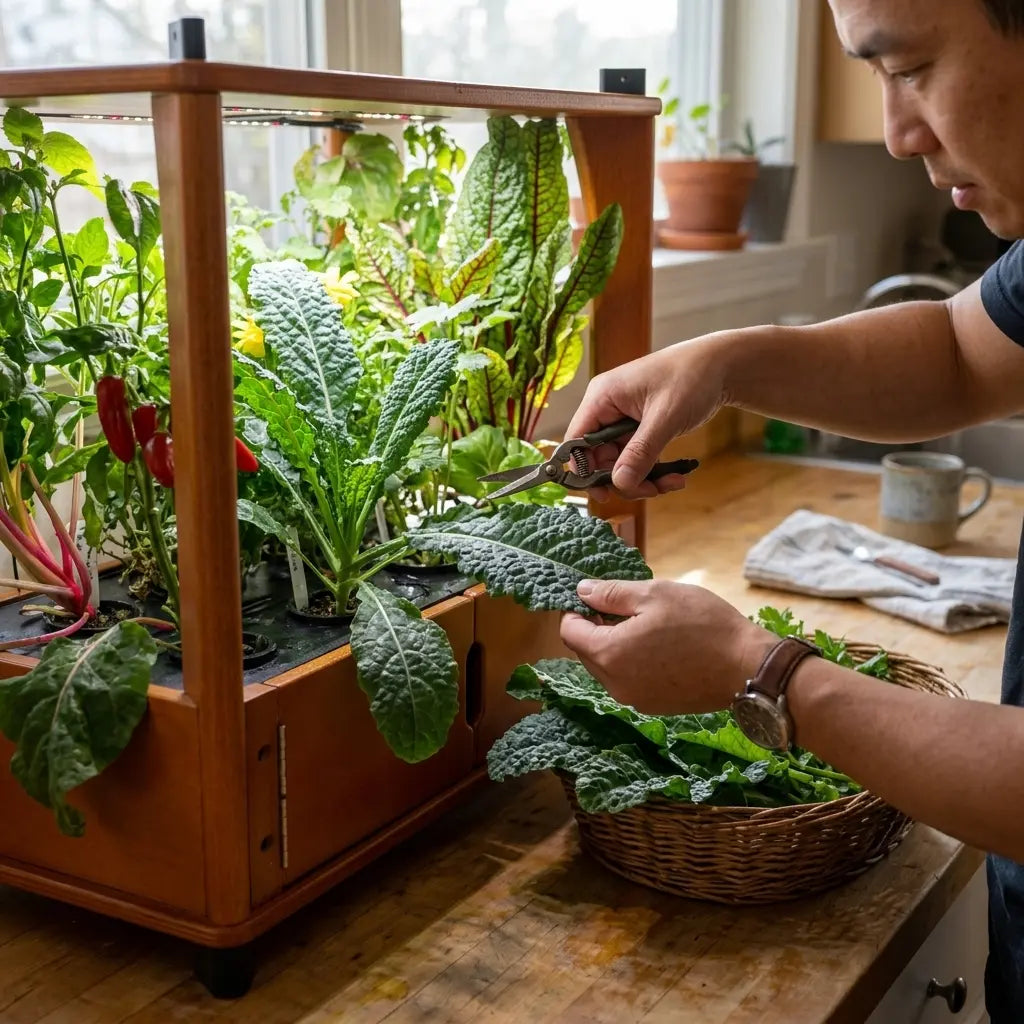
The farm grows herbs 30 to 50% faster than soil because the roots have direct, consistent access to nutrients. There’s no watering inconsistency, no soil pest pressure, and no outdoor seasonal dependency. It runs on a kitchen counter, year-round, in any home or apartment.
With Labor Day in the first weekend of September and the growing timeline of 3 to 6 weeks for these herbs, starting this week means having a fully operational fresh herb kitchen in time for the holiday — and for every meal through winter.
→ Aquager Home Farm — 24 Plants — $179.99
After Labor Day: Keep Growing All Fall
When the cookouts are over and the grill goes under its cover, the herbs don’t have to stop. The exact herbs that make summer cookouts great — thyme, oregano, basil, chives — are also the backbone of fall and winter cooking: roasted chicken, stuffing, pasta, braises, and soups.
The transition from summer cookout herbs to fall kitchen herbs is seamless on the Aquager farm. You don’t need to replant or rebuild anything — just shift what you’re harvesting and what you’re cooking.
For a complete guide to setting up a fall and winter indoor herb garden — including a Thanksgiving planting timeline for sage, rosemary, and parsley — read our post: Fall Indoor Herb Garden: A Complete Setup Guide.
Author: Aquager
Published: June 3, 2026
Updated: June 3, 2026












0 comments