
Fresh sage, thyme, and rosemary are the herbs that make fall and winter cooking taste like fall and winter, and they are also the ones that wilt fastest in the fridge. A small indoor herb garden on the kitchen counter keeps them fresh and within reach.
This guide shows exactly how to set up an indoor herb garden in five steps, from picking herbs to your first harvest. You will get a priced shopping list, real grow times for each herb, and a list of the mistakes that trip up most beginners.

What You Need for an Indoor Herb Garden
You do not need soil, a sunny window, or a green thumb. Here is the full list with current prices:
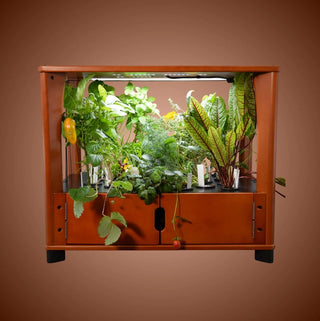
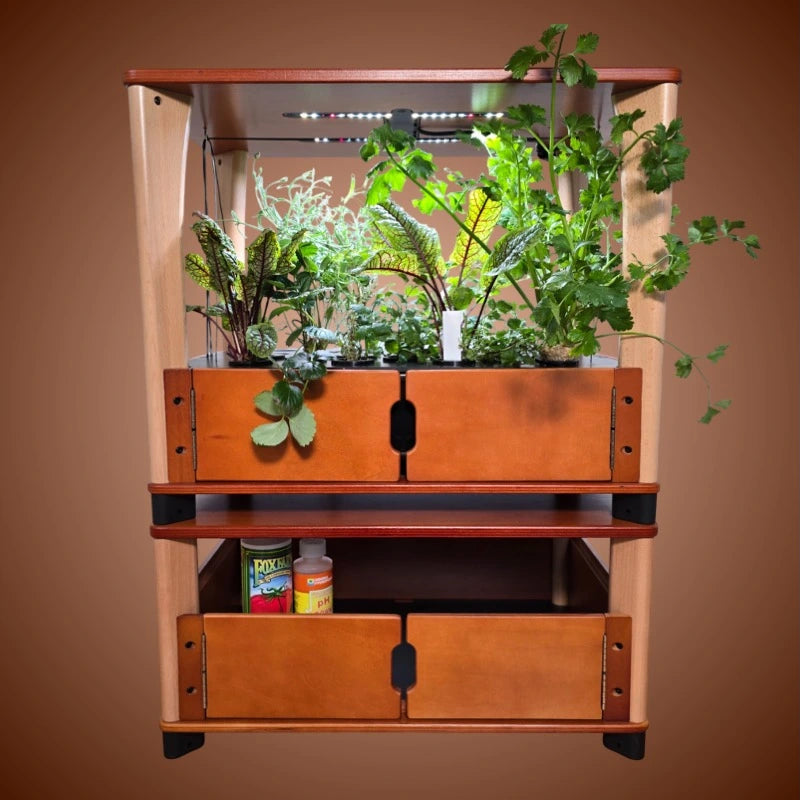
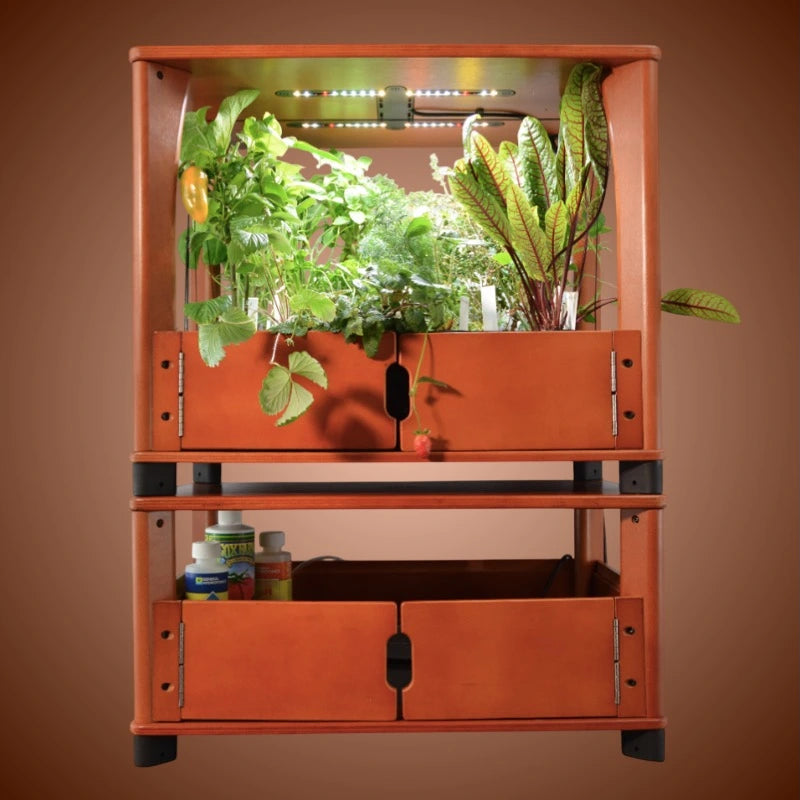
- Hydroponic home farm with built-in lights: the Chef’s Organic Set bundle starts at $199.99 and includes the lights, a pH kit, nutrients, and a starter mix of chard and basil plants.
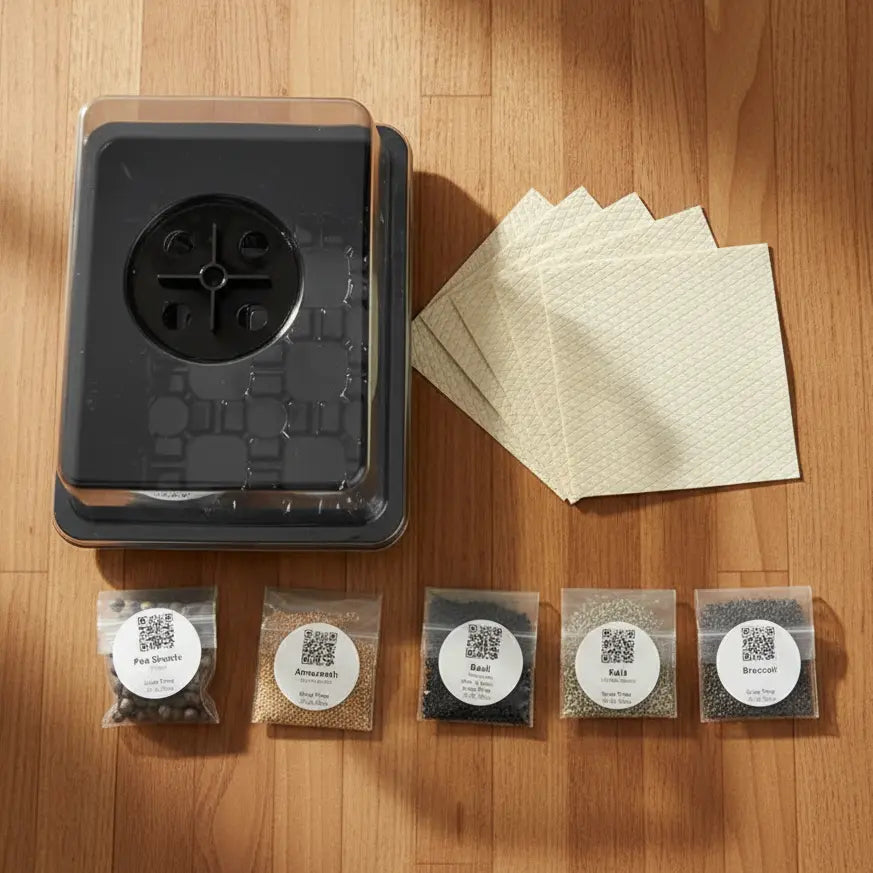
- Herb seeds: Sage, Rosemary, Thyme, Parsley, and Chives are $17.99 per pack. Each pack has 30 seeds and 12 grow mats, enough for 12 cups.
- Grow medium: Clay Pebbles are $9.99. One bag fills all 24 cups and the pebbles can be rinsed and reused.
- Extra cup covers: the farm ships with 10. If you seed more cups at once, add Net Pot Covers for $14.99.
- Harvest tool: Pruning Shears are $5.99.
For a full five-herb garden, the total comes to about $320.91 ($199.99 farm bundle, $89.95 for five seed packs, $9.99 clay pebbles, $14.99 covers, and $5.99 shears). If you start with three herbs, it drops to about $284.93. Nutrient refills are $9.99 when you need them: Hydroponic Nutrients.
The Step-by-Step Setup Process
1. Pick Herbs That Match Your Cooking
Start with the herbs you already buy every week. These five do well indoors in fall and winter, and each product page lists its grow time:
| Herb | Days to First Harvest | If Seeded October 10 | Best For |
|---|---|---|---|
| Chives | 50 | Nov 29 | Potatoes, eggs, soups |
| Thyme | 60 | Dec 9 | Roasts, stews, stocks |
| Parsley | 75 | Dec 24 | Gremolata, chimichurri, finishing |
| Sage | 90 | Jan 8 | Stuffing, brown butter |
| Rosemary | 90 | Jan 8 | Potatoes, bread, roast meats |
Planning for a holiday meal? Count back from the date. Sage and rosemary need about 90 days, so for Thanksgiving on November 26 they would have needed to be seeded in late August. Chives and thyme are the best picks for a late start.

2. Set Up the Farm and Fill the Reservoir
Assemble the farm, place it near an outlet, and fill the reservoir to the fill line. Mix in the nutrients following the directions on the label. Because the lights are built in, the farm can sit anywhere on the counter. It does not depend on window light.
3. Check and Adjust the Water pH
This is the step beginners skip, and it matters. Use the pH kit to test the water and aim for 5.5 to 6.5. Add pH Up or pH Down a few drops at a time and retest. A 2025 study abstract from the American Society for Horticultural Science found that parsley grew best near pH 5.5 and produced about 33% less fresh mass at pH 7.0.
If you want a deeper look at keeping a hydroponic garden healthy, read How to Grow Herbs Indoors Year-Round.
4. Fill the Cups, Soak the Mats, and Plant the Seeds
Fill each cup about five-sixths full with clay pebbles and set a grow mat on top. Use the dropper from your pH kit to soak the mat until it expands. Scatter the seeds on the damp mat and cover the cup. Check daily.
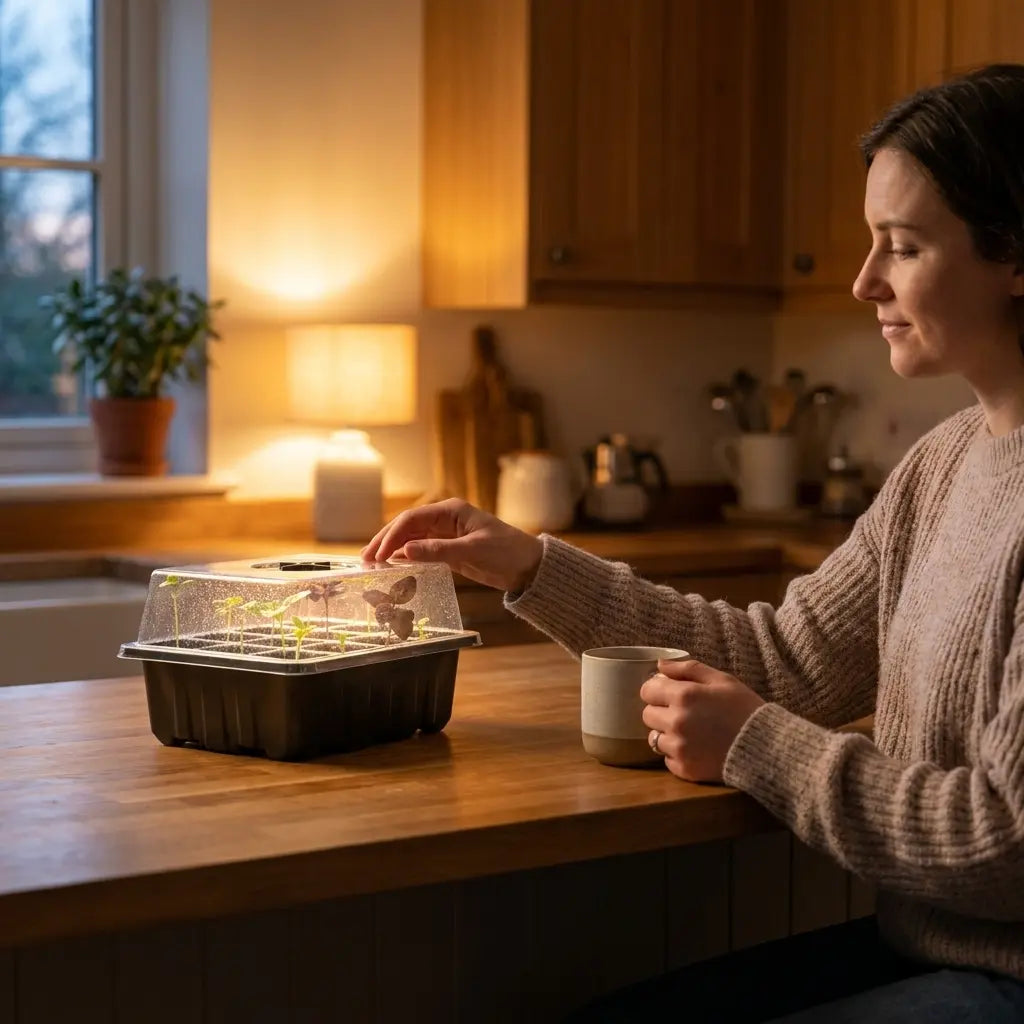
- Seeds sprout in 7 to 14 days. Remove the cover once you see seedlings.
- Keep newly seeded cups away from taller plants so the seedlings get enough direct light early on.
- Seeds grow right where they are planted, so there is no transplanting.
5. Harvest Little and Often
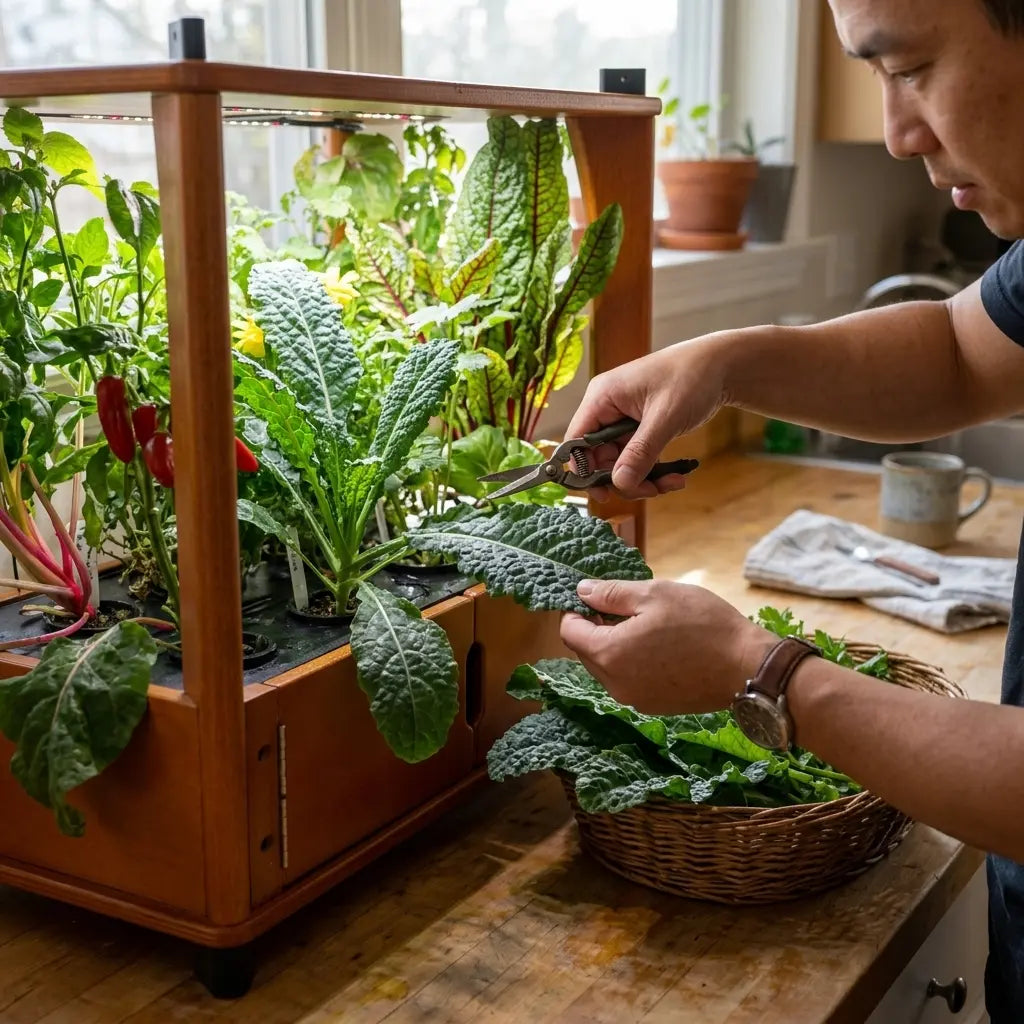
Once a plant is established, snip the outer leaves and stems with clean shears and leave the center to keep growing. Cutting just above a leaf node encourages a bushier plant. Top up the reservoir whenever the level drops and retest the pH every few days.

What to Expect in the First 90 Days
- Days 1 to 14: seeds sprout. Keep covers on until seedlings appear.
- Days 15 to 50: seedlings fill out. Chives are the first to be ready around day 50.
- Days 50 to 75: thyme and parsley reach first harvest.
- Day 90: sage and rosemary are ready, and the whole garden is in production.
Sage and rosemary are perennials, so they keep producing as they mature.
Common Indoor Herb Garden Mistakes
- Seeding more cups than you have covers. The farm ships with 10 covers, so add more before seeding all 12 cups of a pack.
- Skipping the pH check. Test the water each time you refill, not just on day one.
- Crowding new seedlings next to tall plants. Tall herbs shade small ones. Plant slow, tall herbs in the back.
- Letting the reservoir run low. Top it up before it gets close to empty.
- Cutting whole stems. Take the outer growth and leave the center.
Frequently Asked Questions
How do you set up an indoor herb garden?
Pick herbs you cook with, set up a hydroponic farm with built-in lights, fill the reservoir, and mix in nutrients. Adjust the water to pH 5.5 to 6.5, fill the cups with clay pebbles, soak a grow mat on top, scatter the seeds, and cover the cup. Most herbs sprout in 7 to 14 days.
What herbs grow best indoors in fall and winter?
Sage, rosemary, thyme, parsley, and chives all do well indoors under steady light. Chives are the fastest at about 50 days from seeding, thyme takes about 60, parsley about 75, and sage and rosemary about 90.
How long does it take to grow herbs indoors?
Seeds usually sprout in 7 to 14 days. First harvest depends on the herb: about 50 days for chives, 60 for thyme, 75 for parsley, and 90 for sage and rosemary. Harvest the outer leaves and the plants keep producing.
Do I need gardening experience to start?
No. The farm uses built-in lights and a water reservoir, so there is no soil to manage and no watering schedule to guess at. If you can fill a tank and follow a few simple steps, you can grow herbs at home.
Can I grow more than five herbs?
Yes. The farm has 24 plant positions, and each herb seed pack covers up to 12 cups, so you can split packs across the farm. Basil, dill, and oregano are popular additions. For basil, see our guide on how to grow basil indoors.
Your Kitchen Garden Starts With One Setup
Once the farm is running, fresh herbs are a few steps from the stove all winter. Seed the quick ones first, add the slow ones alongside, and keep harvesting. To see what a first month looks like, read How to Get the Most Out of Your Aquager Home Farm.
Author: Aquager Team · Published: June 3, 2026 · Updated: October 10, 2026 · Reviewed: October 10, 2026 (Phase 2 and 3)












0 comments