
Your outdoor garden is starting to struggle. Basil is wilting. The cilantro bolted months ago. The tomatoes are done, and the herbs you planted in spring are leggy, stressed by the season change, or simply gone.
This is exactly the moment to start your fall indoor herb garden — not because outdoor growing has failed, but because indoor growing picks up exactly where outdoor growing leaves off. An indoor herb garden set up now will be producing fresh sage, rosemary, thyme, and parsley by the time Thanksgiving prep begins.
This guide covers everything: which herbs to grow for fall and winter cooking, the exact timing to ensure you have what you need for the holidays, and a complete shopping list so you can start today.
Why Fall Is the Best Time to Start an Indoor Herb Garden
The conventional wisdom is to start an indoor herb garden in spring. That timing is backward for anyone who actually wants fresh herbs through the holiday cooking season.
Fall cooking demands the most herbs. Think about what you’re cooking from October through January: roasted chicken and turkey need thyme, sage, and rosemary. Soups need parsley and thyme. Christmas standing rib roast needs rosemary. New Year’s apps need chives on everything. The herbs that matter most are winter herbs — and they’re the ones that do best in a climate-controlled indoor environment.
Outdoor herb production is declining. By August, most outdoor herb gardens are at peak or past it. Basil bolts in heat; annual herbs die with frost; perennials go dormant. Starting your indoor herb garden setup in late summer ensures you have overlap rather than deprivation.
6–8 weeks from seed to first harvest. Sage and rosemary take 6–8 weeks on the farm to reach first harvest size. Plant them in mid-August and you’re harvesting by mid-October — weeks before Thanksgiving planning begins.
The 6 Essential Fall and Winter Herbs
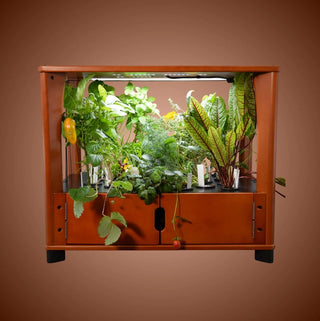
These six varieties cover the core of fall and winter cooking, and all grow excellently on the Aquager Hydroponic Home Farm.
Sage — 6–8 weeks to first harvest
The quintessential fall herb. Sage goes in stuffing, turkey brines, brown butter sauce, butternut squash soup, and sage-and-butter pasta. Once established, a sage plant produces for months with regular harvesting.
Rosemary — 6–8 weeks to first harvest
The holiday roasting herb. Rosemary on prime rib, lamb, roasted potatoes, bread, and the occasional cocktail. Grows slowly from seed but once established produces abundantly.
Thyme — 4–6 weeks to first harvest
The working herb that goes in everything. Thyme is the quiet backbone of French, Italian, and British cooking — roast chicken, soups, braises, stocks, compound butters. It grows faster than sage and rosemary, and a small harvest is possible within 4–5 weeks.
Parsley (Giant of Italy) — 4–6 weeks to first harvest
The finishing herb. Italian flat-leaf parsley is the final touch on everything from roasted vegetables to pasta to holiday grain salads. It’s mild enough to use liberally and grows quickly on the farm.
Chives — 3–4 weeks to first harvest
The fastest of the group. Chives are harvestable within 3–4 weeks and regrow quickly after cutting. They go on baked potatoes, in compound butters, on soups, in egg dishes, and on virtually any cream-based dish.
Oregano (Greek) — 4–6 weeks to first harvest
The pizza-and-pasta herb that also goes in roasted tomato dishes, braised meats, and anything with olive oil and garlic. Greek oregano on the farm produces intensely flavored leaves — more aromatic than the grocery store dried version.
Your Planting Countdown
The timing anchor that makes this post useful rather than abstract:
- Chives → 3–4 weeks → July/August harvest (earliest fresh herbs all summer)
- Thyme + Parsley + Oregano → 4–6 weeks → August/September harvest (before fall cooking season)
- Sage + Rosemary → 6–8 weeks → September/October harvest (well before Thanksgiving)
The Thanksgiving window: Start sage and rosemary by October 1 for a late November harvest. For reliable Thanksgiving herbs, start by mid-September at the latest.
The Christmas window: Start sage and rosemary now for an October harvest, then start a second set in mid-September for a December harvest. Two staggered plantings ensure abundance through both major holidays.
The one-line planning rule: start everything at least 8 weeks before you need it.
The Aquager Farm: Why Climate Control Changes Everything
The reason outdoor herb gardens struggle in fall isn’t lack of gardening skill — it’s physics. Outdoor herbs deal with temperature fluctuations, reduced daylight hours, frost risk, and seasonal transition stress. These conditions trigger bolting, dormancy, or cold damage.
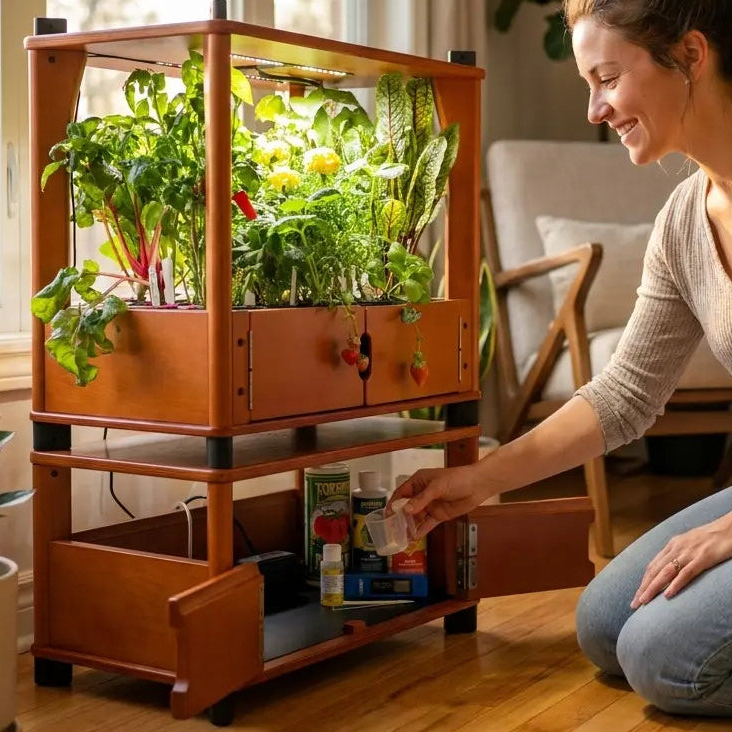
The Aquager Hydroponic Home Farm removes all of these variables. The indoor environment maintains consistent temperature year-round. The farm’s built-in lighting provides the right spectrum regardless of what the sun is doing outside. The hydroponic system delivers balanced nutrients directly to roots, which produces faster growth and more aromatic leaves than container soil growing.
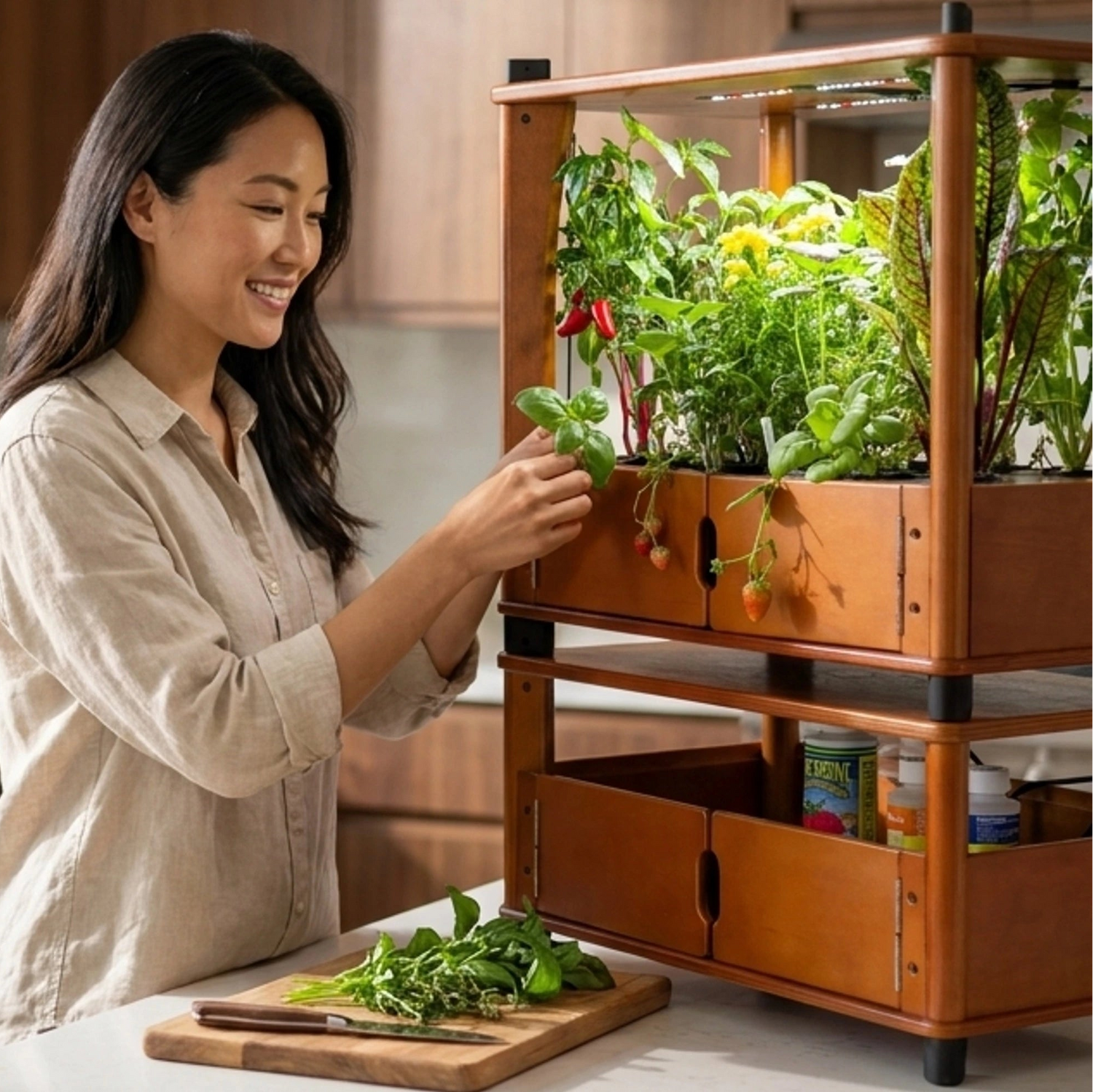
The result: sage, rosemary, thyme, parsley, chives, and oregano growing at peak productivity on your kitchen counter from October through April — the exact window when outdoor options aren’t available and cooking demands the most from fresh herbs.
The Chef’s Organic Set combines the farm with the Storage Unit and includes the essential growing accessories — the most efficient single purchase for setting up your fall herb kitchen.
The Complete Fall Indoor Herb Garden Shopping List
The Growing System
- Aquager Hydroponic Home Farm — the growing system
- Chef’s Organic Set — Farm + Storage Unit + accessories bundle
- Storage Unit — furniture-grade stackable base
The Six Herbs
- Sage (Common) — 6–8 weeks, stuffing, roasts, butter sauces
- Rosemary — 6–8 weeks, prime rib, lamb, roasted potatoes
- Thyme (Summer) — 4–6 weeks, chicken, soups, stocks
- Parsley (Giant of Italy) — 4–6 weeks, finishing herb for everything
- Chives (Staro) — 3–4 weeks, potatoes, cream dishes, soups
- Oregano (Greek) — 4–6 weeks, pasta, roasted tomatoes, braised meats
The Essential Accessories
- Plant Nutrients (Fox Farm Grow Big) — balanced hydroponic nutrition
- pH Control Kit — maintain optimal pH 5.5–6.5
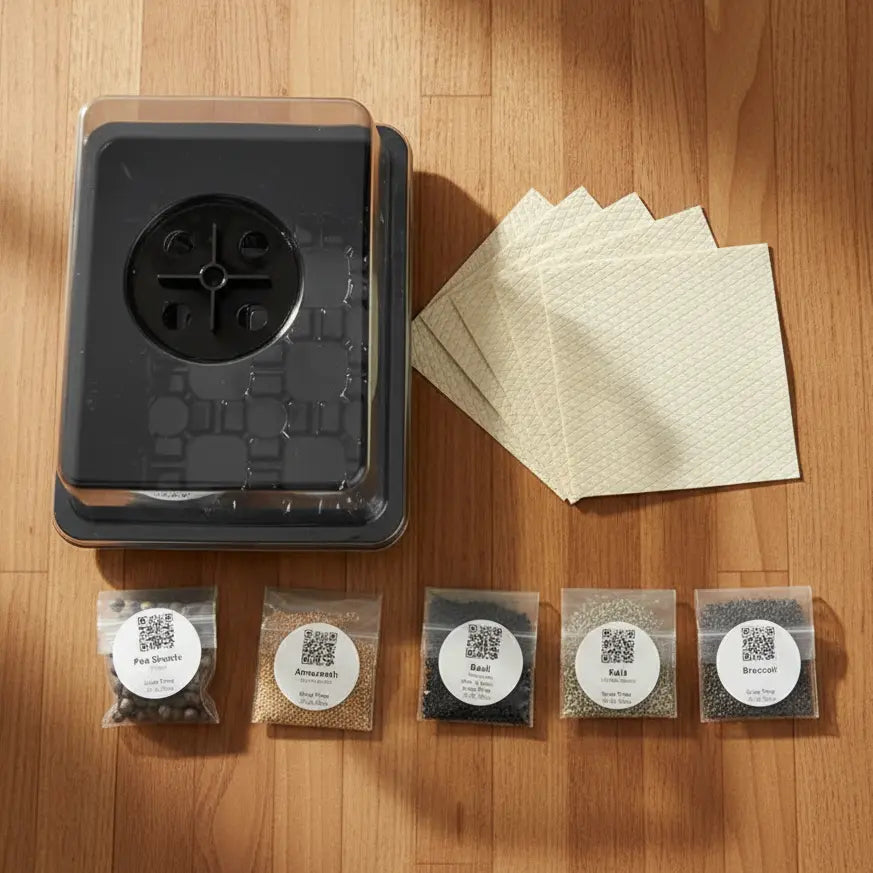
- Organic Grow Mediums 12-Pack — starting medium for seeds
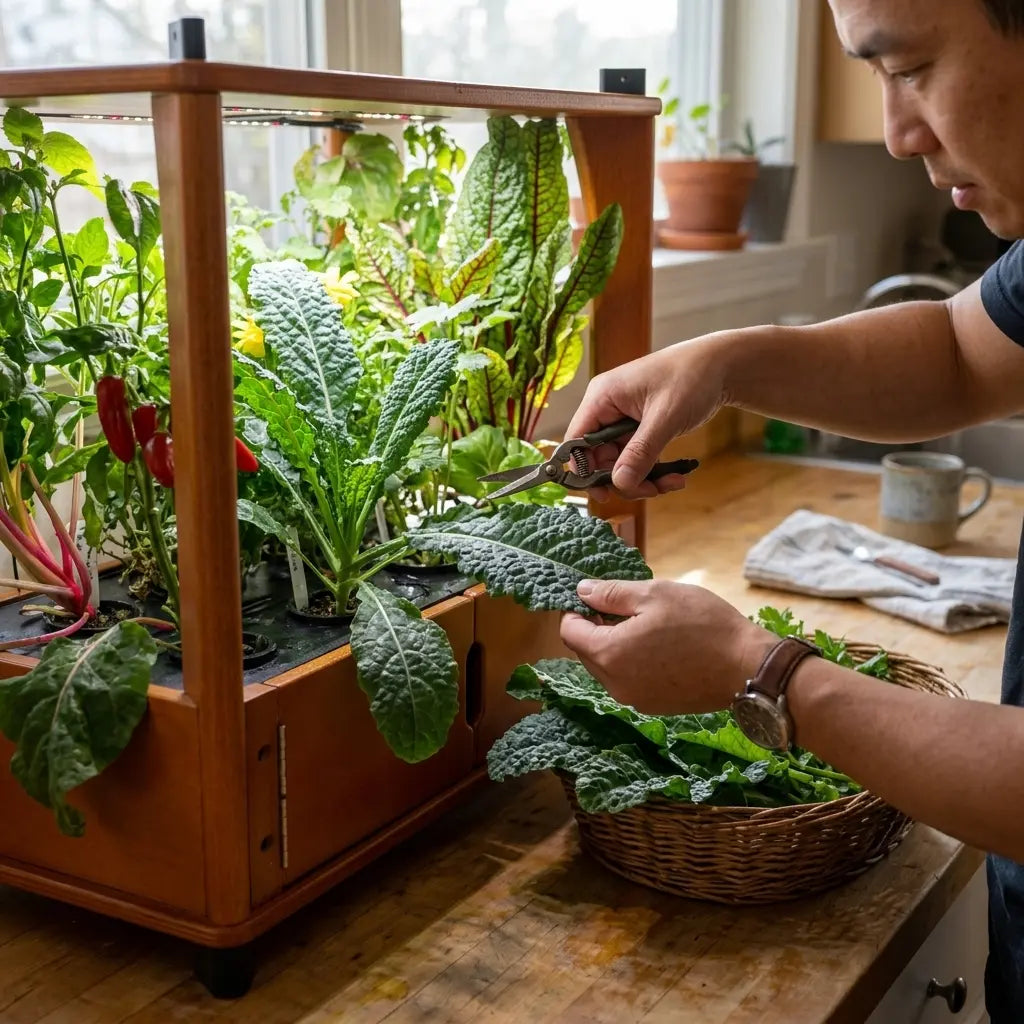
- Pruning Shears (6.5”) — harvesting tool
Setting Up for Your First Harvest
The full setup guide is in our complete guide to getting the most from your Aquager Home Farm. For the fall herb setup specifically:
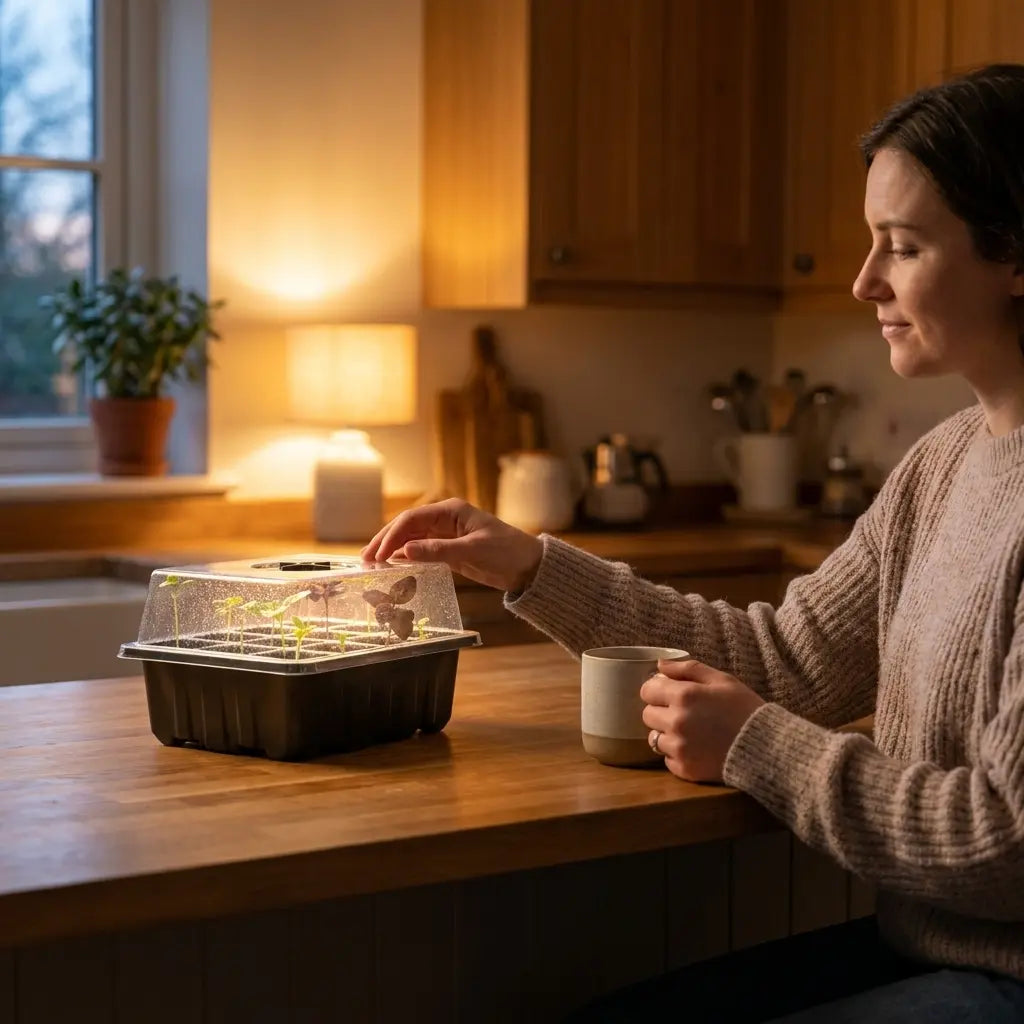
Start seeds in the grow mediums. Place seeds in net pots with organic grow mediums and keep covered with a dome until germination (7–14 days for most herbs; rosemary is slower at 14–21 days). Mist lightly twice per day during germination.
pH matters most in the first two weeks. Maintain the reservoir at pH 5.5–6.5 using your pH kit. Nutrient uptake is dramatically reduced outside this range. Check pH every 2–3 days for the first two weeks.
Start nutrients at half-strength. When seedlings have their first true leaves, add Fox Farm Grow Big at half the recommended dosage. Increase to full dose after two weeks. Overfeeding young seedlings causes nutrient burn.
Harvest frequently to encourage bushiness. Pinch thyme, parsley, and chives from the top as soon as they reach 4–5 inches. Never harvest more than ⅓ of any plant at one time. For basil specifically, our complete basil growing guide covers the techniques that apply broadly to all leafy herbs.
Frequently Asked Questions
Do I need a grow light if I have a south-facing window?
For fall and winter specifically, supplemental light is strongly recommended even with a south window. From October through February, natural light drops significantly — days are shorter, the sun sits lower, and herbs that flourished on a window in summer will become leggy. The Aquager farm’s integrated lighting handles this automatically.
Can I grow basil in fall and winter?
Yes — basil is one of the fastest herbs on the farm (3–4 weeks to first harvest) and produces year-round in the climate-controlled indoor environment. Our guide to growing herbs indoors year-round covers the full rotation.
How many herbs can I grow at once on one farm?
The Aquager Hydroponic Home Farm accommodates 24 plants. The 6 herbs in this guide, planted 4 pods each, fills one farm. For a larger herb kitchen, the Storage Unit allows stacking two farms vertically in the same footprint.
What if I miss the Thanksgiving window?
Start rosemary and sage immediately for Christmas. Chives, thyme, parsley, and oregano will be harvestable in 4–6 weeks regardless — so you’ll have four of the six herbs for Thanksgiving even if sage and rosemary aren’t quite ready. Our 10 easiest herbs to grow indoors covers which varieties to prioritize first.
Final Thoughts
The fall indoor herb garden doesn’t require any particular skill — it requires starting at the right time. The single most common mistake is waiting until October to start thinking about November’s cooking. The herbs that define fall and winter cooking take 6–8 weeks to establish. Start them now, in late summer, and your kitchen will be stocked before the season begins.
The Chef’s Organic Set gives you the farm, the storage base, and the essential accessories in one purchase. Add the six herb seed packs listed above, and your fall kitchen garden is completely equipped. Your first sage harvest will arrive weeks before Thanksgiving. By Christmas, you’ll have a fully producing herb kitchen.
Author: Aquager | Published: June 4, 2026 | Updated: June 4, 2026












0 comments