
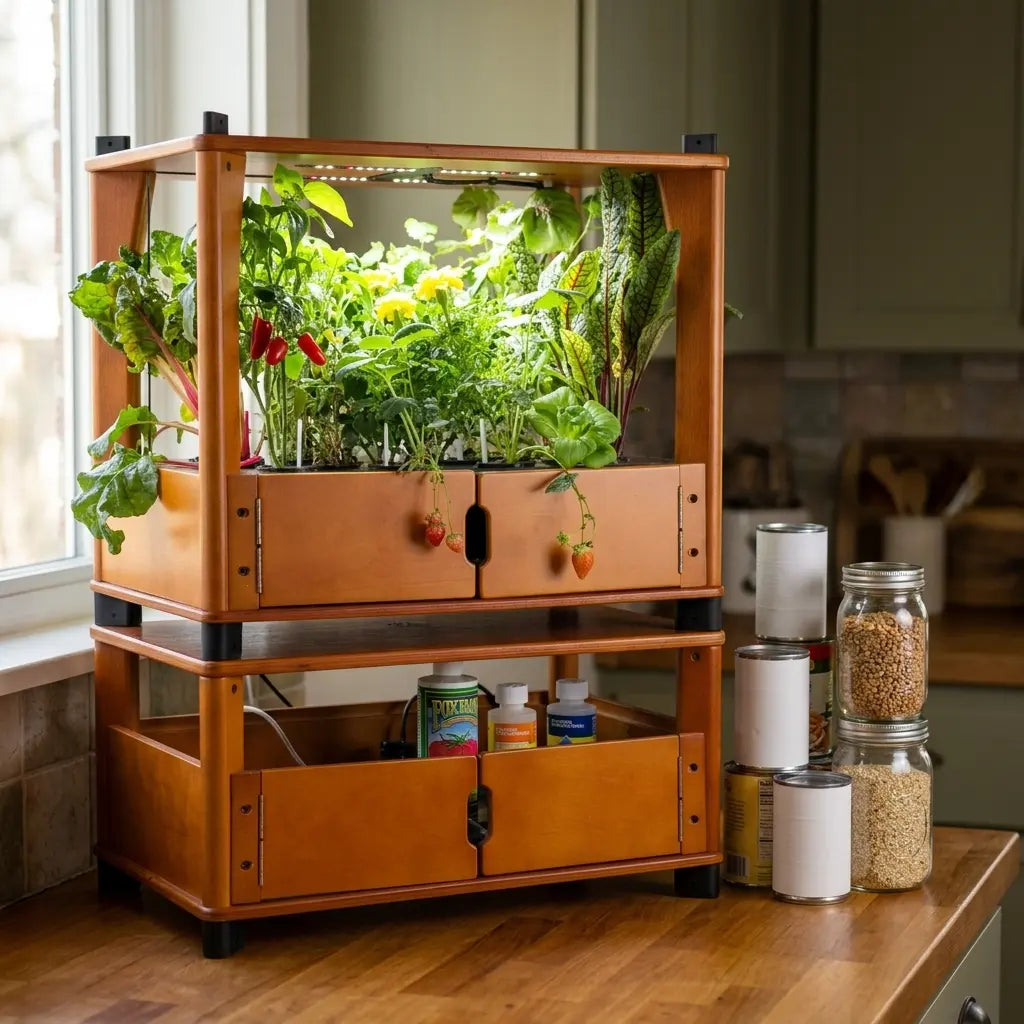
World Food Day falls on October 16 every year, a date set by the United Nations Food and Agriculture Organization to draw attention to hunger, food security, and the systems that get food onto plates around the world. The 2026 theme centers on the right to food for a better life and a better future.
Most of what shapes food security happens far outside any one household: trade policy, climate, crop yields, supply chains. None of that is something a home cook can fix by growing a tray of herbs on a counter.
What a home cook can do is smaller and more personal: build a little self sufficiency into their own kitchen. It will not solve global hunger, but it is a real, practical form of food independence that starts the same day you plant a seed.
This is worth thinking about even for households that have never had a reason to worry about groceries. Food security is not only a concern for people facing scarcity. It is also a question of resilience: how quickly your kitchen adapts when a delivery is late, a price spikes, or a favorite ingredient disappears from the shelf for a season.
What World Food Day Actually Highlights
World Food Day was established in 1979 to mark the founding of the FAO in 1945. It is observed in more than 150 countries, making it one of the most widely recognized UN observance days.
The day is usually framed around large scale problems: food insecurity, malnutrition, and the strain on global supply chains from climate change and conflict. Those are real and serious issues that require policy, investment, and coordination well beyond what any individual can do alone.
It is worth naming that gap honestly rather than skipping past it. A home garden does not fix a broken supply chain, and treating it as though it does would overstate what growing a few herbs at home can accomplish.
What World Food Day can reasonably prompt at a personal level is a simple question: how much of what you eat do you actually have any control over? For most households, the honest answer is very little, and that is where self sufficiency starts to matter on a smaller scale.
Every year, the FAO pairs World Food Day with a specific theme meant to focus attention on one part of the larger problem, whether that is climate resilience, youth in agriculture, or access to nutritious food. The themes change, but the underlying question stays the same: who controls the food supply, and how much of it can any one person or household actually influence.
For most people, the honest answer to that question changes very little year over year, since most food arrives through the same long chain of growers, processors, distributors, and stores regardless of what the news cycle looks like. That is not a criticism of the system, which does an enormous amount of work reliably and mostly invisibly. It is simply a fact worth noticing before deciding whether any of it is worth changing at a personal level.
What Self Sufficiency Really Means (and Doesn't)
Self sufficiency, at the scale of one household, does not mean producing all of your own food. That is not realistic for the overwhelming majority of people, especially anyone living in an apartment or a city.
What it does mean is having some direct, personal control over a small piece of your food supply, rather than every single ingredient arriving already grown, processed, and decided by someone else. That is a meaningful distinction, even at a small scale.
Food independence in this sense is additive. It does not require rejecting grocery stores or supply chains, and it is not a purity test. It is closer to keeping one thread of your food in your own hands on purpose, while the rest still comes from wherever it normally does.
That framing matters because it keeps the goal realistic. A single tray of greens will not replace a grocery budget, but it will change how much of your weekly cooking depends entirely on something you had no hand in growing.
It also helps to separate self sufficiency from self reliance as a broader lifestyle identity. Homesteading, off-grid living, and full food self sufficiency are real pursuits for the people who choose them, but they require a level of land, time, and commitment that most households simply do not have.
What this guide is describing is a much smaller version of the same idea, one that fits inside an apartment or a normal kitchen without requiring a lifestyle change. The principle is the same even at a tenth of the scale: some control is better than none, and it does not need to be dramatic to be worthwhile.
Food Security Starts With What's in Your Kitchen
Food security is usually discussed at a national or global level, but the underlying idea, reliable access to food you can count on, applies at a household scale too. A kitchen that produces even a small amount of its own food has one less point of total dependence on outside supply.
Fresh herbs are one of the more volatile grocery categories in terms of price and availability, and they are also one of the easiest things to grow at home with almost no experience. That combination makes them a reasonable starting point for anyone new to the idea.
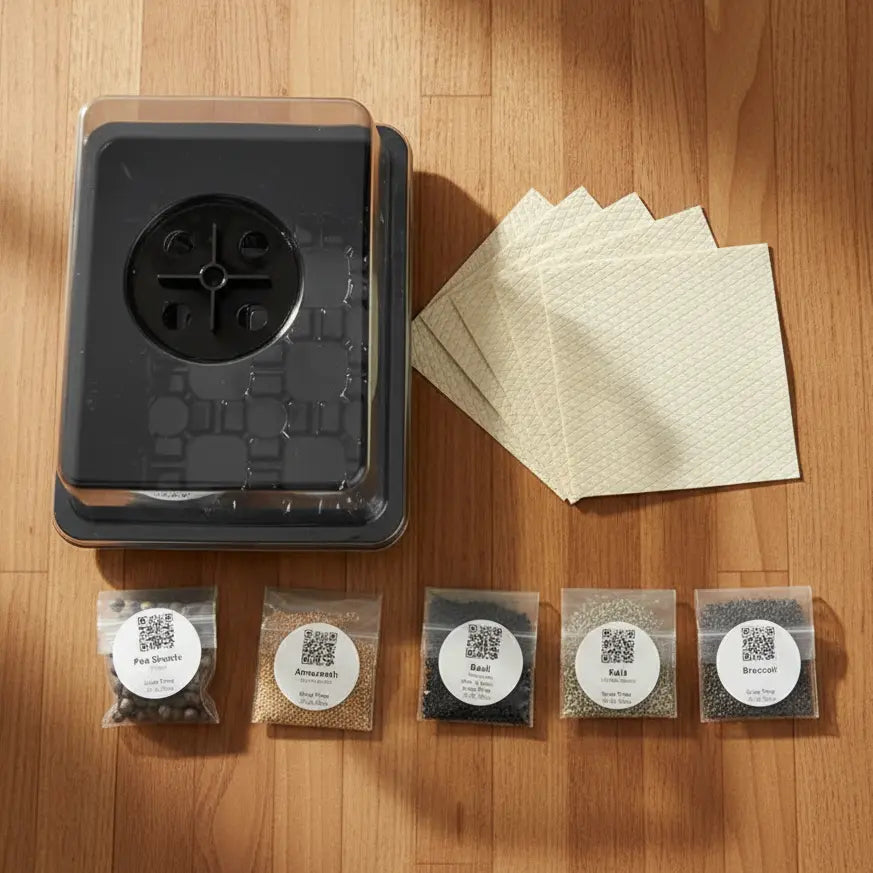
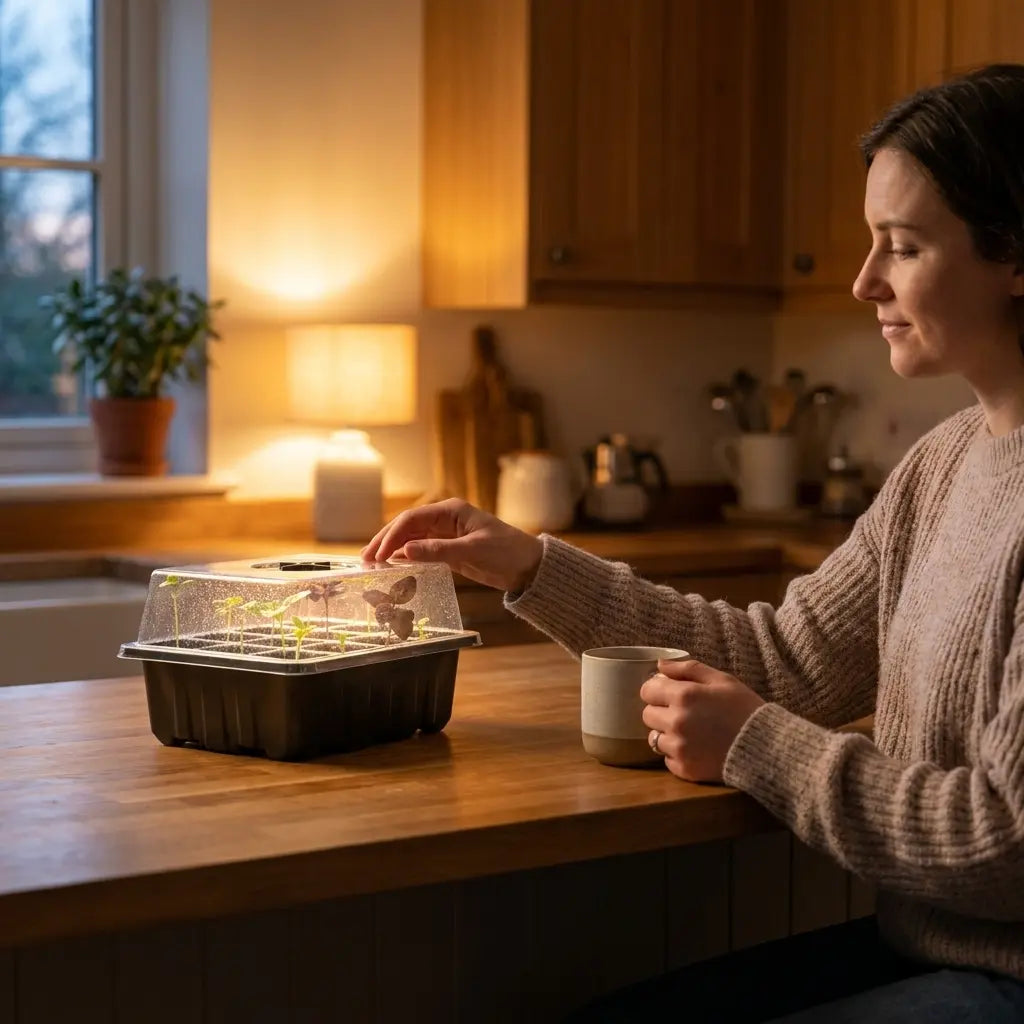
Buying a fresh bunch of basil or cilantro that wilts in the refrigerator within a few days, only to buy more next week, is a small but real form of dependence most people do not think about. The Indoor Seed Starter Kit removes that cycle by letting you grow a continuous, small supply of herbs at home instead of restocking wilted bunches from the store every week.
It is a modest change, but modest changes are the realistic entry point into food independence. Nobody starts by replacing their whole grocery list, they start with the one ingredient that keeps going bad before it gets used.
There is also a cost dimension worth mentioning honestly. Fresh herbs bought a few times a month at grocery store prices add up over a year, often more than people expect when they actually track it. Growing a modest, steady supply at home rarely eliminates that cost entirely, but it does reduce how often you are paying premium prices for something that wilted before you could use half of it.
How to Start Growing Your Own Food
Starting small is the right approach, not a compromise. A single tray of herbs or greens is enough to test whether this is a habit worth building, without committing much space, money, or time upfront.
The easiest entry point is something pre-seeded, so there is no separate decision about what to grow or how much seed to use. A kit that arrives ready to go removes the two biggest reasons people never start: not knowing what to grow, and not having the setup already figured out.
Consistent light matters more than almost anything else for a first attempt. Most indoor growing failures come down to inconsistent light rather than bad luck or a lack of a green thumb, so a setup with reliable light built in solves the most common early mistake before it happens.
Water and nutrients matter too, but they are far more forgiving than light. A plant that gets slightly too much or too little water usually recovers within a few days. A plant that consistently gets too little light rarely does, which is why picking a spot near a bright window, or supplementing with a grow light, is worth getting right from the start.
It also helps to pick one crop rather than several at once for the first attempt. Trying to manage five different plants with different watering and light needs in week one is a common way people burn out on the habit before it has a chance to prove itself useful.

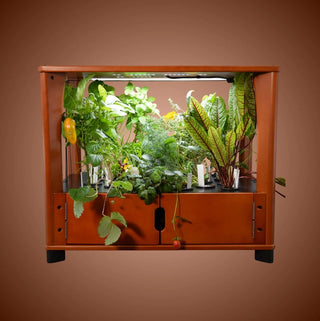
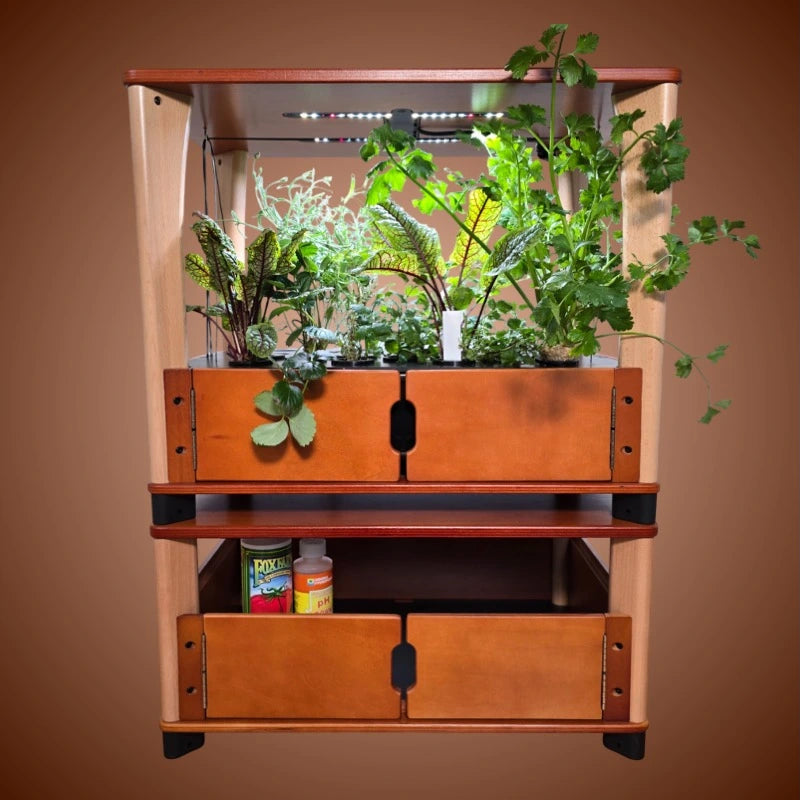
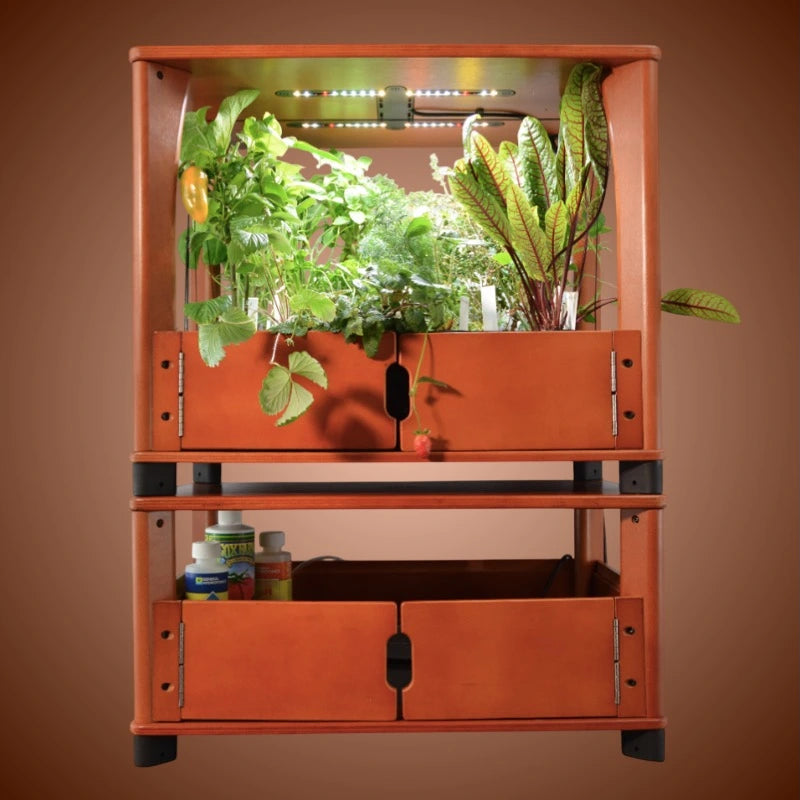
Once the first tray is producing something you actually use, the natural next step is expanding what you grow rather than starting over. That is where a full setup like the Aquager Chef's Organic Set comes in, giving you two full grow boxes so you can keep herbs going in one and rotate leafy greens or vegetables through the other.
A Small Step Toward Food Independence
Nutrient density is a piece of food independence that gets less attention than price or availability. Produce loses nutrients the longer it sits after harvest, which means a bunch of kale that traveled and sat on a shelf for days is not delivering what it did the day it was picked.
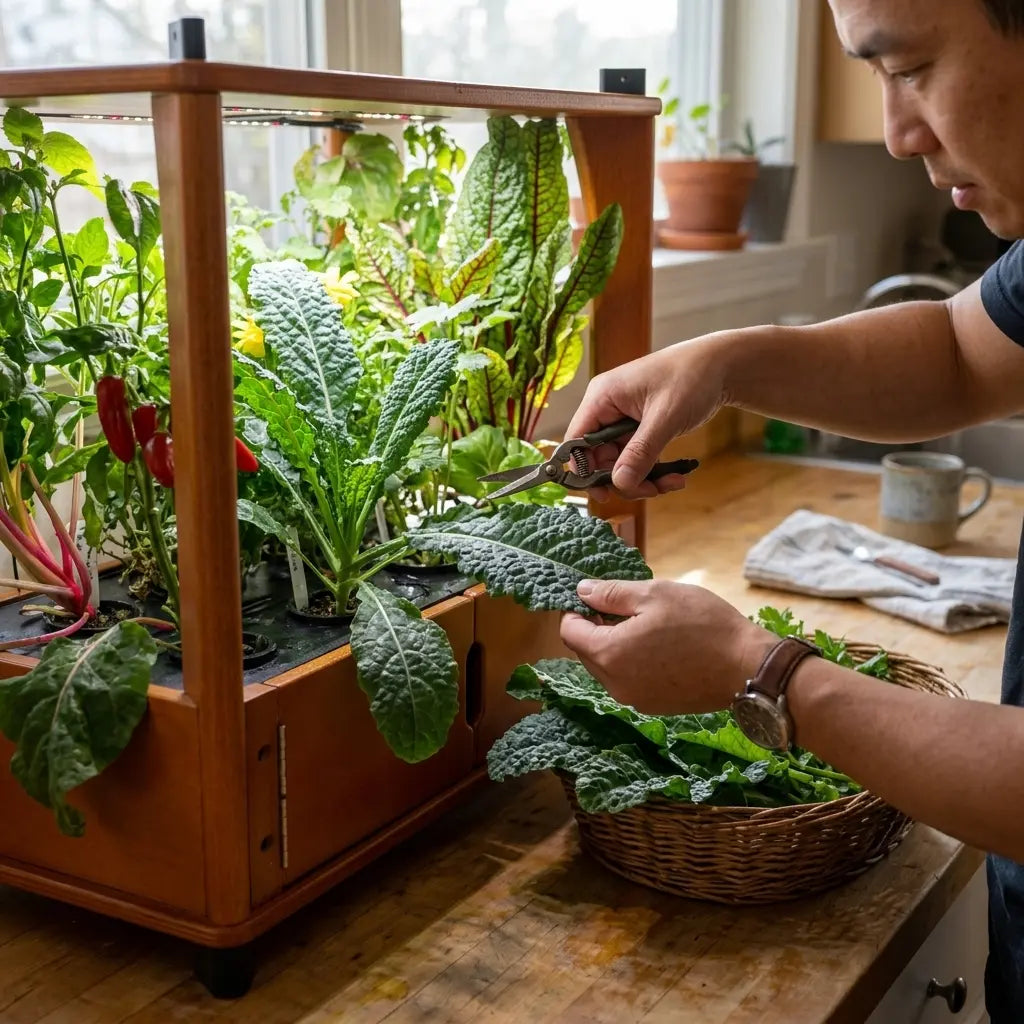
Growing your own closes that gap almost entirely, since a harvest happens minutes before it reaches a plate rather than days or weeks before. The Aquager Kale (Mamba) Seeds and Aquager Chard (Gold) Seeds are both easy starting points for a leafy green that holds up well to home growing conditions and rewards that fresher harvest with a noticeably better texture and flavor.
None of this requires becoming a serious gardener overnight. It requires picking one or two crops, growing them consistently, and letting that habit expand naturally as it proves useful rather than trying to replace an entire grocery list on day one.
Food independence, understood this way, is less about self reliance as an identity and more about a repeatable habit. The households that stick with it are usually the ones who started small and let the habit grow at its own pace instead of overcommitting early.
There is also a resilience argument worth making plainly. A household that has grown even a small amount of its own food once knows the process, has the equipment, and understands roughly how long it takes to go from seed to harvest. That knowledge does not disappear if it is never urgently needed, but it is genuinely useful to already have if a season ever calls for it.
None of this requires framing your kitchen as a survival plan. It is simply a case for treating a small growing habit as a form of preparedness that also happens to make your cooking better in the meantime, rather than something you would only start after a problem already existed.
World Food Day Growing FAQ
What is World Food Day and when is it observed?
World Food Day is observed every year on October 16, marking the founding of the UN Food and Agriculture Organization in 1945. It is one of the most widely recognized UN observance days, marked in more than 150 countries.
Can growing herbs at home actually improve food security?
At a household level, yes, in a limited but real sense. It reduces dependence on a single grocery trip for perishable items like herbs and greens, though it does not address the larger systemic issues World Food Day is built to highlight.
What is the easiest food to start growing for a beginner?
Herbs like basil, cilantro, and chives are typically the easiest starting point, since they grow quickly, tolerate some inconsistency, and are used often enough in cooking to justify the effort.
Do I need a lot of space to grow my own food indoors?
No. A single tray or small hydroponic system fits on a kitchen counter or windowsill and does not require a yard, balcony, or dedicated room.
Is self sufficiency realistic for someone in an apartment?
Yes, at a modest scale. Growing all of your own food is not realistic for most apartment dwellers, but growing a meaningful portion of your herbs and some leafy greens is achievable in a small indoor setup.
How long does it take to see a first harvest?
Most herbs and leafy greens produce a usable first harvest in 4 to 8 weeks, depending on the variety, with some faster growing greens ready a little sooner.
Does growing my own food actually save money?
It can, particularly for herbs that are expensive and perishable at the store, though the bigger benefit for most households is fresher food and less waste rather than a dramatic reduction in the grocery bill.
Growing Something You Can Actually Count On
World Food Day is a reminder of a problem far bigger than any one kitchen can solve. But it is also a reasonable prompt to look at your own habits and ask how much of what you eat you actually have a hand in.

Growing a tray of herbs or a rotation of leafy greens will not resolve global food insecurity, and no single household purchase will. What it will do is give you one small, dependable piece of your own food supply that does not rely on a shelf staying stocked or a delivery arriving on time.
That is a modest form of self sufficiency, but it is a real one, and it starts with something as simple as a single seed and a bit of consistent light. If World Food Day is prompting you to think about where your food actually comes from, the Indoor Seed Starter Kit is a reasonable, low commitment place to start.
For more on building that habit into something bigger, see our guides on how to grow food indoors, growing your own greens as a beginner, and starting an indoor garden in an apartment if space is your main concern.
Author: Aquager · Published: July 4, 2026 · Updated: July 4, 2026










0 comments