
Every Thanksgiving table has a centerpiece. Most of them are looked at once, commented on politely, and ignored for the rest of the meal.
A living herb centerpiece does something different. Guests lean in to smell the rosemary. Someone asks if they can snip a thyme sprig to finish their turkey. The sage — still rooted, still growing — becomes part of the conversation and part of the meal. It's decoration and ingredient in one, and it's something guests genuinely haven't seen before.
This is one of the best DIY thanksgiving decorations you can make, and it starts growing on your countertop weeks before the holiday.
Why a Living Herb Centerpiece Works at Thanksgiving
Most Thanksgiving table decor sits between the guests and doesn't do anything. Gourds, candles, and dried arrangements are beautiful but passive — they set an atmosphere and then recede.
Herbs change the dynamic. Rosemary smells like the meal. Thyme is recognizable and fragrant. Fresh sage leaves, brushed between the fingers, release a scent that signals Thanksgiving food to most people instinctively. Placing living herbs at the center of the table puts the smell of what you're cooking right where guests are sitting.
And then, during the meal, they become functional. A guest reaching for a thyme sprig to drop into a soup bowl, or a sage leaf to finish a plate of turkey and stuffing, creates a moment of participation that no gourd arrangement can match. Simple thanksgiving table decor rarely generates actual conversation. This does.
The Three Herbs to Grow for This Centerpiece
Rosemary, thyme, and sage are the three Thanksgiving herbs that work best as living centerpiece plants. They're visually interesting, they smell like the holiday meal, and they hold up beautifully at room temperature during a multi-hour dinner.
Rosemary
Rosemary is the structural anchor of the centerpiece. Its upright, woody stems and dense needle foliage give height and texture. A well-grown rosemary plant in week 8–10 looks genuinely impressive on a table — deep green, architectural, fragrant. Guests recognize it immediately.
For centerpiece use, let the rosemary grow slightly taller than you'd harvest for cooking. The visual mass of a full, unclipped plant is part of what makes the arrangement work.
Thyme
Thyme grows as a cascading, low mound of tiny leaves — it softens the base of the centerpiece and adds visual contrast to rosemary's vertical lines. Its small, delicate leaves and pale stems photograph well and catch candlelight in a way that woody herbs don't.
Thyme at the table is also the most naturally interactive of the three. The stems are easy to snip, the leaves strip cleanly from the stem with a pinch, and a single sprig adds a subtle, earthy note to almost any dish on the table. Guests who cook will use it. Guests who don't will appreciate that someone thought of it.
Sage
Sage brings the color. The soft gray-green of fresh sage leaves is unlike any other herb — slightly dusty, slightly silver, unmistakably Thanksgiving. A mature sage plant with broad, velvety leaves adds a warm, textural element to the arrangement that balances the needle density of rosemary and the delicacy of thyme.
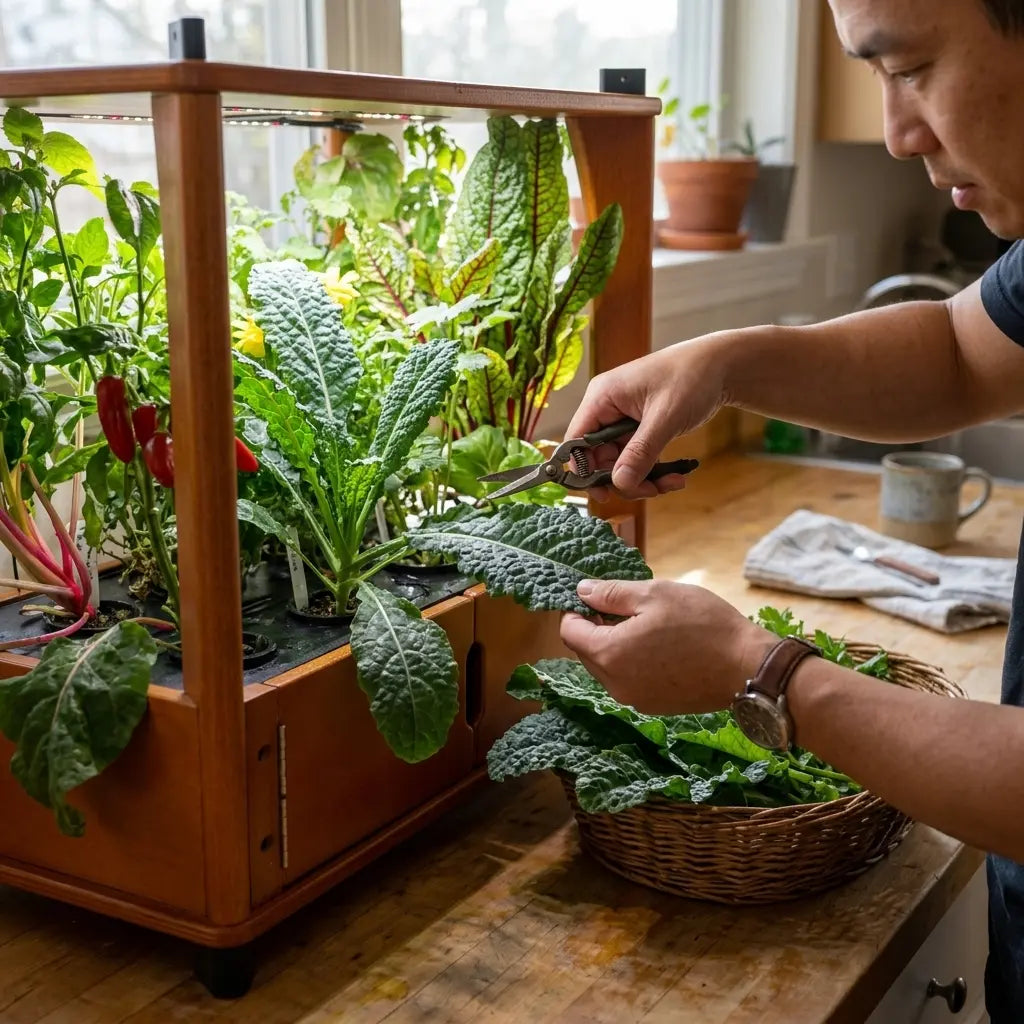
Fresh sage leaves dropped into warm brown butter, or rubbed directly onto a slice of turkey at the table, is a moment that gets noticed. Include a small pair of kitchen scissors near the arrangement so guests feel invited to participate.
How to Style the Centerpiece
The arrangement works best as a low, long centerpiece that doesn't obstruct sightlines across the table. Here are the key principles:
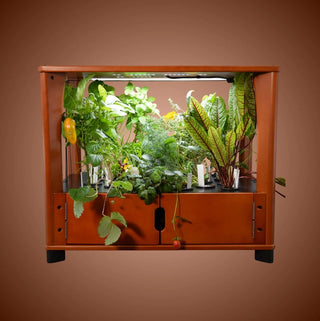
Use the farm pods as the display. The Aquager grow pods are clean, white, and minimal — they look intentional on a table, not like a greenhouse experiment. Cluster rosemary at center (tallest), thyme at the edges (cascading), sage between them for color contrast. No additional containers needed.
Add natural elements at the base. Small sprigs of dried eucalyptus, a few chestnuts, or small gourds tucked between the plant bases tie the living herbs into the fall harvest aesthetic. Earth tones complement the gray-green of sage and the deep green of rosemary without competing.
Use candlelight. Place taper candles or tea lights at the ends of the arrangement, not in the center — the herbs should be the focal point, with light framing them from the sides. The shadows and warmth that candlelight creates on herb foliage are part of what makes this arrangement genuinely beautiful.
Include small scissors or herb snips. Place a small pair of kitchen scissors next to the arrangement with a note or verbal invitation to use them. This transforms the centerpiece from decoration into experience. For DIY thanksgiving centerpieces, participation is the detail that makes the concept memorable.
For more on indoor herb styling and placement, our guide to growing herbs indoors year-round covers the basics of light, growth cycles, and visual presentation.
How It Works During the Meal
The experience unfolds in three stages.
Before dinner: Guests arrive and notice the centerpiece. The rosemary is recognizable; people lean in. Someone comments on the sage color. The scent does most of the work here — warm rosemary and thyme smell like Thanksgiving food, and having that scent at the table before the food arrives primes the room.
During dinner: This is where the centerpiece earns its place. The scissors come out. A guest drops a thyme sprig into turkey gravy. Someone layers a sage leaf under a slice of turkey breast. The person who likes rosemary breaks a small stem and tucks it under a potato. The participation varies by guest, but the option is always there — and the moments when it happens are the ones people remember.
After dinner: The herbs go back to the farm. They'll regrow the trimmings within two weeks. The arrangement has done its job as thanksgiving table decor and as actual culinary ingredients — and none of it went to waste.
After Thanksgiving, It Becomes Your Christmas Centerpiece
A living herb arrangement styled for Thanksgiving adapts naturally to Christmas. The color palette — deep green rosemary, silver-green sage, delicate thyme — maps directly onto traditional Christmas colors. Add a few pine cones, a sprig of holly, or small red berries from a craft store, and the same plants that anchored your Thanksgiving table become a christmas centerpiece for dining table that your guests will compliment again.
You're not buying two separate centerpieces. You're growing one that works for both dinners. After two weeks of regrowth from Thanksgiving trimming, the herbs will be fully harvestable again by mid-December. The farm runs in the background; you just style it differently for each occasion.
Our romantic indoor garden styling guide has more ideas for presenting living plants as decor for special occasions throughout the year.
How to Grow It in Time for Thanksgiving
For a full, presentable centerpiece by Thanksgiving week, rosemary, thyme, and sage need to be planted by early October at the latest. Rosemary takes 8–10 weeks to establish; a mid-September start is ideal.
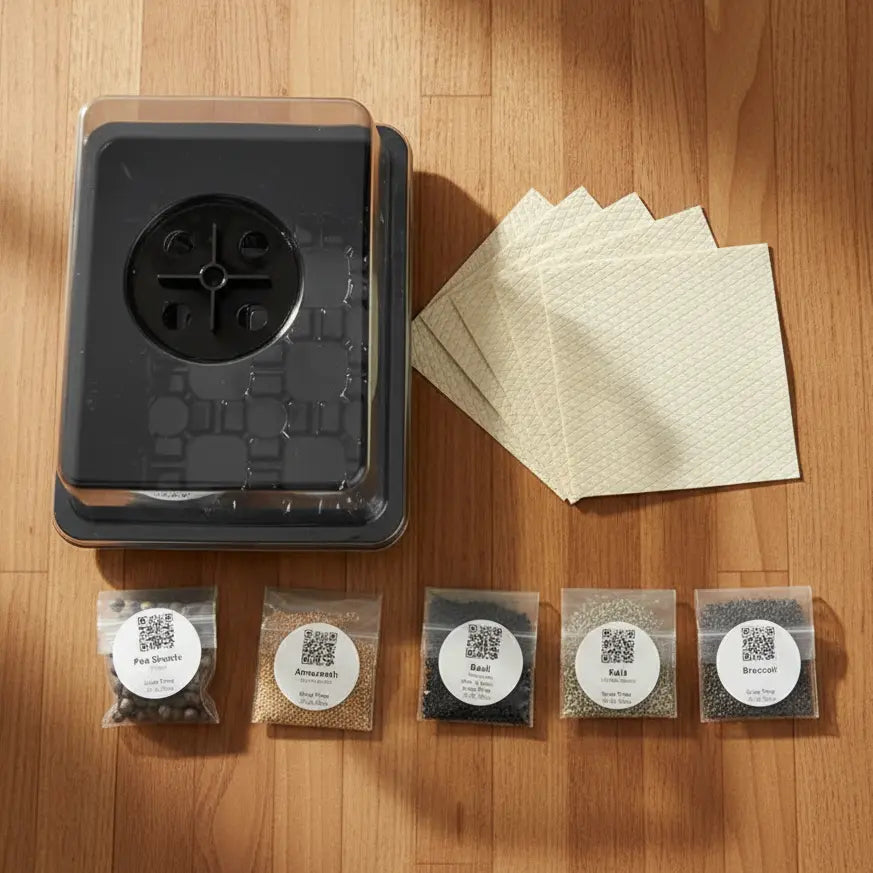
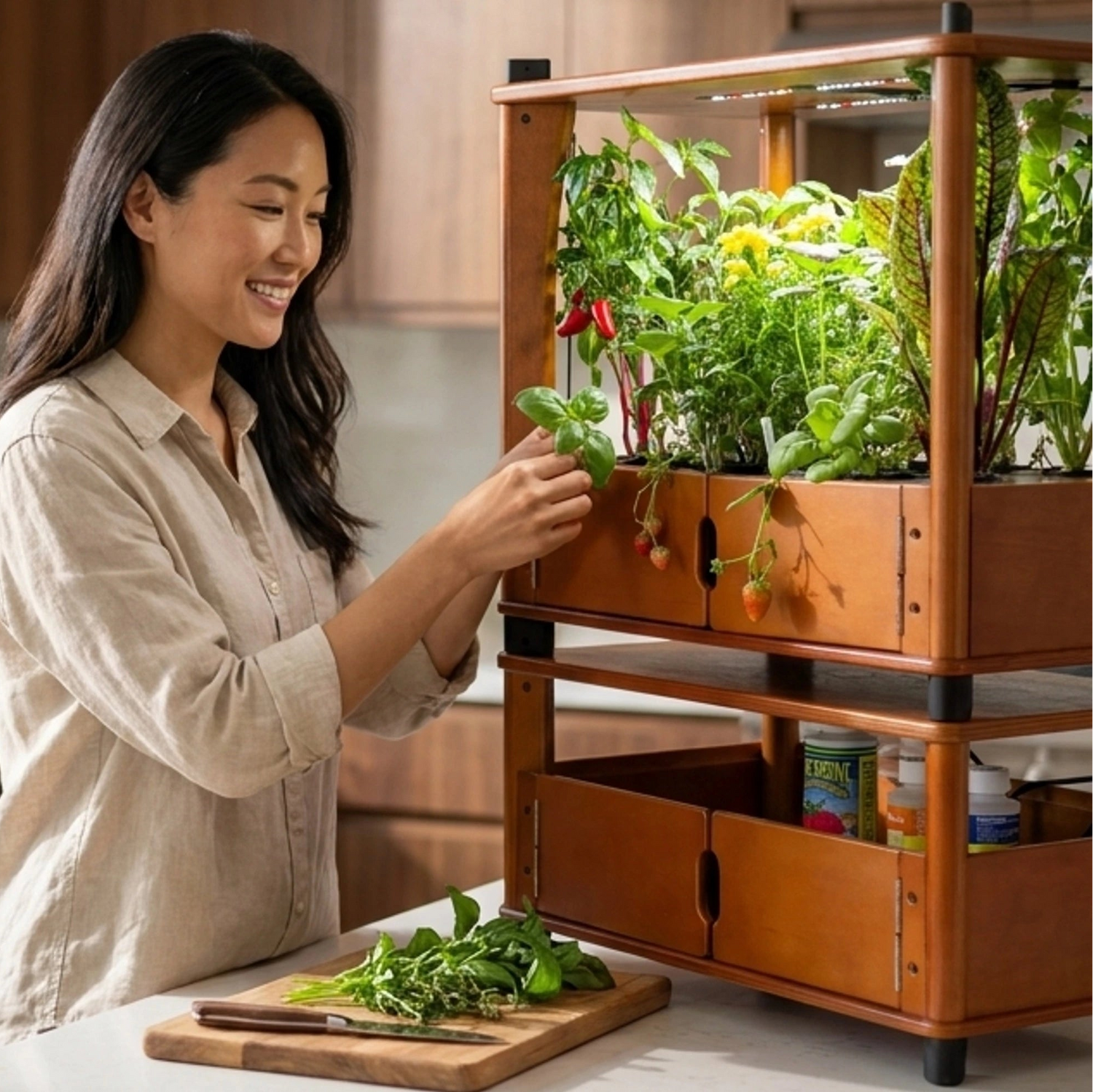
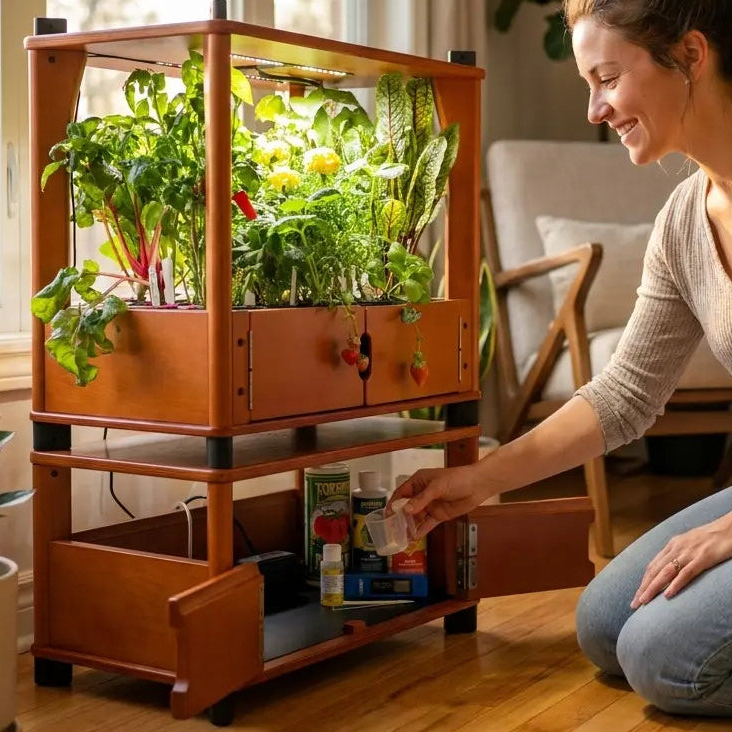
The Chef's Organic Set includes everything you need: the full Aquager Home Farm with built-in lighting, plus an organic herb collection that includes sage, thyme, and rosemary seed pods. Setup takes under 20 minutes. The farm runs automatically — the lighting cycle, water level, and nutrient delivery are all handled without any daily input from you.
By week 7–8, you'll have three visually impressive herb plants ready to style as a centerpiece, harvest at the table, and regrow for Christmas.
Prefer to start with just the centerpiece herbs? Rosemary, Thyme (Summer), and Sage (Common) seed pods are $7.99 each and work in any Aquager farm. Our guide to the easiest herbs to grow indoors covers what to expect from each plant in its first 8 weeks.
Frequently Asked Questions
Will live herb plants survive a full Thanksgiving dinner on the table?
Yes. Rosemary, thyme, and sage are all Mediterranean herbs — they're adapted to warm, dry conditions and handle room-temperature display without any issues. Keep them away from direct heat sources like candles placed too close or heating vents aimed at the table, but otherwise they're as resilient on the table as they are growing on your counter. A 4–6 hour dinner service won't stress them.
How do I keep the centerpiece looking neat if guests are snipping from it?
Light harvesting — a sprig here, a few leaves there — doesn't change the appearance of a well-established herb plant noticeably during a single meal. The visual mass of rosemary and the density of a thyme plant mean that guest-level trimming looks like natural variation, not a depleted plant. If you're concerned, start with one or two extra plants as visual backup and use the extras for cooking.
Can I grow this without the Aquager farm if I already have pots?
Potted herbs in soil can work as a centerpiece, but the growth timeline is slower and less consistent than hydroponic growing — you'll need 10–14 weeks rather than 7–9 for comparable plant mass. For a September-order-to-November-centerpiece timeline, the hydroponic farm gives you the most reliable results in the window available.
What if I want to add a fourth herb to the arrangement?
Parsley makes an excellent addition for visual contrast — its bright, flat green leaves stand out against the gray-green of sage and the deep green of rosemary. It also has a fast growth cycle (6–8 weeks) and produces large, visually impressive growth by Thanksgiving. The downside is that parsley wilts slightly faster than woody herbs at room temperature, so add it to the arrangement just before guests arrive rather than setting it out hours in advance.
A Centerpiece That Gets Used Twice
Most DIY thanksgiving decorations end up in a box after the holiday. This one gets trimmed, regrows, and comes back out for Christmas dinner restyled with seasonal accents. The plants that made your Thanksgiving table memorable are the same ones providing fresh rosemary for your Christmas roast two weeks later.
Order in September, style in November, harvest through December. It's the one centerpiece project that pays for itself before the holiday season is over.
Author: Aquager · Published: June 7, 2026 · Updated: June 7, 2026












0 comments