
Thanksgiving is November 27. Most herbs need 6–10 weeks to reach their first full harvest. That means your plant date is early October at the latest — and your order date is right now, in September.
This isn't a vague gardening calendar. It's a tight, deadline-driven planting schedule built around a single goal: having fresh sage, thyme, rosemary, and parsley on your counter by the third week of November, ready to cut the morning of Thanksgiving.
If you're reading this in September, you have exactly the window you need. If you're reading this in October, you're cutting it close. Here's the math and the plan.
The Calculation That Makes September Your Deadline
Thanksgiving falls on the fourth Thursday of November — November 27 in 2026. For a confident first harvest by November 20 (one week before the holiday, giving you buffer for a second cut), you need herbs in the ground by October 10–15 at the latest.
Working backward: you need 3–5 days for shipping and setup. That puts your order date at October 5–10. And if you want to start with the most demanding herb in this lineup — rosemary, which takes 8–10 weeks to establish — your ideal start date is September 22 to October 1.
September isn't just a convenient time to start. For rosemary, it's a requirement.
Your September Herb Planting Calendar
Here's the exact planting schedule for each of the four core Thanksgiving herbs, with harvest windows based on growing indoors under consistent artificial light. Times are from seed pod placement to first harvestable growth.
Sage — 7 to 9 Weeks to First Harvest
Plant by: October 7 for a November 25 harvest.
Sage takes 10–14 days to germinate, then builds a root system for 2–3 weeks before putting energy into leaf growth. By week 6–7, you'll see dense, harvestable foliage. The characteristic gray-green leaves develop their full aroma — that camphor-forward, earthy depth — around week 7–8.
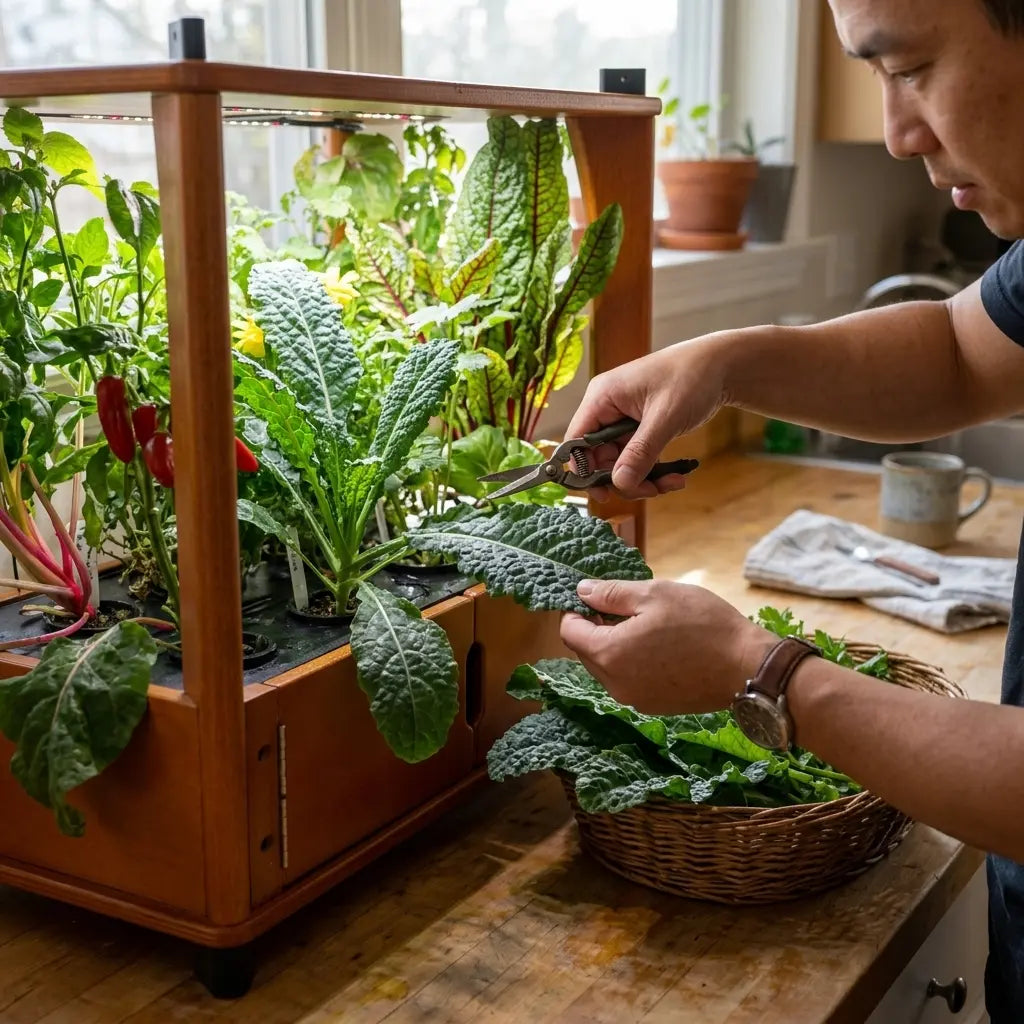
Harvest by picking individual outer leaves, always leaving the center growth intact. A single well-established sage plant holds 30–40 harvestable leaves at any time — enough for stuffing, compound butter, and brown butter sauce at one Thanksgiving dinner.
Thyme — 6 to 8 Weeks to First Harvest
Plant by: October 7 for a November 18 harvest.
Thyme germinates in 7–14 days and establishes faster than sage or rosemary. The delicate needle-like leaves begin appearing at week 3–4, and harvesting thyme becomes possible by week 6 when stems are long enough to cut above a leaf node. A stem trimmed at this point regrows within 10–14 days.
One thyme plant trimmed every two weeks will supply enough for turkey brine, gravy, and roasted vegetables at a full Thanksgiving dinner — with plenty left through December.
Rosemary — 8 to 10 Weeks to First Harvest
Plant by: September 22 for a November 25 harvest.
Rosemary is the outlier in this lineup. It takes longer to establish than any other culinary herb — germination alone can take 14–21 days, and meaningful leaf growth doesn't appear until week 4–5. First harvestable stems aren't ready until week 8–10.
This is why rosemary sets the September deadline for the entire project. If you're starting this lineup together, you need to start by late September — and rosemary is the reason why.
Once established, rosemary is the most forgiving herb to harvest: you can snip woody stems with needle leaves weekly without stressing the plant at all. For roasted potatoes, focaccia, and compound butter, two or three stems per dish is plenty.
Parsley — 6 to 8 Weeks to First Harvest
Plant by: October 7 for a November 18 harvest.
Parsley germinates in 14–21 days — slow for a fast-growing herb — but once it establishes, it grows continuously and produces large harvests. The flat-leaf Italian variety reaches full flavor by week 6–8, with large, deeply lobed leaves that chop cleanly and keep their color in finished dishes.
Parsley is the workhorse of the Thanksgiving herb lineup. You'll use it on almost everything: finishing turkey and gravy, building gremolata for roasted dishes, freshening stuffing. Plan to harvest a full handful the morning of Thanksgiving and have the plant ready to cut again within two weeks.
What Happens If You Miss the Window
Miss the September-to-early-October planting window and your options become much less appealing.
A plant date of October 20 gives you roughly 4–5 weeks of growth by Thanksgiving. Thyme and parsley might produce a small early harvest — 5–8 leaves, a few stems. Sage will have early growth but not enough for stuffing. Rosemary, started in late October, won't be harvestable by Thanksgiving at all.
The alternative is what most home cooks do every November: three separate grocery trips, $3–4 bundles per herb, most of each bunch going into the crisper drawer and turning yellow before Thanksgiving weekend is over. For the six-week Thanksgiving-through-Christmas cooking season, that adds up to $60–100 in herbs, a significant portion of it wasted.
Starting your herb lineup in September costs the same as two or three grocery herb bundles — and produces harvests every two weeks through February.
Getting Started This Week: The Setup Checklist
If you're starting all four herbs together, here's the fastest path from order to first harvest:
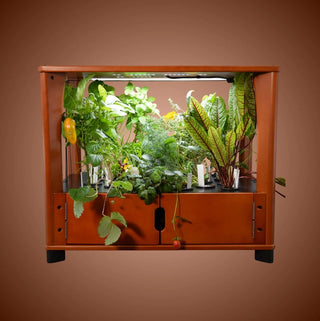
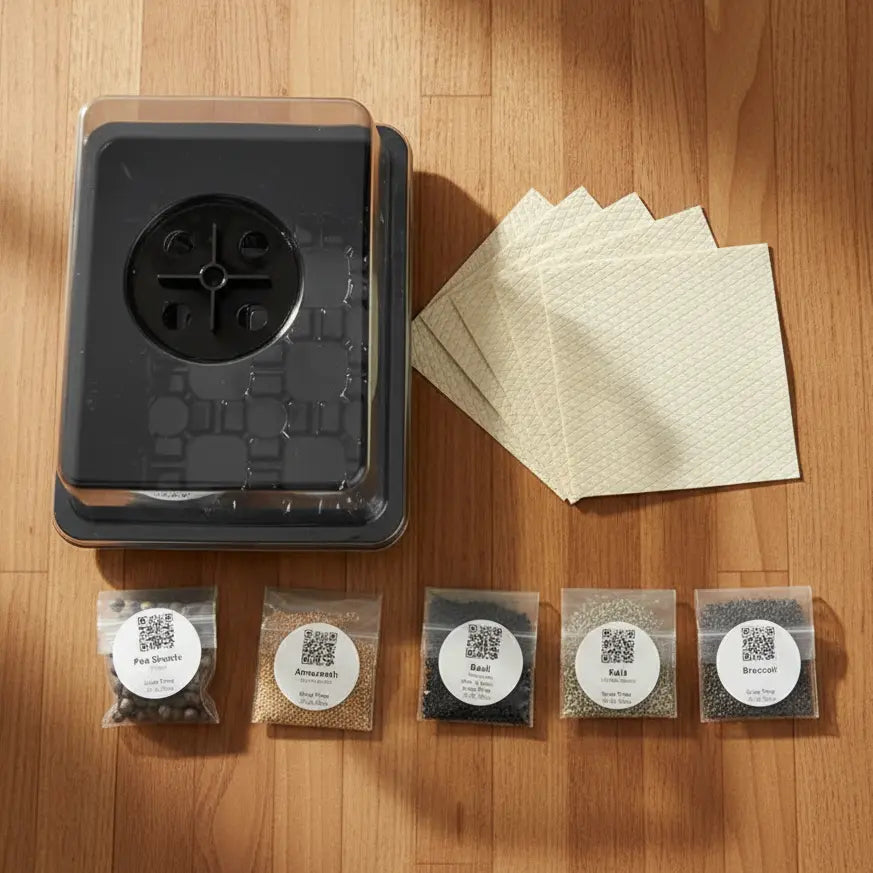
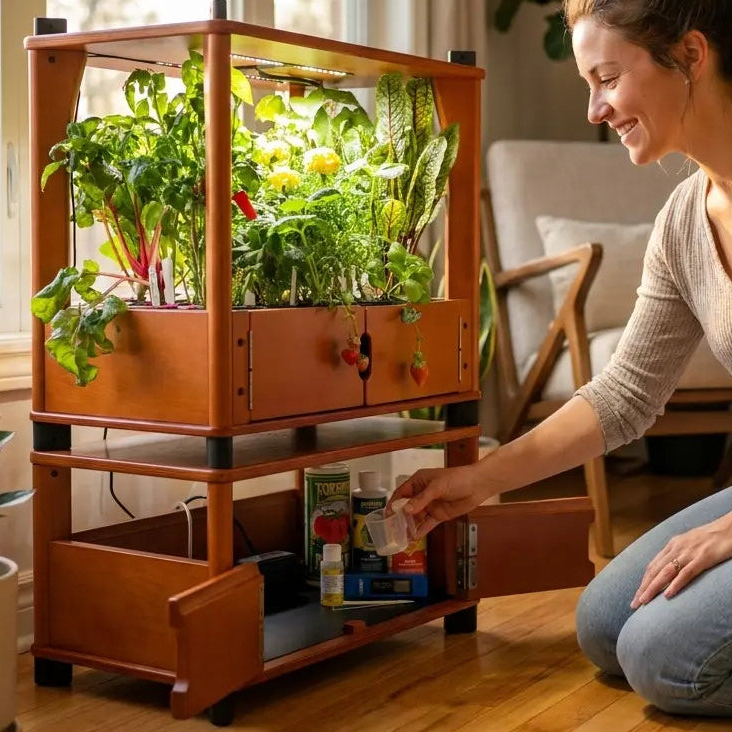
Day 1 (order day): Order the Chef's Organic Set, which includes the full Aquager Home Farm pre-loaded with an organic herb collection. Sage, thyme, rosemary, and parsley seed pods are included. Free shipping, arrives in 3–5 business days.
Day 5–7 (setup day): Unbox and set up the farm. Fill the reservoir, place the pre-seeded grow mediums, plug in the built-in light. Setup takes under 20 minutes. The lighting cycle runs automatically — no timers to set, no sunlight required.
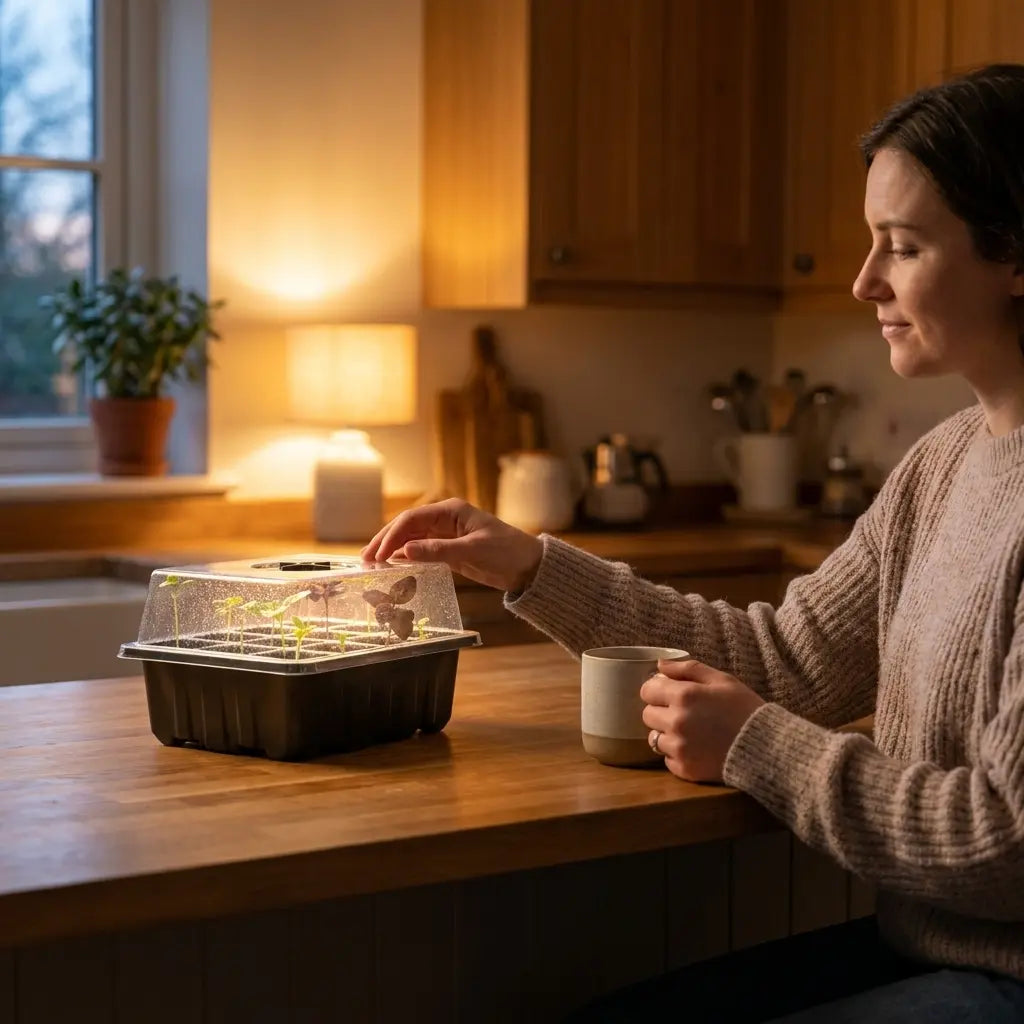
Days 7–21 (germination window): Watch for the first shoots. Thyme and sage typically appear first (7–14 days). Rosemary and parsley take longer (14–21 days) — this is normal. Don't remove pods if you don't see growth by day 10; parsley especially is a slow germinator.
Weeks 4–6 (first growth): All four herbs should show established leafy growth. Begin light harvests of thyme and parsley (a few stems each). Leave sage and rosemary to continue building mass.
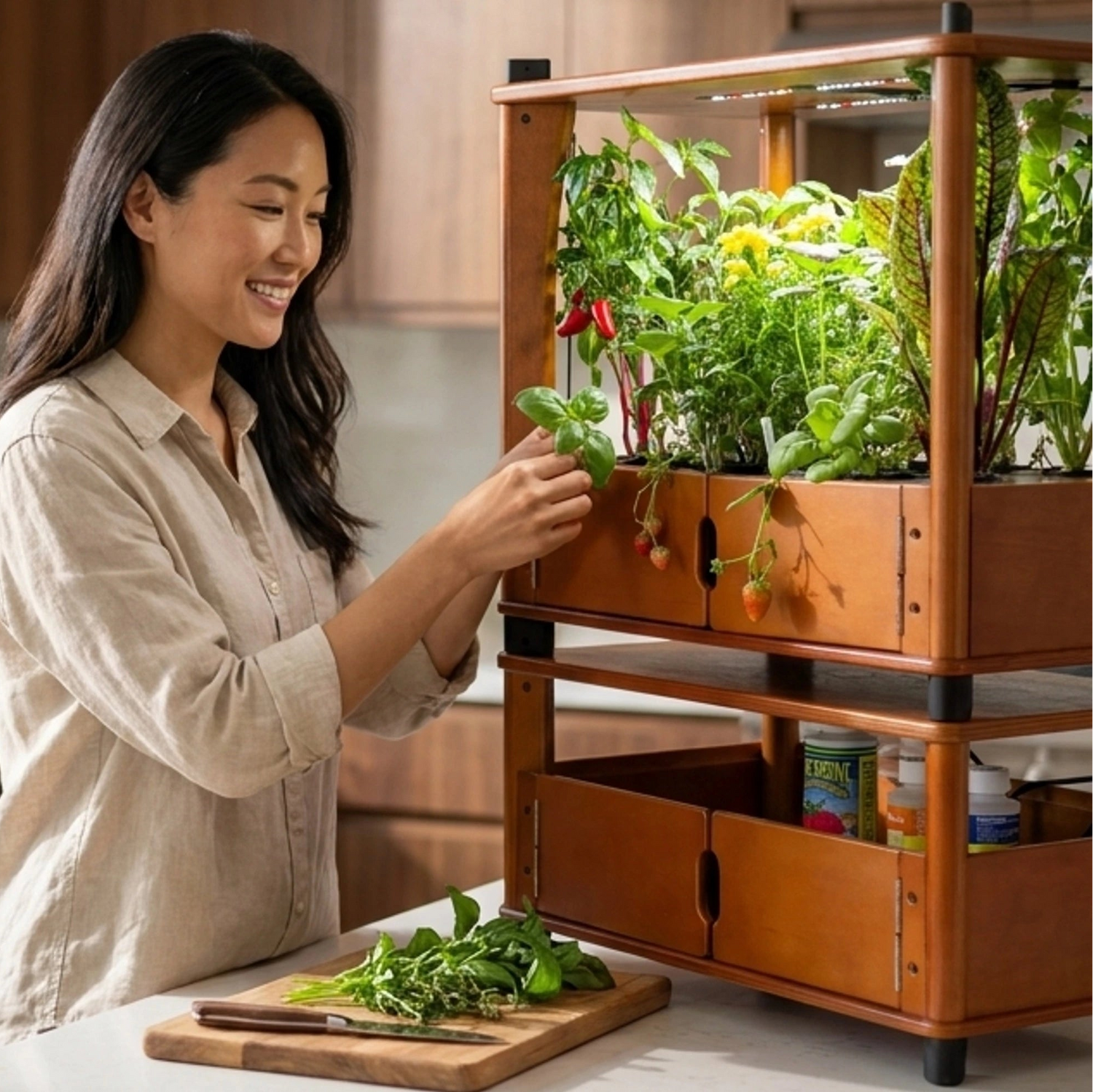
Weeks 7–9 (Thanksgiving harvest window): Full harvest of all four herbs. Cut what you need for each dish the morning you cook it.
For more on timing your indoor herb setup, our complete indoor seed timing guide covers germination windows and setup best practices in detail.
Prefer to start with individual herbs? Sage (Common), Thyme (Summer), Rosemary, and Parsley (Giant of Italy) are each available separately for $7.99. If you're adding to an existing Aquager farm, you only need the seed pods.
Frequently Asked Questions
What is the exact planting calendar for Thanksgiving herbs?
Plant rosemary by September 22. Plant sage, thyme, and parsley by October 7. This gives each herb its full establishment window before the November 20–24 harvest target. Rosemary takes the longest (8–10 weeks) and sets the September deadline for the entire lineup.
Can I start herbs indoors without a grow light?
Technically yes, but results vary heavily by window placement and season. In September and October, available daylight hours are dropping and sun angles are lower — south-facing windows may not provide enough light for consistent herb growth. A dedicated grow light eliminates this variable entirely. The Aquager farm's built-in light is calibrated for herb and leafy green growth, and the automated cycle ensures consistent daily exposure. See our year-round indoor herb growing guide for light requirement details by herb.
What happens if I miss the planting window?
You can still start in mid-to-late October — you'll have partial harvests of fast-growing herbs like thyme and parsley by Thanksgiving, but rosemary won't be ready. For a full four-herb harvest, the September-to-early-October window is firm. A late start is still worth doing: plants started in October are ready for Christmas and every holiday meal through January and February.
How do I know when my herbs are ready to harvest for the first time?
Each herb gives you a visual cue. Thyme: stems reach 4–6 inches long with dense needle-like leaves. Sage: outer leaves are firm, 1.5–2 inches long, with a strong scent when rubbed. Rosemary: woody stems with full needle coverage, at least 5–6 inches of new growth. Parsley: multiple stems with fully formed compound leaves, at least 6 inches tall. For harvesting thyme and sage specifically, cut no more than the top third of any stem on a first harvest — this encourages bushier regrowth rather than leggy stems. Our guide to the easiest herbs to grow indoors has a full breakdown by variety.
Order in September. Harvest by Thanksgiving.
The herbs on your Thanksgiving table can come from a grocery bundle bought four days out — or from a garden you started two months ago on your kitchen counter. The quality difference is real. The cost difference, over a full holiday season, is significant. And the setup, once done in September, runs on autopilot through the entire fall.
September is the window. The math works. Order now.
Author: Aquager · Published: June 7, 2026 · Updated: June 7, 2026












0 comments