
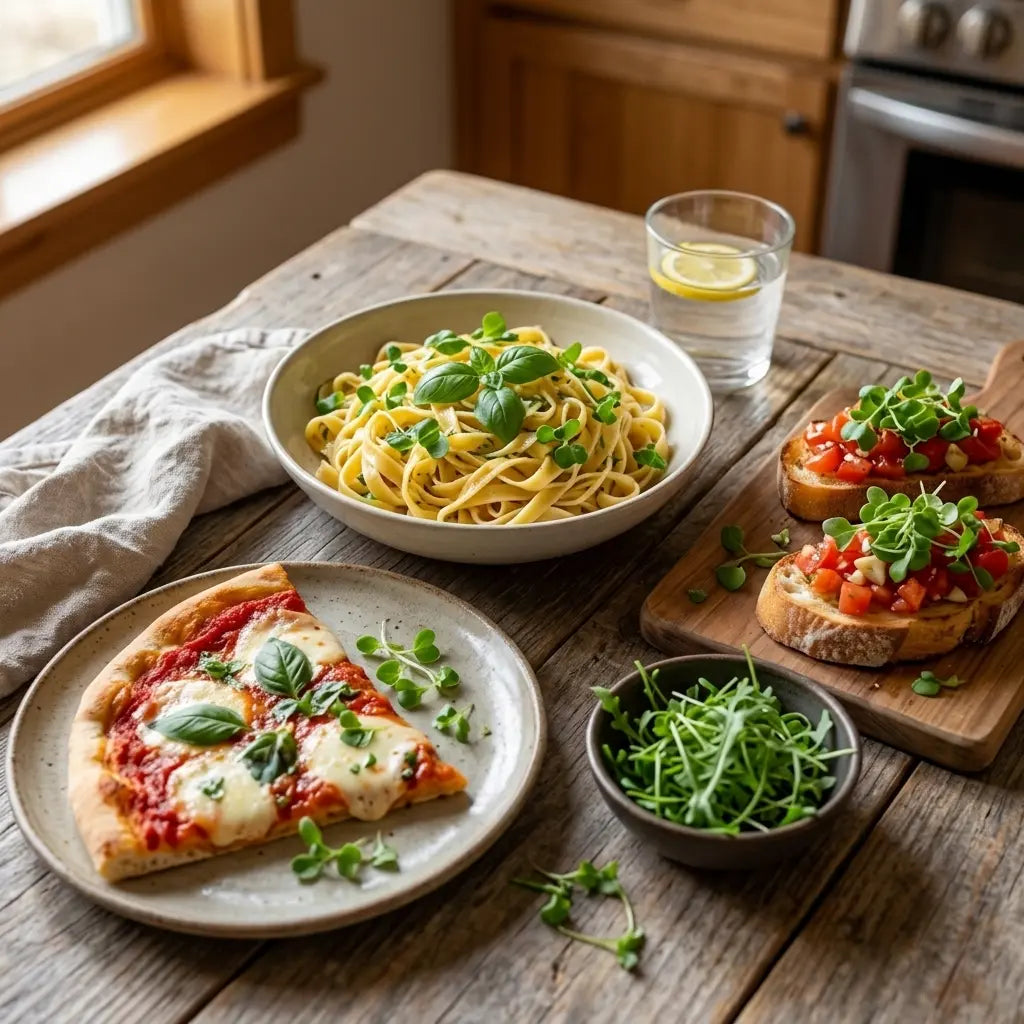
If pizza, pasta, and bruschetta already show up in your weekly cooking rotation, there is a fast way to make all three taste sharper without rewriting a single recipe. Swap a few of the whole herbs you already reach for with microgreens, and the upgrade shows up by the first bite. No new technique required, just a different ingredient doing the same job better.
Roman pizzerias have finished pies with peppery arugula straight out of the oven for generations. Home cooks across Italy tear fresh basil over pasta instead of using dried flakes for the same reason: a fresher herb tastes sharper. Even a simple bruschetta topping gets the same treatment, with a scattering of basil for color and bite instead of one whole leaf laid on top.
Microgreens take that same idea one step further. A small pinch does the work of a handful of chopped herbs, with almost no prep and a more concentrated flavor in every bite. Here is how arugula and basil microgreens fit into all three dishes, no commitment to growing your own required, though you may change your mind by the end.
Arugula Pizza Topping: The Roman Tradition
In Rome, pizzerias rarely bake arugula into a pizza. The leaves wilt, lose their pepper kick, and turn from a bright ingredient into a sad green smear. Instead, the arugula goes on after the pizza comes out of the oven, while the crust is still hot enough to soften the leaves without cooking them through.
Arugula microgreens take this tradition a step further. Because the stems are so young and tender, you get the same peppery bite as full grown arugula using a fraction of the volume. A light scattering across a hot Margherita, or a white pizza with mozzarella and prosciutto, does the work that a much larger handful of regular arugula would normally need to do.
The same trick works on flatbreads, focaccia, and even leftover pizza reheated in a hot oven the next day. Anywhere a crust comes out hot and a little bit of pepper would round out the flavor, arugula microgreens are worth keeping nearby.
Grab a tray of Arugula Microgreens and you will have a steady supply ready in about a week, well before the next pizza night rolls around. Snip what you need straight onto the slice and skip the trip to the produce aisle. For the full nutrition picture behind that peppery bite, our Arugula Microgreens Benefits guide covers it in detail.

What You Need: Arugula Microgreens, extra virgin olive oil, flaky sea salt, a pizza fresh out of the oven.
Basil Microgreens for Pasta: A Concentrated Upgrade
Torn basil leaves look beautiful scattered over a bowl of pasta, right up until the heat from the dish starts working against them. Within a few minutes, the edges blacken, the leaf wilts flat, and most of the aroma that made it worth adding in the first place has already faded into the sauce.
Basil microgreens hold up differently. Because the leaves are harvested so young, they carry a concentrated dose of basil's signature oils in a much smaller package, so a small pinch does what used to take a small handful of torn leaves. The flavor lands faster and the texture stays lighter on the plate instead of sinking into the sauce.
This works whether the pasta is hot or cold. A pinch over a warm bowl of marinara behaves the same way it does scattered across a cold pasta salad at a summer dinner, which makes basil microgreens one of the few garnishes that does not need to be planned around the season.
Toss Basil Genovese Microgreens in off the heat, right before the pasta hits the bowl, whether you are working with a simple marinara, a butter and parmesan toss, or a cold pasta salad. If you would rather grow your own supply from scratch, our Basil Microgreens Growing Guide walks through the full process start to finish.
What You Need: Basil Genovese Microgreens, your favorite pasta and sauce, grated parmesan, a few minutes off the heat.
Bruschetta Topping That Actually Looks Italian
Bruschetta lives or dies on presentation almost as much as taste. A pile of torn basil on warm, oiled bread looks heavy within a few minutes, and the leaves start to wilt and darken right as guests reach for a piece.
Basil microgreens solve the same problem from the other direction. The pieces are small enough to scatter evenly without clumping, the color stays vivid green for the length of a dinner party, and the bite of fresh basil still comes through in every single piece.
It also turns a basic recipe into something that photographs well, which matters if bruschetta is the dish that opens the night. A bruschetta topping with visible flecks of bright green reads as restaurant plating rather than a quick appetizer thrown together before guests arrived.
Top the bruschetta right before serving, since the toasted bread is the only part of this dish that does not hold up well sitting around. A diced tomato and garlic base with a drizzle of olive oil is really all the rest of the recipe needs.

What You Need: Basil Genovese Microgreens, toasted baguette slices, diced tomato, garlic, and good olive oil.
Build Your Italian Microgreens Topping Bar
By now the pattern is probably obvious. The same two microgreens cover all three dishes: arugula for a peppery bite, basil for the classic Italian aroma everyone already associates with the cuisine.
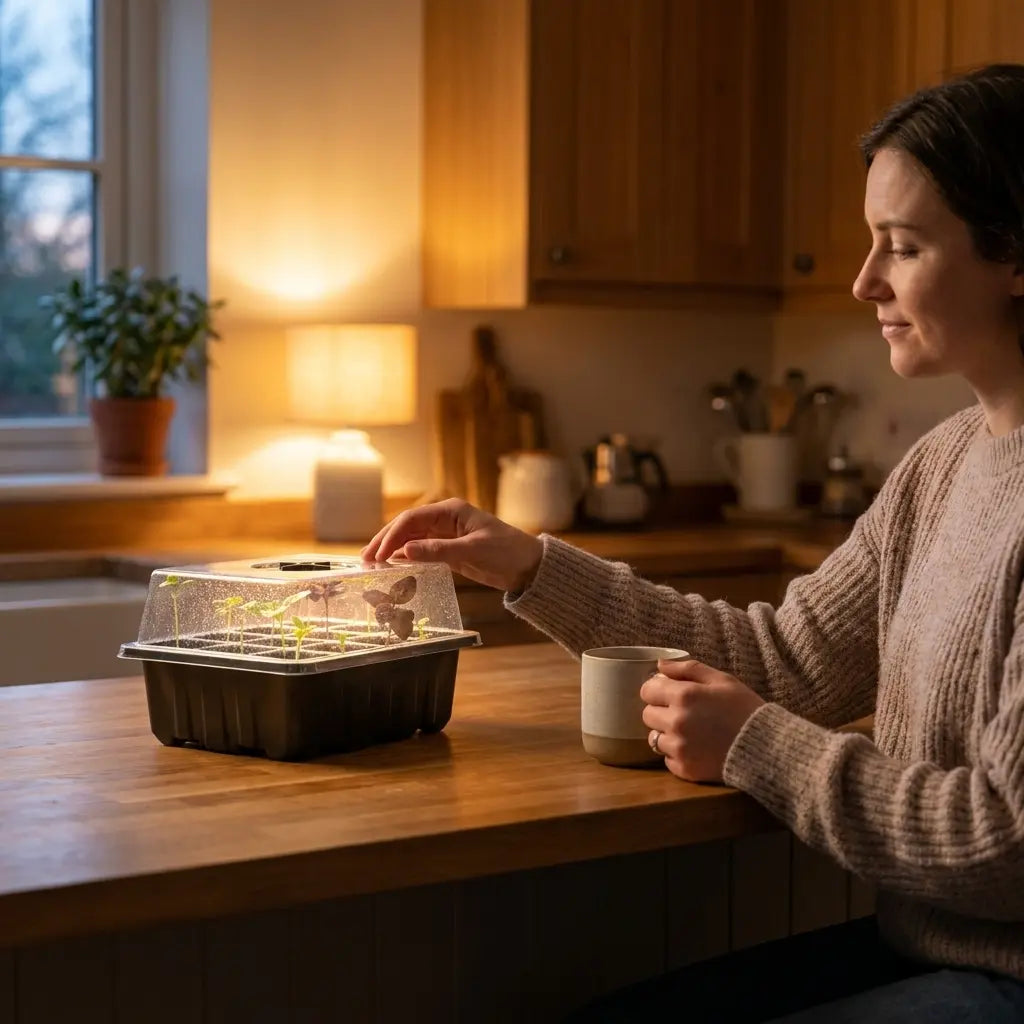
Instead of buying small herb clamshells that wilt within days of getting them home, growing both at once means a fresh batch is always close to ready, with the next harvest only a few days behind the one you just used. That timing is what actually makes Italian night easier, not a new recipe or a new technique.
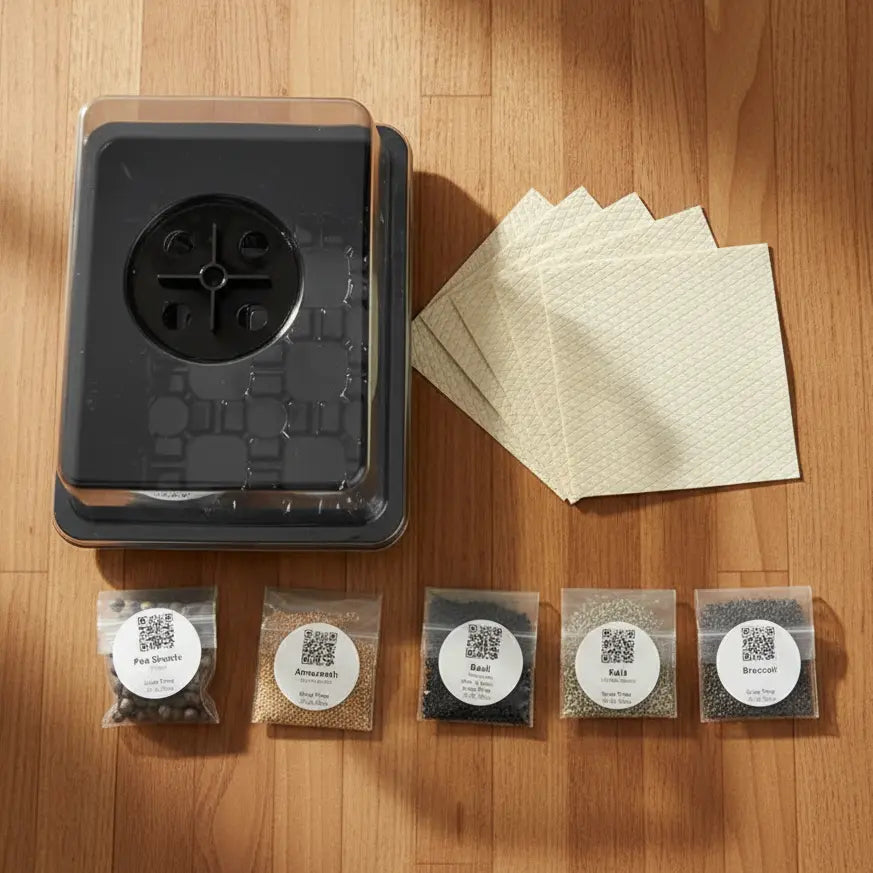
The Microgreens Starter Kit is the easiest way to get both going side by side. It comes with the tray, dome, and grow mat already included, so the only real decision left is which seeds go in first, with the second tray ready to follow once the first one gets used up.
It also tends to pay for itself fast. A small clamshell of fresh basil or arugula from the grocery store rarely lasts past a few days before it turns, and most of it gets thrown out half used. One tray of microgreens covers several rounds of pizza, pasta, or bruschetta for close to the same price, with none of it wasted in the back of the fridge.
Frequently Asked Questions
Can I put arugula microgreens on pizza before it bakes instead of after?
You can, but the leaves will wilt and lose most of their peppery bite in the oven. Adding them after baking, while the crust is still hot, keeps the flavor and texture intact and gives you the same effect Roman pizzerias have relied on for years.
Do basil microgreens taste different from full grown basil?
The flavor is the same sweet, slightly peppery basil profile, just more concentrated. A smaller amount delivers the same impact as a larger handful of torn leaves, which is part of why a single tray goes further than it looks like it should.
How long do microgreens stay fresh once they are harvested?
Most microgreens hold their color and flavor for three to five days in the fridge when kept dry. For a dish like bruschetta where presentation matters, harvesting right before serving gives the best texture and the brightest color.
Can arugula and basil microgreens be swapped for each other in these recipes?
Mostly yes. Arugula brings a peppery edge while basil leans sweet and aromatic, so swapping changes the flavor profile slightly but works fine across all three dishes if that is what you have on hand that night.
Do I need to grow my own, or can I buy microgreens already harvested?
Some grocery stores and farmers markets carry fresh microgreens, but growing your own on the counter means a fresh batch is ready exactly when a recipe calls for it, with no extra trip to the store required.
Your Italian Pantry Just Got an Upgrade
None of these three swaps require a new recipe, a trip to a specialty store, or a single new kitchen skill. Pizza gets its arugula after the bake instead of before. Pasta gets a pinch of basil instead of a handful. Bruschetta gets the same basil for a topping that holds its color through an entire dinner party.
If Italian night is a regular fixture in your kitchen, growing both microgreens at once means neither one runs out mid recipe, and neither one spends three days wilting in the crisper drawer before you get around to using it. That is really the whole upgrade: fresher ingredients, used closer to the moment they are cut.
And if you want more ways to put a tray of microgreens to work beyond Italian cooking, our Pea Shoot Microgreens Recipes piece has eight more ideas worth trying once pizza, pasta, and bruschetta night becomes a regular thing.
Author: Aquager · Published: June 28, 2026 · Updated: June 28, 2026












0 comments