
Every year on October 16, World Food Day marks a moment to think about something most of us take for granted: the ability to eat. To sit down to a meal that is fresh, nutritious, and close to home. For close to 800 million people on this planet, that moment doesn't come every day.
The numbers behind global food security are genuinely sobering. According to the UN Food and Agriculture Organization, hunger affects roughly one in eleven people worldwide — and that figure has barely moved in years, despite decades of international effort. The global food system, as it currently functions, is fragile, carbon-intensive, and deeply uneven. The average piece of produce in the United States travels over 1,500 miles before it reaches a plate.
None of that is the fault of any individual household. But there is something each of us can do — something small, consistent, and surprisingly meaningful. And it starts with a windowsill.
The State of Global Food Security in 2026
Food security means having reliable access to enough safe, nutritious food. It's not just about calories — it's about the diversity, quality, and cultural meaning of what people eat. By that definition, the world has a significant problem.
Around 3 billion people globally cannot afford a healthy diet. Climate disruption is shrinking growing seasons and threatening crop yields in the regions most dependent on agriculture. Supply chains — exposed dramatically in the early 2020s — remain vulnerable to shocks that can empty grocery shelves in days. These are structural problems, and they require structural solutions.
But there is another layer to this conversation that rarely gets discussed: the cultural and psychological shift that happens when ordinary people grow even a fraction of their own food. Not to replace the global food system, but to exist in a slightly different relationship with it. That's what food independence really means.
What Food Independence Actually Means for Everyday People
Food independence is not a homestead fantasy. It doesn't require acreage, a greenhouse, or expertise you've spent years acquiring. At the household level, food independence is simply this: you have some say in where at least part of your food comes from.
When you grow something at home — even something small — you've stepped outside the supply chain for that ingredient. You know what went into it (nothing, except water and light). You harvested it minutes before eating it. The nutrient content hasn't been degraded by weeks in refrigerated transit. And you didn't buy it.
This is a sustainable food practice that scales beautifully down to the smallest possible unit: one person, one tray, one counter. The cumulative effect of thousands of households doing this is not nothing. It's a distributed, resilient, low-tech form of local food production that doesn't depend on policy changes, weather patterns, or logistics networks.
Why Microgreens Are the Fastest Act of Food Sovereignty You Can Take
If you were designing the perfect entry point to growing your own food — something accessible, fast, nutritious, and space-efficient — you would arrive at microgreens.
They germinate in 1–2 days. They're ready to harvest in 7–14 days. They grow in an area roughly the size of a piece of notebook paper. They don't require soil, a garden, outdoor space, or special lighting if you have a reasonably bright window. And gram for gram, they are among the most nutrient-dense foods you can eat — studies have found that many microgreen varieties contain 4–40 times the concentration of vitamins and antioxidants found in their mature counterparts.
This is not a minor point on World Food Day. One of the persistent challenges in food security is not just caloric access but micronutrient access — the vitamins and minerals that determine long-term health outcomes. Broccoli microgreens are extraordinarily rich in sulforaphane, a compound studied intensively for its anti-inflammatory properties. Pea shoots deliver high levels of Vitamin C. Sunflower microgreens are packed with zinc, folate, and complete protein.
They're also, as we've covered in depth, among the easiest food crops a beginner can grow. There is no steep learning curve, no expensive equipment, and almost no failure rate if the basic conditions are met. The barrier to entry for food production — for most of history, a serious barrier — is essentially removed.
Start with One Tray: The Aquager Microgreens Starter Kit
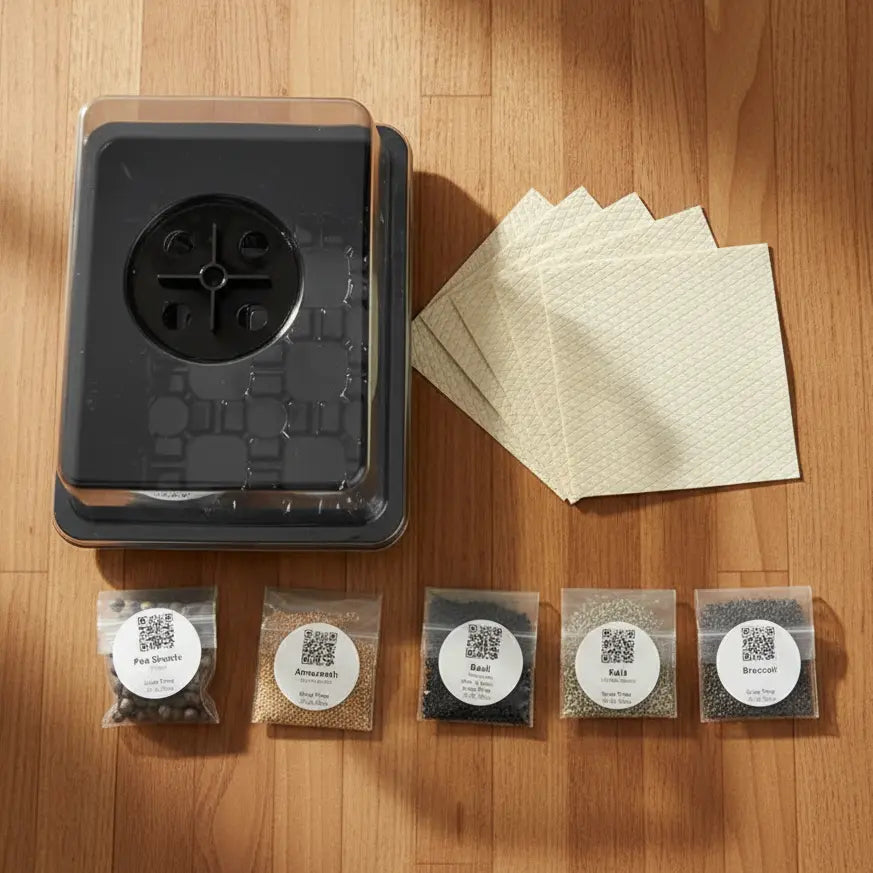
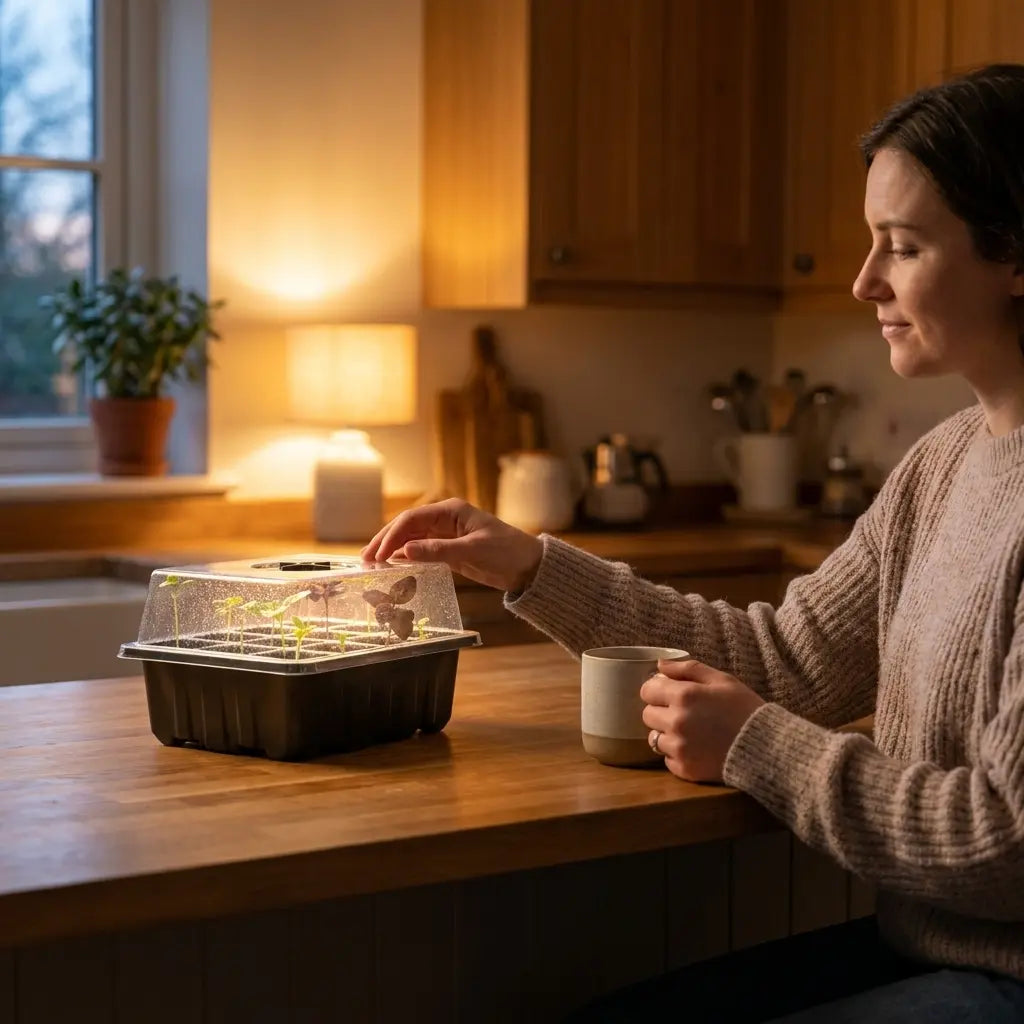
The Aquager Microgreens Starter Kit was built around a simple premise: growing your own food should be as uncomplicated as possible. The kit includes a BPA-free growing tray, a humidity dome for optimal germination, and an organic grow mat that holds moisture without soil. Add seeds, add water, wait a week.
At $29.99, it's a meaningful but accessible investment in your household's food independence — one that returns value every time you harvest a tray instead of buying a clamshell of greens from the produce aisle.
Frequently Asked Questions
What is World Food Day and when is it?
World Food Day is observed annually on October 16, marking the founding of the United Nations Food and Agriculture Organization in 1945. It's a global moment to focus attention on food security, hunger, and sustainable food systems — and increasingly, to discuss what individuals and communities can do locally.
Can growing microgreens at home actually make a difference to food security?
At the individual household level, growing microgreens reduces your dependence on supply chains for at least some portion of your fresh produce. It also keeps nutrient-dense food accessible regardless of grocery prices or shortages. Scaled across many households, distributed home food production represents a meaningful contribution to local food resilience. It's not a replacement for systemic change — but it's not nothing either.
Do I need outdoor space or a garden to grow microgreens?
No. Microgreens grow indoors, in a tray roughly the size of a sheet of paper, with water and ambient light. They are the most space-efficient food crop available to home growers. A windowsill is enough.
How often can I grow microgreens?
Continuously. Harvest one tray, start the next. Many growers stagger two or three trays so they're always harvesting something. Microgreens grow just as well in winter as in summer — there's no seasonality constraint with indoor growing.
Is growing microgreens at home cheaper than buying them?
Significantly. A single pack of microgreens seeds ($3.99) yields multiple harvests and produces what would cost $8–15 at a grocery store or farmers market, assuming you can find them at all.
One Windowsill. One Tray. One Meaningful Step.
World Food Day exists as a reminder that the global food system needs attention — and that food is not, or shouldn't be, something anyone takes for granted. The conversations it prompts about sustainable food production, food access, and the future of how we eat are necessary ones.
But alongside the big-picture conversations, there are small, practical acts that connect the global to the personal. Growing even one tray of microgreens a week is a form of participation in a different kind of food system — one that's local, clean, fast, and entirely within your control.
That's what food independence looks like at the household scale. Not a declaration. Just a tray of greens on a windowsill, ready to harvest.
Author: Aquager · Published: June 13, 2026 · Updated: June 13, 2026












0 comments