
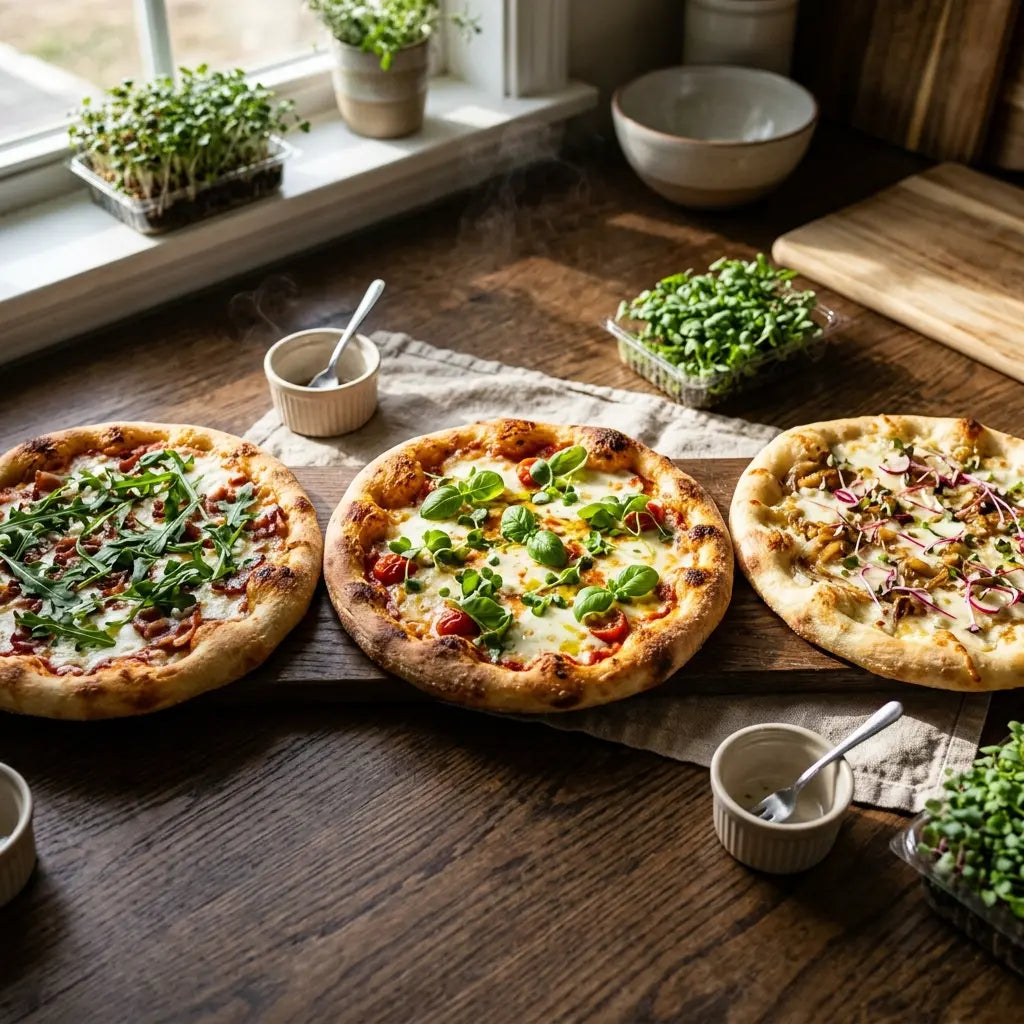
Pizza topping rules change the moment the pie comes out of the oven. Most home cooks pile everything on before baking and call it done, while a few classic moves rely on adding the right ingredient after the bake instead. That single shift, timing the topping to land after the heat, is the difference between a topping that wilts into the cheese and one that stays bright, sharp, and photo ready.
The trick shows up across three very different pizza styles. Arugula goes on a classic Rucola pie after baking. Basil gets torn over a hot Margherita right at the end. Radish brings color and heat to a white pizza in the last thirty seconds before serving. Restaurants rely on this post-bake finish constantly, but it rarely gets explained outside the kitchen.
The most common mistake is adding everything at once before the oven, then wondering why a sharp garnish tastes muted by the time the pizza reaches the table. Heat is the variable most home cooks forget to account for, and it changes every topping differently depending on how delicate it is.
Microgreens make the whole technique even easier. A small pinch carries more flavor than a full grown leaf, so the post-bake finish gets sharper and more consistent every time. Here is the topping chart, broken down by pizza style, with exactly what to use and when to add it.
Classic Rucola Pizza: The Arugula Pizza Topping Tradition
Rucola pizza is the original post-bake topping move. Roman pizzerias never bake the arugula into the pie, since the leaves wilt fast and lose their peppery bite in the oven's heat. Instead, the arugula lands on top the moment the pizza comes out, while the crust is still hot enough to soften the leaves without cooking them.
Arugula microgreens take the same tradition and make it sharper. The stems are young and tender, so a light scattering delivers the same peppery kick as a much bigger handful of full grown arugula. That matters most on a hot Rucola pie, where the crust and cheese can easily overpower a topping added too sparingly.
The timing window is short. Add the arugula within the first minute after the pizza leaves the oven, while the surface is still hot enough to wilt the leaves slightly but not cook them through. Wait much longer and the topping just sits on a cooling pizza instead of melting into it.
A common mistake is treating arugula like any other topping and tossing it on while the pizza is still in the oven for the last minute of baking. Even a single minute of oven heat is enough to wilt the leaves and strip out most of the pepper flavor that makes the topping worth adding in the first place.
Buying a fresh bunch of arugula for one pizza night usually means tossing out whatever is left a few days later. A tray of Arugula Microgreens solves that by staying ready on the counter, with a fresh harvest available again about a week after the last one. For the nutrition case behind that peppery bite, the Arugula Microgreens Benefits guide covers it in full.
What You Need: Arugula Microgreens, a Rucola or plain cheese pizza fresh from the oven, a drizzle of olive oil.
Margherita Pizza Toppings: Why Basil Microgreens Beat Whole Leaves
A classic Margherita pizza topping is whole basil leaves, usually added before the bake or torn on right after. The problem is timing. Bake the basil and it turns dark and bitter. Wait too long after the bake and the leaves wilt flat across the melted mozzarella before the first slice gets cut.
Basil microgreens fix both problems at once. Because the leaves are harvested so young, they carry a concentrated dose of basil's signature aroma in a much smaller piece, so a light scattering does the work a much larger handful of torn leaves used to handle. The flavor lands immediately instead of needing a few bites to build.
The post-bake window for a Margherita runs a little longer than a Rucola pie, since the tomato sauce and mozzarella hold heat differently than a plain crust. Anywhere from thirty seconds to two minutes after the pizza leaves the oven still gives the basil microgreens enough warmth to release their aroma without wilting flat.
Pair the basil microgreens with a light hand on the mozzarella. A Margherita already leans rich between the cheese and the crust, so the basil's job is to cut through that richness with something sharp and aromatic, not add another heavy layer on top.
A small basil plant from the grocery store rarely survives more than a few pizza nights before it starts to brown. Basil Genovese Microgreens grow back on their own schedule instead, so the next harvest is already close behind the one just used. The Basil Microgreens Growing Guide walks through the full setup if a tray is worth adding to the counter.
What You Need: Basil Genovese Microgreens, a Margherita pizza fresh from the oven, a drizzle of good olive oil.
White Pizza: Radish Confetti for Color and Heat
White pizza skips the red sauce entirely, which means the toppings carry almost all of the color and visual interest. A plain white pie with just mozzarella and garlic oil looks pale and a little unfinished without something bright scattered across the top.
Radish confetti microgreens solve that directly. The leaves and stems carry a pink to deep red color along with a light peppery heat, closer to a mild radish bite than anything spicy. Scattered across a white pizza, they read as a finished, restaurant style topping instead of a plain cheese pie.
The garlic oil base on most white pizzas tends to read as pale and one note without something to break it up visually. Radish confetti solves the color problem and the flavor problem at the same time, since the same scattering that brightens the plate also adds a layer of flavor the garlic oil alone cannot provide.
Here is the simple three-step version of the post-bake finish for a white pizza:
1. Pull the pizza the moment the cheese sets
White pizza needs a shorter bake than a red sauce pie since there is no liquid to cook off. Pull it as soon as the cheese turns golden at the edges and the center is fully melted.
2. Add the radish confetti microgreens within the first minute
Scatter a light, even layer across the entire surface while the pizza is still steaming. The heat will soften the stems slightly without wilting the color out of them.
3. Finish with a light drizzle of olive oil
A small drizzle of good olive oil right after the microgreens go on helps the color and the heat both come through in the first bite, instead of the topping sitting dry on top of the cheese.

A bag of radishes from the grocery store gives maybe two pizza nights worth of confetti before the rest goes soft in the crisper drawer. A tray of Radish Confetti Mix Microgreens keeps a fresh harvest coming every few days instead, with the color and heat staying consistent from one pizza night to the next. The Spicy Microgreens Ranked piece breaks down exactly how radish compares to mustard and arugula if heat level matters when picking a topping.
What You Need: Radish Confetti Mix Microgreens, a white pizza fresh from the oven, olive oil for finishing.
Build Your Pizza Topping Pack
Every italian pizza topping move in this chart follows the same pattern: time the topping for right after the bake instead of before. Once that habit is in place, the only real decision left is which seeds to keep growing.
A fourth microgreen rounds out a full pizza topping pack. Amaranth microgreens carry a deep garnet red color and a mild, slightly earthy flavor that works well as an extra accent on a white pizza alongside the radish confetti, or as a color contrast scattered over a Margherita.
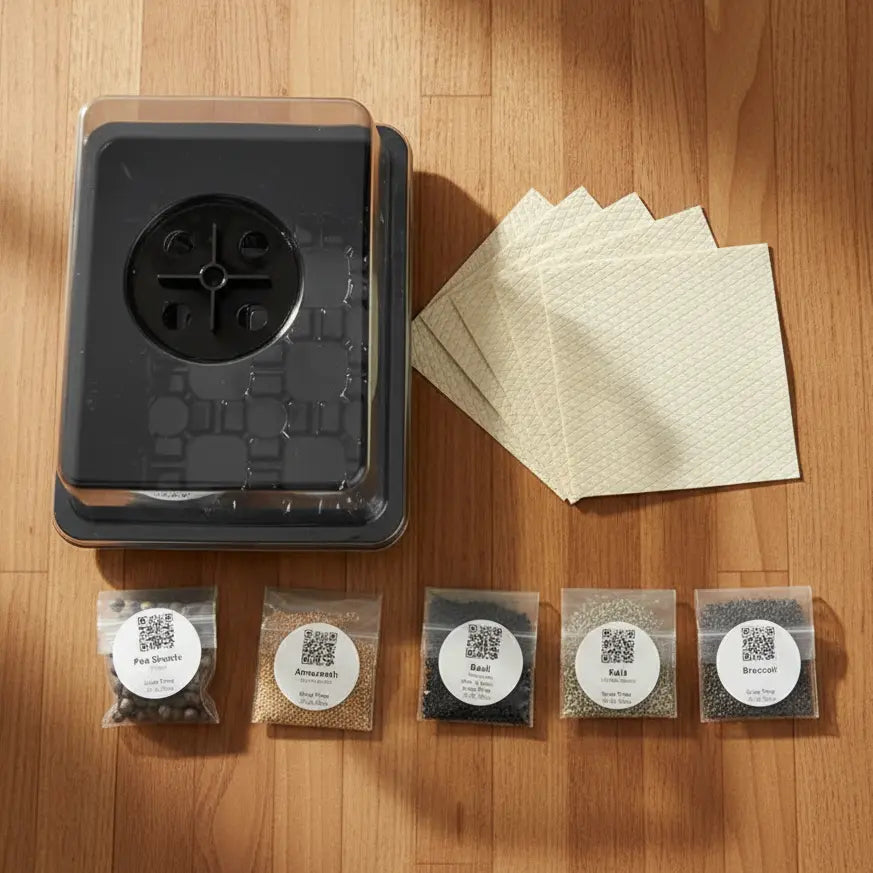
A tray of Amaranth (Garnet Red) Microgreens rounds out the lineup alongside arugula, basil, and radish confetti, giving four different toppings ready to snip straight onto whatever pizza style is on the menu that night. Growing all four at once means there is always something ready, instead of running to the store for a single herb clamshell that gets used once and thrown out half finished.
Buying four separate herb clamshells from the grocery store for one pizza night adds up fast, and most of each one goes to waste before the next pizza night rolls around. Four trays growing on the same counter cost a fraction of that over a month, with almost nothing thrown out since each tray gets harvested close to when it actually gets used.
That is really the whole pizza topping pack: four trays growing on the same counter, each one ready a few days apart, so the post-bake finish is never missing an ingredient on pizza night.
Frequently Asked Questions
What are the best pizza topping suggestions for using microgreens?
Arugula works best on a classic Rucola or plain cheese pizza for a peppery bite. Basil fits a Margherita best for the familiar Italian aroma. Radish confetti adds color and a light heat to white pizza, and amaranth rounds out the lineup with a deep red accent that works on nearly any style.
Should microgreens go on pizza before or after baking?
After. Baking wilts microgreens almost instantly and turns the color dull within a minute or two in the oven. Adding them in the first minute after the pizza comes out keeps the color, texture, and flavor intact.
Do microgreens add real heat to a pizza, or just color?
Radish confetti microgreens carry a mild, genuine heat similar to a young radish, not just color. Amaranth and arugula lean more toward an earthy or peppery flavor without much heat, while basil stays sweet and aromatic with no heat at all.
How long do pizza topping microgreens stay fresh after harvest?
Most microgreens hold their color and flavor for three to five days in the fridge once they are snipped. For a post-bake finish where color matters, harvesting right before pizza night gives the brightest result.
Can one microgreen replace another on these pizza styles?
Mostly yes. Arugula and radish confetti both bring a peppery edge with slightly different heat levels, while basil and amaranth lean milder and more aromatic. Swapping changes the flavor slightly but works fine across any of the three pizza styles.
Does the post-bake finish work on frozen or delivery pizza too?
Yes. The technique has nothing to do with how the pizza was made. Heat a frozen or delivery pizza however it normally gets reheated, then add the microgreens in the same one to two minute window right after it comes out hot.
Your Pizza Topping Chart, Ready for Any Night
None of these three moves require a new recipe or a new oven setting. Rucola pizza gets its arugula after the bake instead of before. Margherita gets a lighter, sharper basil finish instead of whole leaves that wilt by the second slice. White pizza gets a scattering of radish confetti for color and a light heat that a plain cheese pie is missing on its own.
Once arugula, basil, radish confetti, and amaranth are all growing on the same counter, pizza night stops depending on whatever happens to still be fresh in the produce drawer. Each tray comes back a few days after the last harvest, so the full pizza topping chart stays stocked without another trip to the store.

If Rucola pizza is where this started, it is worth ending there too. A tray of arugula microgreens is the simplest way to try the post-bake finish for the first time, before working through basil, radish, and amaranth on the next few pizza nights.
Author: Aquager Team · Published: June 28, 2026 · Updated: September 13, 2026 · Reviewed: September 13, 2026 (Phase 2)













0 comments