
Red and green are the colors of every wreath, ribbon, and holiday table. You can also grow both on a kitchen counter and put them on the Christmas dinner plate. To time your planting, see which microgreens to grow in December.
Red amaranth has deep ruby leaves with light green stems. Pea shoots are bright green with curling tendrils. This guide shows how to grow both in five steps, with exact sowing dates so they are ready by December 25.

What You Need to Grow Red and Green Microgreens
You do not need soil or a garden. Here is the full list with current prices:
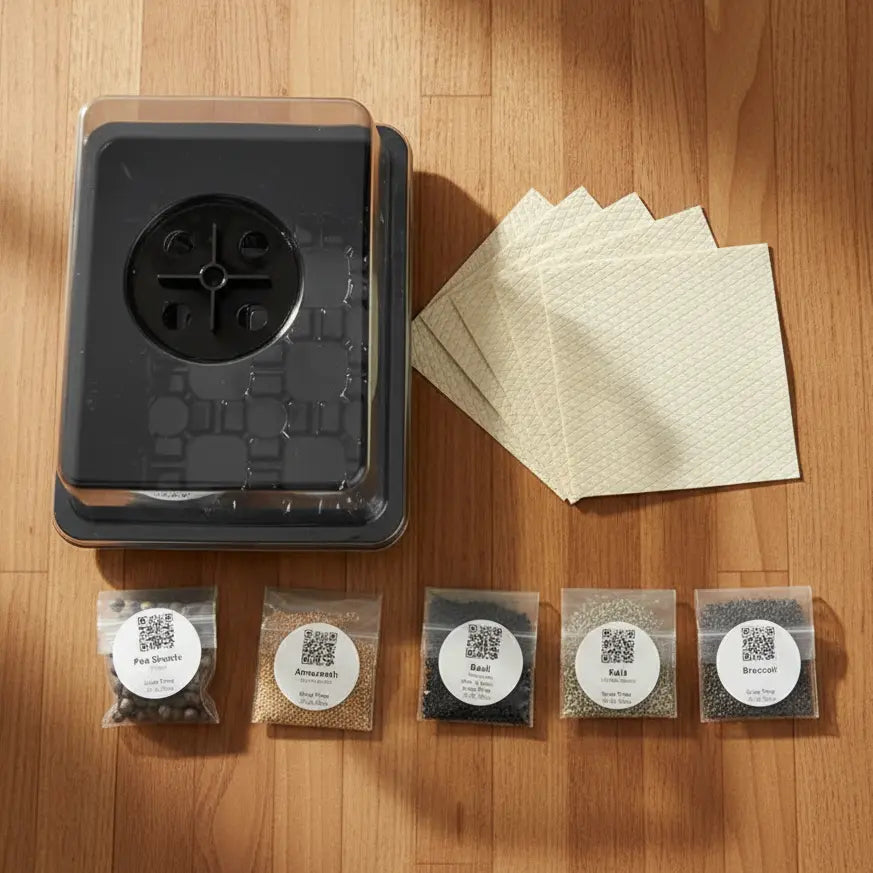
- Tray, dome, and mats: the Microgreens Starter Kit is $29.99. It comes with two trays, a humidity dome, mats, and seeds for pea shoots, lemon basil, kale, and broccoli.
- Red amaranth seeds: Amaranth Garnet Red Microgreens Seeds are $7.99 and include a grow mat.
- A spray bottle for misting the mat.
The total for the red-and-green plan is $37.98 ($29.99 kit plus $7.99 amaranth). The pea shoot seeds are already in the kit.
How to Grow Christmas Microgreens: 5 Simple Steps
1. Pick Your Sowing Dates
Count back from December 25 using each variety’s grow time from the product page. These are the latest safe sowing dates:
| Variety | Grow Time | Latest Sowing Date | Ready Between |
|---|---|---|---|
| Red amaranth | 16 to 25 days | November 30 | December 16 and 25 |
| Pea shoots | 7 to 14 days | December 11 | December 18 and 25 |
Want a practice run first? Sow both a week or two earlier. You get a test harvest and still have time for a second sowing. For a longer plan, see how to stagger microgreens plantings for a continuous harvest.
2. Prepare the Tray and Mat
Place a mat in each tray and wet it until it is evenly damp. Use one tray for amaranth and one for pea shoots. Keeping them apart makes it easier to harvest each on its own schedule.

3. Sow the Seeds and Cover the Tray
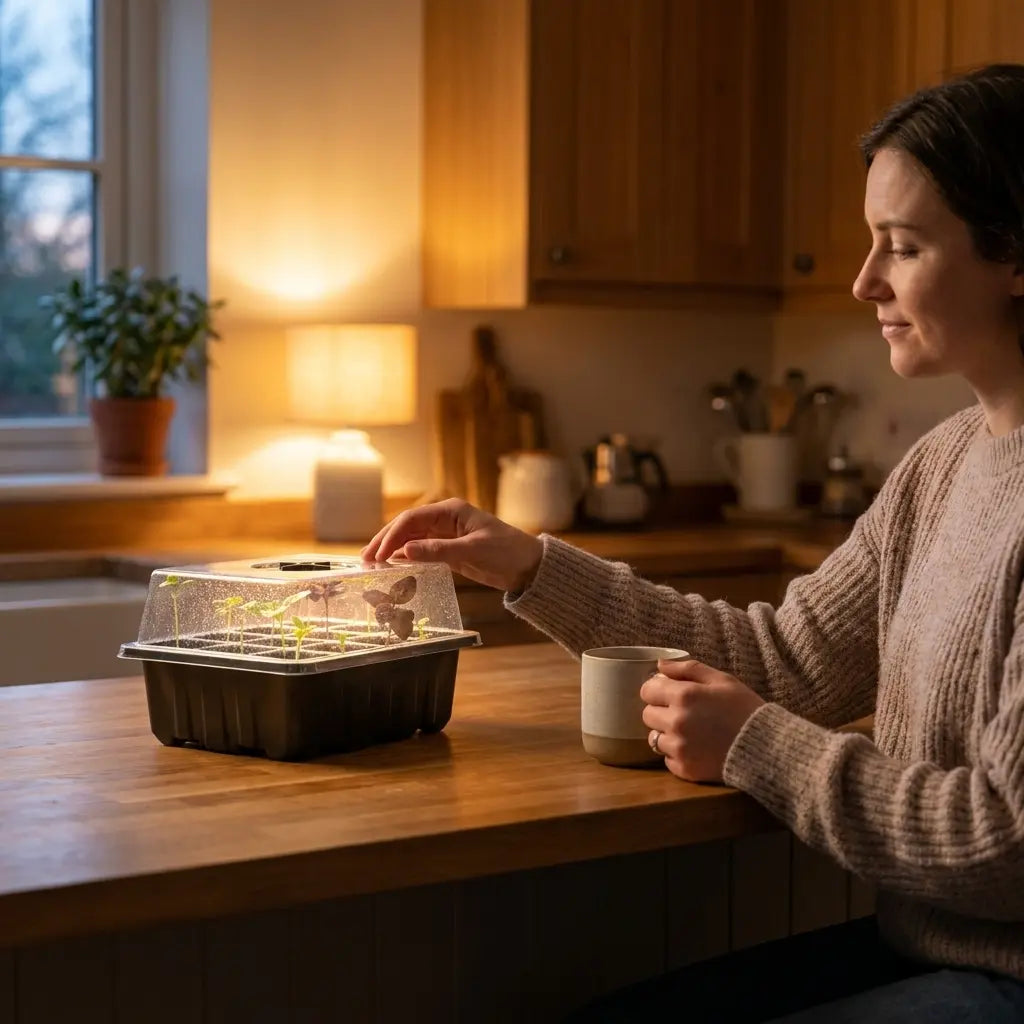
Scatter the seeds evenly over the damp mat and press them lightly so they touch it. Put the dome on the tray and mist as needed so the mat stays damp. Too much water is a common problem in the first days, so aim for damp and not soggy.
4. Give the Trays Light
Once the seeds sprout, move the trays to a bright spot. A sunny window works for many growers, and a basic LED grow light helps when winter light is weak. For more on the options, see how much light microgreens need.

5. Harvest Just Before You Serve
Cut the greens with clean scissors close to the mat on the day you plan to eat them. Pea shoots are ready in 7 to 14 days and amaranth in 16 to 25 days. For the pea shoot basics, see our pea shoot growing guide.
- Amaranth: use a small cluster as a garnish on roasts, smoked salmon, cheese boards, or creamy soups. The flavor is mild and nutty.
- Pea shoots: toss into winter salads or scatter over starters. They are mildly sweet and crunchy. Add them after cooking, since heat wilts them quickly.
- Together: set a small cluster of each side by side for an instant red and green plate.
For more ideas on plating every course, read Microgreens for Christmas Dinner: How to Garnish Every Single Course. Planning brunch too? See 6 Christmas brunch ideas using microgreens you grew yourself.
Red Amaranth vs. Pea Shoots: Quick Comparison
| Red Amaranth | Pea Shoots | |
|---|---|---|
| Color | Deep ruby red, light green stems | Bright green |
| Grow time | 16 to 25 days | 7 to 14 days |
| Flavor | Mild and nutty | Sweet and crunchy |
| Best use | Garnish for roasts, boards, soups | Salads and starters |
| Seeds | $7.99 pack, mat included | Included in the Starter Kit |
If you only grow one, pea shoots are the faster and easier choice. Add amaranth when you want the red.
Common Mistakes When Growing Microgreens for Christmas
- Starting amaranth too late. It can take up to 25 days, so sow it by November 30.
- Overwatering the mat. Keep it damp, not soggy.
- Sharing one tray. The two varieties grow at different speeds.
- Cutting too early. Wait until the greens are fully grown before harvesting.
- Harvesting days ahead. Cut right before serving for the best look and texture.
Frequently Asked Questions
When should I plant microgreens for Christmas?
Plant amaranth by November 30 and pea shoots by December 11 to be sure both are ready by December 25. Amaranth takes 16 to 25 days and pea shoots take 7 to 14 days. Planting a few days earlier gives you a buffer and a practice harvest.
How long do amaranth and pea shoot microgreens take to grow?
Pea shoots are ready in 7 to 14 days. Red amaranth is slower and takes 16 to 25 days. Both are grown on a mat with no soil, so the main job is keeping the mat damp and giving the trays light.
Can I grow both varieties in the same tray?
It is better to keep them separate. The two varieties grow at different speeds and heights, so a shared tray makes harvesting awkward. The Starter Kit comes with two trays, so you can give each variety its own.
Do I need a grow light to grow microgreens in December?
A bright window is enough for many growers. If your windows get little light in winter, a simple LED grow light helps keep the trays growing evenly. Microgreens do not need the strong light that full-size plants need.
Can I give this as a Christmas gift?
Yes. The Starter Kit plus a pack of amaranth seeds makes a complete gift. Add a printed copy of the sowing dates from this guide and the person has everything they need to grow their own red and green microgreens.
A Living Red and Green Plate for Christmas
Every Christmas table has candles, evergreen, and ribbon. Yours can also have red and green microgreens you grew yourself and cut that day. It takes two trays, a few minutes of care, and about three weeks.
Author: Aquager Team · Published: June 7, 2026 · Updated: October 11, 2026 · Reviewed: October 10, 2026 (Phase 2 and 3)












0 comments