
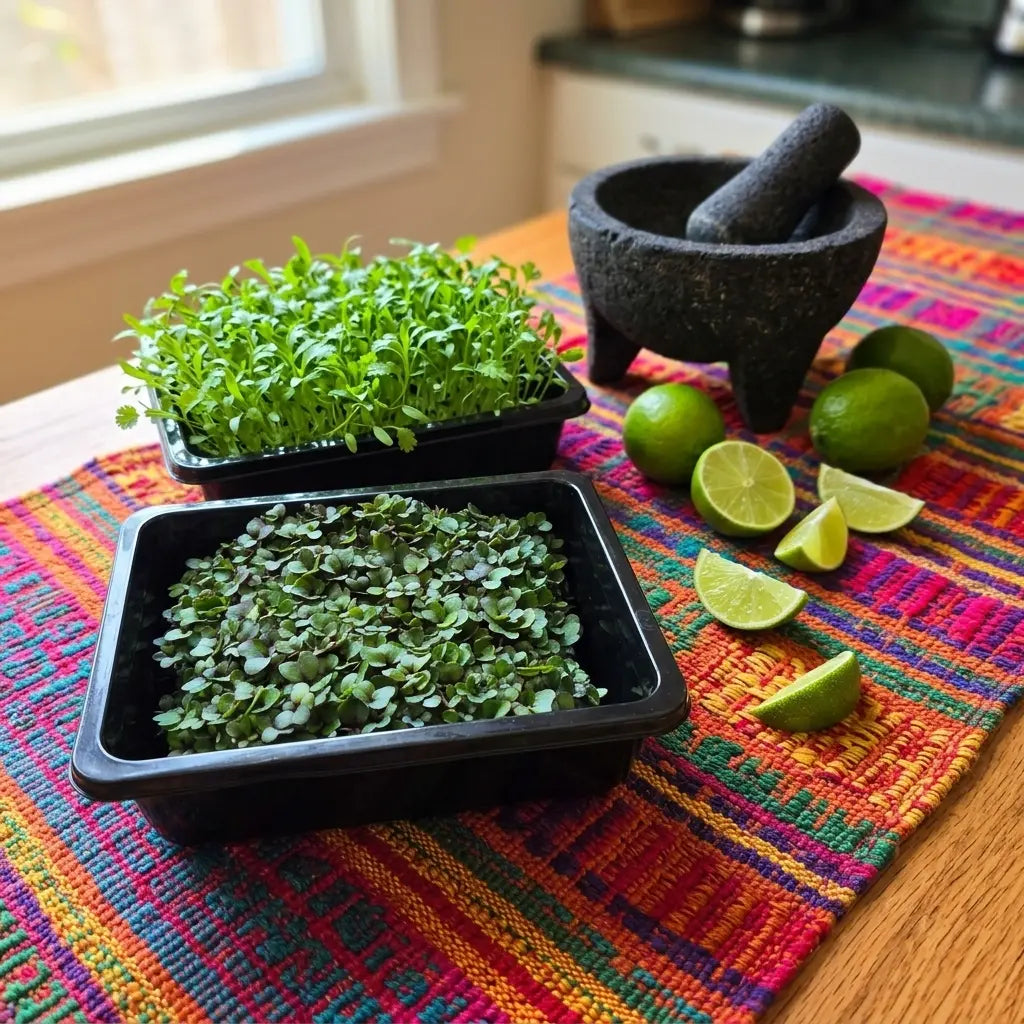
Cinco de Mayo food is built on a handful of ingredients that need to taste fresh: cilantro in the salsa, radish on the tacos, lime on everything. Store-bought versions of both wilt fast and rarely taste as sharp as they should by the time the fifth of May actually arrives.
Cilantro and radish are also two of the fastest things you can grow indoors, which makes them an easy pair to plant with a specific date in mind instead of a vague "sometime this spring."
This guide gives you the exact timeline, plant April 21, harvest by May 5, so both are ready and at their best right when the fiesta starts.
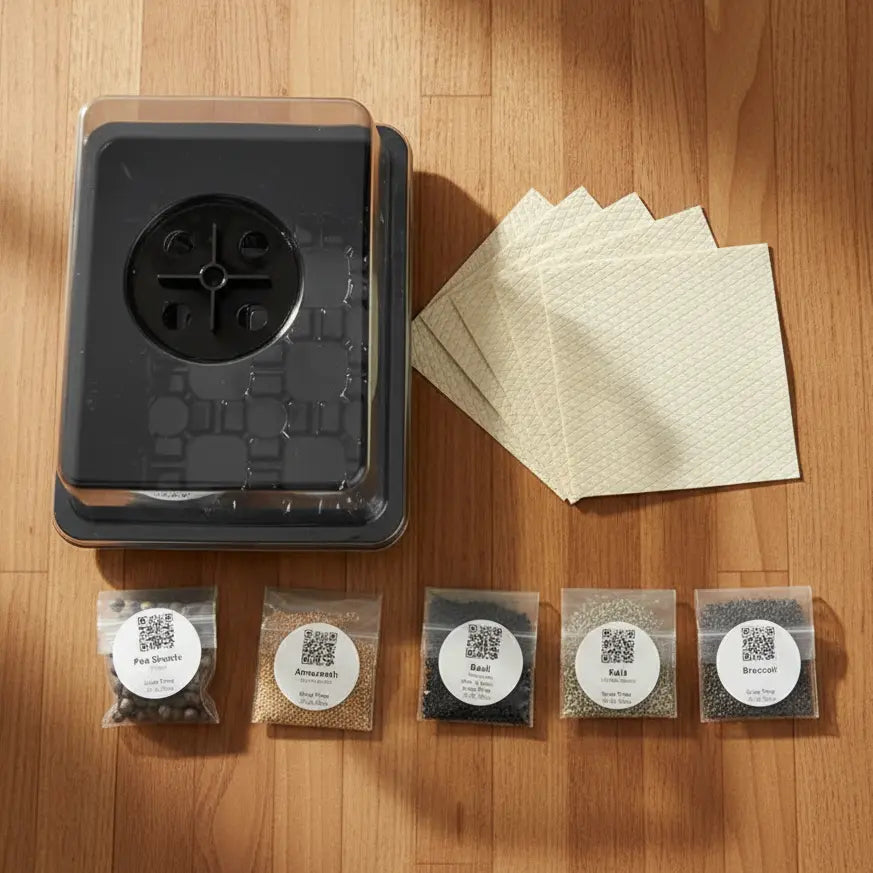
None of this requires a garden or any real growing experience. A tray, a grow mat, water, and a countertop are enough to have fresh toppings ready on schedule.
Why Cilantro and Radish Belong on Every Cinco de Mayo Table
Cilantro is about as close to a non-negotiable ingredient in Mexican cooking as it gets. It shows up in salsa, guacamole, pico de gallo, and as a finishing garnish over nearly every taco, and its bright, citrusy flavor is hard to replace with anything else.
Radish plays a smaller but just as recognizable role, sliced thin over tacos or pickled quickly for a sharp, crunchy contrast to rich, fatty fillings like carnitas or barbacoa. Its color also does real visual work on a plate, especially as microgreens, since the stems carry the same vivid pink as the mature root.
Both ingredients share a practical advantage beyond flavor: they're two of the fastest things you can grow indoors, which matters if Cinco de Mayo sneaks up on the calendar faster than expected.
Growing both also means the toppings on your table were cut minutes before serving instead of days before, which makes a real difference in a dish where the whole point is a burst of fresh flavor on top of something rich and slow-cooked.
The pairing also covers more of the table than it might seem at first. Cilantro reaches into nearly every sauce and garnish on a Mexican-inspired spread, from a squeeze of lime and elote to a simple bowl of rice, while radish adds the crunch that a soft taco or a scoop of guacamole is usually missing. Between the two, most of a Cinco de Mayo table gets a fresh finishing touch without needing a third or fourth herb in the mix.
Plant April 21, Harvest by May 5: Your Cinco de Mayo Timeline
Working backward from May 5th, here's exactly when to start each variety so both are ready at their peak, not still growing in on the day of.
Cilantro Microgreens, Plant April 21
Cilantro microgreens are ready to harvest in about ten to twelve days, which makes April 21 the ideal start date for a May 5th table. The Cilantro Monogerm Microgreens Seeds come with an organic grow mat included, so setup takes minutes.
Unlike full-grown cilantro, which bolts and turns bitter quickly in warm weather, cilantro microgreens are harvested at the seedling stage, before bolting becomes a risk at all. That makes them a more reliable choice for a specific date than a full plant grown outdoors, where a warm spring week can ruin a whole crop overnight.
The flavor is also noticeably more intense than a bunch from the produce aisle. Because the leaves are cut so young, the essential oils that give cilantro its citrusy, slightly soapy edge (for the people who love it) are concentrated into a much smaller leaf, so a light sprinkle does the work of a heavier handful of the mature herb.
Radish Microgreens, Plant April 27
Radish is the faster of the two, ready in as little as five to eight days, so it can go in about a week later than cilantro and still be ready in time. The Radish Confetti Mix Microgreens Seeds bring the same spicy, crisp bite as the mature root, with a bold pink and green color that looks great scattered over a finished dish.
Starting radish a few days after cilantro also spreads out the workload, so you're not managing two trays' worth of setup on the exact same afternoon. Both trays can sit side by side on the same windowsill or counter spot for the rest of the timeline.
The color is as much a reason to grow radish microgreens as the flavor. Where a mature radish only shows its pink skin once sliced, the microgreens carry that same rose-pink color up the whole stem, with a bright green leaf on top. Scattered over a plate of tacos or a bowl of guacamole, it reads as a deliberate garnish rather than an afterthought.

If either date has already passed by the time you're reading this, don't skip the project. Radish especially is forgiving of a late start, and even a slightly smaller cilantro harvest still beats a wilted bunch from the grocery store.
How to Use Your Harvest: Salsa, Guac, and More
Cilantro microgreens work anywhere a recipe calls for chopped cilantro: salsa, guacamole, pico de gallo, or scattered straight over tacos. The flavor is more concentrated than the mature herb, so a smaller handful goes further than you'd expect.
Radish microgreens add crunch and a spicy bite wherever you'd normally reach for pickled or thinly sliced radish: over carnitas, barbacoa, or a simple bean and rice plate. They also make a striking garnish on their own, since the color holds up well against both red and green salsas.
For a simple fiesta topping bar, set out both trays fresh and let guests harvest their own handful straight onto tacos or into a bowl of guacamole. It's a small, interactive touch that a bag of pre-chopped cilantro from the store can't replicate.
If you want a deeper dive into cooking with cilantro specifically, our guide to growing cilantro microgreens as a Latin kitchen staple covers more recipe ideas beyond this Cinco de Mayo timeline, including tacos and ceviche.
Keeping Both Trays Fresh for the Big Day
Once a tray is ready, it doesn't need to be harvested all at once. Cutting only what a recipe calls for and leaving the rest on the mat keeps the remaining microgreens fresh for a few more days, which is useful if Cinco de Mayo prep is spread across a weekend rather than a single afternoon.
For the portion you do cut, a pair of scissors works better than pulling by hand, since it leaves the roots and grow mat undisturbed for the next harvest. A quick rinse and a paper towel to pat dry right before serving keeps both varieties crisp instead of wilting on a warm kitchen counter.
If you're prepping ahead of guests, harvest close to serving time rather than the night before. Both cilantro and radish microgreens hold their texture for a day or two in the refrigerator, but they're noticeably crisper and more fragrant within an hour or two of being cut.
Cinco de Mayo Microgreens FAQ
Will cilantro and radish microgreens really be ready by May 5th?
Yes, if started on the dates above. Cilantro needs about ten to twelve days, so plant it April 21. Radish needs only five to eight days, so it can start closer to the end of April.
What if I'm starting later than April 21?
Radish is still a safe bet even with less lead time, since it's ready in under a week. Cilantro started even a few days late will likely still be usable, just slightly smaller.
Do cilantro microgreens taste the same as the full-grown herb?
Very close, and often more concentrated. Since they're harvested at the seedling stage, cilantro microgreens skip the bolting and bitterness that can affect mature plants grown in warm weather.
Can I grow both varieties in the same tray?
It's possible, but they grow at different speeds, so separate trays make it easier to harvest each one at its best moment instead of compromising on timing.
Is this a good project to do with kids before the holiday?
Yes. Both varieties are fast and forgiving, so kids can watch real progress within days, which is rare for most gardening projects.
What if I want more than one tray's worth for a bigger party?
Start a second tray of each a few days apart from the first. Staggering the start dates spreads out the harvest instead of leaving you with everything ready and wilting on the same day.
Do I need to refrigerate the trays while they're growing?
No. Both varieties grow best at normal room temperature on a counter or windowsill. Refrigeration is only useful after harvest, for storing what you've already cut.
Will the flavor be too strong for guests who aren't used to fresh cilantro?
It can be more pronounced than a store-bought bunch, so start with a light sprinkle rather than a heavy handful, especially for guests who are on the fence about cilantro to begin with.
Conclusion
Cinco de Mayo food deserves fresh toppings, not a wilted bunch of cilantro from the store. Plant cilantro April 21 and radish a few days later, and both will be at their peak exactly when the fiesta starts.

Whether you're building a full spread or just want fresh cilantro for one bowl of guacamole, both varieties are simple enough to start this week and still make the date.
If this is your first time growing microgreens indoors, our beginner's guide to growing your first tray in 7 days covers the basics before you start. And if radish becomes a favorite beyond this one holiday, our ranking of the spiciest microgreens shows how it compares to mustard and arugula.
Author: Aquager · Published: July 12, 2026 · Updated: July 12, 2026












0 comments