
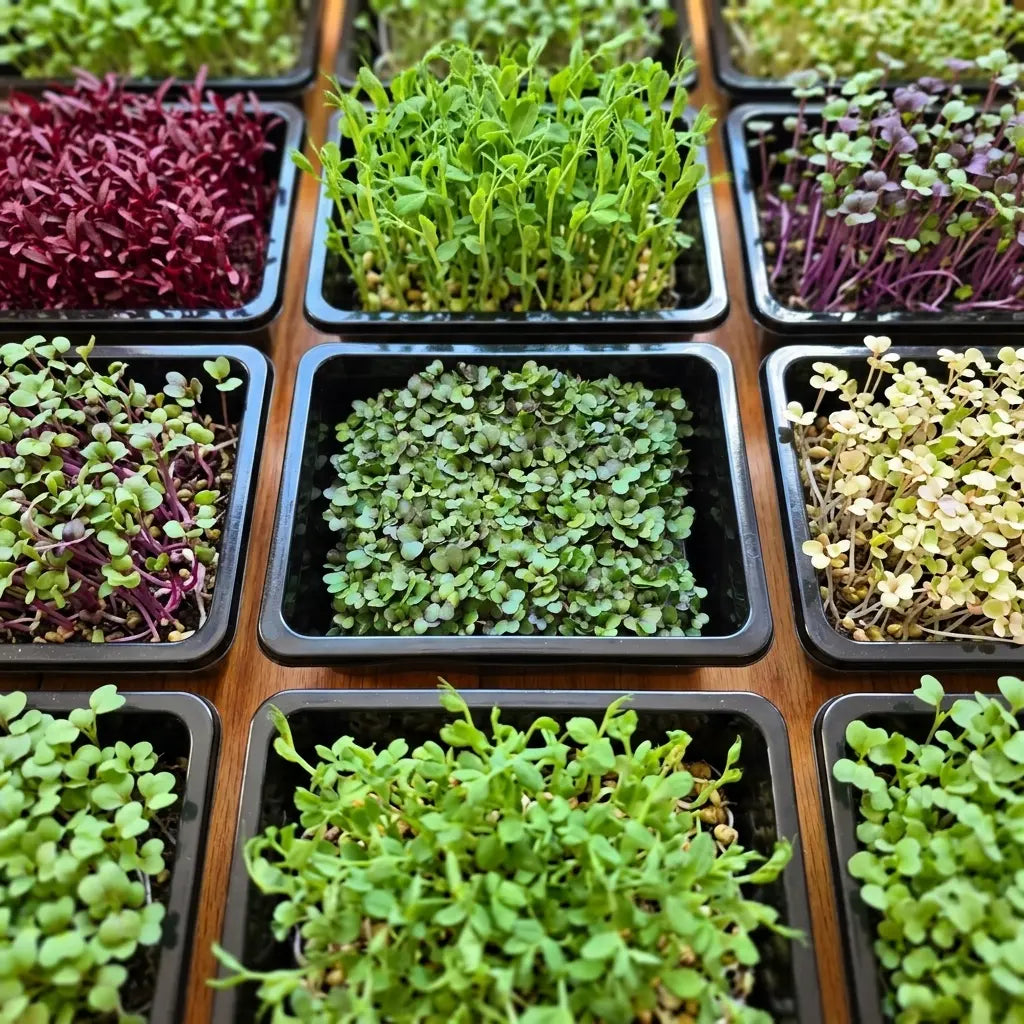
With 18 microgreens varieties to choose from, picking your first tray, or your fifth, can feel more complicated than it needs to be. Some are fast and forgiving. Some are slower and a little more particular. Every one of them brings a different flavor, texture, and best use to the table.
This guide breaks down all 18 Aquager microgreens varieties in one place: flavor, grow time, difficulty, and the dish each one is best suited for. Read it start to finish for the full picture, or jump straight to whichever group matches what you're in the mood to grow.
None of these varieties require a garden or special equipment. A tray, a grow mat, and a windowsill are enough to grow any of the 18, most ready within one to two weeks.
To make 18 options easier to navigate, they're grouped below into three families: spicy Brassicas, aromatic kitchen herbs, and a final group of mild, sweet, and specialty varieties that don't fit neatly anywhere else. A quick-reference table follows the full write-up if you'd rather compare all 18 at a glance before reading the details.
Spicy and Peppery: The Brassica Family
Six of the 18 varieties belong to the Brassica family, the same plant family as broccoli and cabbage, which means they share a peppery, sometimes sharp flavor profile and a reputation for being some of the easiest microgreens to grow. If a recipe needs a garnish that actually contributes flavor instead of just sitting on top, this group is usually the right place to start.
Broccoli
Broccoli microgreens have a mildly bitter, slightly peppery flavor that's much gentler than it sounds, closer to a fresh salad green than the mature vegetable. They're ready in about eight to ten days and count as one of the easiest varieties to grow, with reliable germination and few demands. Best eaten raw in smoothies or scattered over a finished dish, since that's how they hold onto the most nutrients. The Broccoli Microgreens Seeds come with an organic grow mat included.
Arugula
Arugula microgreens carry a bold, sharp peppery bite, essentially the mature green's flavor concentrated into a smaller leaf. They grow quickly, ready in seven to ten days, and are forgiving enough for a first attempt. Best over pizza, a simple salad, or anywhere a recipe needs a punch of real flavor. The Arugula Microgreens Seeds are one of the fastest-growing picks on this list.
Mustard
Mustard microgreens bring the boldest heat of the entire lineup, a spicy, horseradish-like kick that's not for the faint of heart. They're also the fastest grower here, often ready in five to seven days. Easy to grow and hard to mess up. Best on a sandwich or stirred into a dish that needs real bite. The Mustard Microgreens Seeds reward patience with almost none required.
Radish
Radish microgreens are crisp, bold, and spicy, with a vivid pink and green color that does as much work visually as it does on flavor. Ready in as little as five to eight days, they're one of the fastest and easiest varieties to start with. Best on tacos, over guacamole, or anywhere a garnish needs to do real work. The Radish Confetti Mix Microgreens Seeds are a reliable first pick for beginners.
Kohlrabi Purple
Kohlrabi Purple microgreens have a mild, sweet, cabbage-like flavor, gentler than most of the Brassicas on this list. They're ready in eight to ten days and grow easily with minimal fuss. Best in a slaw or wherever a recipe wants mild crunch and color without much heat. The Kohlrabi Purple Microgreens Seeds are a good pick for anyone easing into the spicier end of this family.
Kale Kalefetti Mix
Kale Kalefetti Mix microgreens deliver a vibrant, multi-color tray with a mild, slightly bitter cabbage flavor. Ready in eight to twelve days, and easy enough for a first-time grower. Best blended into a smoothie, where the flavor disappears but the vitamin K and folate content doesn't. The Kale Kalefetti Mix Microgreens Seeds add real color contrast to any tray lineup.

Aromatic Herbs for the Kitchen
These six varieties trade heat for aroma, delivering concentrated versions of familiar kitchen herbs in a fraction of the grow time a full-sized plant needs. Four of the six are basil, which makes this the easiest group to compare side by side, since the differences come down mostly to flavor and color rather than grow time or difficulty.
Basil Genovese
Basil Genovese microgreens carry the classic sweet Italian basil flavor, just concentrated into a much smaller leaf. Ready in about ten to twelve days, with a moderate difficulty level since basil can be a touch slower to germinate evenly. Best in pesto, over a caprese-style plate, or anywhere a recipe calls for fresh basil. The Basil Genovese Microgreens Seeds are a kitchen staple worth keeping in rotation.
Basil Lemon
Basil Lemon microgreens bring a bright, citrusy twist on classic basil flavor. Grow time and difficulty match standard basil, about ten to twelve days with a moderate learning curve. Best over seafood, in a summer cocktail, or anywhere a dish needs a citrus-herb lift. The Basil Lemon Microgreens Seeds add a flavor most kitchens don't already have on hand.
Basil Red Rubin
Basil Red Rubin microgreens have a bold, sweet-spicy flavor and deep purple leaves that stand out on any plate. Ready in ten to twelve days, moderate difficulty. Best as a garnish where color contrast matters as much as flavor, like over a light-colored soup or a plate of eggs. The Basil Red Rubin Microgreens Seeds are one of the more photogenic varieties on this list.
Basil Bicolor
Basil Bicolor microgreens combine a sweet-spicy flavor with striking two-tone leaves, part green, part deep purple. Grow time and difficulty are in line with the rest of the basil family, ten to twelve days and a moderate learning curve. Best anywhere a dish needs both flavor and visual interest at once. The Basil Bicolor Microgreens Seeds are a favorite for plating.
Dill
Dill microgreens have a delicate, feathery texture and a mild, sweet, citrusy flavor close to the full-grown herb. Ready in about ten to twelve days, easy to moderate difficulty. Best on deviled eggs, over smoked fish, or stirred into a simple dip. The Dill Microgreens Seeds are ready right when most spring and summer recipes need them.
Cilantro Monogerm
Cilantro microgreens carry a citrusy, herbal, slightly peppery flavor, more concentrated than a bunch from the store. Ready in ten to twelve days, moderate difficulty since cilantro seed can germinate a little unevenly. Best in salsa, over tacos, or anywhere Latin or Southeast Asian cooking calls for fresh cilantro. The Cilantro Monogerm Microgreens Seeds skip the bolting problem that plagues the full-grown herb in warm weather.
Everything Else: Sweet, Mild, and Specialty Varieties
The remaining six varieties don't fit neatly into the spicy or aromatic categories. Between them, they cover the mildest flavors on this list, the fastest grow times, and a couple of genuinely specialty use cases, including one variety most people grow for a pet rather than for themselves.
Pea Shoots
Pea Shoots have a sweet, tender flavor and impressive crunch, closer to the freshest spring pea imaginable than anything sold in a bag. Ready in eight to ten days and easy enough to recommend as a true beginner variety. Best in a spring salad, a stir-fry, or eaten straight off the tray as a snack. The Pea Shoots Field Microgreens Seeds are one of the most forgiving picks on this entire list.
Sunflower Black Oil
Sunflower microgreens have a nutty flavor and a satisfying crunch that reads more like a snack than a garnish, plus one of the highest protein counts of any variety here. Ready in ten to twelve days, moderate difficulty, since they benefit from a short blackout period early in the grow cycle. Best on a sandwich, tossed into a salad, or eaten by the handful. The Sunflower Black Oil Microgreens Seeds are a favorite for anyone treating microgreens as a real snack, not just a garnish.
Amaranth Garnet Red
Amaranth microgreens are mild and slightly earthy in flavor, but the real draw is the deep red and purple color running through every stem. Ready in ten to fourteen days, moderate difficulty. Best as a garnish where color needs to carry the dish, or blended into a smoothie for a nutritional boost. The Amaranth Garnet Red Microgreens Seeds produce one of the most photogenic trays on this entire list.
Borage
Borage microgreens have a mild, cucumber-like flavor that's unusual on this list and genuinely refreshing. Ready in ten to fourteen days, moderate difficulty. Best in a summer drink, a chilled soup, or anywhere a recipe wants a cool, green note without adding actual cucumber. The Borage Microgreens Seeds are worth trying once just for the novelty of the flavor.
Clover
Clover microgreens are mild, fresh, and just barely sweet, the gentlest flavor of any variety on this list. Ready in about a week and about as forgiving as microgreens get, which makes clover a common first pick for beginners and kids. Best on a sandwich or anywhere a mild, mellow green is more useful than a bold one. The Clover Microgreens Seeds are a common first pick for exactly that reason.
Wheatgrass Cat Grass
Wheatgrass has an intense, grassy flavor that's usually juiced rather than eaten by the handful. Ready in seven to ten days, easy to moderate difficulty. Best blended into a juice, or grown specifically as fresh cat grass for a pet. The Wheatgrass Cat Grass Microgreens Seeds serve double duty as both a human and a pet-friendly variety.
Quick Reference: All 18 Microgreens Varieties
| Variety | Flavor | Grow Time | Difficulty | Best Use |
|---|---|---|---|---|
| Broccoli | Mild, peppery | 8 to 10 days | Easy | Smoothies, raw garnish |
| Arugula | Bold, peppery | 7 to 10 days | Easy | Salads, pizza |
| Mustard | Spicy, sharp | 5 to 7 days | Easy | Sandwiches |
| Radish | Crisp, spicy | 5 to 8 days | Easy | Tacos, garnish |
| Kohlrabi Purple | Mild, sweet | 8 to 10 days | Easy | Slaws |
| Kale Kalefetti Mix | Mild, bitter | 8 to 12 days | Easy | Smoothies |
| Basil Genovese | Sweet, herbal | 10 to 12 days | Moderate | Pesto, caprese |
| Basil Lemon | Citrus, herbal | 10 to 12 days | Moderate | Seafood, cocktails |
| Basil Red Rubin | Sweet-spicy | 10 to 12 days | Moderate | Garnish, color contrast |
| Basil Bicolor | Sweet-spicy | 10 to 12 days | Moderate | Plating |
| Dill | Sweet, citrusy | 10 to 12 days | Easy to moderate | Eggs, fish |
| Cilantro Monogerm | Citrusy, peppery | 10 to 12 days | Moderate | Salsa, tacos |
| Pea Shoots | Sweet, tender | 8 to 10 days | Easy | Salads, snacking |
| Sunflower Black Oil | Nutty, crunchy | 10 to 12 days | Moderate | Sandwiches, snacking |
| Amaranth Garnet Red | Mild, earthy | 10 to 14 days | Moderate | Garnish, color |
| Borage | Cucumber-like | 10 to 14 days | Moderate | Drinks, chilled soup |
| Clover | Mild, sweet | 7 days | Easy | Sandwiches, kids |
| Wheatgrass | Intense, grassy | 7 to 10 days | Easy to moderate | Juicing, cat grass |
Choosing Between Similar Varieties
A few groups on this list are close enough in flavor or use that picking between them comes down to small details rather than a clear right answer.
Among the four basils, Genovese is the safest choice if a recipe specifically calls for basil, since it matches the classic flavor most closely. Lemon is the pick for anything citrus-forward, while Red Rubin and Bicolor are the two to reach for when a dish needs color on the plate as much as it needs flavor.
For heat, mustard is the clear top pick if the goal is real spice. Radish and arugula both bring a milder, more rounded peppery bite that works in more dishes without overwhelming them, which makes those two a safer default for anyone who isn't sure how much heat a recipe can handle.
For a true first tray, broccoli, radish, pea shoots, and clover come up again and again as the most forgiving choices. All four germinate reliably, tolerate a missed watering better than most, and are ready within roughly a week to ten days.
Starting Your First Tray
With 18 microgreens varieties to pick from, the easiest way to start isn't to agonize over the perfect first choice. It's to grab a beginner-friendly variety and a simple setup, then expand the lineup once the first tray is a success.
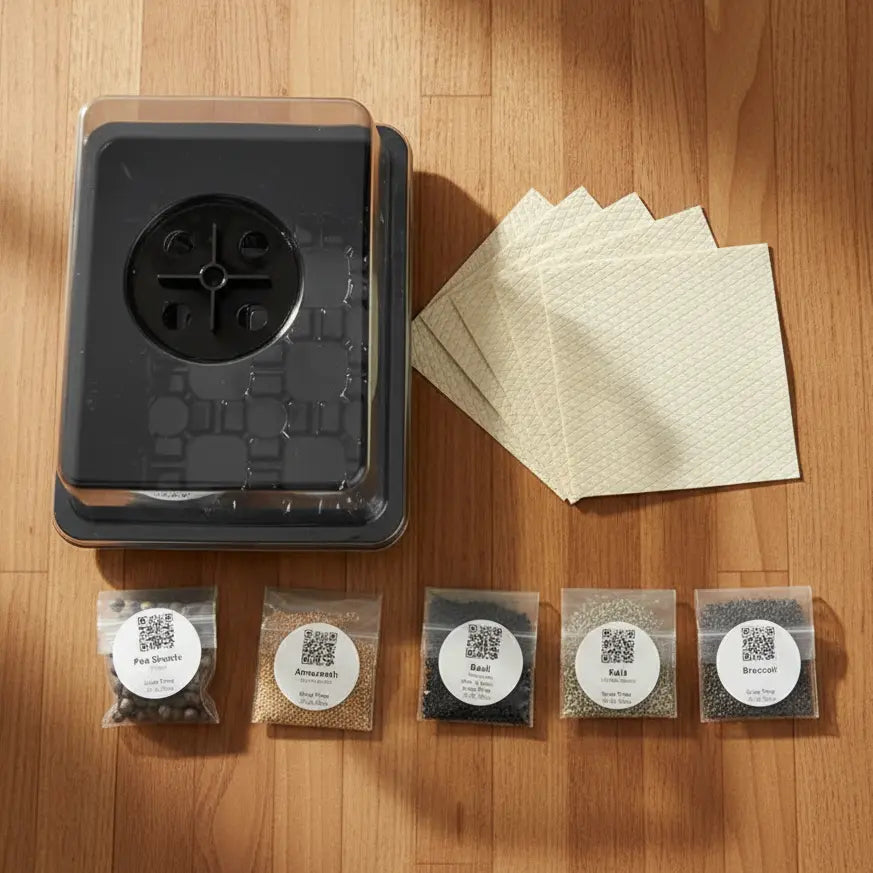
The Microgreens Starter Kit includes the tray, dome, and organic grow mat for $29.99, so the only decision left is which of the 18 seeds to start with. Broccoli, radish, or pea shoots are the most forgiving picks for a true first attempt.
Once one tray is running smoothly, most growers add a second and third variety rather than replacing the first. Staggering start dates by a few days across two or three trays keeps something fresh on the counter at all times, instead of a single tray that's either just planted or already finished.
Microgreens Varieties FAQ
Which microgreens variety is easiest for a first-time grower?
Broccoli, radish, pea shoots, and clover are the most forgiving of the 18, with reliable germination and a wide margin for error on watering. Our 7 microgreens you can't mess up guide covers this shortlist in more depth.
Which variety grows the fastest?
Mustard and radish are typically ready first, in as little as five to seven days. Our guide to the 5 fastest-growing microgreens ranks the quickest options across the full catalog.
Which microgreens have the spiciest flavor?
Mustard is the boldest of the 18, with a horseradish-like heat. Radish and arugula both bring a strong peppery bite as well, just a step below mustard's intensity.
Can I grow multiple varieties at the same time?
Yes. Since grow times vary by variety, staggering start dates by a few days keeps more trays landing at a usable stage around the same week instead of all finishing at once.
Is there a variety that's good for kids to grow?
Clover and pea shoots are both mild, fast, and forgiving, which makes them a good pick for a first growing project with kids. If you're brand new to growing anything indoors, our beginner's guide to growing microgreens in 7 days is worth reading first.
Do all 18 varieties need the same amount of light and water?
Close to it. All 18 do well on a bright windowsill or under normal indoor lighting, with daily misting until harvest. The differences between varieties come down to grow time and germination consistency, not fundamentally different care routines.
Which variety has the mildest flavor overall?
Clover is the mildest of the 18, followed closely by kohlrabi and pea shoots. All three work well for anyone who wants the nutritional benefits of microgreens without a strong flavor taking over a dish.
Conclusion
Eighteen microgreens varieties means there's a flavor, grow time, and difficulty level for almost anyone willing to try a tray. Whether you want the fastest option, the mildest, or the boldest, there's a clear answer above instead of a guess.
Most growers don't settle on just one variety for long. Once a first tray proves easy to manage, it's common to end up cycling through several of the 18 depending on the season, the meal, or simply which flavor sounds good that week.
Want a reason to try more of them? Our 2027 Microgreens Growing Challenge walks you through twelve of these varieties, one new crop each month.

Start with whichever variety matches tonight's dinner, or pick the fastest one just to see results sooner. Either way, the full catalog above is here to come back to whenever the next tray needs deciding.
Author: Aquager · Published: July 12, 2026 · Updated: October 24, 2026












0 comments