
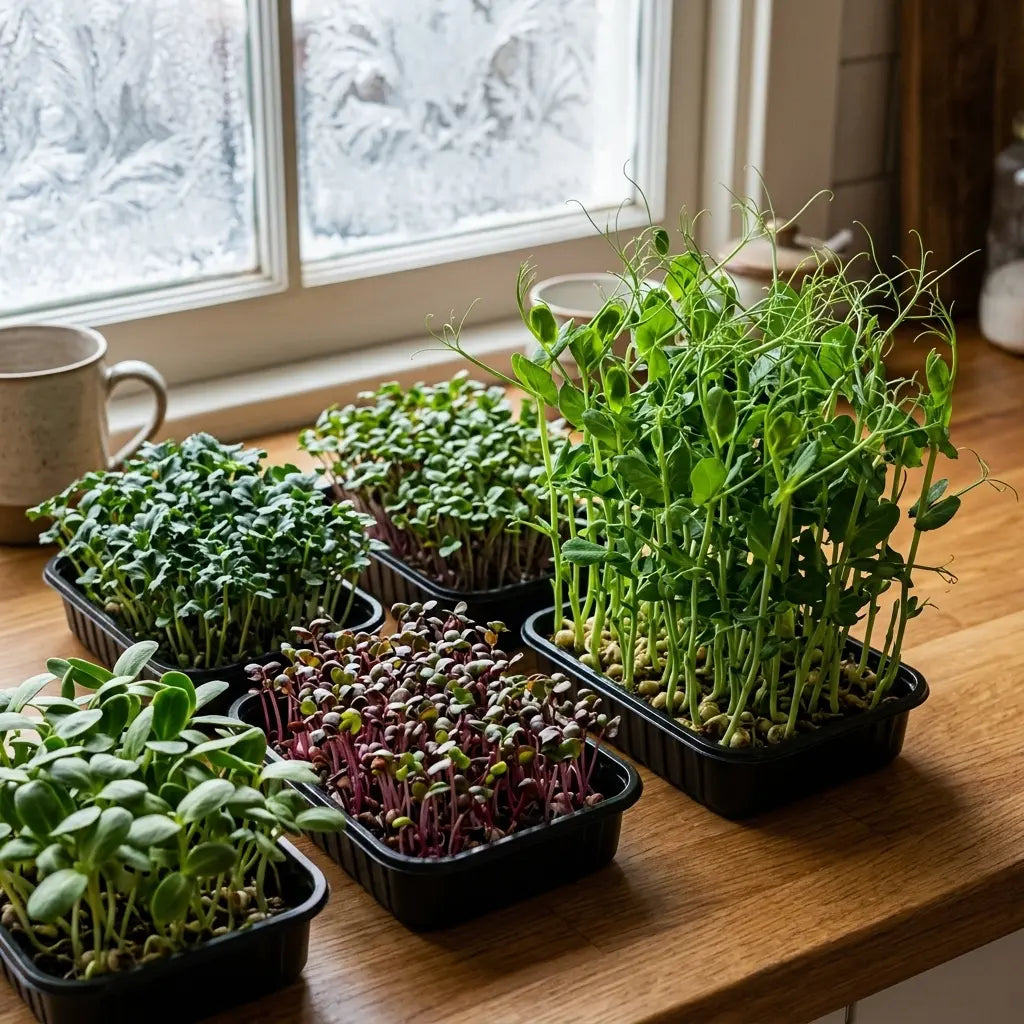
December planting sounds like a lost cause to most people. The garden's done, the ground's frozen, and the holidays are already eating your time. But if you're growing indoors, December is still one of the easiest months to put fresh food on the table by Christmas.
Microgreens don't care about frost. Four varieties, radish, pea shoots, kale, and sunflower, can go from seed to harvest in one to two weeks flat, which means even a decision made today can still land on the table for the holidays.
This guide covers all four, with the real number of days each one needs, so you can count backward from Christmas and know exactly when to start.
None of this requires a greenhouse, grow lights, or gardening experience. A tray, a grow mat, water, and a windowsill are enough to pull off a fresh holiday harvest from a standing start.
If you've never grown anything indoors before, December is actually a forgiving time to start. Short days and dry indoor heat sound like a bad combination, but microgreens spend so little time growing that neither one has much chance to cause a problem.
Why It's Not Too Late for December Planting
Outdoor gardening basically shuts down this time of year, but microgreens grow indoors under normal room temperature and a bit of natural light. Cold weather outside has no effect on a tray sitting on your kitchen counter. If you are short on time, see last minute Christmas microgreens kits.
The other advantage is speed. Most winter garden vegetables planted outdoors take months to reach harvest, if they grow at all in the cold. Microgreens are harvested at the seedling stage, often within one to two weeks, which is exactly the kind of timeline December actually allows. Learn how to stagger microgreens plantings so you always have a tray ready.
There's also very little that can go wrong in that short window. Short growing times mean less chance for pests, mold, or a missed watering to ruin the batch before it's ready.
Dry winter air actually works in your favor here too. Lower humidity means less risk of the mold and damping off issues that sometimes show up in warmer, muggier months, so a December tray is often easier to get right than a summer one. See our guide to growing microgreens indoors in winter for the winter specifics.
If you want the fuller picture on growing through the cold months, our guide to growing microgreens in fall and winter covers year-round timing beyond just this one holiday push. First-timers can also check our beginner's guide to growing your first tray in 7 days for a walkthrough of the basics before diving into all four varieties below.
What to Grow in December: 4 Microgreens That Still Make It
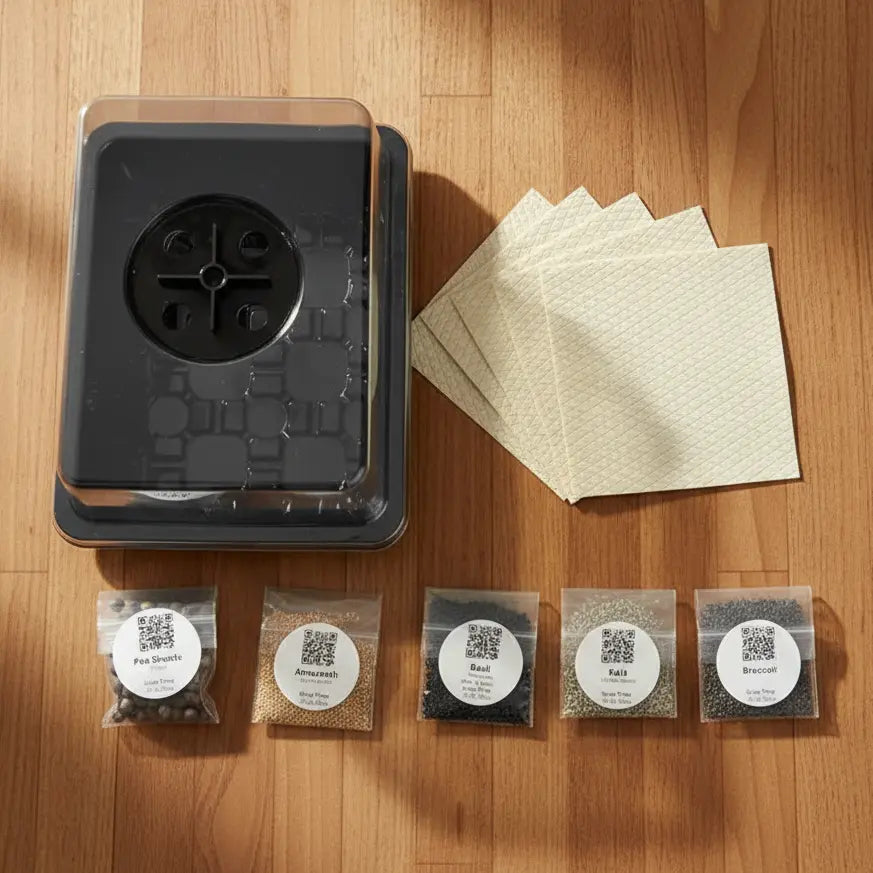
Here are the four most reliable picks for a December start, ordered from fastest to slowest. Each one is a $7.99 seed pack that includes an organic grow mat, so there's nothing extra to buy.
Radish, Ready in 5 to 8 Days
Radish is the fastest variety on this list and the safest bet if you're starting late in the month. It has a crisp texture and a bold, spicy flavor that holds up well on a holiday plate.
The Radish Confetti Mix Microgreens Seeds can go from seed to harvest in under a week, which makes them the best choice if Christmas is closing in fast.

Kale, Ready in 8 to 12 Days
Kale microgreens bring a milder, slightly sweet flavor and a striking multi-color look that dresses up any holiday dish. They take a bit longer than radish, but still comfortably fit a December timeline.
The Kale Kalefetti Mix Microgreens Seeds need about a week and a half from seed to harvest, so plant them with a little more lead time than radish.
Sunflower, Ready in 8 to 12 Days
Sunflower microgreens deliver a nutty flavor and a satisfying crunch that reads more like a snack than a garnish. They need a short soak before planting, so build that extra day into your count.
The Sunflower Black Oil Microgreens Seeds take roughly the same time as kale, which makes them easy to plant on the same day for a matched harvest.
Pea Shoots, Ready in 10 to 14 Days
Pea shoots are the slowest variety here, but also the most productive, with tall, sweet, tender shoots that make a generous holiday garnish. If you want them ready for Christmas Day, this is the one to start first.
The Pea Shoots Field Microgreens Seeds need the longest lead time of the four, so count backward from your target date before anything else. Pea sprouts also regrow a second, smaller harvest after the first cut, which stretches one tray further than the other three varieties.
Timing Your December Planting for a Holiday Harvest
Once you know each variety's day count, working backward from Christmas is simple math. If Christmas Day is your target, start pea shoots first since they need 10 to 14 days, then kale and sunflower a few days later, and radish last since it only needs 5 to 8 days.
A safe rule of thumb: start everything within the first two weeks of December if you want all four ready by the holiday, or start radish alone as late as the week before Christmas if that's all the time you have left.
Set a reminder for each start date instead of trying to remember four separate timelines. It's a small step that prevents the most common mistake, which is starting the slow-growing varieties too late to matter.
Here's a simple way to plan it out if Christmas Day is the target: count back 14 days for pea shoots, 12 days for kale and sunflower, and 8 days for radish. Write each start date on the calendar the same day you decide to do this, since the pea shoots deadline sneaks up faster than it seems.
If you're also cooking for a bigger holiday spread, our 14 day countdown guide for Thanksgiving uses the same backward planning approach for an earlier holiday on the calendar.
If You Only Have Time for One: Start With Radish
If December got away from you and Christmas is only a week or two out, skip the multi-tray plan and start with radish alone. It's the fastest variety in this guide and the most forgiving of a late start.
The Radish Confetti Mix Microgreens Seeds need as little as five days from seed to harvest, which still leaves room for a fresh, homegrown garnish even if you're planting on a whim in mid-December.
One tray is enough to garnish a holiday meal for a full table, so there's no need to overbuy if this is your only planting of the season. It also makes an easy last-minute stocking stuffer if you'd rather give the seed pack than grow it yourself. See our guide to stocking stuffers under $50 for small ideas.
December Microgreens FAQ
Is it too late to plant microgreens in December?
No. Even started in mid-December, radish and other fast varieties can still be ready before Christmas. Microgreens grow so quickly that late starts are rarely a real problem.
Do microgreens need special lighting to grow in winter?
Not usually. A bright windowsill or normal room lighting is enough for most varieties. Extra grow lights help if your space gets very little natural light, but they're not required for a successful harvest.
Which microgreen is best for a Christmas dinner garnish?
Pea shoots and kale both hold up well as a garnish thanks to their color and texture. Radish adds a spicy kick if your table leans toward bolder flavors.
Can I start all 4 varieties on the same day?
You can, but they won't all be ready at once since pea shoots and kale take longer than radish and sunflower. Staggering the start dates by a few days keeps everything landing closer to the same finish line.
Will cold rooms slow down germination indoors?
Slightly. If your kitchen runs cool in December, germination can take a day or two longer than the ranges listed above. Keeping trays away from drafty windows helps keep timing on track.
Can I grow these varieties without a windowsill?
Yes. Any spot with a few hours of indirect daylight works, including a spot on a countertop under a kitchen light. Direct sun isn't required, just enough light for the leaves to green up as they grow.
Conclusion
December planting isn't a race against the weather. It's a race against the calendar, and these four varieties all win it with room to spare.
Whichever you pick, the payoff is the same: a fresh, homegrown dish on the table that didn't exist a week or two ago, grown in the middle of winter without a single trip outside.

Start with whichever fits your timeline. If Christmas is weeks away, plant all four and stagger the harvest. If it's already mid-December, radish alone still gets you a fresh, homegrown dish on the table.
Author: Aquager · Published: July 12, 2026 · Updated: October 11, 2026










0 comments