
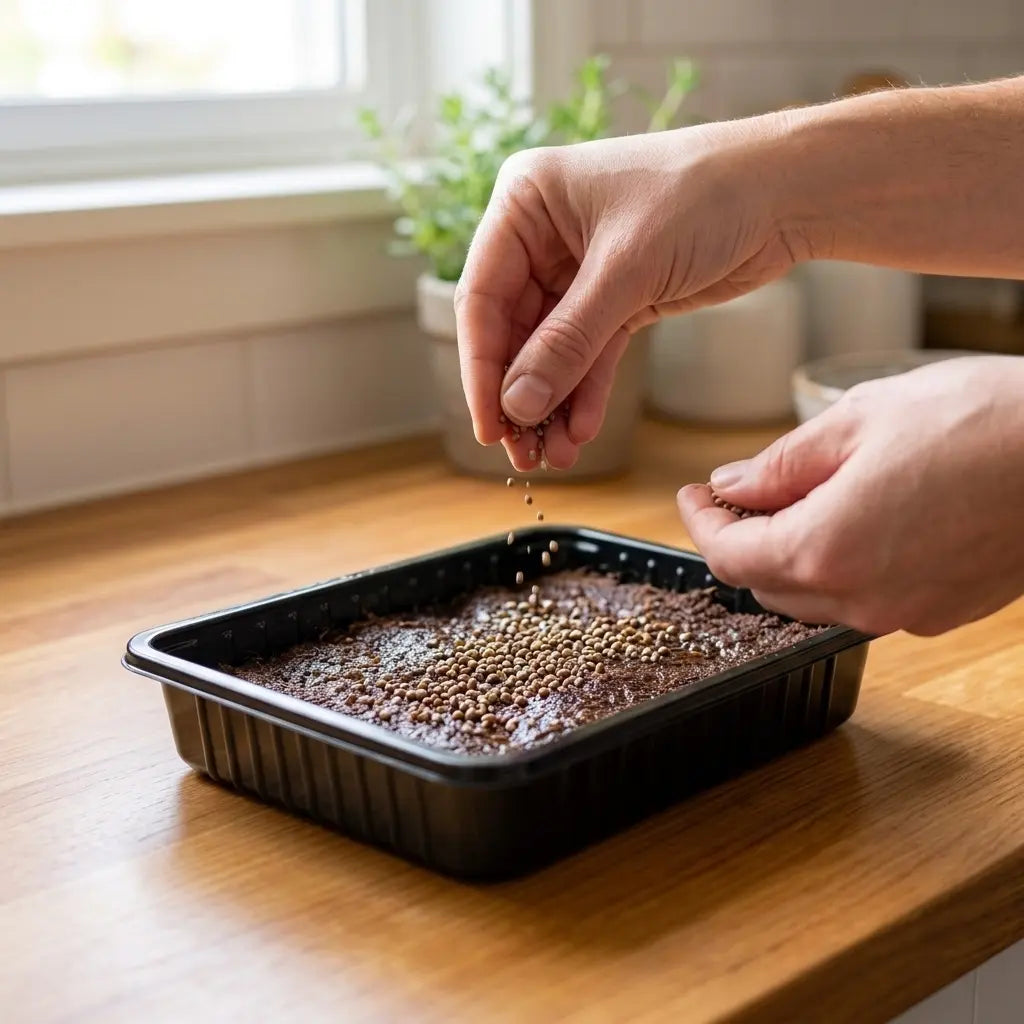
The best family traditions grow slowly. This one literally does: a tray of seeds on December 1, something new to check every morning, and fresh food on the Christmas table.
Most holiday activities last about 20 minutes. The gingerbread house is built and eaten, and the craft is finished and forgotten. An advent garden is different. It starts with seeds and ends with a harvest your family grew together, and everything in between is the tradition.
You do not need a green thumb or a garden. You need two trays, some seeds, and about five minutes a day.
What Is a Microgreens Advent Garden?
A microgreens advent garden is a family project where you plant a tray of microgreens on December 1, tend it daily, and eat the harvest before Christmas. You plant a second tray on December 9 so fresh pea shoots are ready for the Christmas table. Radish goes first because its pink, purple, and red shoots are the most fun to watch.
| Tray | Plant on | Ready around | What you do with it |
|---|---|---|---|
| Radish (first tray) | Dec. 1 | Dec. 11 to Dec. 16 | Eat it together on eggs or toast |
| Pea shoots (Christmas tray) | Dec. 9 (soak seeds the night before) | Dec. 16 to Dec. 23 | Garnish the Christmas Eve dinner |
The times come from the Aquager product pages, which list 10 to 15 days for radish and 7 to 14 days for pea shoots. Planting the pea shoots on Dec. 9 means they are ready by Dec. 23, even if they grow at the slow end. See which microgreens to grow in December so your harvest is ready for the holidays.
What Do You Need for an Advent Garden?
The setup is small enough to fit on a kitchen counter. Here is the full list:
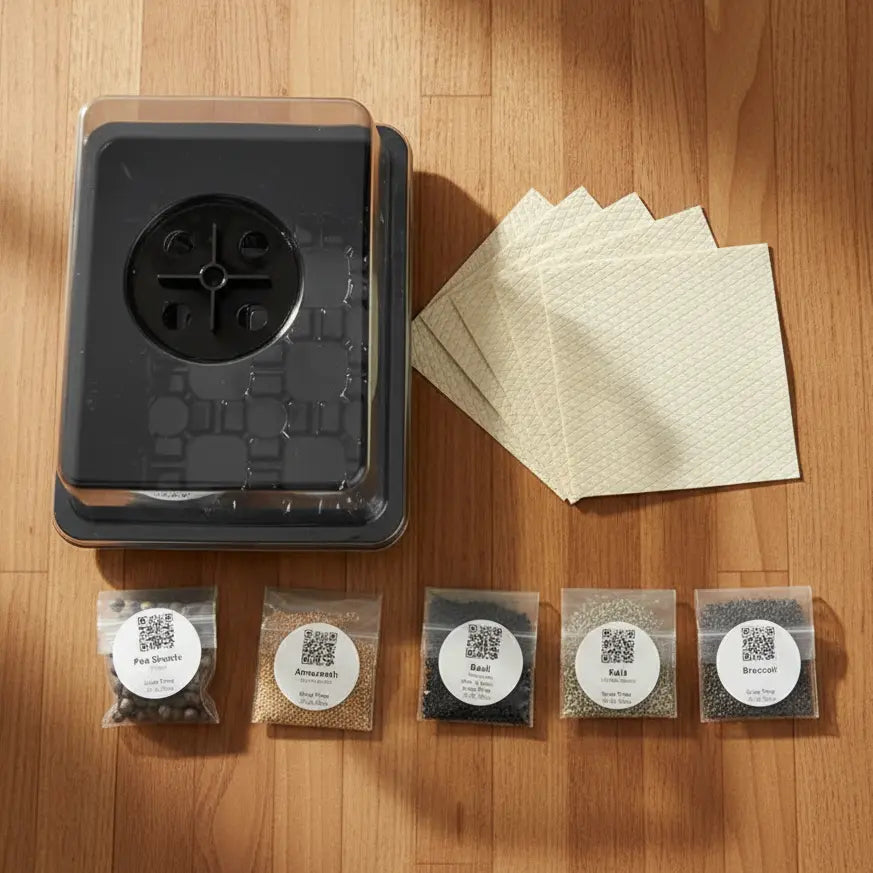
- Two trays and a dome. The Microgreens Starter Kit ($29.99) comes with 2 trays, a humidity dome, and an organic grow mat, so each batch gets its own tray.
- Radish seeds. Radish Confetti Mix ($7.99) grows pink, purple, and red shoots, which makes the first tray fun to watch.
- Pea shoot seeds. Pea Shoots Field ($7.99) gives tall, curly, sweet shoots that look great on a holiday plate.
- A spray bottle, a bowl, and scissors. The bowl is for soaking the pea seeds.
- Light. A bright window, or a simple LED grow light, because December days are short.
- A small notebook. Optional, but kids love drawing the shoots each day.
Each seed pack includes its own organic grow mat, so there is no soil and no mess.
How Do You Run the Advent Garden Step by Step?
December 1: Plant the Radish Tray
Soak the grow mat until it is damp all the way through, then drain any extra water. Scatter the radish seeds in one even layer, close together but not piled up. Mist the seeds lightly and cover the tray with the dome. Let the kids do the scattering, because this is the moment that starts the tradition.
Keep the tray somewhere warm, around 65 to 75°F. Our radish microgreens guide has the full day by day detail.
December 1 to 3: Keep the Seeds Dark and Damp
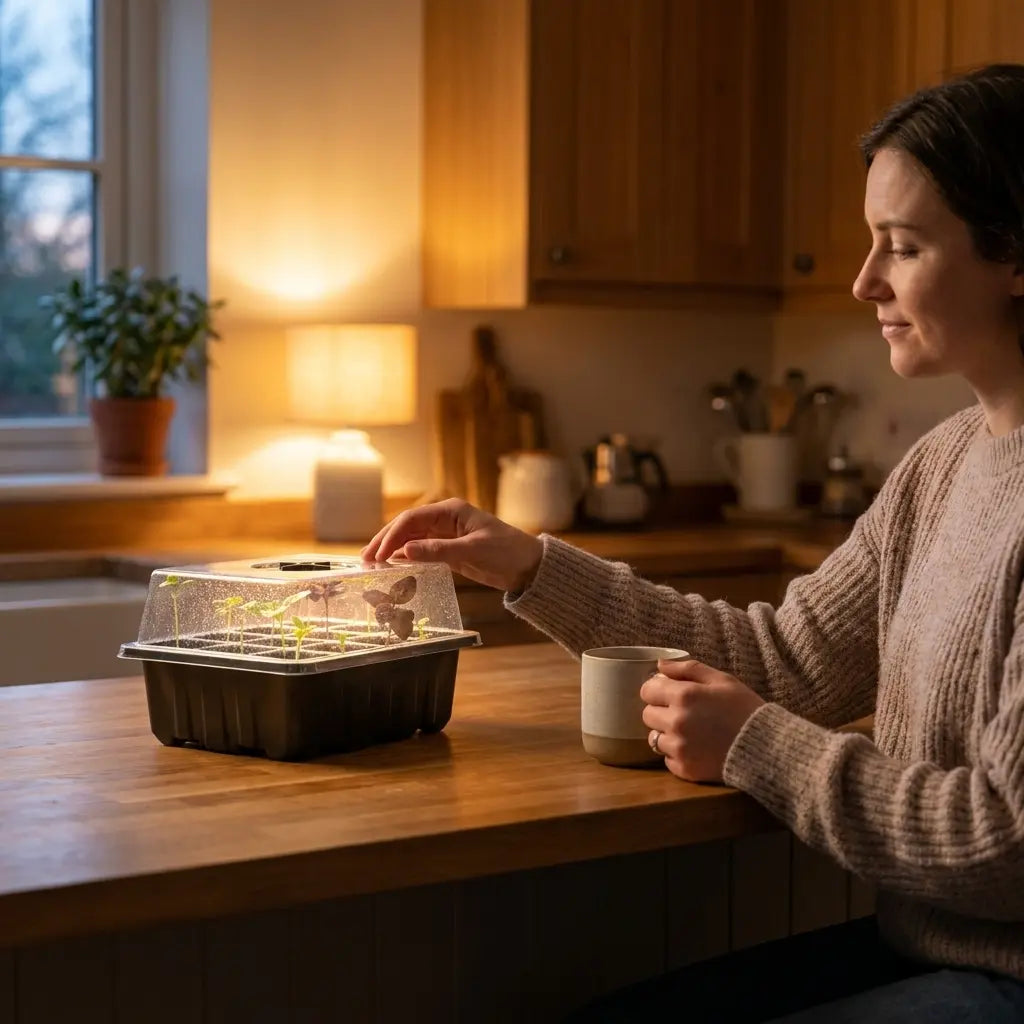
Seeds sprout best in the dark, so leave the dome on. Each morning, kids lift the dome, look for changes, and mist the mat if it feels dry. White root tips usually show up within a day or two, and pale stems follow by day 3.
The seeds look quiet at first, and that is part of the lesson. Checking every morning teaches kids to watch and wait.
December 3 to 4: Move the Tray to the Light
Once most seeds have sprouted, take off the dome and move the tray to a bright window or under an LED grow light. The pale stems turn green within hours. Switch the daily job from misting to bottom watering: pour about a cup of water into the outer tray, let the mat soak it up, and drain what is left. Watering from the bottom helps prevent mold.
December 8: Soak the Pea Shoot Seeds
Pea seeds have a thick coat, so they need a soak first. Put them in a bowl of cool water for 6 to 8 hours or overnight. They will swell up, and kids enjoy seeing the difference by morning.
December 9: Plant the Christmas Pea Shoot Tray
Plant the pea shoots in the second tray the same way as the radish. Cover them for the first 4 days, then move them into the light and switch to bottom watering. The pea shoots growing guide covers each stage if you want more detail.
December 11 to 16: Harvest and Eat the Radish

Radish is ready when the seed leaves are open and flat and the stems are about 1.5 to 3 inches tall. Cut just above the mat with scissors, rinse, and eat them together on eggs, toast, or a sandwich. This is food your family grew, so make it a small celebration. Radish does not regrow after cutting, so the tray is now finished.
December 16 to 23: Harvest the Christmas Pea Shoots

Pea shoots are ready at 3 to 4 inches tall. Cut them the morning of Dec. 23 or Dec. 24, and store them in the fridge in a container lined with a dry paper towel. Use them as a garnish on soups and sides, or tuck them next to the main dish. Tell the story at the table: you planted these two weeks ago, and now they are part of dinner. They also make a pretty garnish for drinks, as our holiday cocktail garnish guide shows.
Why Is the Starter Kit the Easiest Way to Run an Advent Garden?
The Microgreens Starter Kit is the easiest way to run an advent garden because the two trays match the two batches. The first tray is harvested by mid-December while the second tray is still growing. The humidity dome also keeps the mat damp during the dark phase, when a dry mat is the most common problem.
The kit is also reusable. After Christmas, you can refill it with seed packs and keep growing through winter, which our fall and winter microgreens guide explains. Many families keep going once the habit forms.
What Do Kids Gain From Growing Food Together?
Gardening can help kids eat more vegetables. The Community Preventive Services Task Force recommends school-based gardening programs paired with nutrition education, based on a review of 14 studies where vegetable consumption rose in 12 of them (Community Guide, 2017). That research comes from school programs, but the idea carries over to a tray on your counter.
The advent garden also builds a few quiet habits over 24 days:
- Patience. Some results cannot be rushed, and the tray proves it every morning.
- Observation. Kids start to notice change, like shoots leaning toward the window.
- Responsibility. If the mat dries out, the plants suffer, so the daily job feels real.
- Where food comes from. Eating something you grew feels different from eating something from a bag.
For more family ideas, see our guide to growing microgreens as a family activity, or the research on gardening and mental wellness.
Frequently Asked Questions
How long do microgreens take to grow?
Radish takes 10 to 15 days and pea shoots take 7 to 14 days, according to the Aquager product pages. That is why the radish tray goes in on Dec. 1 and the pea shoot tray goes in on Dec. 9.
Do you need a grow light to grow microgreens in December?
A bright window works, but December light is weak and short. A basic LED grow light a few inches above the tray gives thicker stems and better color, so it is worth using if your window is dim.
How much do kids need to do each day?
Kids lift the dome, look, and mist the mat during the first 3 days. After that, they pour water into the outer tray once a day and watch the shoots grow. Young children can handle a spray bottle and a small cup of water on their own.
What if the first tray does not grow well?
Most problems come from a dry mat, uneven seeds, or too much top watering. Fix the cause and plant again. A new radish tray planted by Dec. 8 is still ready before Christmas.
Is the white fuzz on my microgreens mold?
Usually not. Fine white fuzz that covers the stems evenly is root hairs, which are harmless. Gray-green patches with a musty smell are mold, so remove the dome, add airflow, and water from the bottom only.
Can kids eat all the microgreens they grow?
Yes. Radish and pea shoots are both edible at the microgreen stage. Radish has a mild peppery bite and pea shoots are sweet and grassy. Our microgreens you can't mess up guide covers more beginner-friendly picks.
The Christmas Harvest Is Only Half the Gift
There is a moment on Christmas Eve when the food on the table means a little more. This year, some of it grew on your counter. Your kids checked those trays every day. They watched seeds split open, took turns with the spray bottle, and now those shoots are on the plate.
That is the point of a good family tradition. The outcome matters, but the 24 days of small moments matter more. If you want to start this year, the Microgreens Starter Kit has everything you need to plant on December 1.
Author: Aquager Team · Published: June 10, 2026 · Updated: October 11, 2026 · Reviewed: October 10, 2026 (Phase 2 and 3)












0 comments