
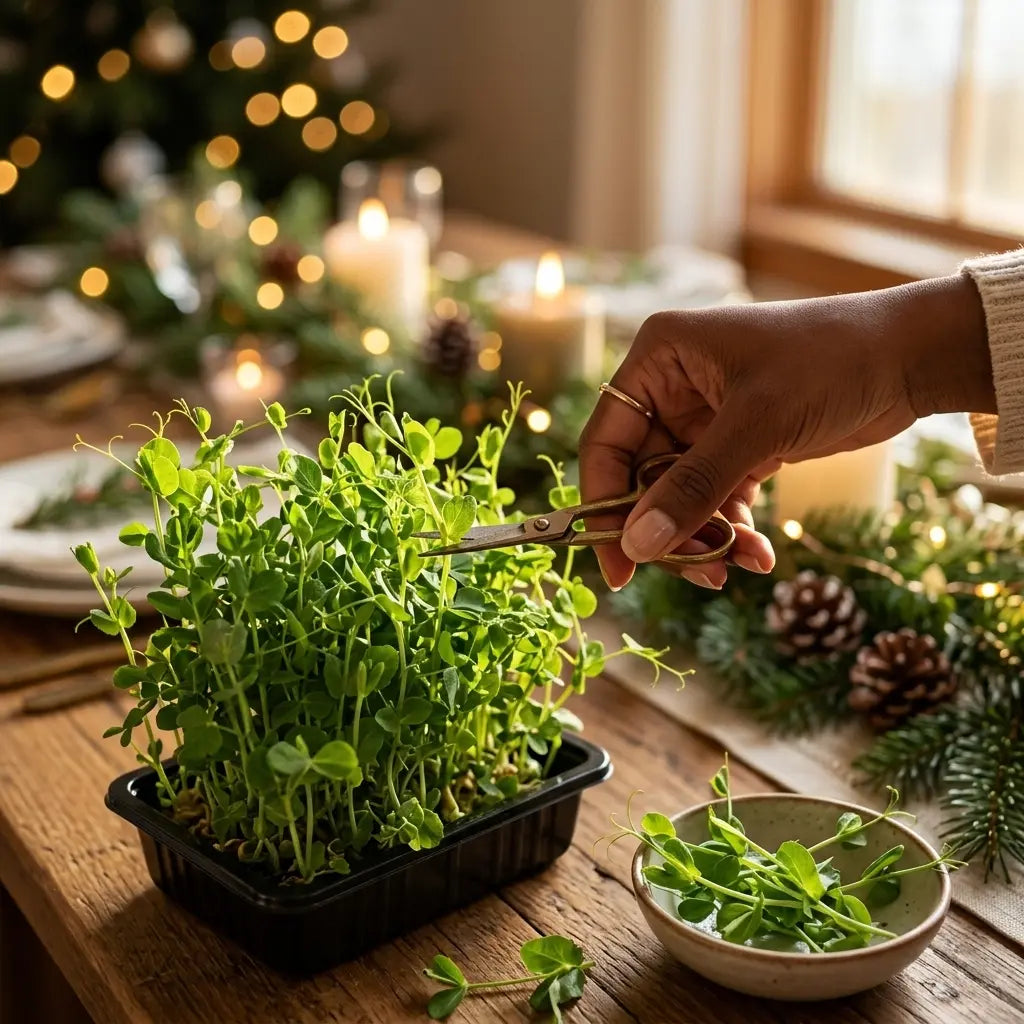
Holiday tables get more ambitious and more photographed between Thanksgiving and New Year's, and a sprig of something on top can look like an afterthought. A small handful of fresh microgreens does not.
Microgreens are young vegetable shoots, ready to cut in 5 to 25 days, and the right variety changes how a dish tastes: sweet pea shoots on turkey, peppery arugula on prime rib, mild clover under shrimp.
Below are 12 holiday microgreens recipes, three each for Thanksgiving, Christmas, New Year's Eve, and winter everyday meals. Each one has a quick method, the variety to use, and the date to plant it.
Which Microgreens Go With Which Holiday Dish?
Match the microgreen to the dish: sweet and mild varieties for turkey and seafood, peppery and spicy ones for beef, cheese, and rich sides, and colorful ones for pale soups and bowls. Here are all 12 pairings, with the grow time for each variety.
| Dish | Microgreen | Flavor | Grow time |
|---|---|---|---|
| 1. Herb-crusted turkey platter | Pea shoots | Sweet and fresh | 7 to 14 days |
| 2. Roasted butternut squash soup | Sunflower | Nutty and crunchy | 7 to 21 days |
| 3. Cranberry and mixed greens salad | Radish Confetti Mix | Peppery | 10 to 15 days |
| 4. Prime rib or beef tenderloin | Arugula | Peppery and nutty | 15 days |
| 5. Holiday salmon | Broccoli | Mild and slightly spicy | 10 to 15 days |
| 6. Cheese and charcuterie board | Mustard | Spicy, horseradish-like | 10 to 15 days |
| 7. Shrimp cocktail and oysters | Clover | Mild and slightly sweet | 5 to 7 days |
| 8. Smoked salmon blinis | Basil Genovese | Sweet and aromatic | 16 to 25 days |
| 9. Guacamole and chip station | Cilantro | Citrusy and herbal | 20 to 25 days |
| 10. White bean and vegetable soup | Kale Kalefetti Mix | Mild | 16 to 25 days |
| 11. Winter grain bowl | Amaranth Garnet Red | Mild and earthy | 16 to 25 days |
| 12. Morning-after smoothie | Wheatgrass | Intense and grassy | 7 to 15 days |
Grow times come from each Aquager seed pack page. Seed packs are $7.99 each and include an organic grow mat.
What Are the Best Microgreens Recipes for Thanksgiving?
The best Thanksgiving microgreens recipes pair fresh, sweet, and peppery greens with rich dishes: pea shoots on the turkey, sunflower on squash soup, and radish in the cranberry salad. For a full garnish plan, see our guide to the 5 best microgreens for Thanksgiving garnish.
1. Herb-Crusted Turkey Platter with Pea Shoots
Pea shoots piled around a carved turkey turn a plain platter into a centerpiece. Their sweet, fresh flavor contrasts with the seasoned skin instead of competing with it. Grow them from Pea Shoots Field Microgreens Seeds, and see our pea shoot recipe guide for more uses.
- Rub the turkey with butter, garlic, rosemary, and thyme, then roast until the thickest part reads 165°F.
- Rest the bird at least 20 minutes before carving.
- Fan the slices on a warm platter and pile pea shoots around the edge right before serving.
2. Roasted Butternut Squash Soup with Sunflower Microgreens

Creamy, sweet squash needs something crunchy, and thick-stemmed sunflower microgreens add a nutty bite. Float three to five on each bowl just before it goes to the table. More soup ideas are in our fall soup pairing guide, and the sunflower growing guide covers the 48 to 72 hour soak.
- Roast cubed squash and a sliced onion at 400°F for about 35 minutes, until soft and browned at the edges.
- Blend with broth and a splash of cream, then season with salt and pepper.
- Top each bowl with a small handful of sunflower microgreens just before serving.
3. Cranberry and Mixed Greens Salad with Radish Microgreens

A Thanksgiving salad has to earn its place next to rich dishes. Radish Confetti Mix adds clean, peppery heat that cuts through a creamy dressing and sweet cranberries, and the red, purple, and green colors match the season. Mix them into the greens instead of using them only on top.
- Toss baby greens with dried cranberries and toasted pecans.
- Whisk orange juice, olive oil, a little Dijon mustard, salt, and pepper for the dressing.
- Fold in a handful of radish microgreens right before serving so they stay crisp.
What Are the Best Microgreens Recipes for Christmas?
The best Christmas microgreens recipes use bold greens on rich main dishes: arugula on prime rib, broccoli on salmon, and mustard on the cheese board. For a course-by-course plan, see how to garnish Christmas dinner with microgreens.
4. Prime Rib or Beef Tenderloin with Arugula Microgreens
Peppery arugula and red meat are a classic Italian pairing, and microgreens make it easy to plate. Roast the beef to your preferred doneness with a meat thermometer, rest it, and slice. Toss a small nest of arugula microgreens with olive oil and a squeeze of lemon, and set it beside or under the slices. Not sure which spicy green you want? See radish vs. mustard vs. arugula, ranked by heat.
5. Holiday Salmon with Broccoli Microgreens
Deep green broccoli microgreens against pink salmon look as good as they taste. Their mild, slightly grassy flavor complements the rich fish without overpowering it. Read more about this variety in our guide to broccoli microgreens.
- Season salmon fillets with salt, pepper, and lemon zest.
- Roast at 400°F for 12 to 15 minutes, until the fish reaches 145°F.
- Serve on a bed of broccoli microgreens with a lemon wedge, or scatter them over a whole roasted side just before serving.
6. Christmas Cheese and Charcuterie Board with Mustard Microgreens

Mustard microgreens are the most condiment-like green in the lineup, with a horseradish finish that pairs with aged cheddar, manchego, and cured meats. Build the board with cheeses, cured meats, honey or fig jam, and crackers, then pile a generous handful of mustard microgreens in the center. Guests use them without being told to. For the full setup, see our microgreens charcuterie board guide.
What Are the Best Microgreens Recipes for New Year's Eve?
The best New Year's Eve microgreens recipes use mild, quick greens on party food: clover under shrimp, basil on smoked salmon blinis, and cilantro in guacamole. For more party bites, see our New Year's Eve appetizers with microgreens.
7. Shrimp Cocktail and Oysters with Clover Microgreens
Clover is the mildest variety here, so it never competes with delicate seafood. Chill the shrimp, set them over a bed of clover microgreens, and serve with lemon and cocktail sauce. For oysters, arrange clover beside each shell on crushed ice. Clover is also the fastest grower on this list, ready in 5 to 7 days, which makes it a good last-minute tray.
8. Smoked Salmon Blinis with Basil Microgreens
Basil and smoked salmon is an unexpected pairing that works: the basil's sweetness plays against the salty fish the way a squeeze of lemon does. Spoon crème fraîche onto each blini, fold a slice of smoked salmon on top, and add one small pinch of Basil Genovese microgreens just before serving. Want to grow it? See our basil microgreens growing guide.
9. New Year's Eve Guacamole and Chip Station with Cilantro Microgreens

Cut cilantro wilts quickly on a party spread, while cilantro microgreens hold their shape longer and taste brighter and more citrusy. Cilantro is the slowest variety on this list, so plant it first.
- Mash 3 ripe avocados with the juice of one lime, a pinch of salt, and finely diced onion.
- Fold in a handful of cilantro microgreens and save a pinch for the top.
- Set out the bowl with chips, salsa, and tacos, and scatter more microgreens over the salsa.
What Are the Best Microgreens Recipes for Winter Everyday Meals?
The best winter everyday microgreens recipes add color to pale, hearty food: kale on white bean soup, amaranth on grain bowls, and wheatgrass in a morning smoothie. They work well after the holidays too, and our New Year bowls with microgreens has more ideas.
10. White Bean and Vegetable Soup with Kale Microgreens
Kale Kalefetti Mix is a blend of bright green, dark green, and purple kale with a mild flavor, which gives a pale broth strong color contrast. Simmer cannellini beans with onion, carrot, celery, garlic, and broth for 25 to 30 minutes, then float a handful of kale microgreens on each bowl right before serving.
11. Winter Grain Bowl with Amaranth Microgreens

Amaranth Garnet Red grows in deep magenta and pink, which makes any bowl look styled, and its mild, earthy flavor suits roasted vegetables. Cook farro or brown rice, roast carrots, beets, and parsnips at 425°F for 25 to 35 minutes, and top the bowl with a small handful of amaranth. It is the smallest harvest here, about 5 g per tray, which is plenty for garnish.
12. Morning-After Smoothie with Wheatgrass

Wheatgrass is best blended or juiced instead of eaten whole, and it is ready in 7 to 15 days, so you can start a tray right after the holidays.
- Blend 1 banana, 1 cup of pineapple, and 1 cup of coconut water or water.
- Add a small handful of wheatgrass, because the flavor is strong, and blend until smooth.
- Add more wheatgrass next time if you want a stronger green flavor.
When Should You Plant Microgreens for Each Holiday Dish?
Count back from the slowest end of each grow time. For Thanksgiving on November 26, plant sunflower by November 2 (start the soak), radish by November 11, and pea shoots by November 12. For Christmas on December 25, plant arugula, broccoli, and mustard by December 10. For New Year's Eve on December 31, plant basil and cilantro by December 6 and clover by December 24.
| Event | Variety | Grow time | Plant by |
|---|---|---|---|
| Thanksgiving (Nov 26) | Sunflower | 7 to 21 days, plus a 48 to 72 hour soak | Nov 2 (start the soak) |
| Thanksgiving (Nov 26) | Radish Confetti Mix | 10 to 15 days | Nov 11 |
| Thanksgiving (Nov 26) | Pea shoots | 7 to 14 days | Nov 12 |
| Christmas (Dec 25) | Arugula | 15 days | Dec 10 |
| Christmas (Dec 25) | Broccoli | 10 to 15 days | Dec 10 |
| Christmas (Dec 25) | Mustard | 10 to 15 days | Dec 10 |
| New Year's Eve (Dec 31) | Basil Genovese | 16 to 25 days | Dec 6 |
| New Year's Eve (Dec 31) | Cilantro | 20 to 25 days | Dec 6 |
| New Year's Eve (Dec 31) | Clover | 5 to 7 days | Dec 24 |
| Winter everyday | Kale and amaranth | 16 to 25 days | 25 days before you want them |
| Winter everyday | Wheatgrass | 7 to 15 days | 15 days before you want it |
Most trays are ready before the slow end of their range, so you can cut early. Harvest the morning of the meal for the best flavor. New to growing? Start with the beginner's guide to growing microgreens at home.
What Do You Need to Grow Holiday Microgreens at Home?
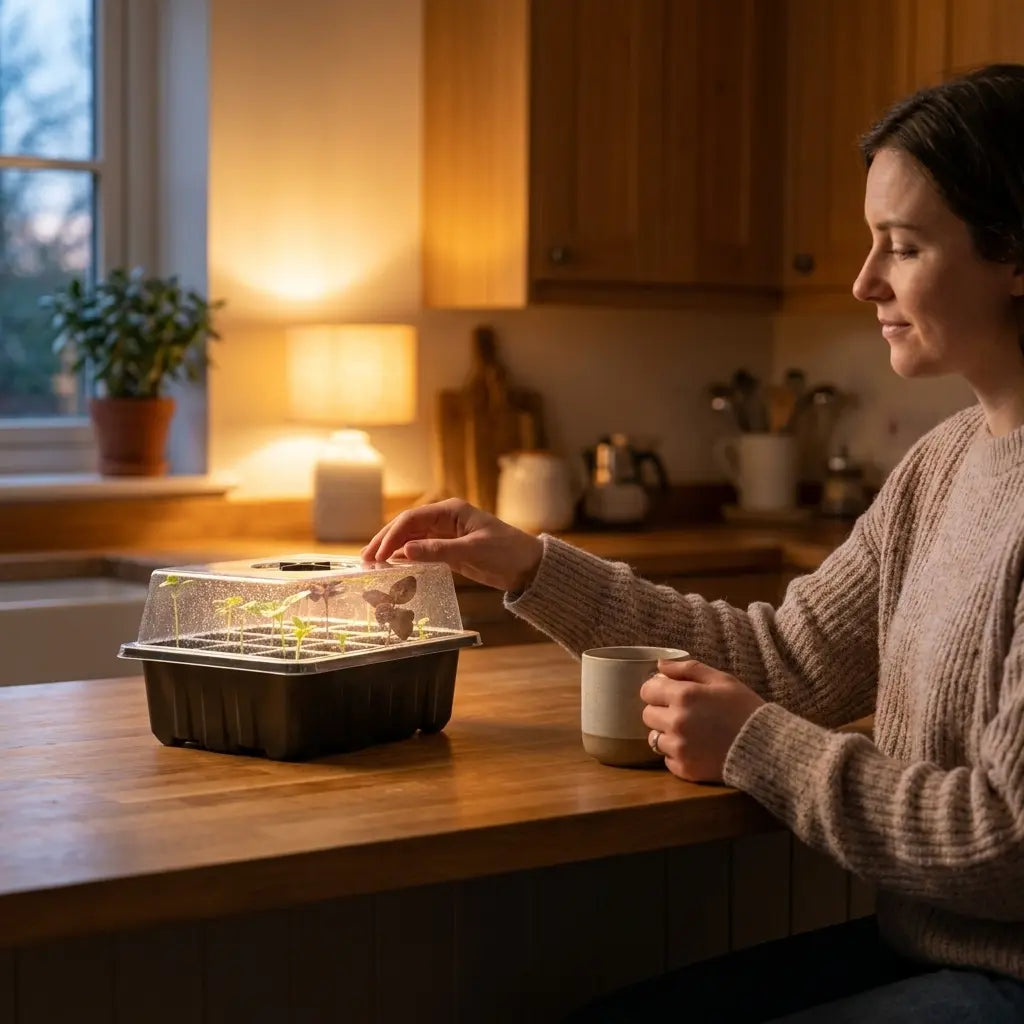
Microgreens are easy to time, but only if every tray is level and watered evenly, which is hard in a random container. A proper tray with a humidity dome and a grow mat removes most of that guesswork, and there is no soil and no mess.
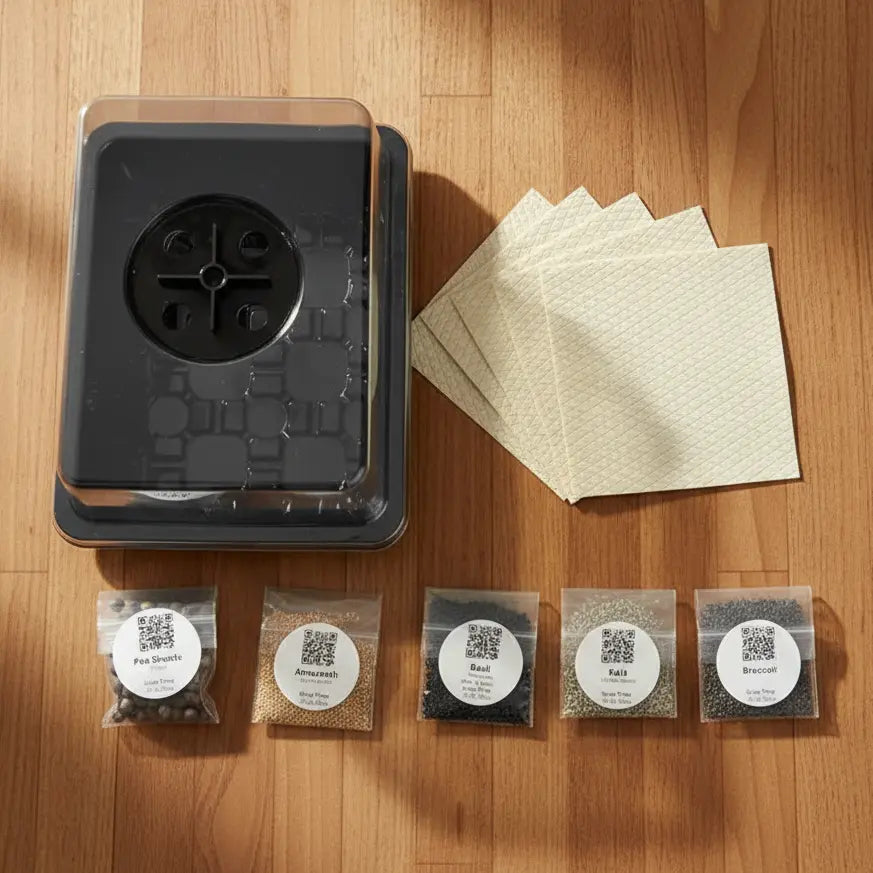
The Aquager Microgreens Starter Kit ($29.99) includes two trays, a humidity dome, organic grow mats, and seeds for lemon basil, kale, pea shoots, and broccoli. The pea shoots and broccoli cover dishes 1 and 5, and the kale seeds work for dish 10. Add radish, arugula, mustard, and the rest as $7.99 seed packs, each with its own grow mat. The kit fits on a windowsill, a counter, or under a grow light.
If you want to plan your grows around nutrition as well as flavor, read our guide to the most nutritious microgreens.
Frequently Asked Questions
How far ahead should I grow microgreens for a holiday meal?
Count back from the slowest end of each variety's grow time. Pea shoots need up to 14 days, radish, broccoli, and mustard up to 15, arugula 15, and basil and cilantro up to 25. The plant-by table above has the dates for Thanksgiving, Christmas, and New Year's Eve. Harvest the morning of the meal.
Do microgreens need to be cooked?
No. For holiday dishes, add microgreens raw as a finishing touch right before serving, because heat dulls the color and wilts the texture. Put them on the plate last, after the dish is hot and finished. The exception is wheatgrass, which is blended or juiced instead of eaten whole.
How much microgreens do I need for a holiday dinner?
One tray per variety is plenty, because a garnish needs only a small pinch per dish. A tray yields about 30 g of pea shoots, 20 g of radish, 21 g of arugula, 10 g of mustard, 9 g of clover, or 6 g of cilantro. Grow a second tray of the smaller harvests if you want more.
Which microgreens go with turkey, prime rib, and salmon?
Pea shoots go with turkey for sweet, fresh contrast. Arugula goes with prime rib for a peppery bite, and broccoli goes with salmon for a mild, slightly grassy pairing. Use radish or mustard on rich cheese boards, clover under shrimp, and basil on smoked salmon blinis.
Can I give a microgreens kit as a holiday gift?
Yes. The Microgreens Starter Kit ($29.99) includes two trays, a humidity dome, organic grow mats, and seeds for lemon basil, kale, pea shoots, and broccoli, so the recipient can start right away. For more ideas, read our guide to meaningful holiday gifts.
Which Holiday Microgreens Recipe Should You Start With?
Start with the dish at the top of your calendar. If that is Thanksgiving, plant sunflower on November 2 and pea shoots on November 12, then move on to the Christmas and New Year's Eve trays. One kit and a few seed packs cover the whole season, and the same trays keep producing in January.

The Microgreens Starter Kit is the simplest place to begin: two trays, a dome, and mats that you reuse across all twelve recipes and every season after.
Author: Aquager Team · Published: June 13, 2026 · Updated: October 11, 2026 · Reviewed: October 11, 2026 (Phase 2 and 3)











0 comments