
Most people who start growing microgreens land on one or two varieties and stick with them. Pea shoots because they are forgiving. Broccoli because of the sulforaphane articles. That is the whole rotation.
But there are far more microgreens worth growing, each with its own flavor, texture, color and kitchen use. You do not need a garden or a greenhouse. You need one tray, one variety at a time, and a little curiosity.
This is the 2027 Microgreens Growing Challenge: twelve months, twelve varieties, one new crop each month. By December you will have grown everything from peppery radish to nutty sunflower to mild clover, and you will know exactly which ones your kitchen reaches for.

How Does a One Variety Per Month Challenge Work?
You plant one new variety at the start of each month and harvest it before the month ends. Every variety in this challenge is ready in 25 days or less, so a single tray handles the whole year. You are never juggling twelve trays at once.
The pace builds real skill. After tasting radish, mustard and arugula across three different months, you start to understand what peppery actually means. You also notice which varieties like dense seeding, which need more water, and which look best in natural light. And each harvest is tied to a meal, such as cilantro for summer tacos in June or kale for autumn soup in October, so the whole year feels intentional.
New to microgreens? Our beginner's guide to growing your first tray covers the basics. Want to see every variety we sell? The complete guide to all 18 microgreens varieties goes beyond these twelve.
What Do You Need for the Challenge?
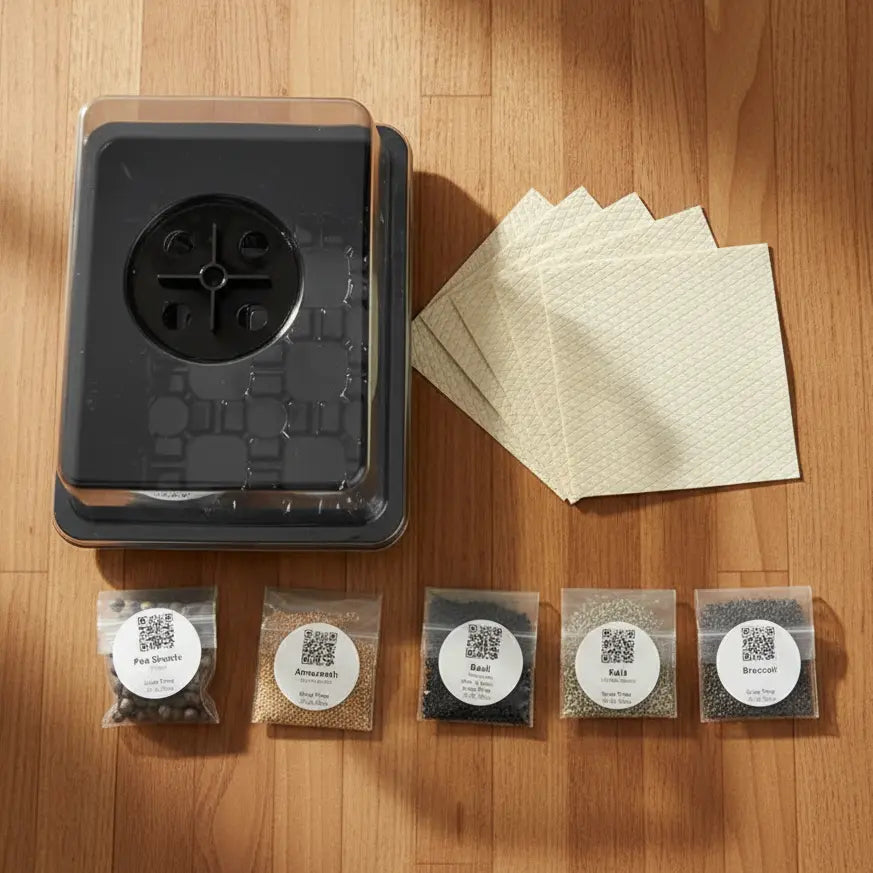
Two things: a tray setup and seeds. The Microgreens Starter Kit ($29.99) includes two trays, a humidity dome with adjustable vents, an organic grow mat, and seeds for broccoli, kale, pea shoots and lemon basil with four grow mats. Pea shoots, broccoli and kale are all in this challenge, so the kit covers three of the twelve months.
Every seed pack is $7.99 and comes with its own organic grow mat. With the kit, you would buy nine more packs, about $72, for roughly $102 for the whole year. That works out to under $9 a month for fresh greens that never wilt in the fridge. Rinse and dry the tray between batches and it is ready for the next variety.
Which Microgreens Should You Grow Each Month?
Here is the full 2027 calendar at a glance. Plant on the first of the month, and even the slowest varieties will be ready by the end of it.
| Month | Microgreen | Days to harvest | Yield per tray |
|---|---|---|---|
| January | Pea shoots | 7 to 14 | 30 g |
| February | Broccoli | 10 to 15 | 20 g |
| March | Radish Confetti Mix | 10 to 15 | 20 g |
| April | Sunflower | 7 to 21 | 22 g |
| May | Basil Genovese | 16 to 25 | 10 g |
| June | Cilantro | 20 to 25 | 6 g |
| July | Arugula | 15 | 21 g |
| August | Amaranth (Garnet Red) | 16 to 25 | 5 g |
| September | Mustard | 10 to 15 | 10 g |
| October | Kale Kalefetti Mix | 16 to 25 | 15 g |
| November | Clover | 5 to 7 | 9 g |
| December | Wheatgrass | 7 to 15 | 17 g |
1. Pea Shoots for January

Start the year with the easiest crowd-pleaser. Pea shoots are sweet, tender and forgiving, and they grow tall and lush. They are also the biggest producer of the twelve, at about 30 g per tray. See our pea shoots growing guide for tips.
- Flavor: sweet and fresh, like spring peas.
- Best in: stir-fries, soups, grain bowls, or on toast with ricotta.
- Grow time: 7 to 14 days. Get pea shoots seeds →
2. Broccoli for February

Broccoli is the most studied microgreen on the list, mainly for its sulforaphane content. It germinates reliably and is worth growing at least once. Our guide to growing broccoli microgreens walks through it.
- Flavor: mildly bitter and slightly spicy, like mature broccoli but more intense.
- Best in: smoothies, grain bowls, on eggs, or layered in wraps.
- Grow time: 10 to 15 days. Get broccoli seeds →
3. Radish Confetti Mix for March

March wakes you up. Radish delivers crunch and a peppery punch that turns a plain bowl into something memorable, and the Confetti Mix adds color. It is also the quickest if you are in a hurry, since it can be cut in as little as 4 days at the sprout stage. Read the radish microgreens growing guide to learn more.
- Flavor: crisp, bold and spicy.
- Best in: avocado toast, tacos, sushi, ramen and noodle dishes.
- Grow time: 10 to 15 days. Get Radish Confetti Mix seeds →
4. Sunflower for April

Sunflower is the most substantial crop in the challenge. The stems are thick, the crunch is satisfying, and first-time growers are often surprised by how good it tastes straight from the tray. Soak the seeds for 48 to 72 hours before planting. The sunflower microgreens guide has the full method.
- Flavor: nutty and a little sweet, with a chewy bite.
- Best in: sandwiches, grain bowls, salads, or as a snack.
- Grow time: 7 to 21 days. Get sunflower seeds →
5. Basil Genovese for May

Basil takes longer than the early crops, but May is the right time, just ahead of grilling and garden party season. The microgreen version gives you the same sweet, aromatic punch as full leaves in a fraction of the space. Start it on the first of the month. See the basil microgreens growing guide for details.
- Flavor: sweet, aromatic, classic Italian basil.
- Best in: pizza, pasta, caprese, and anything that wants fresh basil.
- Grow time: 16 to 25 days. Get basil genovese seeds →
6. Cilantro for June
June is taco season, and cilantro microgreens are the obvious pick. They are the slowest crop in the challenge, so plant them on the first of the month to harvest by the end of it. The flavor is bright and citrusy, and it stays delicate in a way chopped herb does not. Our cilantro microgreens guide covers the details.
- Flavor: citrusy, herbal and slightly peppery.
- Best in: tacos, salsas, guacamole, ceviche and summer rice dishes.
- Grow time: 20 to 25 days. Get cilantro seeds →
7. Arugula for July
Arugula microgreens bring the same boldness as full-grown arugula in a more tender form. In July, when you want salads that actually taste like something, they stand up to dressings and hold their flavor even next to warm ingredients. The arugula microgreens guide has more.
- Flavor: bold, peppery and sharp.
- Best in: summer salads, bruschetta, flatbreads, pizza and pasta.
- Grow time: about 15 days. Get arugula seeds →
8. Amaranth (Garnet Red) for August

August is the most colorful month. Garnet Red Amaranth grows in deep magenta and pink tones that make any dish look styled for a photo shoot. The flavor is mild and approachable, but the color is the real star. It is a small producer, at about 5 g per tray, so think garnish rather than salad base.
- Flavor: mild, earthy and a little nutty.
- Best in: grain bowls, salads, smoothie bowls, and anywhere color matters.
- Grow time: 16 to 25 days. Get amaranth seeds →
9. Mustard for September

As temperatures drop and cooking gets richer, mustard earns its place. The heat is sharper and more lasting than radish, with a horseradish quality that makes it the most condiment-like microgreen of the twelve. Use it where you would use whole-grain mustard. Our mustard microgreens guide explains how to grow it.
- Flavor: spicy and horseradish-like, with a long finish.
- Best in: charcuterie boards, roasted meats, sandwiches and ramen.
- Grow time: 10 to 15 days. Get mustard seeds →
10. Kale Kalefetti Mix for October

October is soup season, and Kalefetti is a good fit. It blends bright green, dark green and purple kale, without the bitterness or toughness of full-grown kale. Float a handful on white bean soup or blend it into a smoothie. Start it on the first of the month, since it is one of the slower crops. See how to grow kale microgreens.
- Flavor: mild and slightly earthy, much gentler than mature kale.
- Best in: autumn soups, grain bowls, smoothies and egg dishes.
- Grow time: 16 to 25 days. Get Kale Kalefetti Mix seeds →
11. Clover for November
Clover is the palate cleanser of the challenge. After months of bold flavors, November brings something gentle: light, fresh and almost universally liked. It is also the fastest crop on the list, ready in 5 to 7 days, so it is a good one to fit around a busy holiday month. Try it on turkey wraps or holiday leftovers.
- Flavor: mild, fresh and slightly sweet.
- Best in: wraps, sandwiches, salads, and anywhere you want greens without heat.
- Grow time: 5 to 7 days. Get clover seeds →
12. Wheatgrass for December
End the year with the classic. Wheatgrass is not a garnish, it is a whole different category: grassy, earthy and chlorophyll-forward, and best juiced or blended. It is the same seed we sell for cat grass, so there is a bonus if you share your tray with a cat. Here is the 7 day wheatgrass growing guide.
- Flavor: intensely grassy and earthy.
- Best in: juice shots, smoothies and holiday green drinks.
- Grow time: 7 to 15 days. Get wheatgrass seeds →
Why Start the Microgreens Challenge With a Kit?

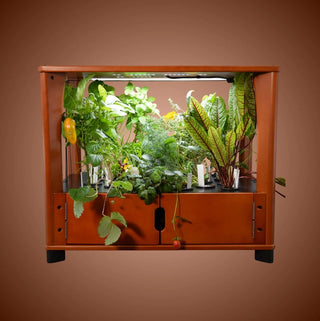
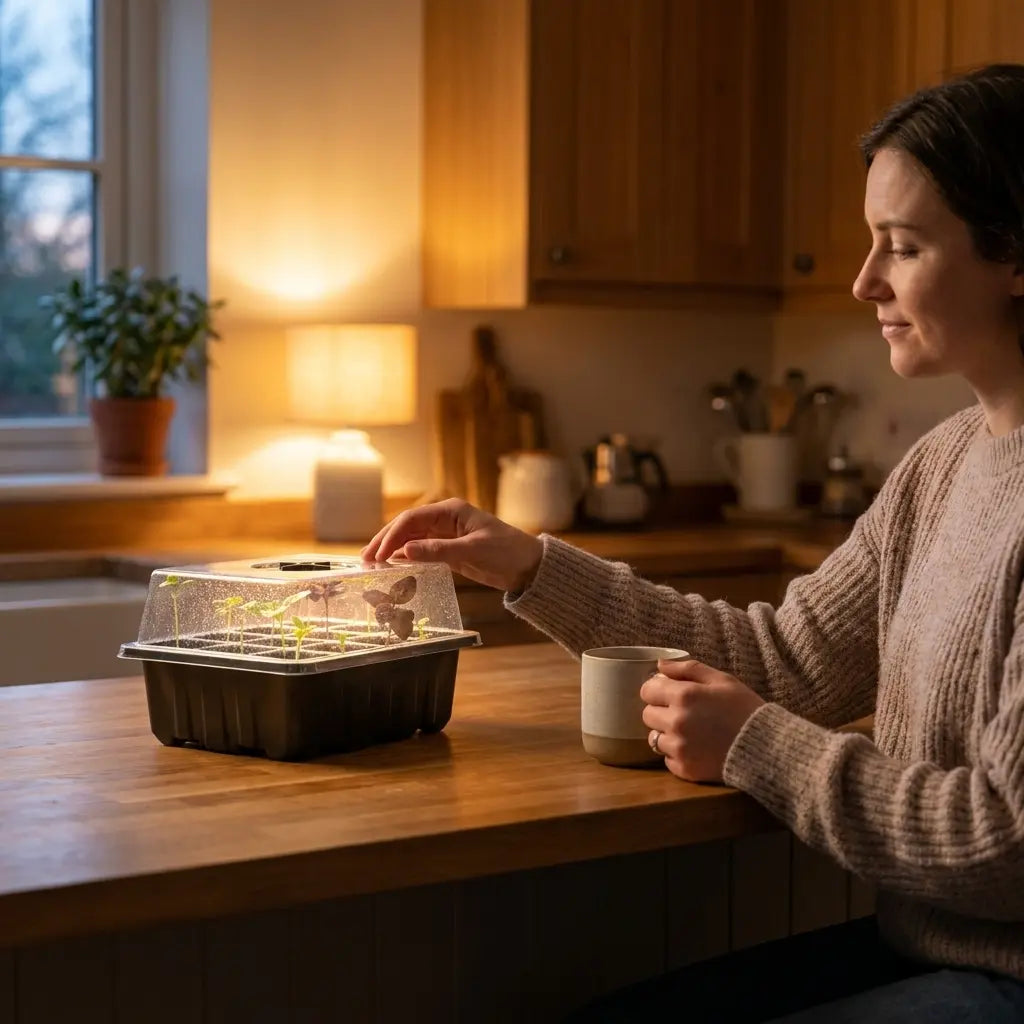
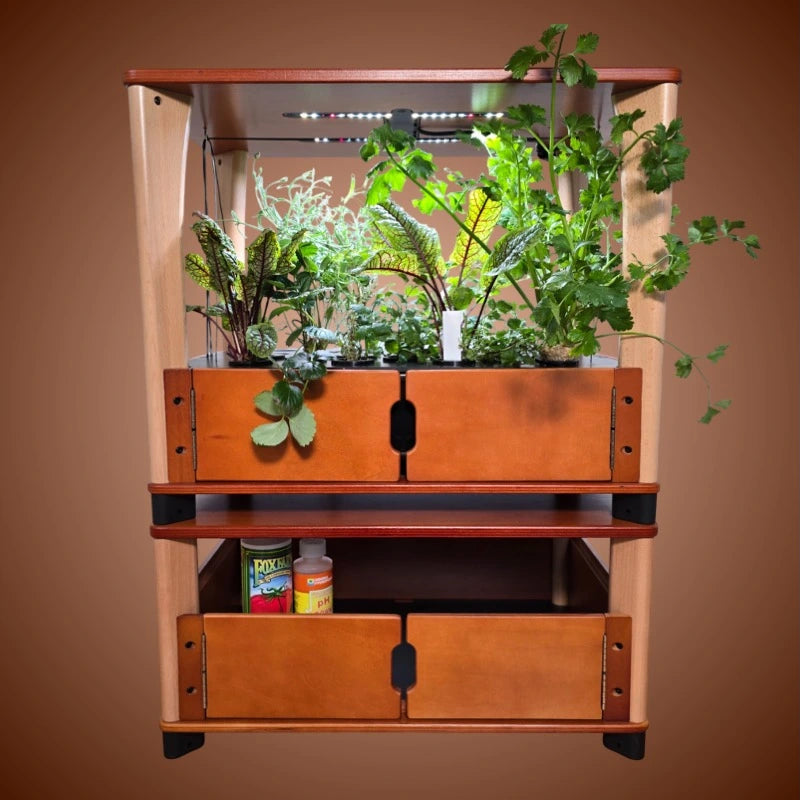
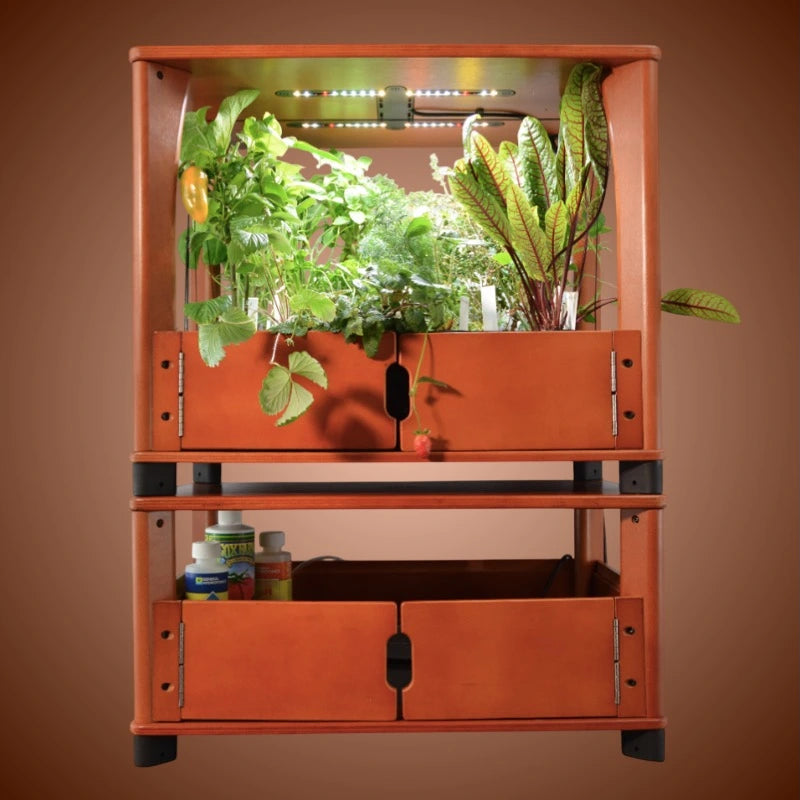
Every month of this challenge runs through the same base setup. The Microgreens Starter Kit gives you two trays and a humidity dome, so you can run one tray at a time or overlap two when a slow crop like basil or cilantro is still growing. The kit is also compatible with the Aquager Home Farm, if you ever want to grow microgreens alongside herbs.
You are not managing a supply chain. You pick a new variety each month, drop it in the tray you already own, and go again.
Microgreens Challenge FAQ
Do I need a new tray every month?
No. The tray is reusable. After each harvest, rinse it, let it dry, and it is ready for the next variety. Each seed pack includes its own organic grow mat, so you start fresh every cycle.
What if I miss a month?
Pick it up the next month and grow two varieties. The challenge does not expire, and the only rule is that you try something new. The calendar is a guide, not a contract.
Can I grow microgreens indoors all year?
Yes. Microgreens do not need outdoor conditions, seasons or direct sun. A countertop near a bright window, or a small grow light, is enough for all twelve varieties in any month. See our guide to growing microgreens through fall and winter.
What is the easiest variety for a beginner?
Pea shoots (January) and radish (March) are the most forgiving. They germinate reliably and grow fast, so you get an early win. For more picks, see 7 microgreens you can't mess up.
How much does the challenge cost?
Each seed pack is $7.99 and includes an organic grow mat. The Starter Kit is $29.99 and includes seeds for pea shoots, broccoli and kale, so you would buy nine more packs. That is about $102 for the full year, or under $9 a month.
How long do harvested microgreens last in the fridge?
Most keep for 5 to 7 days when stored dry in a sealed container. Harvest right before using whenever you can for the best texture.
Ready to Start Your 2027 Challenge?
By the time you blend a wheatgrass shot in December, you will have grown twelve different microgreens and learned their flavors, textures and best uses. You will know which ones your household reaches for and which ones surprise you. That is the real result: not just fresh greens on the plate, but a growing habit that sticks. One tray, one new variety, every month.
The Microgreens Starter Kit has everything you need to begin in January and keep going all year.
Author: Aquager Team · Published: June 13, 2026 · Updated: October 24, 2026 · Reviewed: October 24, 2026 (Phase 2 and 3)












0 comments