
Horticultural therapy is a recognized practice, not alternative medicine. Credentialed therapists use plants and gardening in hospitals, rehabilitation centers and memory care programs to support stress relief, mood and recovery.
Most people have never heard the term, but they know the feeling: the quiet focus of tending something alive, the small pleasure of watching it grow, the structure a daily routine gives when other things feel uncertain.
This guide covers what horticultural therapy is, what the research says about gardening and mental wellness, and why a tray of microgreens is one of the easiest ways to try it at home. No outdoor space and no gardening experience needed.
This article is informational, not medical advice. Growing plants can support well-being, but it does not replace professional mental health care. If you or someone you care about is struggling, please talk with a healthcare provider or mental health professional.

What Is Horticultural Therapy?
Horticultural therapy is the use of plants and gardening activities, guided by a trained professional, to meet specific treatment goals. The American Horticultural Therapy Association describes it as plant-based activity led by a credentialed horticultural therapist as part of a treatment plan.
The idea is old. Benjamin Rush, a physician and signer of the Declaration of Independence, observed in 1812 that working in the garden seemed to help patients with mental illness. After World War II, gardening became part of physical and occupational rehabilitation for returning veterans in VA hospitals.
Today, horticultural therapists work in settings such as rehabilitation centers, psychiatric and residential mental health programs, and memory care units. The benefits do not depend on one diagnosis. They come from how people respond to living things, routine and purposeful activity.
Does Gardening Actually Help Mental Health?
Research suggests it can. A meta-analysis of 22 studies by Soga and colleagues, published in Preventive Medicine Reports, linked gardening with lower depression, anxiety and body mass index, and with higher life satisfaction, quality of life and sense of community. These were group-level findings, not a promise for any one person.
Several mechanisms are often cited:
- Lower stress response. In a randomized crossover study in the Journal of Physiological Anthropology (2015), young adults who transplanted an indoor plant showed lower autonomic nervous system activity, a marker of the body's stress response, than when they did a computer task.
- Restored attention. Attention restoration theory, developed by psychologists Rachel and Stephen Kaplan at the University of Michigan, proposes that contact with nature gives your focus a chance to recover after sustained mental effort. Living plants, even indoors, are part of that idea.
- Visible progress. Growing something gives you clear cause and effect and a reward on a reliable schedule. Small, achievable wins are a core piece of behavioral activation, an evidence-supported approach to depression.
- Sensory grounding and routine. Touch, smell and sight all engage when you water and harvest a tray. A gentle daily check-in adds structure without pressure.
Why Are Microgreens Good for Therapeutic Growing?
Microgreens give you a full growing cycle in days instead of months, which makes the routine easy to finish and easy to restart. Most seeds sprout within a few days, and harvest takes 5 to 25 days depending on the variety. Clover is ready in 5 to 7 days, and pea shoots in 7 to 14.
- Fast feedback. You see sprouts quickly and a harvest soon after, so the reward arrives before motivation fades.
- Low physical demand. A flat tray sits at counter height. There is no digging, no heavy soil and no bending, which suits people with limited mobility or who are recovering from surgery.
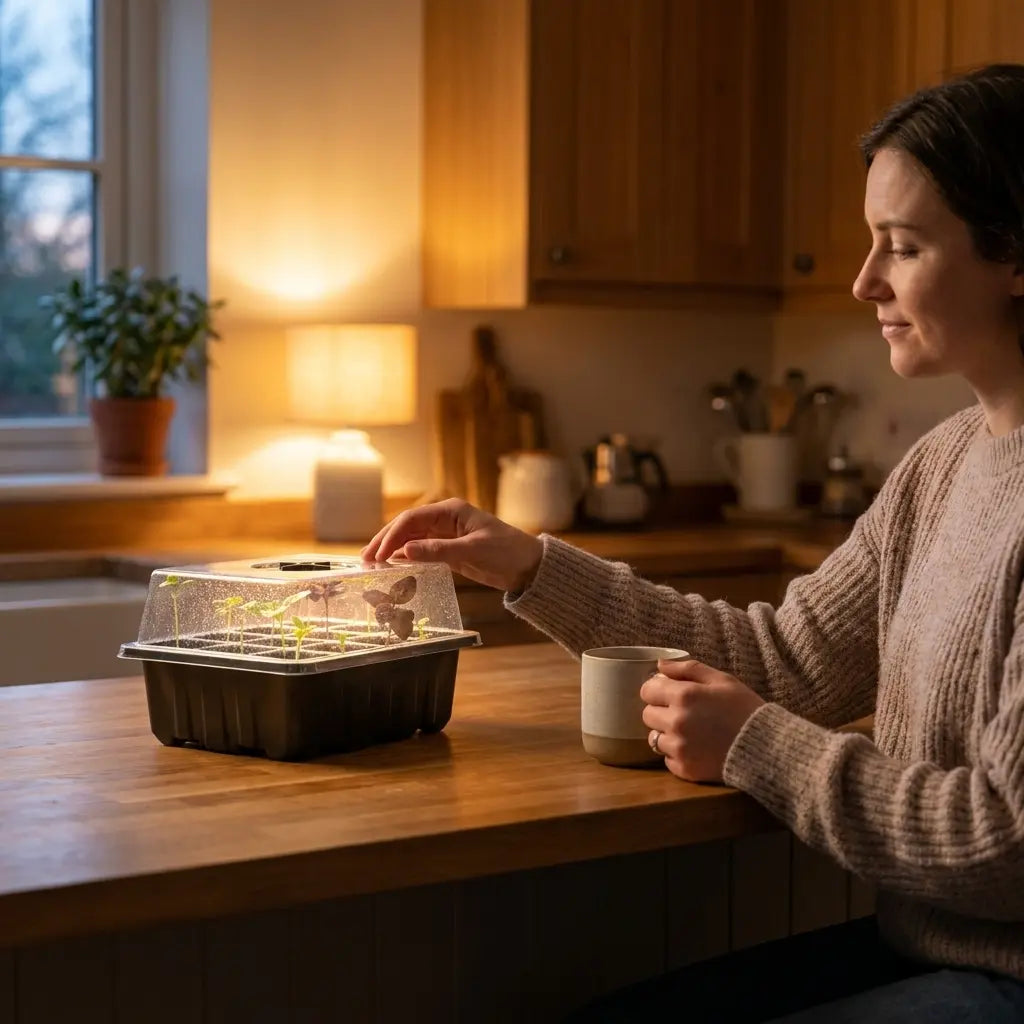
- No outdoor space needed. A kitchen counter or windowsill works, which helps people in apartments, assisted living or residential programs.
- Low cost and low stakes. A seed pack is $7.99 and includes an organic grow mat. If a tray does not work out, starting over is cheap and quick.
For the nutrition side, including nutrients linked to mood, see our post on kale microgreens and mood-supporting foods.
If you want the simplest possible start, the Grab & Grow Pre-Seeded Starter Kit arrives ready to go. Open the box, add water and watch it grow, with no seed measuring or setup decisions to make.
Is Horticultural Therapy Used With Veterans?
Yes. Gardening has been part of veterans' rehabilitation since the 1940s, and garden and horticultural therapy programs for veterans exist today at VA medical centers and community gardens. Program reports describe benefits such as less perceived stress, a stronger sense of purpose and more social connection.
The overlap with the research above is clear: a growth cycle with a start and a finish, visible progress, and a hands-on activity that does not require talking about hard experiences. Veterans Day on November 11 is a good moment to remember that formal programs are not available to everyone, and that growing something at home on your own schedule is a related, simpler practice. Your local VA medical center can tell you which wellness and occupational therapy programs are currently offered.
How Do You Start a Therapeutic Growing Routine at Home?

Keep it small and repeatable. Here is a simple way to begin:
- Pick an easy starter. Pea shoots and sunflower are forgiving and show clear daily growth. Our list of 7 microgreens you can't mess up covers more options.
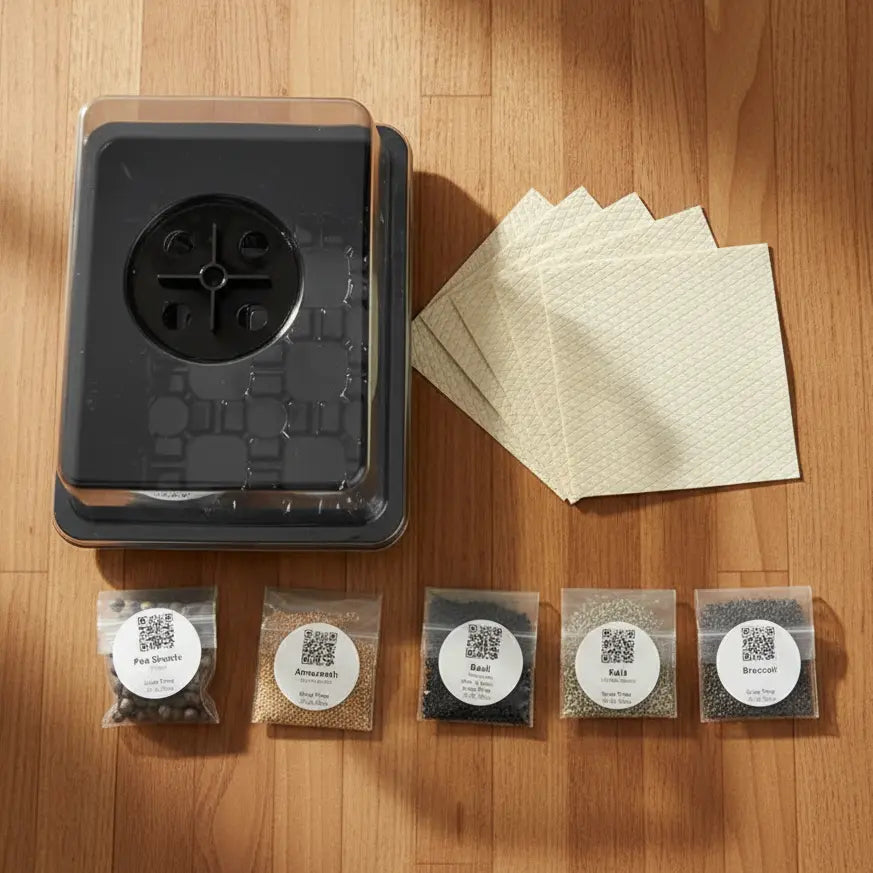
- Choose your setup. The Microgreens Starter Kit ($29.99) includes two trays, a humidity dome, an organic grow mat, and seeds for broccoli, kale, pea shoots and lemon basil. The Grab & Grow Kit (from $44.99) is pre-seeded if you want zero setup.
- Set a daily check-in. A minute in the morning to look, water and notice what changed is enough. The routine matters more than the amount.
- Harvest and eat it yourself. Cutting and eating what you grew is the part many people find most rewarding.
- Start again. Plant the next tray right away. A cycle you can finish in one or two weeks makes it easy to keep going.
For a full walkthrough, see how to grow microgreens at home, or the windowsill microgreens guide if you have no grow light.
Horticultural Therapy and Microgreens FAQ
Is horticultural therapy the same as gardening?
Not exactly. Horticultural therapy is led by a credentialed therapist with specific treatment goals. Gardening at home for well-being draws on the same ideas without clinical guidance. Both can help, but they serve different needs.
Can growing microgreens help with anxiety or depression?
Research links gardening with lower anxiety and depression, and growing microgreens uses some of the same elements: routine, sensory engagement and visible progress. It is not a treatment for clinical anxiety or depression and should not replace professional care. If you are struggling, please speak with a qualified provider.
What are the best microgreens for a home therapeutic growing routine?
Pea shoots and sunflower are good first picks. Both have large seeds, show visible growth, and are forgiving of small mistakes. Clover is a fast option at 5 to 7 days.
Are there horticultural therapy programs for veterans?
Yes. Garden and horticultural therapy programs for veterans exist at VA medical centers and in community settings. Your local VA medical center can explain which programs are currently available.
Do microgreens need a lot of space or time?
No. A tray fits on a counter or windowsill, and daily care takes about a minute. Harvest comes in 5 to 25 days depending on the variety.
Do microgreens have nutrients linked to mood?
Microgreens contain vitamins and minerals such as folate, and some research suggests they are more nutrient dense than mature greens. They are food, not a treatment. See microgreens benefits ranked by nutrition for the details.
What Does Growing Something Living Actually Do?

The research points to something most people who have grown a plant already know: caring for something alive, watching it change and harvesting it yourself creates a satisfaction that is hard to find elsewhere. It is immediate, tangible and repeatable.
Microgreens make that experience small enough to try this week. A short cycle from seed to harvest is quick enough to finish before motivation fades, cheap enough to restart without worry, and simple enough for almost anyone. It is not a cure for anything, but it is something real.
Growing plants is a meaningful wellness practice, not a substitute for professional mental health care. If you are in crisis, call or text 988 (veterans can press 1). For help finding treatment, the SAMHSA National Helpline is 1-800-662-4357.
Author: Aquager Team · Published: June 3, 2026 · Updated: October 24, 2026 · Reviewed: October 24, 2026 (Phase 2 and 3)












0 comments