
As the days get shorter and fall settles in, a pattern shows up consistently in nutrition research: mood-related searches spike, and the link between what we eat and how we feel becomes more relevant than ever. Two of the most researched nutrients for mood regulation — folate and magnesium — are chronically under-consumed in the American diet. And one of the most concentrated, accessible sources of both is something you can grow on your kitchen counter in under ten days: kale microgreens.
This post covers what the science says about nutrition and mood, why kale microgreens stand out specifically as mood foods, and how to grow them at home so you can add these compounds to your daily routine without supplements or complicated protocols.
One note upfront: this is nutritional information, not clinical guidance. Diet supports well-being — it does not replace professional care for depression, anxiety, or any other mental health condition. If you’re dealing with a serious mental health challenge, please reach out to a qualified provider.
What Makes a Food a Mood Food?
The term “mood foods” gets used loosely, but there’s genuine science behind the category. Certain nutrients are directly involved in producing and regulating neurotransmitters — the chemical messengers that govern how we feel, sleep, and respond to stress.
Serotonin is the neurotransmitter most closely associated with mood stability and a sense of calm. About 90% of the body’s serotonin is produced in the gut, and its synthesis requires specific nutritional inputs. Folate (vitamin B9) is essential for converting tryptophan to 5-HTP, the direct precursor to serotonin. Without adequate folate, this pathway becomes rate-limited — the raw material is there, but the conversion can’t proceed efficiently.
Magnesium plays a different but equally important role. It regulates NMDA receptors — proteins on neurons that control how cells respond to stress signals. Low magnesium is associated with increased neuronal excitability, which is linked to heightened anxiety and mood instability. Multiple epidemiological studies have found lower magnesium intake in people with self-reported depression and stress-related disorders, though the relationship is complex and researchers are careful not to claim simple causation.
Both nutrients are widely under-consumed. The NIH estimates that roughly 35% of American adults fail to meet the recommended daily intake for magnesium. Folate deficiency is common enough that the US has required grain product fortification for decades. Eating more vegetables that are dense in these compounds is one of the most consistently supported dietary recommendations for overall well-being.
Why Kale Microgreens Are Among the Best Serotonin Foods
Kale is already recognized as one of the most nutrient-dense leafy greens available in its full-grown form. But kale microgreens — harvested at 7 to 10 days old — concentrate the same compounds into a much smaller volume of plant matter.
A landmark 2012 study published in the Journal of Agricultural and Food Chemistry, funded by the USDA, found that many microgreens contained 4 to 40 times higher nutrient concentrations per gram than their mature vegetable equivalents. Kale microgreens ranked among the top performers for vitamins C, K, and key B vitamins including folate. Here’s what that means for mood-relevant nutrition specifically:
- Folate: Kale microgreens contain concentrated folate — essential for serotonin synthesis and one-carbon metabolism, the cellular process involved in methylating DNA and neurotransmitter precursors.
- Magnesium: Kale in full-grown form is a recognized magnesium source; at the microgreen stage, these minerals are concentrated in the cotyledons before being diluted across a larger mature plant.
- Vitamin C: Kale microgreens are exceptionally high in vitamin C, which supports adrenal function — the system responsible for cortisol regulation. Chronic stress depletes vitamin C reserves; dietary replenishment supports the stress response pathway.
- Vitamin K: Present in high concentrations in kale microgreens. Beyond its role in bone health, vitamin K1 is involved in the synthesis of sphingolipids — brain lipids that play a role in cognitive signaling.
A small daily serving of kale microgreens delivers all four of these compounds in concentrated, bioavailable form. That’s a meaningful dietary input for a vegetable you can grow in a week.
For a broader look at how kale microgreens compare to other varieties across the nutritional spectrum, see our full breakdown: Microgreens Benefits: The 7 Most Nutritious Varieties, Ranked by Science.
What Do Kale Microgreens Taste Like?
This is the question most people don’t ask until after they’ve planted a tray — and the answer is better than expected.
Full-grown kale has a pronounced, sometimes bitter flavor that puts a lot of people off. Kale microgreens are significantly milder. The brassica character is there — slightly earthy, with a faint peppery note — but without the heavy, sometimes astringent quality of mature kale leaves. Most people who say they dislike kale will find kale microgreens genuinely enjoyable, especially in smoothies where the flavor almost disappears entirely.
Best ways to use kale microgreens as mood foods:
- Smoothies: Kale microgreens’ finest use. A small handful blends completely smooth, turns the drink a deep vibrant green, and adds a meaningful nutritional payload without any noticeable flavor impact. Combine with mango, banana, pineapple, or berries.
- Grain bowls: Scatter generously over warm quinoa or rice bowls just before serving. Residual heat wilts the greens slightly without destroying nutrients.
- Salads: Use as a base or topping. The tender cotyledons are less chewy than mature kale leaves — easier to eat in quantity.
- Eggs: Fold into scrambled eggs in the final 30 seconds of cooking, or layer under poached eggs on toast.
- Wraps and sandwiches: Use in place of lettuce. Sturdier than arugula but milder than full kale — an excellent everyday layer.
The Kalefetti Mix variety produces green, red Russian, and purple kale all in a single tray. It’s one of the most visually striking microgreens you can grow — a bowl of it looks deliberate and beautiful, which matters when you’re trying to build a daily habit.
How to Grow Kale Microgreens: 7–10 Days to Your First Harvest
Kale microgreens are forgiving, reliable, and fast. This is the full process:
Day 1 — Optional soak: Kale seeds are small, so soaking isn’t strictly required. But a 2 to 4 hour soak can speed germination by a day or two — worth doing if you have time.
Day 1 — Plant: Place a damp organic coconut coir grow mat in your tray. Scatter seeds evenly across the surface to achieve full coverage without piling up. About 1 level teaspoon covers a standard 10”×20” tray.
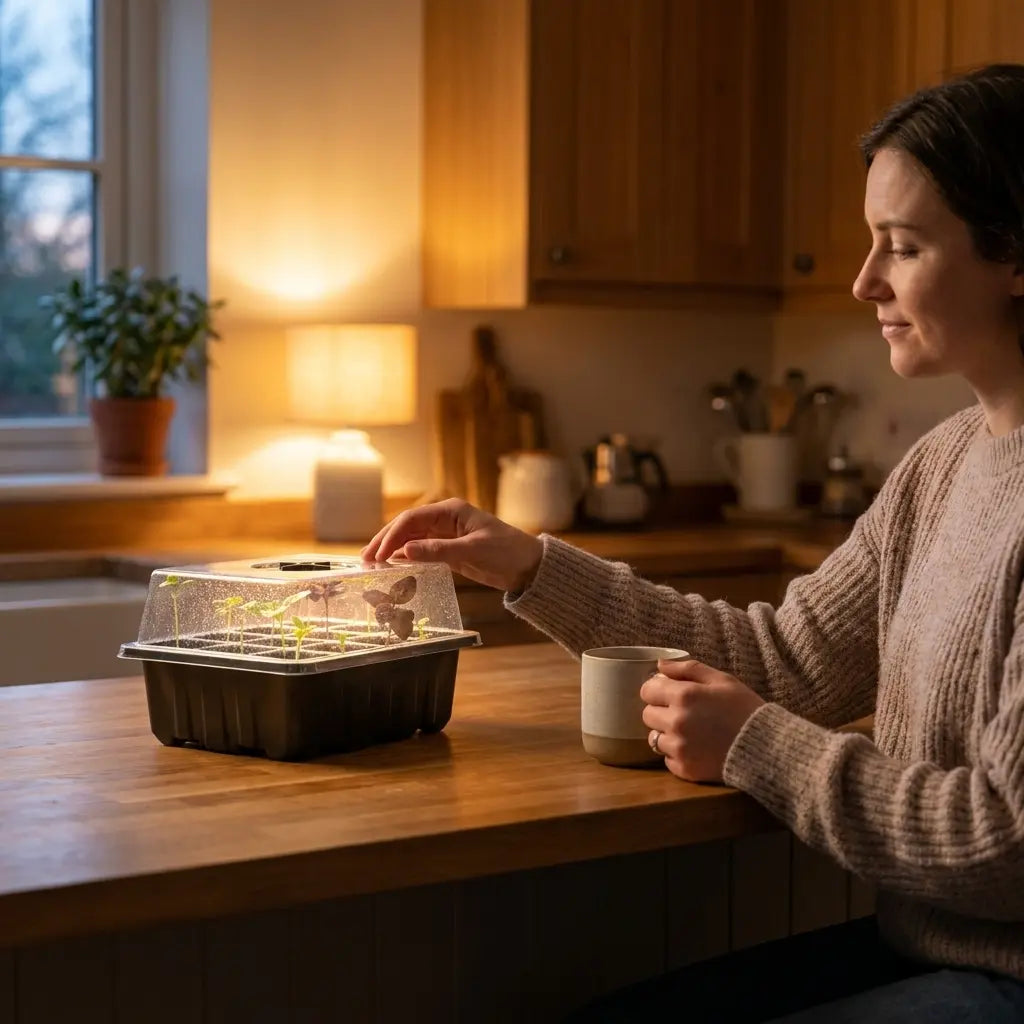
Days 1–4 — Blackout phase: Cover with a second tray or dome to block all light. Water daily by adding a small amount to the bottom tray — never spray the seeds from above, which promotes mold. In the dark, seedlings reach upward, building strong stems. By day 3 or 4, you’ll have a dense mat of pale sprouts pushing against the cover.
Days 4–7 — Greening: Remove the cover and place the tray in bright indirect light. Within 24 to 48 hours, the Kalefetti Mix will explode with color — greens, reds, and deep purples as photosynthesis activates the pigments unique to each variety.
Days 7–10 — Harvest: Cut just above the mat when the cotyledons are fully open, typically at 2 to 3 inches tall. Rinse and use immediately, or store in the refrigerator in a covered container for up to a week.
The full beginner’s guide with tips for every variety is here: How to Grow Microgreens at Home: The Complete Beginner’s Guide.
What You Need to Grow Your Own Mood Foods
The setup for kale microgreens is genuinely minimal. Three things: a tray, a grow mat, seeds. No grow light required for a sunny windowsill. No specialized knowledge. No previous gardening experience.
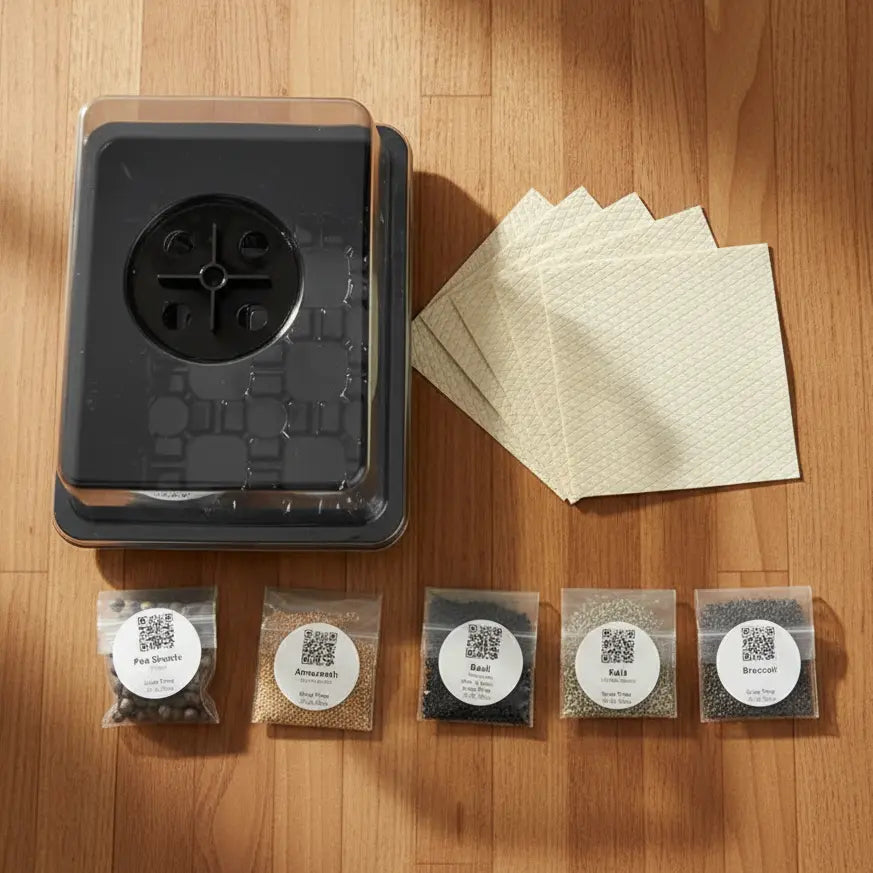
The Microgreens Starter Kit from Aquager includes the 10”×20” growing tray, dome for the blackout phase, and an organic coconut coir grow mat — everything except the seeds. At $24.99, the kit pays for itself after two or three harvests compared to buying pre-grown microgreens at a store.
Add a pack of Kale Kalefetti Mix Microgreens Seeds — $3.99, with an organic grow mat included — and your first tray is fully covered. One pack fills a full 10”×20” tray, which produces enough kale microgreens for several weeks of daily smoothies or bowls.
Frequently Asked Questions
Do kale microgreens contain more folate and magnesium than full kale?
Research on microgreens consistently shows higher nutrient concentration per gram than mature vegetables. The 2012 USDA-funded study found kale microgreens ranked among the top performers for B vitamins including folate. At the seedling stage, these compounds are concentrated in the cotyledons before being diluted across a larger plant structure.
Are kale microgreens good for mood?
Kale microgreens are a concentrated source of folate and magnesium — two nutrients directly involved in neurotransmitter synthesis and stress regulation. Adequate intake of both is associated with better mood outcomes in population-level research. They are not a treatment for depression or anxiety and should not replace professional mental health care.
What do kale microgreens taste like compared to full kale?
Significantly milder. Full-grown kale can be bitter and tough; kale microgreens are tender and lightly earthy with a faint peppery note. They blend seamlessly into smoothies with almost no detectable flavor, and work well raw in salads, bowls, wraps, and eggs.
How long does it take to grow kale microgreens?
7 to 10 days from planting to harvest. The first 3 to 4 days are a covered blackout phase; the remaining days are in light. Harvest when the cotyledons are fully open at 2 to 3 inches tall.
Do I need a grow light to grow kale microgreens indoors?
No. A bright window with 4 to 6 hours of indirect light is sufficient in most homes. In low-light fall and winter conditions, a simple LED grow light helps but isn’t required for a first grow.
The Bottom Line
Folate and magnesium are two of the most under-consumed nutrients in the American diet, and two of the most directly relevant to how we feel day-to-day. Kale microgreens offer a concentrated, food-first way to get both — faster and more economically than any supplement, from a source you can grow fresh on a kitchen counter in under ten days.
The Kalefetti Mix turns what could be a chore into something worth photographing: a tray of deep red, purple, and green cotyledons that performs as well nutritionally as it looks on a plate. For more on the nutritional case for microgreens as a category, read our post: Why Microgreens Are the Most Nutritious Vegetables You Can Eat.
Start your first tray this week with the Microgreens Starter Kit and Kale Kalefetti Mix Seeds — and have your first harvest ready well before the mood-shifting days of October arrive.
Author: Aquager Team · Published: June 1, 2026 · Updated: September 12, 2026 · Reviewed: September 12, 2026 (Phase 2)












0 comments