
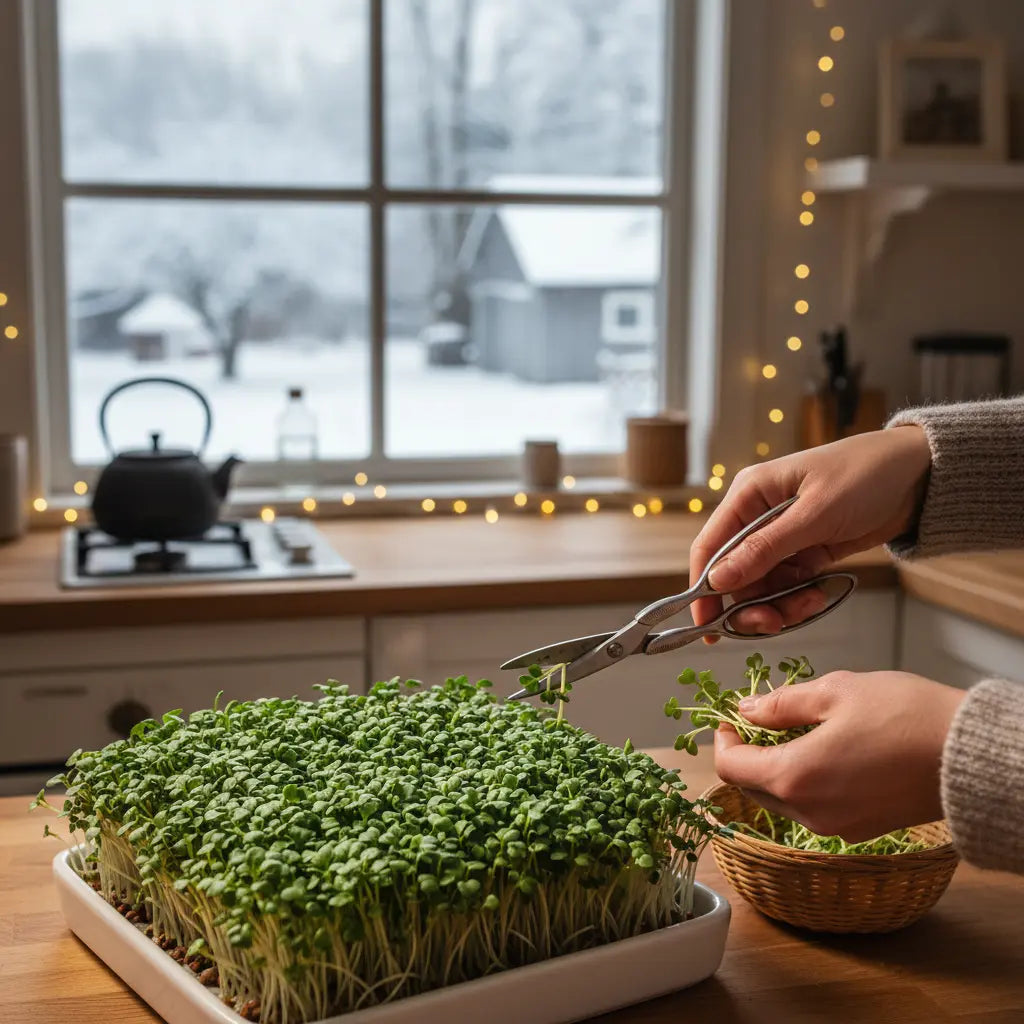
Thanksgiving is on Thursday, November 26, and four fast microgreens can be on your table by then: radish, pea shoots, sunflower, and kale. They are the best winter greens to start now, because they grow on a windowsill with no soil and no outdoor space.
This guide gives the plant-by date for each one, shows which two you can start right away in a two-tray kit, and ends with a two-tray plan that keeps fresh greens coming from Thanksgiving through February.
Which Winter Greens Microgreens Should You Plant Before Thanksgiving?
Plant radish, pea shoots, sunflower, and kale. Radish and pea shoots are the quickest, so plant them on November 11 and 12. Sunflower needs a soak and a November 2 start, and kale takes the longest, so plant it by November 1. The table shows grow times, yields, and the best uses for each.
| Variety | Grow time | Yield per tray | Plant by (for Nov 26) | Best use |
|---|---|---|---|---|
| Radish Confetti Mix | 10 to 15 days | 20 g | Nov 11 | Deviled eggs, beet salad, turkey sliders |
| Pea shoots | 7 to 14 days | 30 g | Nov 12 | Squash soup, roasted carrots, fall salad |
| Sunflower | 7 to 21 days, plus a 48 to 72 hour soak | 22 g | Nov 2 (start the soak) | Cheese board, arugula salad, vegetable tart |
| Kale Kalefetti Mix | 16 to 25 days | 15 g | Nov 1 | Grain sides, mushroom appetizer, smoothies |
Grow times and yields come from each Aquager seed pack page, and each plant-by date counts back from the slowest end of the range. For more fast options, see our list of the fastest-growing microgreens.
The Aquager Microgreens Starter Kit has two trays and pea shoot seeds, which makes radish and pea shoots the easiest pair to start with.
What Are the 4 Best Winter Greens Microgreens?
The four best winter greens microgreens are radish, pea shoots, sunflower, and kale. Each one grows on a windowsill and brings a different flavor: peppery, sweet, nutty, or earthy. Here is why each one made the list and how to use it.
1. Radish Confetti Mix: The Peppery Starter

Radish gives a sharp, peppery bite that cuts through rich holiday food, and the green, purple, and white stems look great on a plate. Plant it on November 11 and it is ready by November 26. Try it on deviled eggs, a roasted beet salad, or turkey sliders, starting with Radish Confetti Mix Seeds.
2. Pea Shoots: The Crowd-Pleaser

Pea shoots are sweet, mild, and tender, and sturdy enough to use as a bed for other foods instead of just a garnish. Stir them into warm butternut squash soup just before serving, scatter them over roasted carrots, or use them in a fall salad with pomegranate and pecans. Grow them from Pea Shoots Field Microgreens Seeds.
3. Sunflower: The Nutty Crunch

Sunflower microgreens have thick stems, a nutty flavor, and a crunch that works beside aged gouda and walnuts on a cheese board. Mix them into an arugula salad with lemon and olive oil, or use them on a roasted vegetable tart. The seeds need a 48 to 72 hour soak first, which our sunflower growing guide explains. Order Sunflower Black Oil Microgreens Seeds to start.
4. Kale Kalefetti Mix: The Colorful Slow Grower

Kalefetti Mix grows green, red Russian, and purple kale in one tray, with a milder, slightly earthy flavor than full-grown kale. It is the slowest of the four at 16 to 25 days, so plant it first. Fold it into a wild rice and cranberry side, scatter it over a roasted mushroom appetizer, or blend it into a smoothie. Get Kale Kalefetti Mix Microgreens Seeds to grow it.
What Do You Need to Grow Winter Greens at Home?
You need trays, grow mats, and seeds. Each tray holds one variety, and the trays need a dome for the first few days so the seeds stay moist while they sprout. Here is how to set up for all four.
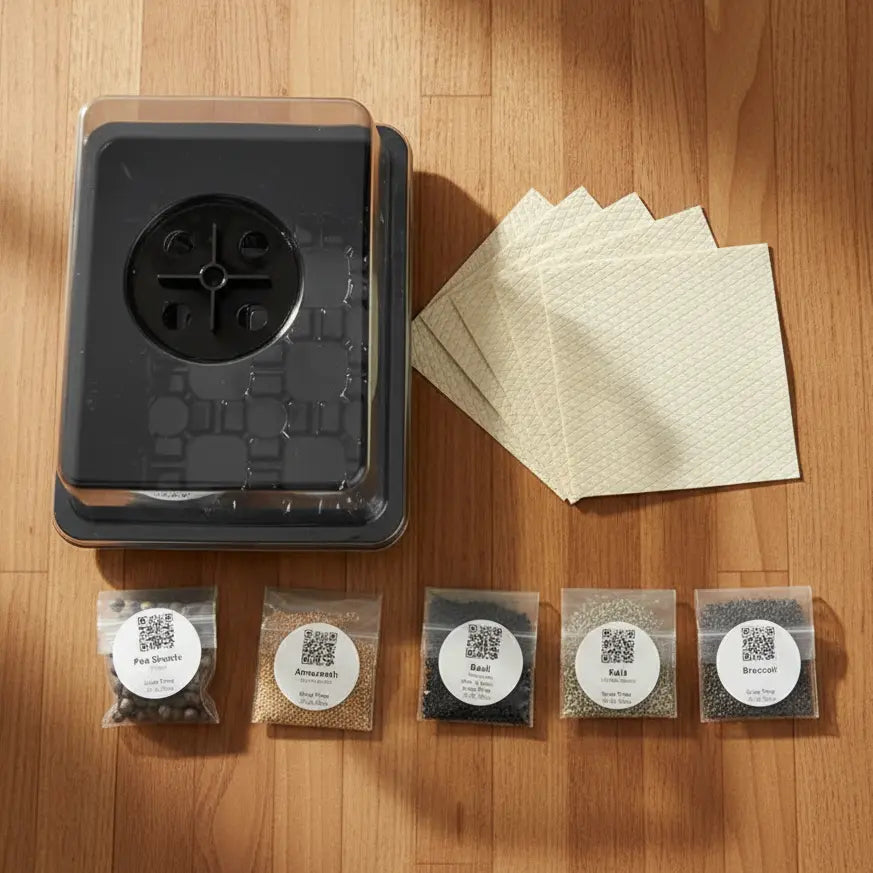
The Aquager Microgreens Starter Kit ($29.99) includes two trays, a humidity dome with an adjustable vent, organic grow mats, and seeds for lemon basil, kale, pea shoots, and broccoli, so the pea shoots for your list are covered. Radish, sunflower, and Kale Kalefetti Mix are $7.99 seed packs, and each pack includes its own organic grow mat.
Growing all four at once needs four trays. The Indoor Seed Starter Kit 2-Pack ($19.99) adds two more trays with humidity domes and no seeds. If you only have the kit's two trays, plant radish and pea shoots, the quickest pair.
How Do You Keep Winter Greens Growing Through February?
Replant each tray the day you cut it. With two trays, a new batch is always growing, so you get fresh greens every few weeks without a gap. The dates below use the longest grow time for each variety, so you can often cut a few days earlier.
| Date | Tray 1 | Tray 2 |
|---|---|---|
| Nov 11 and 12 | Plant radish (Nov 11) | Plant pea shoots (Nov 12) |
| Nov 26 | Cut radish for Thanksgiving | Cut pea shoots for Thanksgiving |
| Nov 27 | Plant sunflower (start the soak Nov 24) | Plant Kale Kalefetti Mix |
| Dec 18 and 22 | Cut sunflower (Dec 18), plant radish | Cut kale (Dec 22), plant pea shoots |
| Jan 2 and 5 | Cut radish (Jan 2), replant | Cut pea shoots (Jan 5), replant |
Keep alternating the four varieties through February. For cutting tips, read our guide to harvesting microgreens the right way. For more on growing indoors in the cold months, see Winter Microgreens: How to Grow Fresh Food Indoors All Winter Long and our fall and winter growing guide.
Frequently Asked Questions
What are the best microgreens to grow in winter?
Radish, pea shoots, sunflower, and kale are good winter picks, because they grow well on a windowsill and finish in 7 to 25 days. Radish and pea shoots are the quickest, at 10 to 15 days and 7 to 14 days. Sunflower and kale take longer but add crunch and color.
Do I need a grow light to grow microgreens in winter?
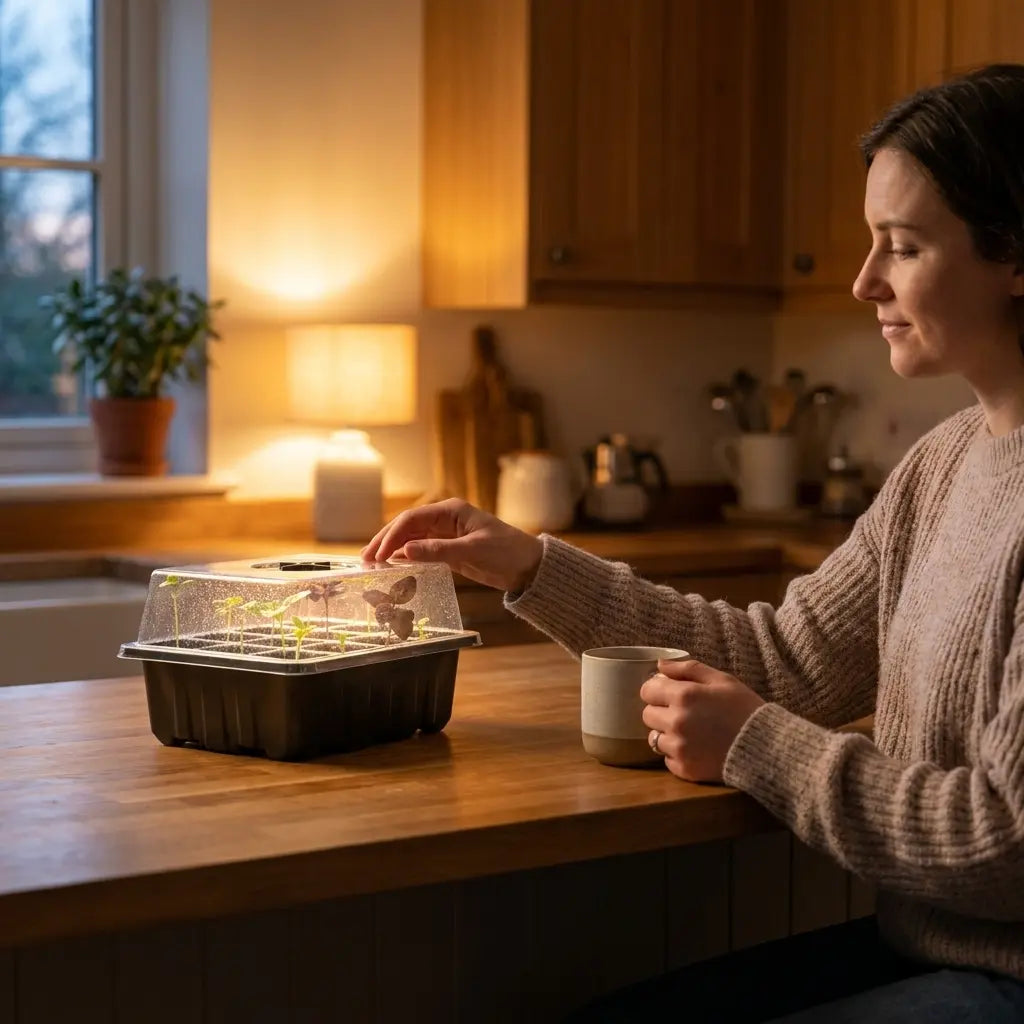
A bright windowsill works for most varieties, and a south-facing window is best in November. If your windows get little light, a grow light helps the shoots grow sturdy instead of stretching. The Aquager kit fits on a windowsill, a counter, or under a grow light, so you can pick what suits your kitchen.
When is the last day to plant microgreens for Thanksgiving?
For Thanksgiving on November 26, plant kale by November 1, sunflower by November 2, radish by November 11, and pea shoots by November 12. If you miss those dates, plant clover, which is ready in 5 to 7 days, by November 19 and cut it on Thanksgiving morning.
What is the difference between the Starter Kit and just buying seeds?
The kit includes two trays, a humidity dome, organic grow mats, and seeds for lemon basil, kale, pea shoots, and broccoli. A $7.99 seed pack includes its own organic grow mat but no tray or dome, so you need a tray from the kit or the 2-Pack to grow it.
How much do I harvest from one tray?
It depends on the variety. A tray yields about 30 g of pea shoots, 22 g of sunflower, 20 g of radish, or 15 g of kale. A garnish needs only a small pinch per dish, so one tray per variety is usually plenty for a holiday meal.
Can I grow microgreens without any outdoor space?
Yes. Microgreens grow on a mat in a tray with no soil, so all you need is a spot near a window or under a grow light, water, and seeds. A kitchen counter or a windowsill is enough space, and there is no outdoor garden required.
Ready to Plant Your Winter Greens?
Mark November 1 and 2 for kale and sunflower, and November 11 and 12 for radish and pea shoots. Cut them on Thanksgiving morning, then replant each tray to keep the greens coming through February.
For ideas on what to serve with them, see our guide to the best microgreens for Thanksgiving garnish, and for a day-by-day growing timeline, read how to grow microgreens for Thanksgiving. The Microgreens Starter Kit is the simplest place to begin.

Author: Aquager Team · Published: June 1, 2026 · Updated: October 11, 2026 · Reviewed: October 11, 2026 (Phase 2 and 3)












0 comments