
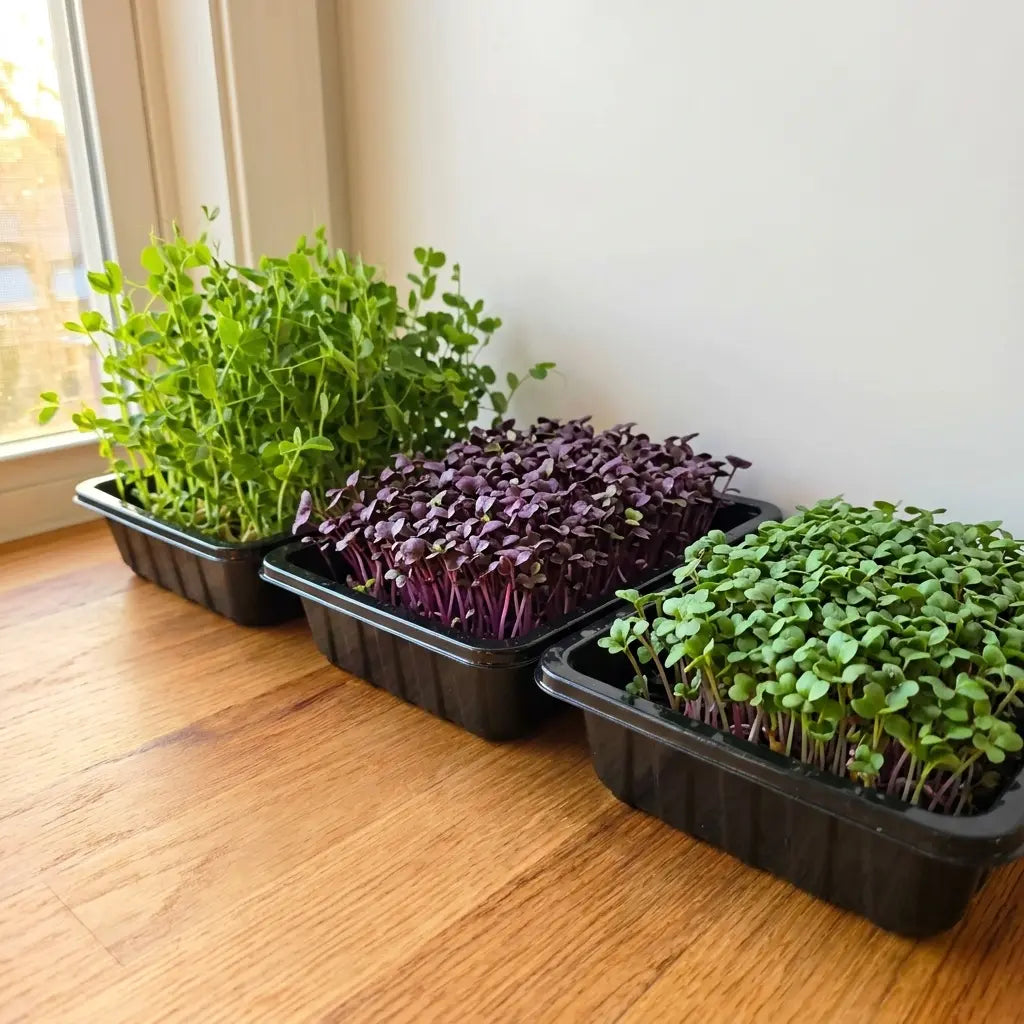
Microgreens cost anywhere from cheap to surprisingly expensive, depending entirely on whether you grow them or buy them at the store. A single 4 ounce clamshell at the grocery store can run five dollars or more, while a home tray produces several times that amount for a fraction of the price.
Most articles stop at "growing your own is cheaper" without showing the actual math. That leaves you guessing whether a starter kit is worth the upfront cost or just another gadget that sits in a drawer.
This breakdown lays out real store prices, real per-tray growing costs, and a simple monthly budget calculator, plus the costs most guides leave out, so you can see exactly where the numbers land for your own kitchen.
Average Price of Microgreens at the Store
Grocery store and farmers market microgreens are sold in small clamshells, usually 2 to 4 ounces per container. Prices typically run from 4 to 7 dollars per container depending on the variety and where you shop.
At a 4 ounce container for 4.99 dollars, the average price of microgreens works out to about 20 dollars per pound. Specialty varieties like pea shoots or purple radish, and anything labeled organic, often push that closer to 25 to 30 dollars per pound.
There is a real reason microgreens carry that price tag. They wilt fast, often within a few days of harvest, so stores cannot buy in bulk and hold inventory the way they do with hardier vegetables. Harvesting is also done by hand, one small tray at a time, which adds labor cost that a head of lettuce or a bag of spinach does not carry.
Farmers markets tend to charge even more than grocery chains, since the smaller batches and direct-to-consumer model carry higher overhead. Even at the low end, microgreens are one of the more expensive items per pound in the produce section, right up there with specialty herbs and fresh berries.
Prices also swing by region and season. Larger cities with more health food stores tend to run higher than smaller towns, and winter months can push prices up further since local growers have less outdoor competition to keep prices in check. None of that changes the math much once you are growing your own, since a tray costs about the same to seed in January as it does in July.
The Real Cost of Growing Microgreens at Home
The cost of growing microgreens at home breaks into two parts: what you spend once on equipment, and what you spend every time you grow a new batch.
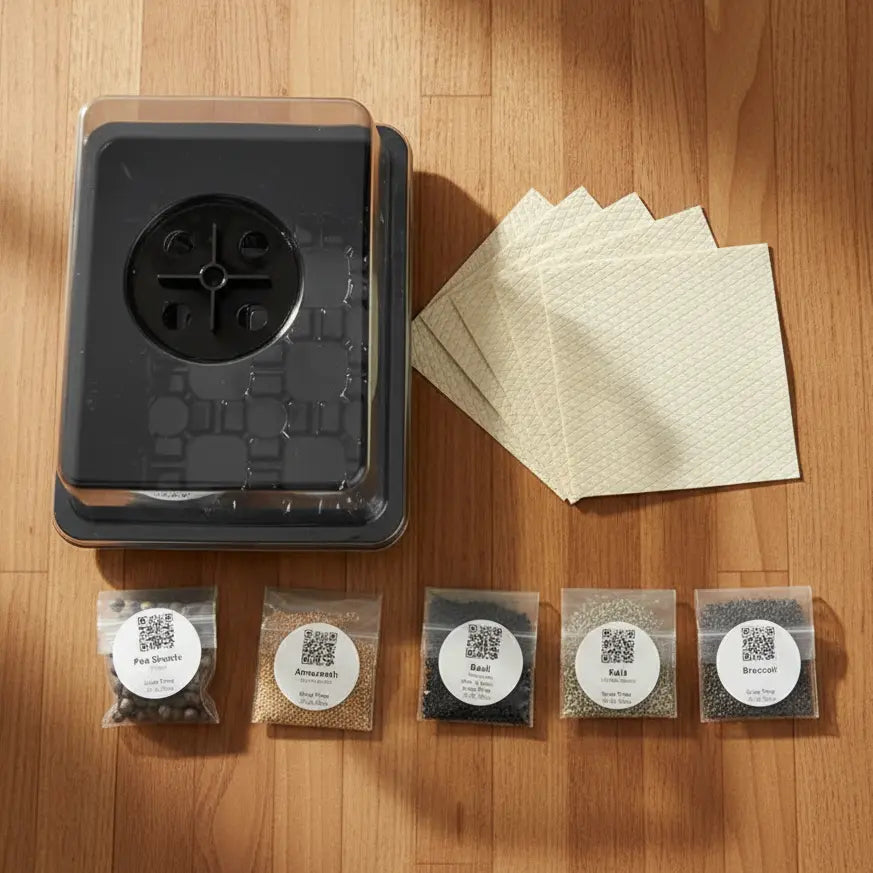
An all-in-one kit like the Microgreens Starter Kit runs 29.99 dollars and includes two reusable trays, a humidity dome, and enough organic grow mat and seed for your first two harvests. That first harvest alone produces roughly a pound of fresh microgreens, so the kit effectively pays for the trays, the dome, and the food itself in one purchase.

After that first grow, the trays and dome are reusable indefinitely. Each new batch just needs a fresh seed and mat packet, which runs about 3.99 dollars per tray. A standard 10x20 tray yields roughly 8 ounces of fresh microgreens per grow, depending on the variety, so the ongoing cost of growing microgreens works out to around 8 dollars per pound.
At about 8 dollars per pound, the cost of microgreens per pound at home is less than half of what most stores charge. That gap only grows the more often you plant. Fast-growing varieties like radish and broccoli are ready in about a week, which keeps the trays from sitting idle between harvests, while heavier producers like sunflower and pea shoots take a few extra days but yield noticeably more per tray. For a rundown of which seeds turn over fastest, The 5 Fastest-Growing Microgreens is worth a look before you pick your first varieties.
Yield is the variable that moves this number the most. A tray that is seeded too thin, watered inconsistently, or harvested a day or two early will come in under 8 ounces, which quietly pushes the real cost per pound higher. A tray that is seeded properly and harvested at peak height can push closer to 10 or 12 ounces, which pulls the cost per pound down even further.
Cost at a Glance
Before the month-by-month breakdown, here is the short version of every number in this article, useful if you just want the bottom line.
- Store-bought microgreens average about 20 dollars per pound, and can run 25 to 30 dollars per pound for organic or specialty varieties.
- Home-grown microgreens cost about 8 dollars per pound once you own trays and a dome, using seed and mat packets at 3.99 dollars each.
- The Microgreens Starter Kit costs 29.99 dollars upfront and covers trays, a dome, and your first two harvests.
- Most varieties are ready to harvest in 7 to 14 days, so a single tray can turn over two or three times a month.
- A regular household can expect to save 20 to 25 dollars a month growing at home instead of buying at the store.
Monthly Budget Calculator: Growing vs Buying
The math changes depending on how much your household actually eats. Here is what the monthly cost looks like at three different usage levels, comparing store prices to home-grown trays. These numbers assume you already own trays and a dome, so only the seed and mat packets count toward the ongoing cost.
Light User: About 4 Ounces a Week
If you add a small handful of microgreens to salads or sandwiches once or twice a week, that is roughly one store clamshell weekly. At 4.99 dollars per container, that comes to about 20 dollars a month at the store.
Growing the same amount at home takes about one tray every two weeks, or two seed packets a month. That runs about 8 dollars a month, a savings of roughly 12 dollars every month once your kit is paid for.
Regular User: About 8 Ounces a Week
Households that use microgreens most days, on eggs, sandwiches, or as a daily salad topper, land closer to 8 ounces a week. At the store, that is two clamshells weekly, or about 40 dollars a month.
At home, that is roughly one tray a week, or four seed packets a month, for about 16 dollars. The starter kit pays for itself in under two months at this pace, and every month after that saves close to 24 dollars.
Heavy User: About a Pound a Week
Some households cook with microgreens daily, garnishing nearly every plate. At a pound a week, store prices add up fast, running around 80 dollars a month at the 20 dollar per pound average.
Growing that much at home means about two trays a week, or eight seed packets a month, for roughly 32 dollars. That is a savings of nearly 48 dollars a month, and the kit pays for itself in a few weeks.
What This Math Doesn't Include
An honest cost breakdown has to account for the small expenses that do not show up on a receipt. Water is one of them, though it barely moves the needle. A tray needs a light daily misting, which adds up to a few cents per grow cycle at most.
Electricity is the other one, and it only applies if you are growing somewhere without much natural light. Most microgreens do fine on a bright windowsill with no supplemental lighting at all. If you do add a small grow light, expect a dollar or two a month in electricity, which barely changes the per-pound math above.
Time is the real cost that numbers cannot capture. Growing microgreens takes a few minutes a day for misting and about ten minutes for harvesting and cleanup. It is not a large time investment, but it is not zero either, and it is worth weighing against the money saved if your schedule is already tight.
What you get in exchange is control. You know exactly what touched your food, with no pesticides, no long-haul shipping, and no guessing how many days it sat in a warehouse before reaching the store shelf.
The Cheapest Way to Start Growing Your Own
If the math above looks appealing, the starting cost is lower than most people assume. The Microgreens Starter Kit includes everything needed for the first two harvests: trays, a humidity dome, organic grow mat, and seed, all for 29.99 dollars. Buying the pieces separately, trays plus seed plus mat, usually costs more and takes more research to get right on the first try.
Once you have grown a few rounds and know which varieties you like, refilling is simple. Single seed and mat packets already include everything needed for one more tray, no separate mat purchase required, at about 3.99 dollars each. There is no subscription and no extra equipment to buy.
New growers often waste part of their first harvest by cutting too early or too late, which quietly raises the real cost per pound. How to Harvest Microgreens the Right Way covers timing so your first few trays actually hit that 8 dollar per pound number instead of falling short.
Frequently Asked Questions
How much do microgreens cost to grow at home?
Most growers land around 8 dollars per pound in ongoing costs, using seed and mat packets that run about 3.99 dollars per tray. The upfront starter kit costs 29.99 dollars and covers your first two harvests, trays and dome included.
Is it actually cheaper to grow microgreens than buy them?
Yes, in almost every case. Store-bought microgreens average around 20 dollars per pound, while home-grown trays run closer to 8 dollars per pound once you own the trays and dome. The more often you grow, the wider that gap becomes.
How much does a microgreens starter kit cost?
The Aquager Microgreens Starter Kit costs 29.99 dollars and includes two trays, a humidity dome, and enough seed and grow mat for your first two harvests.
How long does one seed and mat packet last?
One packet grows a single tray, typically about 8 ounces of fresh microgreens per grow, over roughly 7 to 14 days depending on the variety.
Do I need a grow light, and does it change the cost?
Most varieties grow well on a bright windowsill without one. If your space is dim and you add a small grow light, expect only a dollar or two a month in electricity, which has little effect on the overall cost per pound.
Are microgreens worth the money nutritionally?
Many varieties concentrate noticeably more vitamins and antioxidants than their mature counterparts, so the value goes beyond just price per pound.
How fast does the starter kit pay for itself?
For a regular user eating microgreens most days, the 29.99 dollar kit typically breaks even within one to two months. Heavier users can break even in just a few weeks, since the store cost they are avoiding is higher to begin with.
Conclusion
The honest answer is that microgreens cost less at home almost every time, but the size of the savings depends on how often you actually grow. A light user might save around 12 dollars a month. A household that eats microgreens daily can save closer to 50.
Either way, the starter kit typically pays for itself within the first one to two months, and every batch after that costs a fraction of the store price. If you are curious where to start, Microgreens for Beginners walks through your very first tray from seed to harvest.
Once you have run the numbers for your own kitchen, growing your own stops being a maybe and starts being the obvious choice. The Microgreens Starter Kit is the simplest way to find out.












0 comments