
The holiday spread is finished, the leftovers are gone, and somewhere between the second helping of stuffing and the third slice of pie, you made a quiet promise: January is going to be different. The trouble is that most detox recipes either taste like punishment or call for ingredients you will never find at a regular grocery store.
These five bowls take a simpler route. Each one starts with a base you probably already cook, adds roasted vegetables and a protein, and finishes with a handful of fresh microgreens. They are real meals that taste good, and they are easy to repeat all month.
One honest note first: no food detoxes your body. Your liver and kidneys already do that job every day. What a bowl like this can do is pack more vegetables, fiber and plant nutrients into a meal, which is exactly what most people want after the holidays.

Why Do Microgreens Work for a Post-Holiday Reset?
Microgreens are tiny, nutrient-dense, and quick to use. A 2012 study from USDA researchers in the Journal of Agricultural and Food Chemistry tested 25 commercial microgreens. It found vitamin C, vitamin K, vitamin E and carotenoid levels that were roughly 4 to 40 times higher than in the mature leaves of the same plants, depending on the nutrient and the variety.
That matters for January eating because of the volume-to-nutrient ratio. A small handful adds color, crunch and nutrients to a bowl without adding much weight or many calories. Different varieties also bring different nutrients, so rotating through broccoli, pea shoots, sunflower, radish and kale gives you a different bowl each time.
If you have never grown them, our beginner's guide to growing microgreens covers the full setup. For a closer look at what each variety offers, see the complete microgreens benefits guide.
What Are the 5 Best Microgreens Detox Bowls for January?
Each bowl is built around one microgreen. The base ingredients are flexible, so swap in whatever grains, legumes or proteins you have. Add the microgreens last, right before eating, so they stay crisp.
1. Broccoli Sulforaphane Bowl

Microgreen: Broccoli microgreens (ready in 10 to 15 days)
Broccoli is the classic source of sulforaphane, a compound that has been widely studied for its role in the body's own defense systems. Research on young broccoli plants has found much more of its precursor, glucoraphanin, per gram than in mature heads. Heat reduces sulforaphane, so always add these raw. Our guide to broccoli microgreens and sulforaphane goes deeper.
- Base: brown rice or quinoa, roasted sweet potato, cucumber, shredded purple cabbage, a soft-boiled egg.
- Dressing: tahini thinned with lemon juice and a pinch of sea salt. The fat helps you absorb the fat-soluble nutrients in the greens.
2. Pea Shoot Protein Bowl

Microgreen: Pea shoots (ready in 7 to 14 days)
January is when many people cut back on meat and forget to replace the protein. Pea shoots are naturally sweet, mild and high in vitamins A and C and folate, so they pair with almost any dressing. They are also the biggest producer of the group, at about 30 g per tray.
- Base: green or beluga lentils, roasted beets, thinly sliced radish, pickled red onion, toasted pumpkin seeds.
- Dressing: apple cider vinegar and olive oil.
3. Sunflower Healthy Fat Bowl

Microgreen: Sunflower black oil microgreens (ready in 7 to 21 days)
A reset does not have to be low fat. Cutting fat too hard is a quick way to crash your energy by week two. Sunflower microgreens have a rich, nutty flavor and a satisfying crunch, and they are known for their protein and healthy polyunsaturated fats. Seeds need a 48 to 72 hour soak before planting, so start these early.
- Base: roasted cauliflower and chickpeas, sliced avocado, cherry tomatoes, plus a soft-cooked egg or grilled chicken if you want more protein.
- Dressing: miso-ginger, made with white miso, rice vinegar, ginger, sesame oil and a little honey. The umami echoes the nuttiness of the greens.
4. Radish Confetti Crunch Bowl

Microgreen: Radish Confetti Mix (ready in 10 to 15 days, or about 4 days as sprouts)
Holiday eating is rich, so something bright and peppery feels good in January. Radish Confetti brings a crisp bite, a flavor close to arugula and plenty of vitamin C, with green, purple and pink stems that make a plain bowl look great. See the radish microgreens guide for more ways to use them.
- Base: mixed greens or thinly sliced raw fennel, black beans, roasted carrots, orange segments, toasted walnuts.
- Dressing: lemon and olive oil with a pinch of cumin.
5. Kale Kalefetti Iron-Rich Bowl

Microgreen: Kale Kalefetti Mix (ready in 16 to 25 days)
Kalefetti mixes bright green, dark green and purple kale leaves in one tray. The flavor is mild, without the bitterness of mature kale, and kale is a good plant source of iron and calcium. Pair it with something rich in vitamin C, like the cranberries below, because vitamin C helps your body absorb plant iron. Kale is the slowest of the five, so plant it first.
- Base: freekeh or farro, roasted butternut squash, sliced almonds, unsweetened dried cranberries, crumbled feta or nutritional yeast.
- Dressing: balsamic reduction with olive oil.
How Do You Grow Microgreens for Your January Bowls?

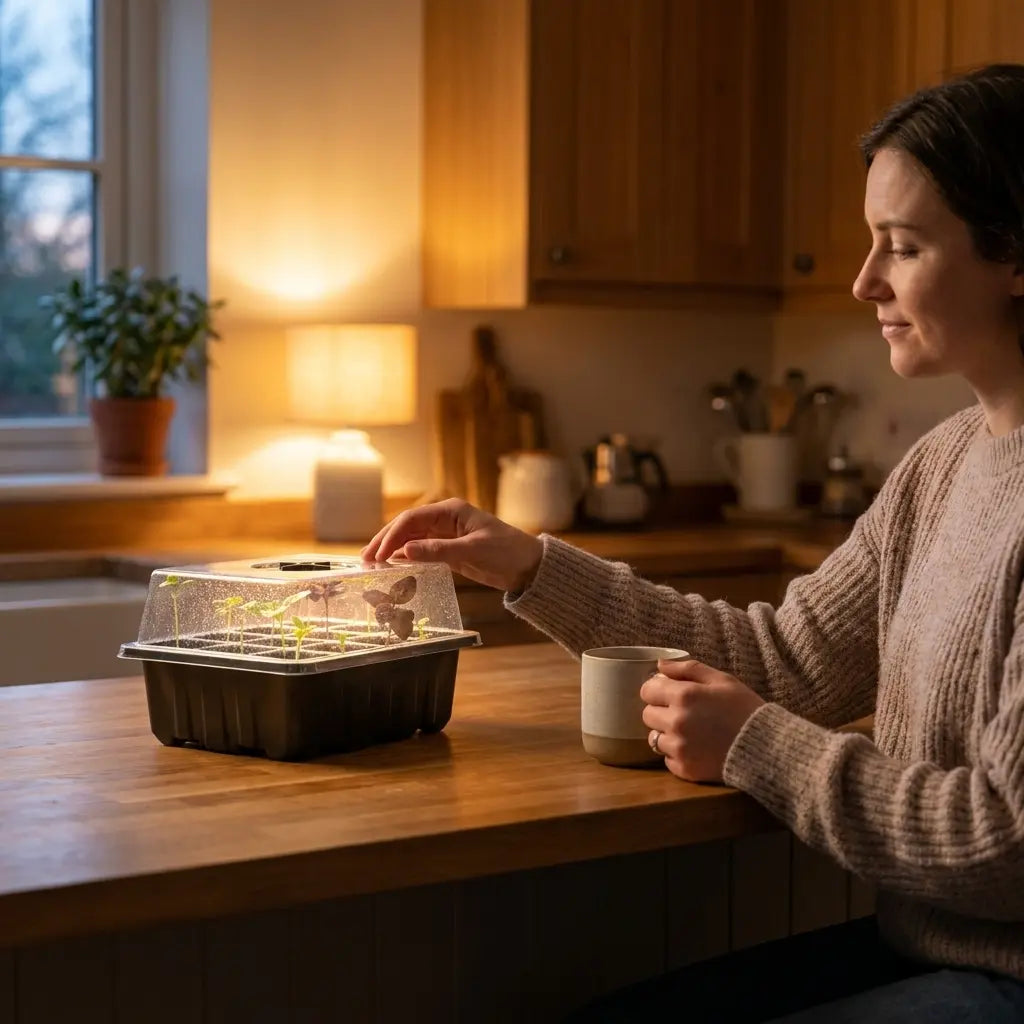
Store-bought microgreens work fine in every recipe above. Growing your own gives you more varieties, and you can cut only what you need. One tray yields roughly 15 to 30 g depending on the variety, which covers one to two bowls, so the trick is to stagger a few trays. Start the slow varieties first and the quick ones a week later, and something will be ready to harvest every few days.
| Microgreen | Days to harvest | Yield per tray |
|---|---|---|
| Kale Kalefetti | 16 to 25 | 15 g |
| Sunflower | 7 to 21 (after a 48 to 72 hour soak) | 22 g |
| Broccoli | 10 to 15 | 20 g |
| Radish Confetti | 10 to 15 | 20 g |
| Pea shoots | 7 to 14 | 30 g |
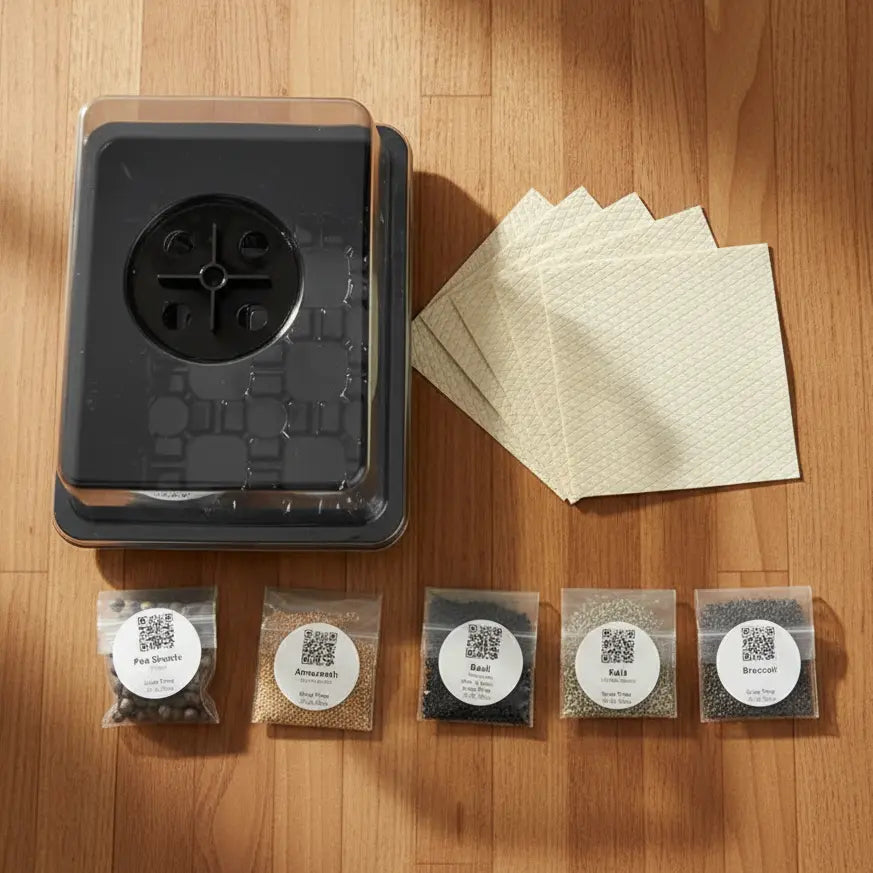
To have your first bowls ready in early January, plant kale and sunflower in mid-December, then broccoli, radish and pea shoots a week later. The Aquager Microgreens Starter Kit ($29.99) includes two trays, a humidity dome with adjustable vents, an organic grow mat, and seeds for broccoli, kale, pea shoots and lemon basil with four grow mats. That covers three of the five bowls. Sunflower and radish seed packs are $7.99 each and include an organic grow mat.
How Do You Build a Reset Meal Plan That Lasts All Month?

Most January resets fail by front-loading: elaborate meals in week one, lost steam by week three. Aim for two or three reset bowls a week instead of every meal. That keeps it flexible, and flexible plans are the ones people stick with.
- Prep once on Sunday: a batch of grains, two sheet pans of roasted vegetables and a half dozen hard-boiled eggs.
- Assemble in about 20 minutes: build each bowl from the prepped parts and finish with fresh microgreens.
- Swap freely: out of beets? Use carrots. No lentils? Use black beans. The microgreen on top is the part to keep.
Want more ideas? The new year detox dinner recipes with fresh herbs pair well with these bowls on the days you want something warm.
Microgreens Detox Bowl FAQ
Do microgreens detox your body?
No single food detoxes the body, because your liver and kidneys do that work on their own. Microgreens help by adding vitamins, fiber and plant compounds to meals. If you have a medical condition or take medication, check with your doctor before changing your diet.
Are microgreens more nutritious than mature greens?
Often, yes. A 2012 USDA study of 25 commercial microgreens found vitamin and carotenoid levels roughly 4 to 40 times higher than in mature leaves, depending on the nutrient and variety.
How many microgreens should I put in a bowl?
A small handful, about 15 to 30 g, is plenty. Add them after cooking and just before eating, because heat reduces sulforaphane and some vitamins.
Can I use store-bought microgreens for these bowls?
Yes. Any fresh microgreens work in these recipes. Growing your own opens up more varieties and lets you cut only what you need.
How long do harvested microgreens last?
Kept in an airtight container in the fridge, they last about 5 to 7 days. For the best flavor, cut them right before you eat and leave the rest growing in the tray.
When should I plant microgreens for January bowls?
Plant kale and sunflower in mid-December, since they take the longest, then broccoli, radish and pea shoots a week later. That puts your first harvests in the first days of January.
Author: Aquager Team · Published: June 13, 2026 · Updated: October 24, 2026 · Reviewed: October 24, 2026 (Phase 2 and 3)












0 comments