
There's a moment at every New Year's Eve party when someone looks at the spread and says, "Who catered this?" That moment doesn't require a professional chef or a fancy delivery order. It requires one small detail done right.
Microgreens are that detail. A small nest of pea shoots on a blini, a pinch of radish confetti on a deviled egg, a few arugula leaves fanned across a smoked salmon toast — these tiny touches turn home-assembled food into something that looks intentional, considered, and genuinely impressive.
This guide covers five NYE appetizers and the exact microgreen that elevates each one. It also includes a planting calendar so you can harvest fresh by December 31 — no last-minute grocery run needed.
Why Microgreens Make NYE Appetizers Look Catered
Most home party food looks like home party food. The flavors are solid, but the presentation gives it away — there's nothing finishing the plate, nothing adding color contrast, no touch that says someone thought about this.
Microgreens solve that in seconds. They add height, color, and texture to any bite-sized appetizer. On dark smoked salmon, pale green pea shoots look striking. On a white deviled egg, a crown of deep ruby radish microgreens turns something ordinary into something your guests photograph before they eat.
The secondary benefit is flavor. These aren't just decorative. Radish microgreens are bold and peppery. Pea shoots are sweet and delicate. Arugula microgreens are nutty with a clean bite. Every microgreen you place is also a flavor layer — and a small amount goes a long way.
If you're already growing microgreens at home, you have everything you need. If you haven't started yet, there's still time — this guide includes the exact planting dates so you're harvesting right on December 31.
The 5 Best NYE Appetizers to Elevate With Microgreens
Each of these five dishes is a New Year's Eve entertaining classic. The microgreen pairing was matched for flavor harmony, visual contrast, and grow time, so you can harvest everything you need from a staggered planting window starting in mid-December. For dishes across the whole season, see our 12 holiday microgreens recipes.
1. Blinis — Pea Shoots
Classic blinis with crème fraîche are already elegant. Pea shoots make them look like something from a catering catalog. The shoots are long enough to drape naturally over the edge of the blini, sweet enough not to compete with smoked fish or roe, and a vivid green that pops against ivory crème fraîche.
Grow Pea Shoots Field Microgreens 10–12 days before the party. You want the shoots slightly mature — long enough to bend when placed. Harvest the morning before and keep them loosely covered in the fridge until plating.
2. Deviled Eggs — Radish Confetti Mix
Deviled eggs are one of the most searched new year's eve appetizers because they work — they plate beautifully, they're easy to make ahead, and they disappear fast. The problem: they all look the same. Radish Confetti Mix microgreens fix that immediately.
The confetti blend is a mix of red, purple, and ivory stems with a crisp, spicy bite that plays off the creamy filling. A small pinch on top of each egg takes three seconds and makes every one look individually decorated. Radish Confetti Mix Microgreens are ready in 5–7 days — your fastest option and a solid backup if you're planting close to the wire.
3. Smoked Salmon Toasts — Arugula Microgreens
Smoked salmon on cucumber rounds or crostini is a NYE standard. Add a small fan of arugula microgreens and it goes from assembled to intentional. The peppery bite of arugula is a natural pairing with fatty, salt-cured salmon — it cuts the richness without competing with the fish.
Arrange a small bunch on each piece with the stems pointing one direction. It reads as styled, takes no skill, and makes the entire platter more photogenic. Arugula Microgreens are ready in 7–10 days and grow dense enough that one tray handles 30–40 toasts easily.
4. Oysters on the Half Shell — Borage Microgreens
If you're serving oysters for New Year's Eve — and for a celebration that feels like a celebration, you should be — borage microgreens are the finishing touch that works. Borage has a mild cucumber flavor that complements the brininess of a fresh oyster without masking it. Visually, the delicate green shoots look precise and elegant against the pearlescent shell.
Place two or three stems of Borage Microgreens alongside each oyster, not on top. The goal is to frame the oyster, not cover it. Borage takes 10–14 days to reach harvest — plant this one first.
5. Cheese Board — Amaranth Garnet Red
A cheese board is the one NYE appetizer where presentation matters as much as what's on it. Amaranth Garnet Red microgreens are the most visually dramatic option in this lineup — deep ruby stems with jewel-toned leaves that look intentional scattered across aged cheeses, honeycomb, and crackers.
Don't hold back here. A generous handful scattered across the board creates a layered, abundant look that reads as styled and deliberate. The flavor is mild and earthy, so it doesn't interfere with any cheese pairing. Amaranth Garnet Red Microgreens are ready in 7–10 days and produce enough from one tray to cover a full board with stems left over.
How to Harvest in Time for December 31
Growing all five varieties before New Year's Eve is straightforward — it just takes a staggered planting calendar. Here's when to seed each one:
- Plant by December 16: Borage (10–14 days) — plant this one first, it takes the longest
- Plant by December 19: Pea Shoots (10–12 days)
- Plant by December 21: Arugula (7–10 days) and Amaranth (7–10 days)
- Plant by December 24: Radish Confetti Mix (5–7 days) — your safety net if you're running late
All five varieties grow simultaneously on a countertop. Each tray is independent — set up one tray per variety using the staggered dates above and you'll have everything ready to harvest December 29–31. Harvest the morning of the party or the evening before, and store loosely covered in the fridge until plating.
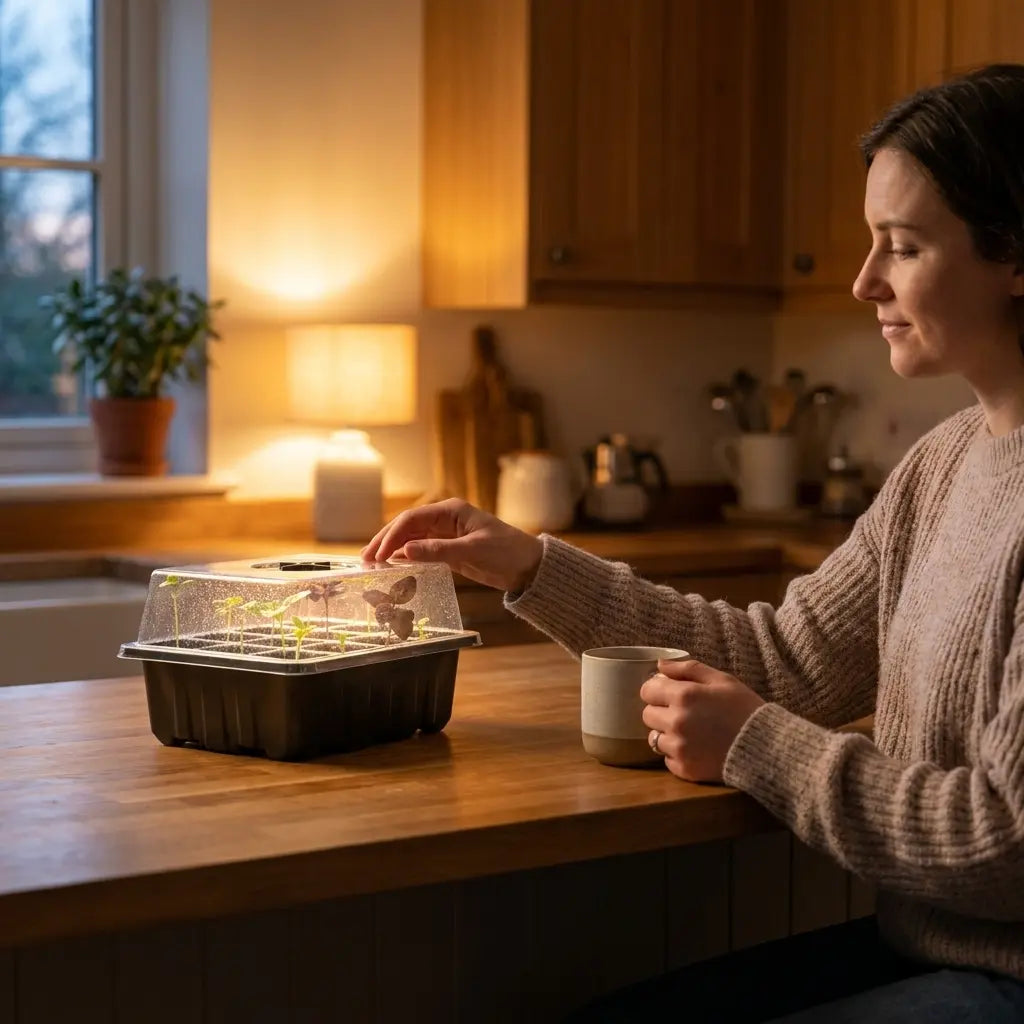
The daily process is simple: check moisture, rinse once or twice, watch them grow. If this is your first time, our beginner's guide to growing microgreens walks through the full setup — most people have their first tray going the same day they read it. If you're already set up for winter indoor microgreens growing, redirecting one or two trays toward the NYE lineup is all it takes.
Everything You Need to Grow Your NYE Microgreens at Home
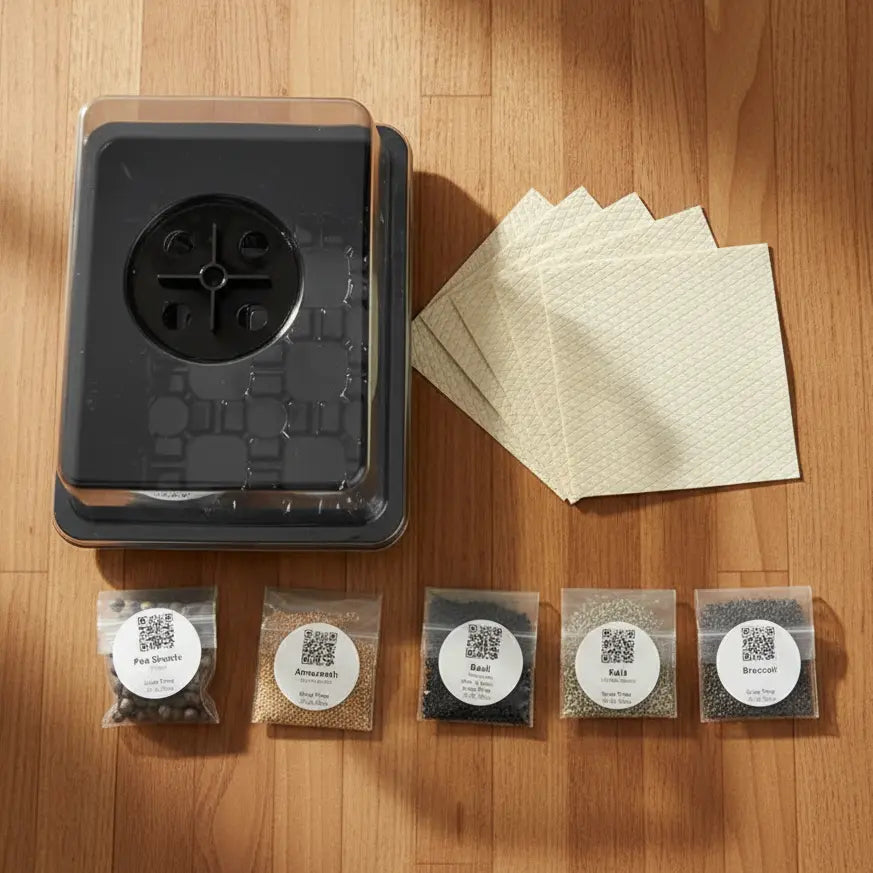
You don't need five separate setups. The Microgreens Starter Kit includes a tray, a dome, and an organic grow mat — everything to start one crop at a time. Run consecutive trays starting mid-December using the planting calendar above and you'll work through all five varieties without needing extra equipment.
If you want to grow multiple trays simultaneously, add a few extra grow mats and reuse the same tray between harvests. Either approach works. The simplest path for a first-time grower is to start with the kit and stagger the planting as listed.
Each individual variety — pea shoots, radish, arugula, borage, amaranth — is sold separately, and each pack includes an organic grow mat already. Build exactly the NYE lineup you want without overbuying.
FAQ: Microgreens for NYE Appetizers
Can I buy microgreens at a store instead of growing them?
Yes — some specialty grocery stores and farmers markets carry them. But availability around the holidays is unpredictable, selection is limited, and the cost per tray is significantly higher than growing your own. Growing at home gives you the exact variety you want, harvested at peak freshness the day before the party.
How long do harvested microgreens stay fresh?
Stored loosely covered in the fridge, harvested microgreens stay crisp for 3–5 days. Harvest the morning of December 31 or the evening before for best results. Avoid rinsing until just before plating — moisture speeds up wilting.
Do microgreens change the flavor of the appetizers?
Yes, intentionally. Radish adds spice to deviled eggs. Arugula adds a peppery bite to salmon. Pea shoots add sweetness to blinis. Borage adds a cucumber note to oysters. These aren't neutral garnishes — each one was chosen because the flavor works with the dish. If you want to see which varieties have the mildest flavor, this guide to beginner-friendly microgreens is a good starting point.
How much microgreens do I need per appetizer?
Less than you think. For individual bites — blinis, deviled eggs, oysters — a pinch of 3–6 stems per piece is enough. For a cheese board, use more generously: a small handful scattered across the board. One tray typically yields enough for 30–50 individual appetizers.
Make This New Year's Eve the One They Remember
The difference between a party platter that looks homemade and one that looks catered often comes down to a single finishing element. Something green. Something fresh. Something that tells your guests you thought about the details.
Microgreens are that element. Plant the five varieties in this guide starting mid-December, follow the harvest calendar, and you'll have everything you need to elevate every appetizer on your table before midnight. The Microgreens Starter Kit is the simplest way to start — at $29.99, it costs less than a single catering tray and keeps producing long after the party is over.
Author: Aquager · Published: June 13, 2026 · Updated: October 11, 2026












0 comments