
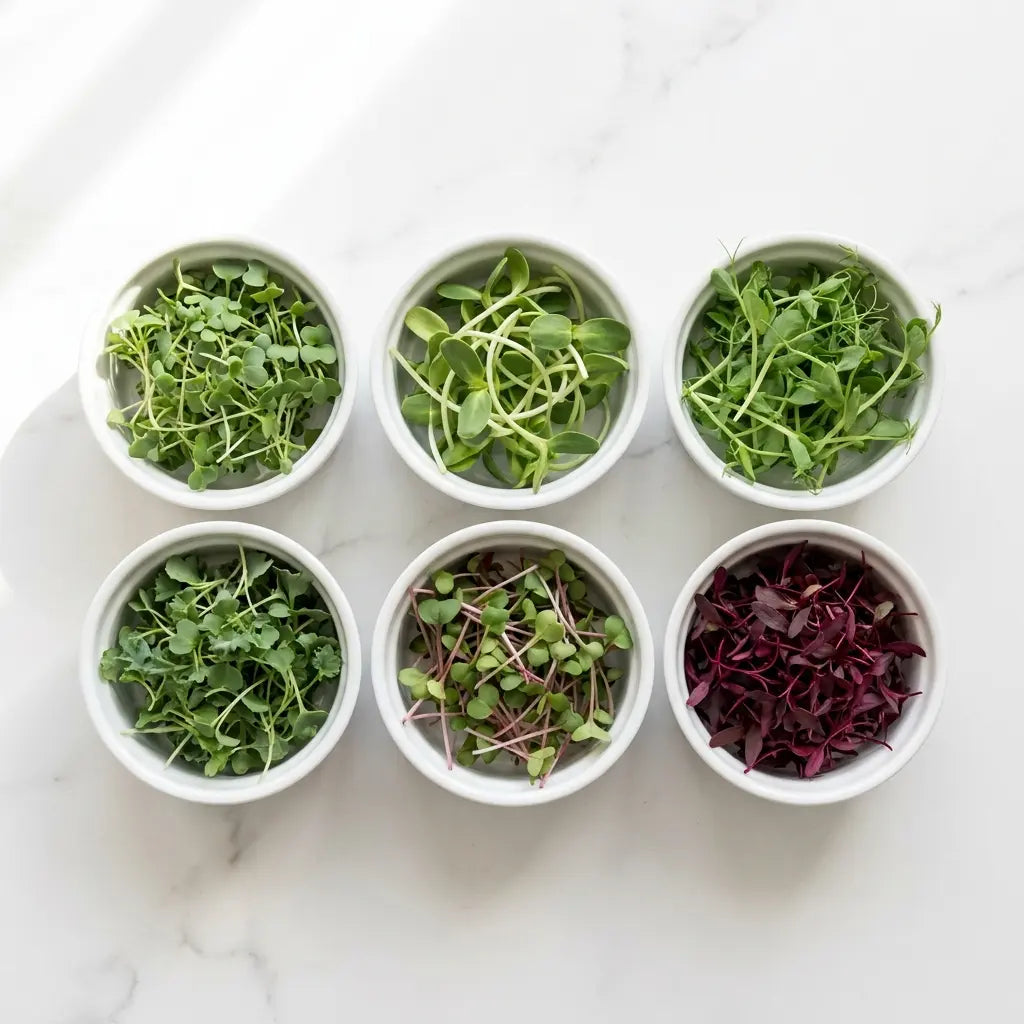
A fully mature head of broccoli takes 60–90 days to grow. A tray of broccoli microgreens takes 8–10 days. And according to research published in the Journal of Agricultural and Food Chemistry, those 8–10 day seedlings contain up to 40 times more nutrients per gram than the fully grown vegetable.
That finding, from a University of Maryland and USDA study, upended how nutritional scientists think about nutrient dense vegetables and where the highest concentrations of vitamins, phytonutrients, and antioxidants actually exist in the plant kingdom.
This post breaks down the research, explains the biology behind it, and profiles the five microgreen varieties with the most compelling nutritional data — with a quick-reference guide so you can match your health goals to the right variety to grow.
The University of Maryland Research That Changed Everything
In 2012, researchers at the University of Maryland and the USDA Agricultural Research Service published a landmark study analyzing the nutrient content of 25 commercially available microgreens across four categories: vitamins C, E, K, and beta-carotene.
The results were striking. Across all varieties studied, microgreens contained significantly higher concentrations of vitamins and carotenoids than their mature counterparts from the USDA National Nutrient Database. The differences ranged from 4x to 40x higher, depending on the variety and nutrient measured.
Key findings:
- Red cabbage microgreens contained 40x more vitamin E and 6x more vitamin C than mature red cabbage.
- Cilantro microgreens had 3x more beta-carotene than mature cilantro.
- Amaranth microgreens showed the highest vitamin K concentrations of any variety in the study.
- Pea shoot microgreens were among the highest for vitamins C and A.
The study was careful about what it did and didn't claim. The higher concentrations are per unit weight — not an absolute measurement of microgreens being "better" in every scenario. But for people trying to maximize the nutritional impact of their diet, the per-gram comparison is exactly what matters.
For the complete 18-variety breakdown with a full side-by-side comparison chart, see our microgreens nutrition comparison.
Why Young Plants Concentrate More Nutrients
The biology behind the research is intuitive once you understand it. A germinating seed is in a moment of maximum biological investment. The plant is in its most vulnerable stage and must rapidly develop the photosynthetic and structural machinery it needs to survive. To do this, it draws on every nutrient stored in the seed and concentrates those resources in the emerging cotyledons.
At the cotyledon stage — when microgreens are harvested — the plant has mobilized its entire seed reserve into the first two leaves. These leaves contain the amino acids, vitamins, and phytonutrients that will drive the plant's initial growth phase.
As the plant matures into a vegetable, those nutrients get distributed across a vastly larger mass: stems, roots, thick cell walls, reproductive structures. The nutritional concentration per gram of edible material naturally declines.
This is the concentration effect: same nutrients, a fraction of the plant mass. The 40x figure for specific vitamins in some varieties reflects just how dramatic that concentration can be.
The 5 Most Nutritious Microgreens — Broken Down by Variety
Broccoli Microgreens — The Sulforaphane Record
The most extensively studied microgreen for a specific compound, broccoli microgreens are the standout entry for cancer prevention and cellular defense research.
In 1997, Johns Hopkins cancer researcher Paul Talalay published findings that 3-day broccoli sprouts contained up to 50x more glucoraphanin — the precursor to sulforaphane — than mature broccoli. Subsequent research on broccoli microgreens confirmed similarly high concentrations.
Sulforaphane is an isothiocyanate that activates the Nrf2 pathway — a master regulatory protein that switches on over 200 genes involved in antioxidant production, inflammation control, and carcinogen detoxification. Multiple peer-reviewed studies associate high sulforaphane intake with reduced risk of breast, prostate, and colon cancers.
Health goals served: Cancer prevention, inflammation reduction, liver detoxification, gut protection.
For the complete sulforaphane science, see our dedicated guide on broccoli microgreens and sulforaphane.
Broccoli Microgreens Seeds — $3.99, organic grow mat included.
Sunflower Microgreens — Protein, Zinc, and Healthy Fats
Sunflower microgreens are the most protein-dense microgreen available, making them particularly valuable for plant-based diets. They're also among the highest sources of zinc — an essential mineral for immune function, testosterone production, and wound healing.
The nutritional profile reflects the extraordinary nutrient density of the sunflower seed itself. The seed stores large amounts of vitamin E, zinc, folate, and essential amino acids to support initial plant growth. At cotyledon stage, that full reserve is concentrated in the two broad, crunchy leaves.
Health goals served: Muscle recovery, immune support, plant-based protein, skin and nail health.
See our sunflower microgreens growing guide for step-by-step instructions.
Sunflower Black Oil Microgreens Seeds — $3.99, organic grow mat included.
Kale Microgreens — Vitamins K and C, Mood, and Bone Health
Kale microgreens deliver the same nutritional profile as mature kale in a far more concentrated form. The University of Maryland study found kale microgreens to be among the highest in vitamin K concentrations — essential for blood clotting and bone mineral density.
Kale microgreens are also rich in folate and magnesium, two nutrients linked to serotonin synthesis and mood regulation. Magnesium deficiency is associated with increased anxiety and depression risk; folate is required for the methylation cycle that produces neurotransmitters.
Health goals served: Bone health, mood and mental wellbeing, immunity, inflammation reduction.
Kale Kalefetti Mix Microgreens Seeds — $3.99, organic grow mat included.
Amaranth Microgreens — The Antioxidant Record Holder
Amaranth (Garnet Red) microgreens have the most striking visual profile in the catalog — deep red and purple stems — and the color tells the nutritional story. That pigmentation comes from betacyanins: phytochemicals with potent antioxidant and anti-inflammatory properties.
The University of Maryland study identified amaranth as having among the highest vitamin K concentrations of all varieties tested. Its betacyanin content places it in the same antioxidant category as red beets and red cabbage — foods studied for cardiovascular protection and anti-inflammatory effects.
Health goals served: Cardiovascular protection, antioxidant defense, reducing oxidative stress, anti-aging.
Pea Shoots — Vitamin C, Complete Protein, and Versatility
Pea shoots are beginner-friendly to grow, mild and sweet in flavor, and nutritionally exceptional. The University of Maryland study ranked pea shoots among the highest for vitamins C and A, and they're one of the few plant-based sources of a near-complete amino acid profile.
Vitamin C in pea shoots is substantially higher per gram than in mature peas. Combined with high folate content and significant iron, pea shoots are particularly valuable for pregnant women, vegetarians supplementing iron, and anyone focused on immune function.
Best Microgreen for Your Health Goal — Quick Reference
| Health Goal | Best Variety | Key Compound | Grow Time |
|---|---|---|---|
| Cancer prevention / detox | Broccoli | Sulforaphane | 8–10 days |
| Muscle recovery / protein | Sunflower | Zinc, vitamin E, amino acids | 10–12 days |
| Bone health / mood | Kale Kalefetti | Vitamin K, folate, magnesium | 8–12 days |
| Antioxidant / heart health | Amaranth Garnet Red | Betacyanins, vitamin K | 10–14 days |
| General nutrition / immunity | Pea Shoots | Vitamin C, folate, iron | 8–10 days |
| All-round combination | Grow all five in rotation | Multiple | Staggered cycle |
How to Maximize Nutritional Intake from Microgreens
Eat broccoli microgreens raw. Sulforaphane forms when myrosinase contacts glucoraphanin. Cooking above 140°F deactivates myrosinase, preventing conversion. Eat broccoli microgreens raw in salads, smoothies, or as a finishing garnish — never cook them.
Chew thoroughly. The sulforaphane and many other phytochemical reactions are triggered by physical damage to plant cells. The more you chew microgreens, the more active compounds are released. Blending works equally well.
Eat at peak freshness. Vitamin C content declines rapidly after harvest. Microgreens consumed within hours of cutting retain near-peak vitamin C levels. Store-bought microgreens cut 2–4 days ago have measurably lower vitamin C. This is the most compelling practical argument for growing your own.
Eat a variety. No single microgreen variety covers every nutritional base. A rotation across broccoli, sunflower, kale, amaranth, and pea shoots delivers broader nutritional coverage than any individual superfood.
The Simplest Way to Eat the Most Nutritious Vegetables Every Day
The research is clear on what the most nutrient dense vegetables are. The practical challenge is sourcing them consistently — fresh, uncontaminated, and at peak nutritional value. For gifts built around fresh greens, see healthy gifts for people who eat clean.
The Microgreens Starter Kit from Aquager ($24.99) is the complete setup: 10×20" tray, humidity dome, and organic coco coir grow mat. Everything for one full grow cycle.
For the highest nutritional impact, start with these three seed varieties:
- Broccoli Microgreens Seeds — $3.99. The sulforaphane leader. Start here for the most-studied, highest-potency functional food in the catalog.
- Sunflower Black Oil Microgreens Seeds — $3.99. The protein and zinc source. Crunchy, nutty, and the most satisfying microgreen to eat as a standalone snack.
- Kale Kalefetti Mix Seeds — $3.99. Vitamins K, C, folate, and magnesium in a mild, colorful tray. The easiest variety to add to smoothies without changing the flavor.
Stagger the three trays by 5–7 days and you have a different variety ready to harvest every week — three of the most nutritious vegetables per gram that exist, growing on your kitchen counter.
Frequently Asked Questions
Is the 40x nutrient claim accurate?
The 4–40x figure comes from the 2012 University of Maryland / USDA Journal of Agricultural and Food Chemistry study by Xiao et al. The range reflects variation across varieties and specific nutrients — some vitamins show 4x differences, others (like vitamin E in red cabbage) show 40x differences. The study measured specific vitamins against USDA mature vegetable data; the comparison is per gram of fresh weight.
Do all microgreens have more nutrients than their mature counterparts?
The 2012 study found this to be true for the vitamins it measured (C, E, K, beta-carotene) across all 25 varieties tested. The mechanism — seed nutrient mobilization into cotyledons — applies broadly. The specific magnitude varies significantly by variety and nutrient.
Are microgreens safe to eat every day?
Yes. Microgreens are whole food with no known safety concerns for regular consumption. The only caveat is that people on vitamin K-sensitive medications (warfarin/coumadin) should keep their vitamin K intake consistent from week to week, not necessarily avoiding high-K foods but maintaining consistent intake.
How many microgreens should I eat per day?
No clinical dosage exists for whole-food microgreens specifically. Most researchers working with microgreens-based interventions use 30–100 grams per day as a meaningful intake range. A large handful (2–3 tablespoons loosely packed) is approximately 30 grams. One to two handfuls daily across a variety rotation covers the nutritional bases well.
Can I get the same benefit from microgreen supplements or powders?
Concentrated supplements may capture some compounds but lack the fiber, the intact myrosinase enzyme (critical for sulforaphane activation), and the full phytonutrient complexity of fresh microgreens. Whole-food sources consistently outperform supplements in bioavailability research for food-derived compounds like sulforaphane.
Grow the Most Nutritious Vegetables on Your Kitchen Counter
The research is settled: microgreens, grown in their first 7–14 days, are among the most nutrient dense vegetables per gram available. No mature vegetable comes close on the specific vitamins, phytonutrients, and antioxidants that matter most for long-term health.
The gap between knowing that and eating them is a two-week grow cycle on a kitchen counter. Broccoli for sulforaphane. Sunflower for protein and zinc. Kale for vitamins K and folate. Amaranth for antioxidants. Pea shoots for versatile daily nutrition.
The Microgreens Starter Kit is everything you need to start. Add the three seed varieties above and your first harvest of the most nutritious vegetables you've ever grown will be ready in under two weeks.
Author: Aquager Team · Published: May 30, 2026 · Updated: October 11, 2026 · Reviewed: August 8, 2026 (Phase 2)

















0 comments