
Earth Day falls on April 22 this year, with the 2026 theme built around collective action: Our Power, Our Planet. Most Earth Day content leans on general advice, recycle more, drive less, which is useful but rarely tied to a specific number you can actually check.
Indoor hydroponic growing is one of the few sustainable food choices with real data behind it. Multiple studies point to water savings of up to 90% compared to conventional soil based farming, a figure that holds up across several independent sources rather than a single marketing claim.
This is not a case that growing a tray of herbs at home will offset a household's entire environmental footprint. It will not. But the actual numbers behind hydroponic growing are strong enough to stand on their own, without needing exaggeration to make the case.
Most sustainability advice asks people to give something up: drive less, buy less, consume less. Hydroponic growing is one of the few options that works the other way, adding a small daily habit that happens to use fewer resources than the alternative it replaces, rather than asking for a sacrifice.
How Much Water Hydroponics Actually Saves
Traditional soil farming loses a significant amount of water to evaporation, runoff, and uneven absorption, especially in open fields where irrigation cannot be perfectly targeted. Hydroponic systems avoid most of that loss by design.
A closed loop hydroponic system delivers water and nutrients directly to the roots and recirculates whatever the plant does not use, rather than watering a wide area of soil and losing the excess. That is the core mechanical reason behind the water savings, not a marketing simplification.
Soil farming also loses water below the root zone, where it drains past the plant entirely and becomes unavailable. A hydroponic system has no soil for water to disappear into, so nearly everything delivered to the roots either gets absorbed or recirculated back into the reservoir.
One 2024 commercial greenhouse study found that hydroponic lettuce used roughly 5 to 8 liters of water per kilogram of produce, compared to at least 30 liters per kilogram for traditional soil farming. Figures vary by crop and system, but the direction and scale of the difference are consistent across the research.
That gap holds up across multiple independent sources rather than a single study, which matters when evaluating a sustainability claim. Numbers that only appear in one place, often from a company selling the product, are worth treating skeptically. Numbers that show up consistently across academic and industry research are a different story.
It also helps to understand why the number lands specifically in the 90% range rather than somewhere else. Traditional field irrigation typically delivers water across an entire planted area, most of which the plant's roots never directly contact. A hydroponic system delivers water to a much smaller, precisely targeted root zone, which is the structural reason the efficiency gap is so large rather than incremental.
Agriculture also accounts for over 70% of global freshwater use, which is what makes a 90% reduction meaningful well beyond any single household. A small indoor system will not move that number by itself, but the underlying mechanism is the same one that makes hydroponics genuinely more water efficient at any scale.
Scale matters here, and it is worth being honest about it. A single home tray uses a genuinely small amount of water regardless of the method, so the percentage savings are real but the absolute quantity is modest. The value of understanding the mechanism is that it holds true whether you are growing one tray or running a commercial greenhouse.
What "No Pesticides" Really Means Indoors
Soil is where most common plant pests live and reproduce. Growing without soil, in a controlled indoor environment, removes the majority of the pest pressure that drives pesticide use in traditional agriculture.
It is worth being precise here rather than overstating it. Larger commercial hydroponic greenhouses can still encounter pests like aphids and still use some pest management as a result. A small, enclosed indoor home system is a different environment, and most home hydroponic growers never need to spray anything at all.
That difference matters for anyone eating what they grow. Herbs and greens harvested straight from a home system, with no soil-borne pests and no reason to spray, arrive at the plate with a shorter and simpler path than most produce from a store.
Weeds are another category worth mentioning, since they compete with crops for water and nutrients in soil and often prompt herbicide use in traditional farming. A hydroponic system has no open soil for weeds to establish in, which removes that entire category of chemical input before it becomes a decision at all.
The Carbon Footprint of Growing at Home
Carbon footprint is usually measured at a much bigger scale than a kitchen counter, but food transportation is a real contributor most people do not think about often. Produce commonly travels a long distance from farm to distribution center to store shelf before it ever reaches a plate.
Growing herbs and greens at home removes nearly all of that transportation footprint, since the distance from harvest to plate is measured in feet rather than hundreds of miles. It is a small reduction in the context of a whole household's carbon footprint, but it is a real and directly attributable one.
None of this requires an all or nothing approach to be worthwhile. Replacing even a portion of store-bought herbs and greens with something grown at home is a real, if modest, reduction, and it is one of the few sustainability changes that also improves what ends up on your plate.
Packaging is a smaller but related factor. Store-bought herbs typically arrive in plastic clamshells, most of which are used once and discarded. A tray growing on a counter needs no comparable packaging for each harvest, since the herbs are cut fresh as needed rather than bought pre-packaged every time.
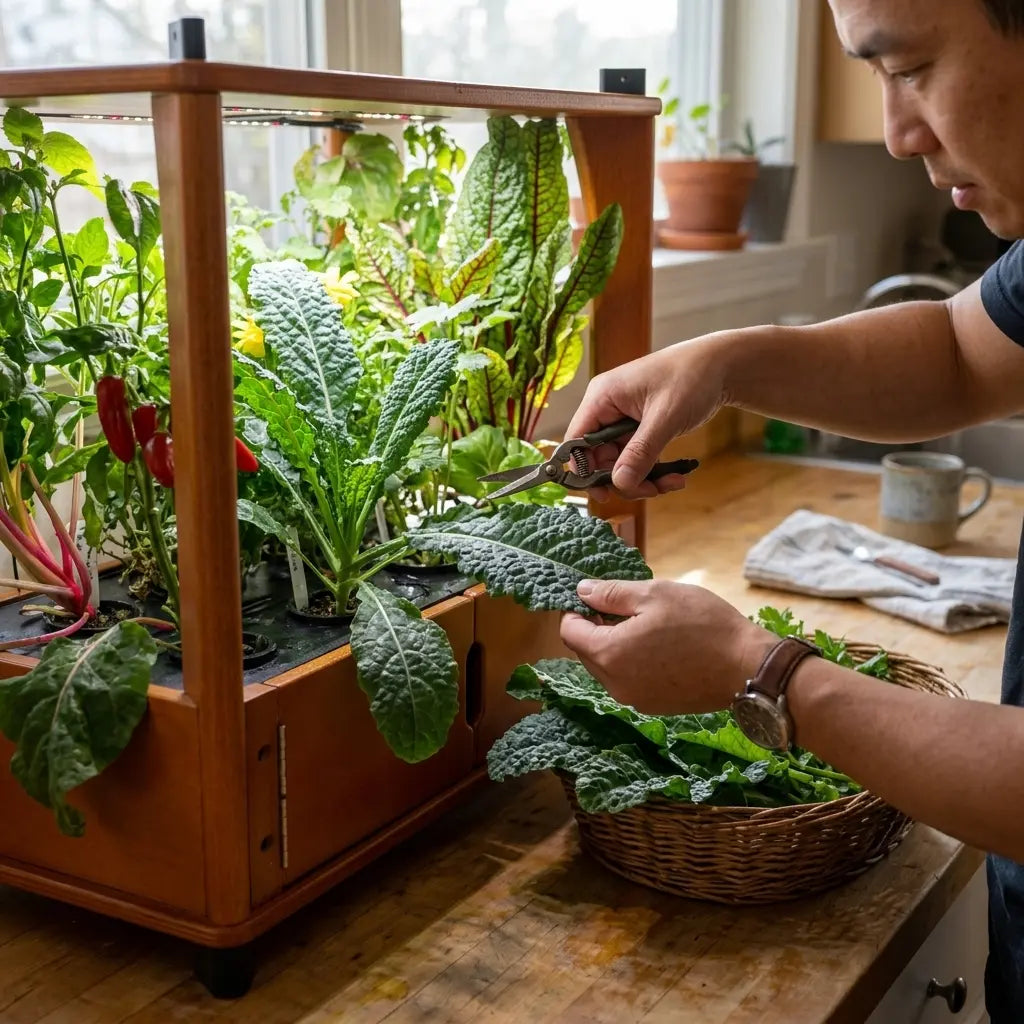
Food waste is another piece worth naming directly. A significant share of store-bought herbs gets thrown out unused before it wilts past the point of being usable. Harvesting only what is needed for a specific meal, straight from a countertop tray, avoids that particular waste almost entirely, since nothing sits in a refrigerator drawer waiting to go bad.
How to Start Growing Sustainably at Home
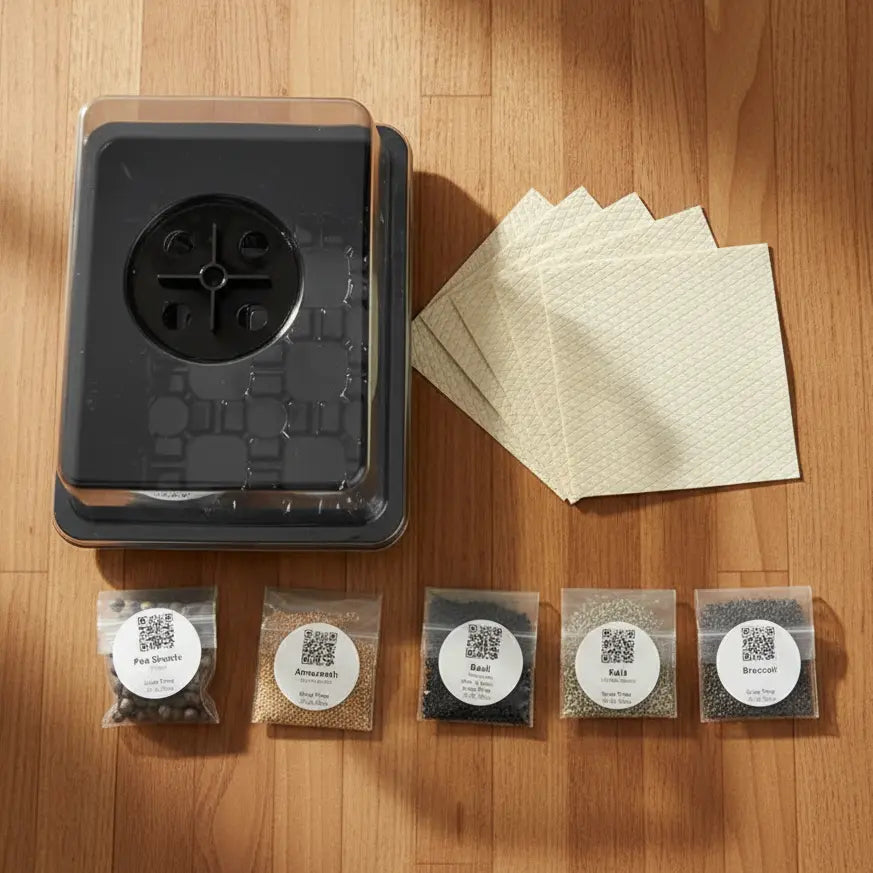
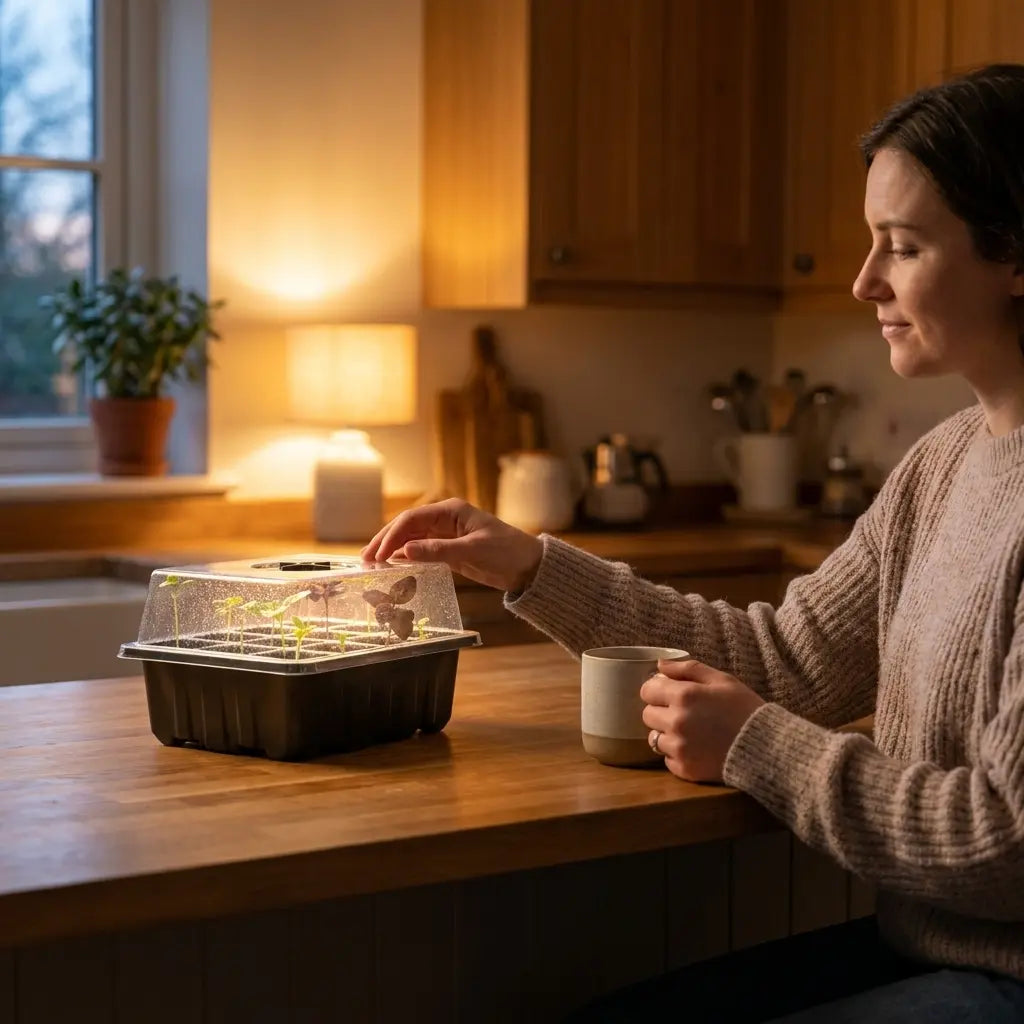
The easiest way to test whether this is worth expanding into a habit is to start with a single tray rather than a full setup. A pre-seeded kit removes the two most common points of hesitation: not knowing what to grow, and not having the equipment already figured out.
Consistent light and water management matter more than anything else in a system's efficiency. A hydroponic setup designed with both built in captures nearly all of the water savings described above from the very first tray.
Checking the reservoir level once every week or two is typically all the maintenance a small system needs to stay efficient. That is a lower time commitment than most people expect, and it is a large part of why the water savings hold up in practice rather than only on paper.

The Indoor Seed Starter Kit is a reasonable entry point for anyone who wants to see the water and pesticide advantages firsthand before committing to a larger system.
A Small Setup, a Real Difference
Once the habit sticks, expanding to a full hydroponic system multiplies the same water and space efficiency across a wider rotation of herbs and vegetables rather than a single tray.
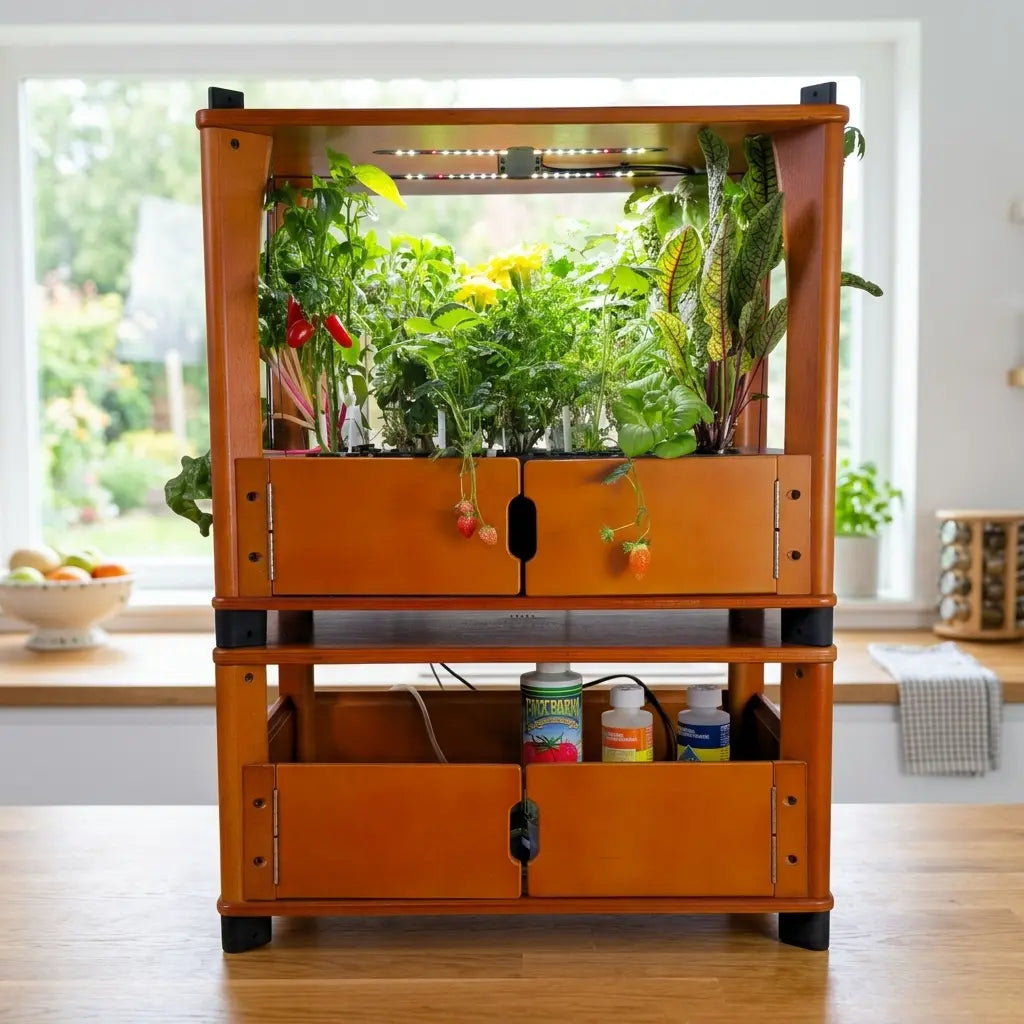
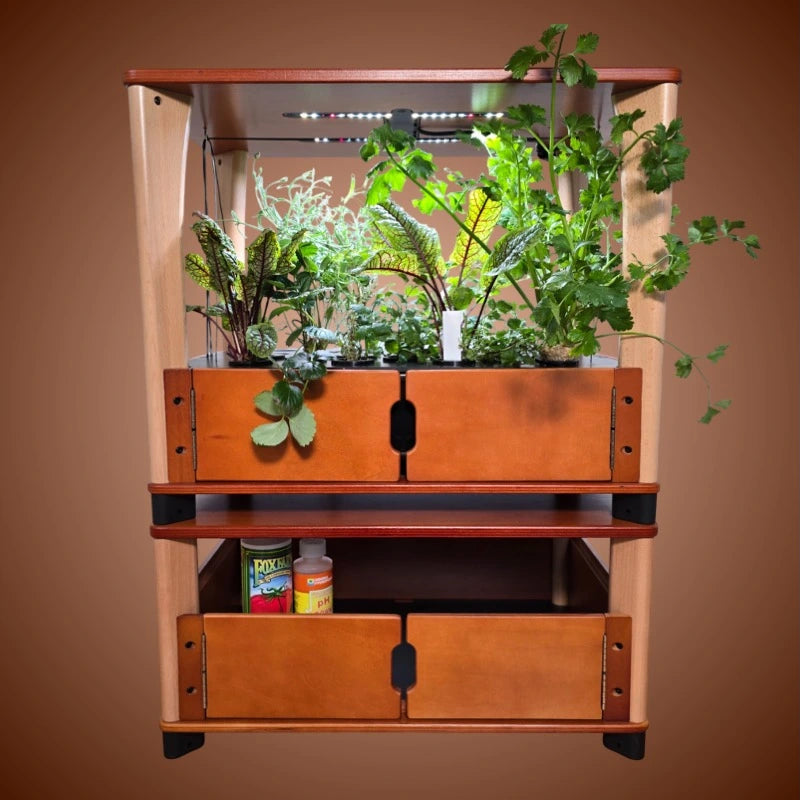
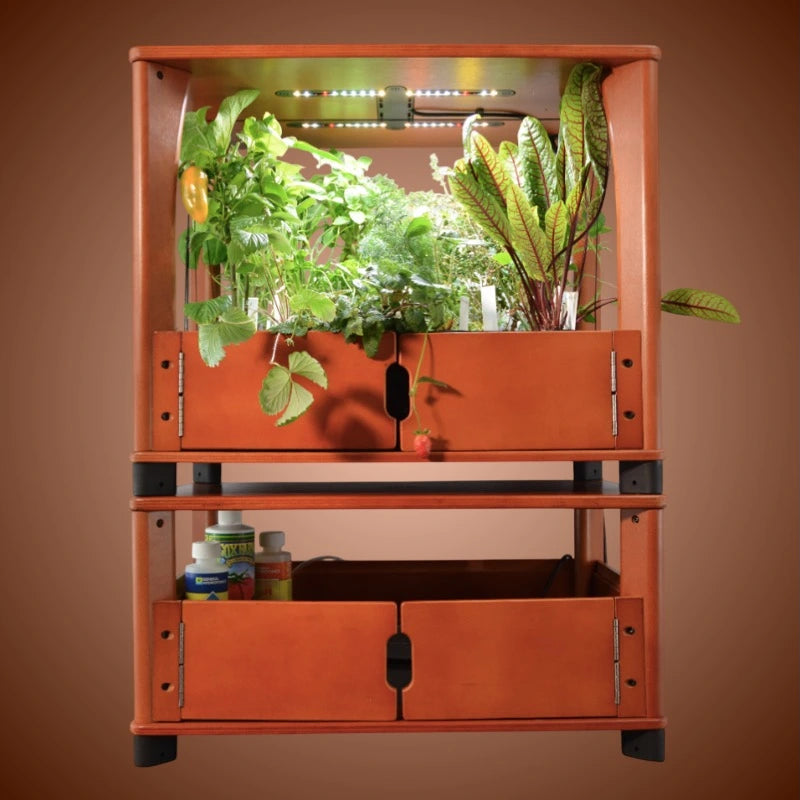
The Aquager Chef's Organic Set bundles a full hydroponic home farm with a matching storage unit, giving a household two full grow boxes built on the same closed loop, water conserving design described above.
It is not framed here as a way to single-handedly solve a global resource problem, since no individual household purchase does that. It is a genuinely more water efficient and lower footprint way to grow a portion of your own food, with data behind the claim rather than just good intentions.
A second grow box also gives more room to test how the water and pesticide advantages hold up across different crops, from leafy greens to fruiting vegetables like peppers, rather than only observing them with a single herb variety.
Earth Day Sustainability FAQ
How much water does hydroponic growing actually save?
Multiple studies point to water savings of up to 90% compared to traditional soil based farming, largely because closed loop systems recirculate water rather than losing it to evaporation and runoff.
Do hydroponic systems really use no pesticides?
Most small home hydroponic setups never need pesticides, since growing without soil removes most common pest pressure. Larger commercial greenhouses can still encounter some pests and use limited pest management as a result.
Is growing food at home actually better for the environment?
It is a real but modest improvement, mainly through reduced water use and a shorter distance from harvest to plate. It is not a substitute for larger scale environmental action.
What is the easiest way to start growing more sustainably at home?
Starting with a single pre-seeded tray is the simplest entry point, since it lets you test the habit and see the water efficiency firsthand before committing to a larger system.
Does hydroponic growing work for vegetables as well as herbs?
Yes. Leafy greens and many vegetables grow well hydroponically and see similar water efficiency gains as herbs, though growth times vary by crop.
How much water does a small home system actually use per week?
It depends on the size of the system and how many trays are running, but most small home setups use only a few liters a week, since the reservoir recirculates rather than draining away.
Is hydroponic produce as nutritious as soil grown produce?
Yes, generally. Nutrient content is driven more by the freshness of the harvest and the specific nutrients delivered to the roots than by whether the growing medium is soil or water.
A Sustainability Choice Backed by Real Numbers
Earth Day tends to produce a lot of general advice and not much specific data. Indoor hydroponic growing is one of the rare exceptions, with independent studies consistently showing significant water savings and a straightforward case against pesticide use in small home systems.

None of this requires treating a kitchen counter as a solution to climate change. What it offers is a genuinely more water efficient, lower footprint way to grow a real portion of your own food, with numbers behind the claim rather than just a good feeling.
If Earth Day has you looking for a change that is both sustainable and useful daily, the Indoor Seed Starter Kit is a low commitment way to start.
The theme for Earth Day 2026, Our Power, Our Planet, is built around the idea that environmental progress comes from daily actions rather than any single large decision. A tray of herbs on a counter is a small example of exactly that: not a dramatic gesture, but a repeatable one, backed by real numbers rather than good intentions alone.
For more on how hydroponic growing compares to traditional methods, see our guides on hydroponics vs soil for indoor growing, organic gardening vs indoor growing, and why plant roots need oxygen in hydroponics for the science behind the system.
Author: Aquager · Published: July 4, 2026 · Updated: July 4, 2026












0 comments