
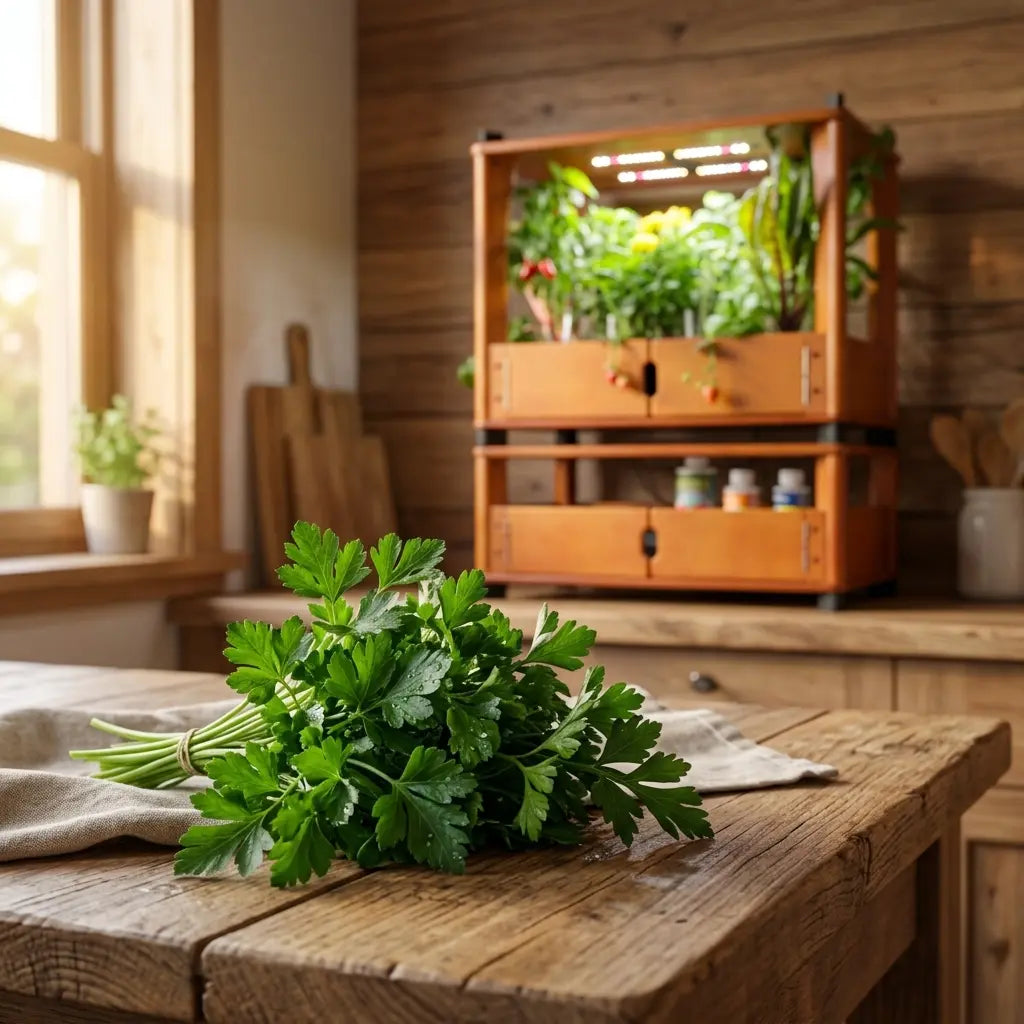
Parsley benefits get overlooked constantly, mostly because parsley spends most of its life as a decoration pushed to the edge of a plate rather than eaten.
That is a genuine waste. Ounce for ounce, parsley is one of the most nutrient-dense herbs available, packing meaningful amounts of vitamins and plant compounds into a handful of leaves most people scrape into the trash.
This guide breaks down what is actually in parsley, what the research says about compounds like apigenin, and how to eat enough of it to matter, not just enough to decorate a dish.
Why Parsley Deserves More Credit Than "Garnish"
A single tablespoon of chopped parsley looks like almost nothing on a plate, which is exactly why its nutritional density is so easy to underestimate.
Per gram, fresh parsley delivers more vitamin K and vitamin C than many vegetables people actively think of as healthy, simply because it is so concentrated in flavor and nutrients relative to its light, leafy structure.
The problem is portion size. Most people eat a pinch of parsley as decoration, not a real serving, which means they never actually get close to the amounts studied in nutrition research.
The Nutrition Breakdown: What's Actually in Parsley
A half-cup of fresh chopped parsley provides a substantial share of a day's vitamin K, an important nutrient for blood clotting and bone health that many people fall short on.
That same half-cup also delivers a meaningful amount of vitamin C, an antioxidant vitamin that supports immune function and, notably, plays a direct role in how well the body absorbs iron from food.
| Nutrient | Per 1/2 Cup Fresh, Chopped | Why It Matters |
|---|---|---|
| Vitamin K | Roughly a full day's worth | Blood clotting, bone health |
| Vitamin C | A meaningful share of daily needs | Immune support, helps iron absorption |
| Vitamin A | Notable contribution | Eye and skin health |
| Iron | Small but real amount | Oxygen transport, energy |
| Flavonoids (including apigenin) | Present in meaningful concentration | Antioxidant activity, studied for other effects |
Beyond vitamins, parsley is also rich in antioxidant plant compounds, including flavonoids that researchers have studied for a range of effects beyond basic nutrition.
Parsley's vitamin K content is high enough to matter for one specific group of people: anyone taking a blood-thinning medication like warfarin, where vitamin K intake needs to stay consistent. Anyone on this kind of medication should talk to their doctor before significantly increasing parsley intake, since sudden changes in vitamin K intake can affect how the medication works.
Parsley Compared to Other Leafy Greens
Parsley is not the only nutrient-dense leafy green worth eating regularly, but it holds up well against more commonly praised options when compared by the amount of nutrients packed into a small serving.
| Green (per 1/2 cup) | Vitamin K | Vitamin C | Notable Compound |
|---|---|---|---|
| Parsley | Very high | High | Apigenin |
| Kale | High | High | Lutein |
| Spinach | High | Moderate | Iron, folate |
| Arugula | Moderate | Moderate | Glucosinolates |
What sets parsley apart is less any single nutrient and more its sheer concentration relative to how little of it people typically eat compared to a full salad's worth of kale or spinach.
This is exactly why serving size matters so much when talking about parsley benefits. A half-cup of spinach in a salad is a normal serving, while a half-cup of parsley added deliberately to a dish still feels generous by comparison, even though nutritionally it competes well.
Apigenin and the Anti-Anxiety Research
Apigenin is a flavonoid found in meaningful concentration in parsley, along with a few other plants like chamomile, and it has drawn research interest for effects beyond simple antioxidant activity.
Some laboratory and animal studies have examined apigenin for potential calming, anxiety-reducing effects, generally attributed to how it interacts with certain receptors in the brain.
It is important to be precise about what this research actually shows. Much of the apigenin and anxiety research to date comes from animal models and laboratory studies, not large-scale human clinical trials, and eating parsley is not a substitute for treatment of a diagnosed anxiety condition.
This is genuinely interesting, well-documented research territory, but it should be read as a promising area of study rather than a proven treatment. Anyone dealing with anxiety symptoms should talk to a healthcare provider rather than relying on diet alone.
The Iron Absorption Boost
Plant-based iron, the kind found in parsley itself and in other vegetables, is harder for the body to absorb than the iron found in meat, which is a real limitation of a produce-heavy diet.
Vitamin C changes this equation. Eating a vitamin C source alongside a plant iron source measurably improves how much of that iron the body actually absorbs, a well-established finding in nutrition science.
Parsley is unusual in that it supplies both pieces at once. It contains a real amount of iron and enough vitamin C to help the body absorb more of it, along with any other iron-rich food eaten in the same meal.

Pairing a generous handful of parsley with iron-rich foods like beans, lentils, or leafy greens is a simple, practical way to put this iron absorption principle to use at an actual meal.
This pairing effect is one of the more practically useful pieces of nutrition science to come out of parsley research, since it turns a garnish herb into an active part of how well a meal's other nutrients get used.
Someone eating a bean-based dish, for example, gets noticeably more usable iron out of that meal by stirring in a real handful of parsley than by leaving it off entirely or using it only as a plate decoration.
Why Fresh Matters More Than People Realize
Vitamin C is notably unstable. It degrades with exposure to light, air, and time, which means parsley that has been sitting cut in a store display or a refrigerator for days has already lost some of the vitamin C content used in nutrition research.
This is true of most fresh herbs, but it matters more for parsley specifically because vitamin C is one of its headline nutrients and one of the more fragile ones.
Parsley harvested minutes before use, rather than days before, genuinely delivers more of the nutrition this guide describes, which is a meaningful practical argument for growing it rather than relying entirely on store-bought bunches.
How Much Parsley Do You Actually Need to Eat
A pinch sprinkled on top of a dish for color does not deliver meaningful nutrition. Getting a real benefit means treating parsley as an ingredient, not a decoration.
A half-cup of fresh chopped parsley, roughly a small handful, is a realistic serving that actually delivers the nutrient amounts discussed in parsley nutrition research.
Adding parsley by the handful to a salad, blending it into a sauce, or stirring it generously into a finished dish gets much closer to a real serving than a light dusting on top.
Growing Your Own Fresh Parsley at Home
Fresh parsley loses some of its nutrient content and flavor the longer it sits after being cut, similar to most tender leafy herbs, so freshness at the point of use genuinely matters.
Store-bought parsley has often been sitting in transit and on a shelf for days by the time it reaches a kitchen, while parsley harvested at home can go from plant to plate in minutes.
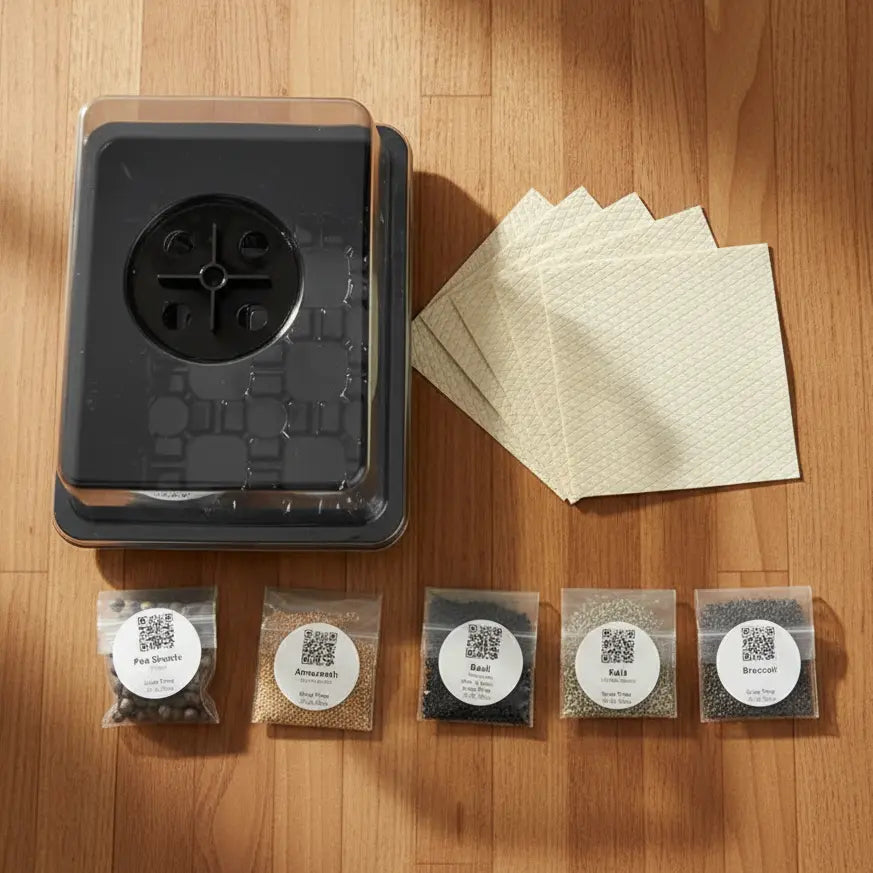
The Aquager Parsley (Giant of Italy) Seeds grow well in a hydroponic setup, producing large, tender leaves suited to being used generously rather than sparingly.
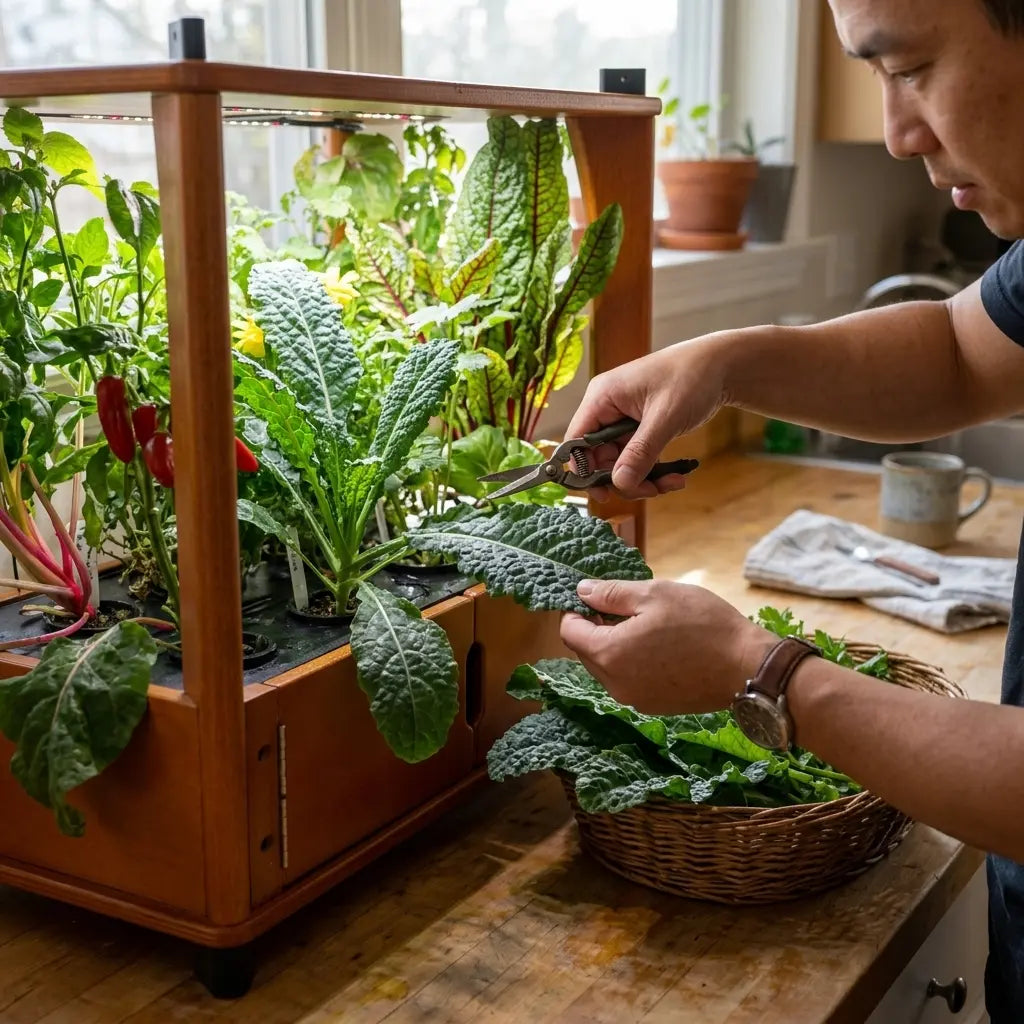
Growing it in an Aquager Home Farm means a constant supply of fresh parsley within reach of the kitchen, rather than a single bunch that wilts in the crisper drawer before it's used up.
Simple Ways to Use More Parsley Than a Garnish
Blending a generous handful of parsley into a vinaigrette or sauce is one of the easiest ways to add a real serving without changing the texture of a dish.
Stirring chopped parsley into a finished soup, grain bowl, or pan of vegetables right before serving preserves more of its bright flavor and nutrients than cooking it for a long time.

Using parsley as a base herb, the way basil is used in pesto, rather than a background note, is one of the simplest mental shifts that leads to eating more of it.
Tabbouleh, a Middle Eastern salad built primarily around parsley rather than treating it as an afterthought, is a good example of what parsley looks like when it is the point of the dish instead of the decoration.
Adding a generous handful to scrambled eggs, folding it into a grain salad, or blending it into a green smoothie alongside fruit are all easy ways to work a real serving into meals that already exist in a normal rotation, rather than treating parsley as a separate health chore.
Common Misconceptions About Parsley
The biggest misconception is treating parsley purely as decoration, which is exactly the habit this guide is meant to correct. A pinch on top of a plate was never enough to deliver a meaningful serving of anything.
Another common misconception is that dried parsley is roughly equivalent to fresh. Drying concentrates some compounds but destroys much of the vitamin C content, so fresh parsley is meaningfully more nutritious for the vitamin C and iron absorption benefits this guide covers.
A third misconception is that all parsley varieties differ nutritionally. Flat-leaf and curly parsley are nutritionally very similar, with the main practical difference being flavor intensity and how each holds up in cooked versus raw dishes.
Parsley Benefits FAQ
What are the main health benefits of parsley?
Parsley is notably rich in vitamin K and vitamin C, contains a real amount of iron, and supplies antioxidant flavonoids including apigenin, all in a small, calorie-light serving.
Does parsley really help with anxiety?
Parsley contains apigenin, a compound studied in animal and laboratory research for potential calming effects, but this research has not been established in large human clinical trials, so it should not be treated as a treatment for anxiety.
How does parsley help with iron absorption?
Its vitamin C content improves how well the body absorbs plant-based iron, both from parsley itself and from other iron-rich foods eaten in the same meal.
How much parsley should I eat to get real benefits?
A half-cup of fresh chopped parsley is a realistic serving that gets meaningfully closer to the nutrient amounts studied in research, compared to a light garnish sprinkle.
Is flat-leaf or curly parsley more nutritious?
Both varieties are nutritionally very similar. Flat-leaf parsley tends to have a slightly stronger flavor, which is why it's often preferred in cooking, but the nutrient profile does not differ meaningfully between the two.
Does cooking parsley destroy its nutrients?
Extended cooking reduces vitamin C content in particular, so adding parsley toward the end of cooking or using it fresh preserves more of its nutritional value.
Can I take vitamin K supplements instead of eating parsley?
A supplement can address a vitamin K shortfall, but parsley delivers vitamin K alongside vitamin C, antioxidant flavonoids, and iron in one whole food, which a single-nutrient supplement does not replicate.
Is it safe to eat parsley every day?
For most people, eating parsley daily in normal food amounts is safe and simply adds a nutrient-dense ingredient to meals, though anyone on blood-thinning medication should discuss consistent vitamin K intake with their doctor first.
Parsley as an Ingredient, Not an Afterthought
Parsley's reputation as a throwaway garnish undersells what is genuinely one of the more nutrient-dense herbs available, from its vitamin K and C content to its role in iron absorption.
Our guide to basil's nutrition science covers a similar nutrient breakdown for another everyday herb, and our piece on whether hydroponic vegetables are more nutritious digs into the research behind freshness and nutrient content more broadly.
For anyone just getting started growing herbs at home, our list of the easiest herbs to grow indoors is a good next stop, since parsley is a genuinely forgiving one to start with.
Eating parsley by the handful, not the pinch, is really the entire shift required to turn it from a plate decoration into a meaningful part of a nutrient-dense diet.
Author: Aquager · Published: July 10, 2026 · Updated: July 10, 2026
















0 comments