
Here’s the thing nobody tells you about building an indoor herb garden for winter: October is too late.
By the time September arrives and you start thinking about how to keep fresh herbs through the cold months, the window to be harvesting by November has already closed. Rosemary takes 6–8 weeks to reach productive size. Sage and thyme need 4–6 weeks. Parsley, 4–6 weeks. Start them in October and your Thanksgiving herbs are still seedlings.
The outdoor gardener who wants fresh herbs all winter needs to plant in summer — when it feels too early — so everything is established, producing, and ready before the outdoor garden gives up.
This is the guide for that person. Which herbs to grow, why the hydroponic farm is the only practical solution for true year-round winter growing, and a planting timeline that works backward from harvest so you know exactly when to start.
Why Starting in Summer Is the Only Way to Win
Most herbs are not fast crops. The time from seed to productive, regular-harvest herb plant ranges from 3 weeks (chives) to 8+ weeks (rosemary).
If you’re targeting continuous winter harvests:
- Plant in July → Established and harvesting by September. Full productive season through December.
- Plant in August → Productive by October. Catching the beginning of soup and stew season.
- Plant in September → Productive by November — Thanksgiving is the earliest you’ll have anything meaningful.
- Plant in October → You’re harvesting in December at the earliest. Your outdoor garden is already gone, and you’ve had nothing fresh for two months.
The September/October moment is when most people search for “indoor herb garden” — and it’s the moment when the right answer is “you should have started in July.” The people who did start in July are already harvesting rosemary when the first frost hits.
For more on the full year-round growing system, see our guide on growing herbs indoors year-round.
The Best Herbs for a Winter Indoor Garden
Not all herbs perform equally through winter. For winter herbs, prioritize cold-tolerant and slow-bolting varieties.
Fast and Forgiving (Ready in 3–5 Weeks)
Chives are among the most cold-tolerant and easiest-growing herbs you can keep indoors. They germinate quickly, grow continuously, and need almost no attention. Snip the tops and the plant regrows. Perfect for eggs, soups, potatoes, and anything that benefits from a mild onion flavor.
Parsley — flat-leaf Italian parsley — is the workhorse of winter cooking. It takes 4–5 weeks from seeding to productive harvest, tolerates lower light than most herbs, and doesn’t go bitter in cool conditions. Start it earliest.
The Winter Cooking Trio (Ready in 4–6 Weeks)
Thyme is the most useful winter cooking herb after parsley. It flavors roasts, soups, braises, and holiday dishes. Cold-tolerant, low-maintenance, and retains flavor even when harvested heavily. Established thyme will produce for months on a single planting.
Sage is the quintessential fall and winter herb — stuffing, roasted squash, pork, risotto, brown butter. Plant sage in July and it’ll be ready in time for Thanksgiving.
Rosemary is the slowest of the winter herbs and the most rewarding. It takes 6–8 weeks to reach productive harvest size from seed. Rosemary flavors roasted meats, potatoes, bread, and nearly everything cooked in the oven through winter. Plant it first, in July, before anything else.
Worth Adding
Oregano — essential for Italian and Mediterranean winter cooking. Cold-tolerant, fast, and produces reliably. 4–5 weeks to productive harvest.
Basil prefers 70°F+ and declines in cold winter conditions — it’s the one herb that requires extra planning in winter. See our guide on growing basil indoors for the basil-specific setup.
The Planting Timeline — Work Backward from Harvest
Use this table to know exactly when to plant for each winter harvest milestone:
| Herb | Weeks to Harvest | Plant by (for Thanksgiving) | Plant by (for Christmas) |
|---|---|---|---|
| Rosemary | 6–8 weeks | Early September | Late October |
| Sage | 4–6 weeks | Mid September | Early November |
| Thyme | 4–6 weeks | Mid September | Early November |
| Parsley | 4–5 weeks | Late September | Mid November |
| Chives | 3–4 weeks | Early October | Mid November |
| Oregano | 4–5 weeks | Late September | Mid November |
The practical recommendation: Seed everything in mid-July. By September, rosemary and sage are beginning to produce. By October, everything is in full harvest. By November, you have a complete kitchen herb setup that will carry through March.
Why a Hydroponic Farm Is the Only Practical Winter Solution
A winter windowsill herb garden sounds straightforward. In practice, it has a fundamental problem: winter light.
In December and January across most of the US, south-facing windows receive approximately 4–6 hours of usable sunlight. Many herbs need 8–12 hours for optimal growth. The result is leggy, sparse, slow-growing plants that produce far less than they would in summer.
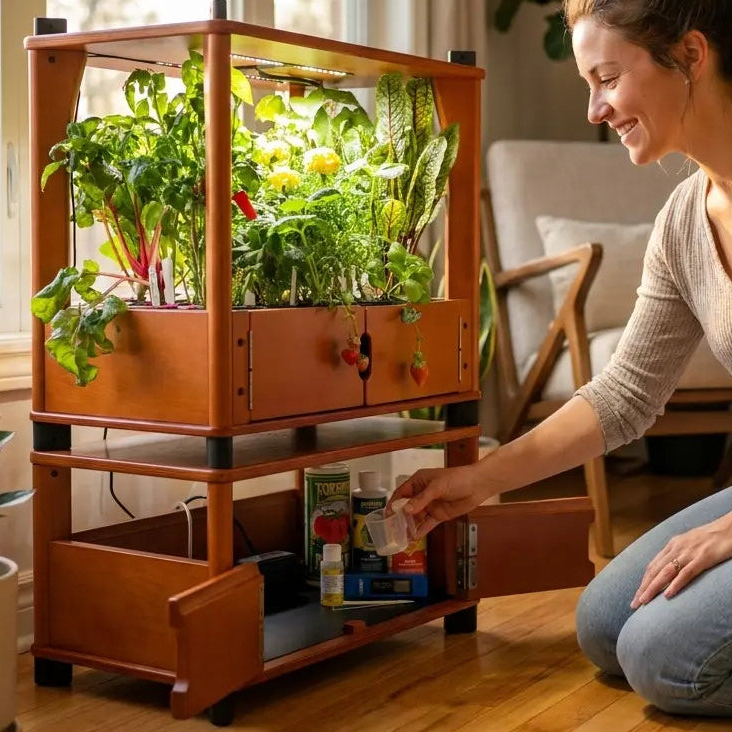
The Aquager hydroponic farm solves this specifically:
Consistent light. The built-in grow lights run on a 16-hour daily cycle regardless of what’s happening outside. December in Chicago with 9 hours of daylight is identical to July in terms of what the herbs experience. They don’t know it’s winter.
Consistent temperature. The farm runs at room temperature year-round. No cold drafts from windows, no temperature fluctuation from heating systems cycling on and off.
Water consistency. The hydroponic system delivers nutrients and water continuously. No forgetting to water during busy holiday weeks.
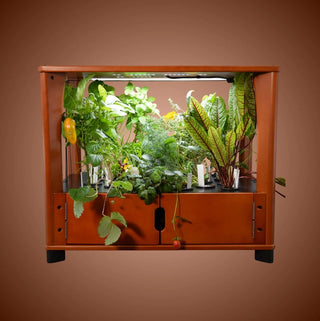
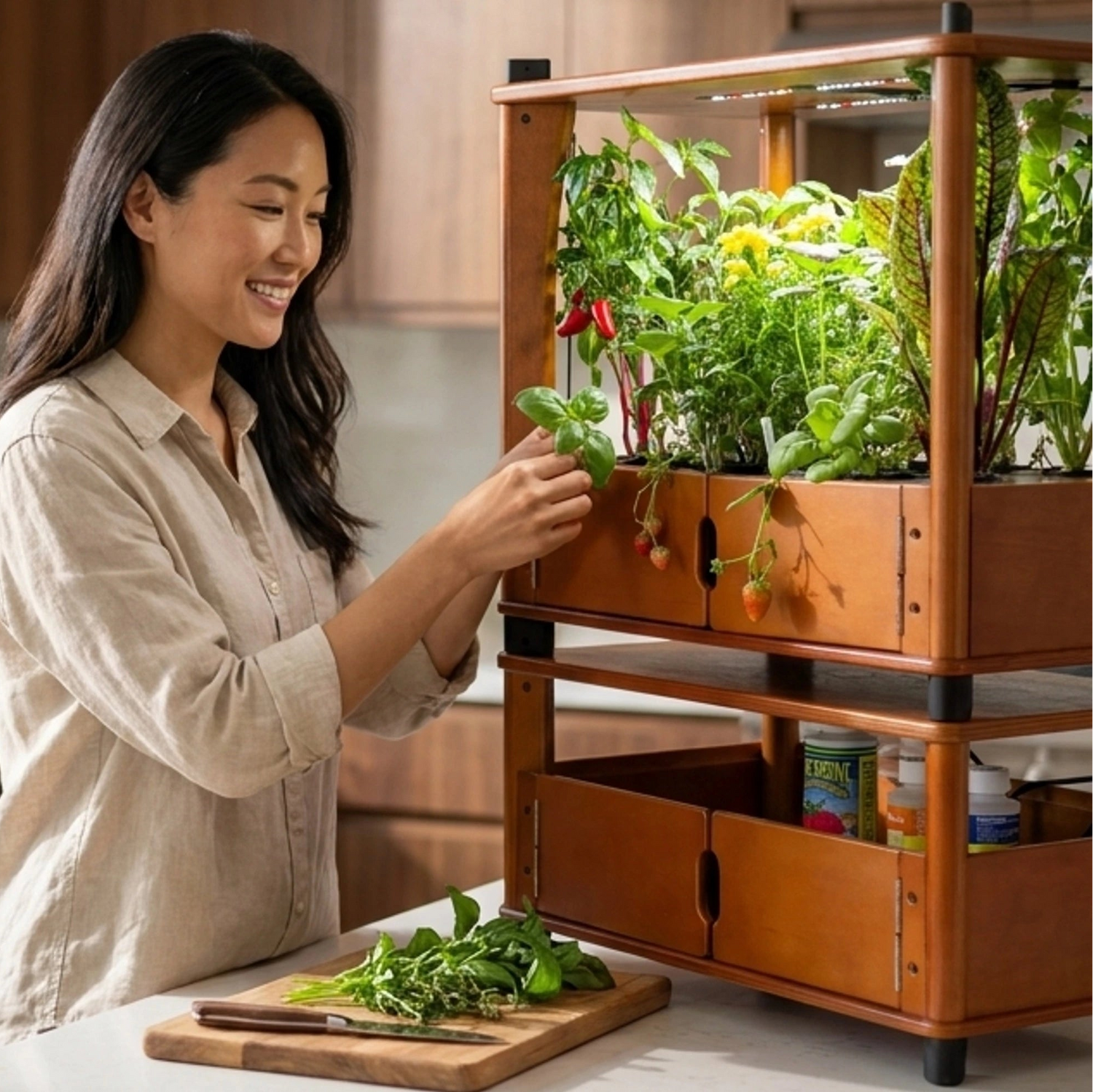
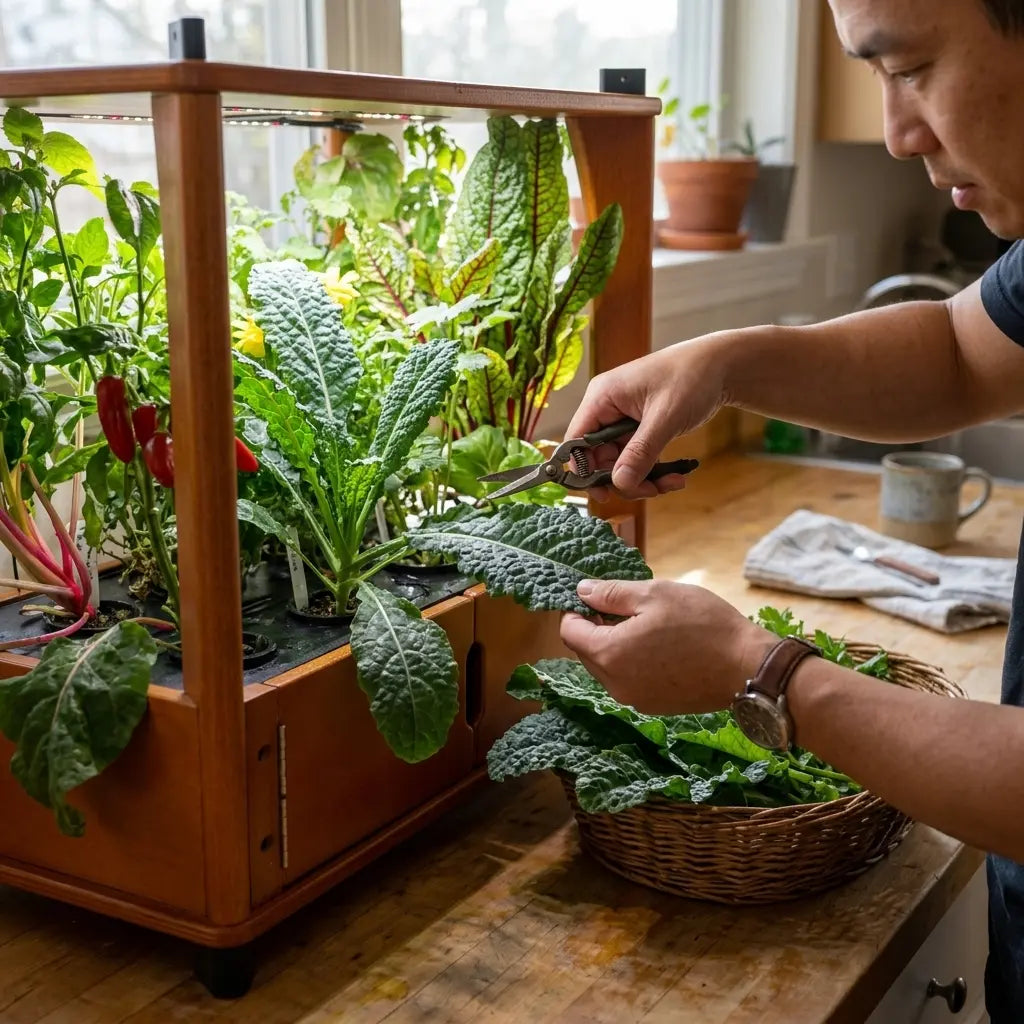
Space efficiency. A 24-plant farm on a kitchen counter provides far more growing capacity than a collection of individual pots, with a fraction of the maintenance.
For a comparison of what specific herbs produce in a hydroponic setup, see our guide to the 10 easiest herbs to grow indoors.
Set Up Your Winter Herb Garden Today
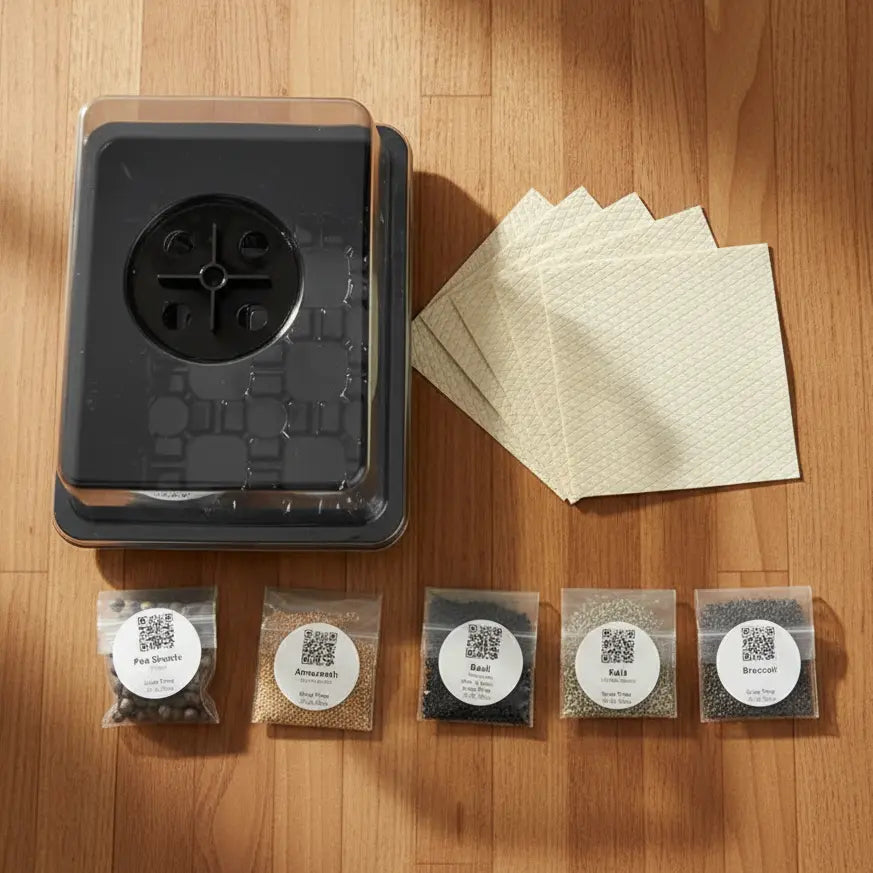
The complete winter herb garden setup requires one farm and a selection of seed pods chosen for the cooking you do from September through March.
The Aquager Home Farm — 24 Plants runs 24 plants simultaneously at the right light spectrum and duration for year-round herb production. $179.99 for the Starter Farm. For a household that cooks regularly with fresh herbs, the payback on store herb purchases typically happens within 3–4 months.
The Winter Herb Selection — start with these three:
- Sage (Common) — $8.99 for a 4-pod pack. The irreplaceable fall and winter herb. Stuffing, squash, brown butter pasta, roasted root vegetables.
- Rosemary — $8.99 for a 4-pod pack. The slow starter that rewards the planner. Roasted chicken, potatoes, bread, everything in the oven. Plant it first.
- Thyme (Summer) — $8.99 for a 4-pod pack. The soup and stew herb. Goes in at the start of every braise, every long-cooked dish, and every roast.
Add Parsley (Giant of Italy) and Chives (Staro) from the Aquager seed catalog to complete the full winter herb lineup. The 24-plant capacity of the farm runs all five simultaneously with room for basil and whatever else you cook with regularly.
Frequently Asked Questions
Can I move my outdoor herbs indoors for winter instead of starting new plants?
You can try, but most herbs don’t transition well. Outdoor herbs harbor insects and soil-borne pathogens, and the shock of moving from outdoor sunlight to indoor light typically causes significant leaf drop and a 4–6 week recovery period. Starting fresh plants in a hydroponic system is faster and cleaner than transitioning outdoor plants.
Why does rosemary take so much longer than other herbs?
Rosemary is a slow-growing Mediterranean perennial. Indoors, you’re compressing that timeline significantly through hydroponic nutrition and grow lights, but you can’t fully overcome the plant’s natural pace. The upside: once established, a rosemary plant produces for months without any decline in flavor.
What if I’m reading this in September — is it too late?
For a full winter harvest, September is late but not too late for faster varieties. Start parsley, chives, thyme, and oregano immediately. Skip rosemary if you need it before December, or start it now and accept it’ll arrive later in the season. A September planting will have most herbs productive by November.
Do I need to replace the plants every season?
Some herbs (thyme, rosemary, sage, oregano, chives) are perennials that can produce continuously for a year or more. Others (parsley, basil) complete their lifecycle within 12–18 months and benefit from replacement. Start new plants for annual herbs on a rolling schedule and maintain perennials indefinitely.
How often do I need to refill the hydroponic farm’s water tank?
The Aquager farm’s water tank holds approximately 13 liters and needs refilling every 1–2 weeks depending on how many plants are actively growing. Nutrients are added at each water change. It’s significantly less maintenance than a collection of individual soil pots.
The Garden That Doesn’t Know It’s Winter
The outdoor garden stops. The indoor herb garden doesn’t.
Every November, December, January, and February — when fresh herbs at the store are $3–5 per wilted bunch — your Aquager farm is running the same cycle it runs in July. Rosemary for the roast. Thyme for the braise. Sage for the stuffing. Parsley for everything. All from a countertop farm that requires about 20 minutes of attention per month.
Start today — not in October. Sage, Rosemary, and Thyme seeds are in stock and ship this week. The Aquager Home Farm gives you the infrastructure to grow all of them simultaneously, year-round, regardless of what’s happening outside.
Author: Aquager Team · Published: May 30, 2026 · Updated: August 8, 2026 · Reviewed: August 8, 2026 (Phase 2)












0 comments