

Hanukkah 2026 runs from sundown on Friday, December 4, to nightfall on Saturday, December 12. That is eight nights of latkes, brisket, soup, and kugel, and almost every dish gets better with a fresh herb on top.
This guide pairs one herb with a traditional dish for each night, then shows which of those herbs you can grow at home in time. Grow times matter here, because some herbs take 50 days and others take 90.
Which Fresh Herb Goes With Each Night of Hanukkah?
Chives go with latkes, rosemary and thyme with brisket, dill with matzo ball soup, mint with applesauce, sage and parsley with roast chicken, chives and dill with kugel, and rosemary and lavender with festive drinks. Night 8 uses all of them. The table below adds the grow time for each herb.
| Night | Dish | Fresh herb | Grow time |
|---|---|---|---|
| 1 | Latkes with sour cream | Chives | About 50 days |
| 2 | Brisket | Rosemary and thyme | About 90 and 60 days |
| 3 | Matzo ball soup | Dill | About 50 days |
| 4 | Latkes with applesauce | Mint | Not sold as seeds, buy fresh |
| 5 | Roast chicken | Sage and parsley | About 90 and 75 days |
| 6 | Savory kugel | Chives and dill | About 50 days |
| 7 | Festive drinks | Rosemary and lavender | About 90 days |
| 8 | The full table | All of the above | See the planting dates below |
Night 1: Latkes With Chive Sour Cream
Stir snipped fresh chives into the sour cream about twenty minutes before serving. The first night calls for latkes, and sour cream is the classic pairing that cuts through the fried potato. Snip more than you think you need, then scatter extra over the top at the table.
Chives are also the fastest herb to plan for. The Staro variety in our chive seeds takes about 50 days from seeding, and it is a cut-and-come-again perennial, so snipping the stems makes it regrow.
Night 2: Brisket With Rosemary and Thyme
Tuck whole sprigs of rosemary and thyme into the braising liquid, using three to four rosemary and five to six thyme. Hanukkah brisket is the centerpiece of the second night for many families. The long braise, three to four hours in a covered pot with wine, onions, and aromatics, turns the herbs into the backbone of the sauce. Remove the sprigs before serving.
Finish with a few fresh thyme leaves and a small rosemary sprig over the sliced meat. Thyme takes about 60 days from seed, and rosemary takes about 90, so thyme seeds fit this year better than rosemary seeds.
Night 3: Matzo Ball Soup With Fresh Dill
Simmer dill in the broth, then scatter fresh dill into each bowl just before it goes to the table. Dill and matzo ball soup are one of the great pairings in Jewish cooking. The last handful, cut at the final moment, is what makes the soup taste bright instead of just warm.

Our Bouquet dill seeds take about 50 days from seeding and give feathery fronds you can snip again and again. If you are starting late, there is a faster option in the planting section below.
Night 4: Latkes Again With Fresh Mint Applesauce
Stir a tablespoon of finely chopped fresh mint into warm homemade applesauce, then add a leaf or two at the table. Latkes appear more than once during the eight nights, so the variation is the applesauce. The mint adds a cool lift that turns a classic side into something unexpected.
We do not sell mint seeds, so pick up a fresh bunch or a small potted spearmint plant for this one.
Night 5: Herb-Roasted Chicken With Sage and Parsley
Work sage butter under the skin and over the surface, roast until golden, then scatter flat-leaf parsley over the carved bird. The sage gives the meat a warm, earthy flavor, and the parsley adds color and a clean, bright note against the rich butter.
Both herbs are slow growers. Sage seeds take about 90 days and flat-leaf parsley seeds take about 75, so buy these two fresh this year and plant them now for winter roasts.
Night 6: Savory Kugel With Chives and Dill
Stir a generous handful of chives and dill through the kugel mixture before baking, then scatter more over the top when it comes out of the oven. The savory version, with sour cream and cheese, gets a lift from both herbs. The chives add a mild onion note, and the dill adds a clean, bright flavor.
This is the night that rewards the two fastest herbs. Chives and dill seeded on time are both ready to cut by now.
Night 7: Herb-Infused Drinks
Make a rosemary simple syrup and stir it into sparkling wine with a lemon twist, or serve a lavender and honey mocktail for the non-drinkers. A gin cocktail with a torched rosemary sprig fills the room with a piney aroma as it arrives at the table.
Rosemary and lavender both take about 90 days, so treat them as a winter project. Our guide to growing herbs for holiday cocktails has more drink ideas for when yours are ready.
Night 8: The Grand Finale With Herb Butter
Serve herb butter made with rosemary, thyme, and parsley alongside the challah, and let every dish carry its herb. The eighth night is the full family gathering, with the most food and the brightest lights. Chive sour cream goes with the last latkes, fresh dill goes on the fish, and sage goes over the roasted vegetables.
When Should I Plant Each Herb for Hanukkah 2026?
Seed chives and dill by October 15 to cut them for the first candle on December 4, or by October 22 for the last night. Thyme needs about 60 days, so seed it by October 12 to cut it by December 11. Rosemary, sage, parsley, and lavender take 75 to 90 days, so they arrive after Hanukkah.
| Herb | Grow time | Seed by for Night 1 (Dec 4) | Seed by for Night 8 (Dec 11) |
|---|---|---|---|
| Chives | About 50 days | October 15 | October 22 |
| Dill | About 50 days | October 15 | October 22 |
| Thyme | About 60 days | October 5 | October 12 |
| Parsley | About 75 days | September 20 | September 27 |
| Rosemary | About 90 days | September 5 | September 12 |
| Sage | About 90 days | September 5 | September 12 |
| Lavender | About 90 days | September 5 | September 12 |
Grow times are the approximate times listed on each product page, counted from seeding. Herbs seeded on October 10 are ready around November 29 for chives and dill, December 9 for thyme, December 24 for parsley, and January 8 for rosemary, sage, and lavender. That makes the slower herbs a good fit for New Year’s dinners and next year’s Hanukkah. For what grows best in the farm the rest of the year, see our guide to growing herbs indoors year-round.
What if I Am Past the Seed-By Dates?
Buy fresh herbs for this Hanukkah and seed the slow ones now for later. Dill microgreens are ready to cut in 16 to 25 days, a quick way to get dill onto the matzo ball soup. Chives seeded by October 22 still make the last night. Anything seeded after that is for Christmas and the new year.
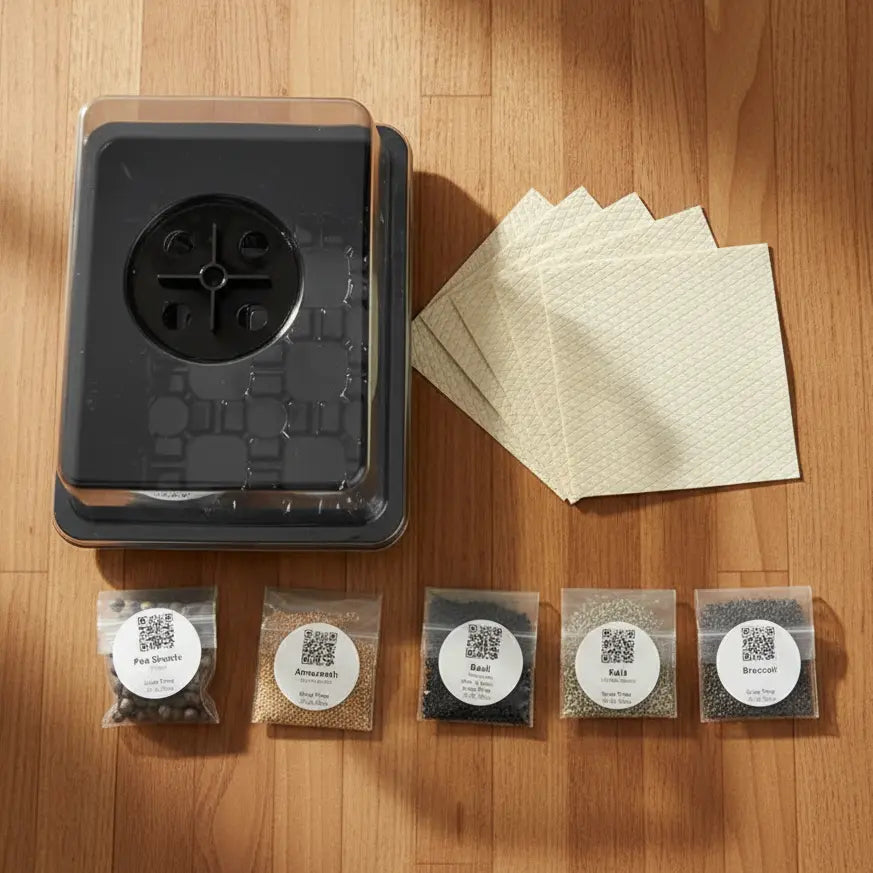
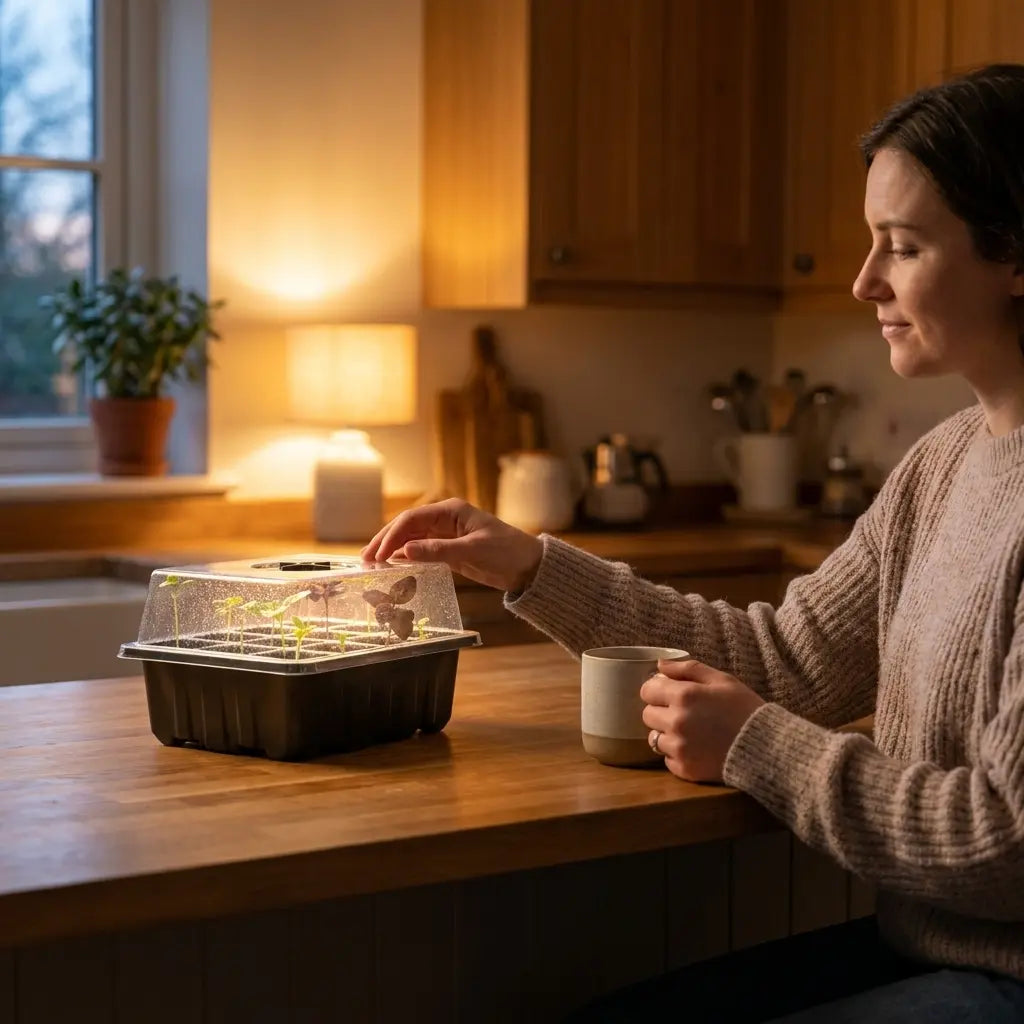
Dill microgreen seeds come with a grow mat included and are ready to cut in 16 to 25 days. For more garnish ideas from the fastest crops, see our guide to Hanukkah cooking with microgreens.
Why Grow Herbs at Home for Hanukkah?
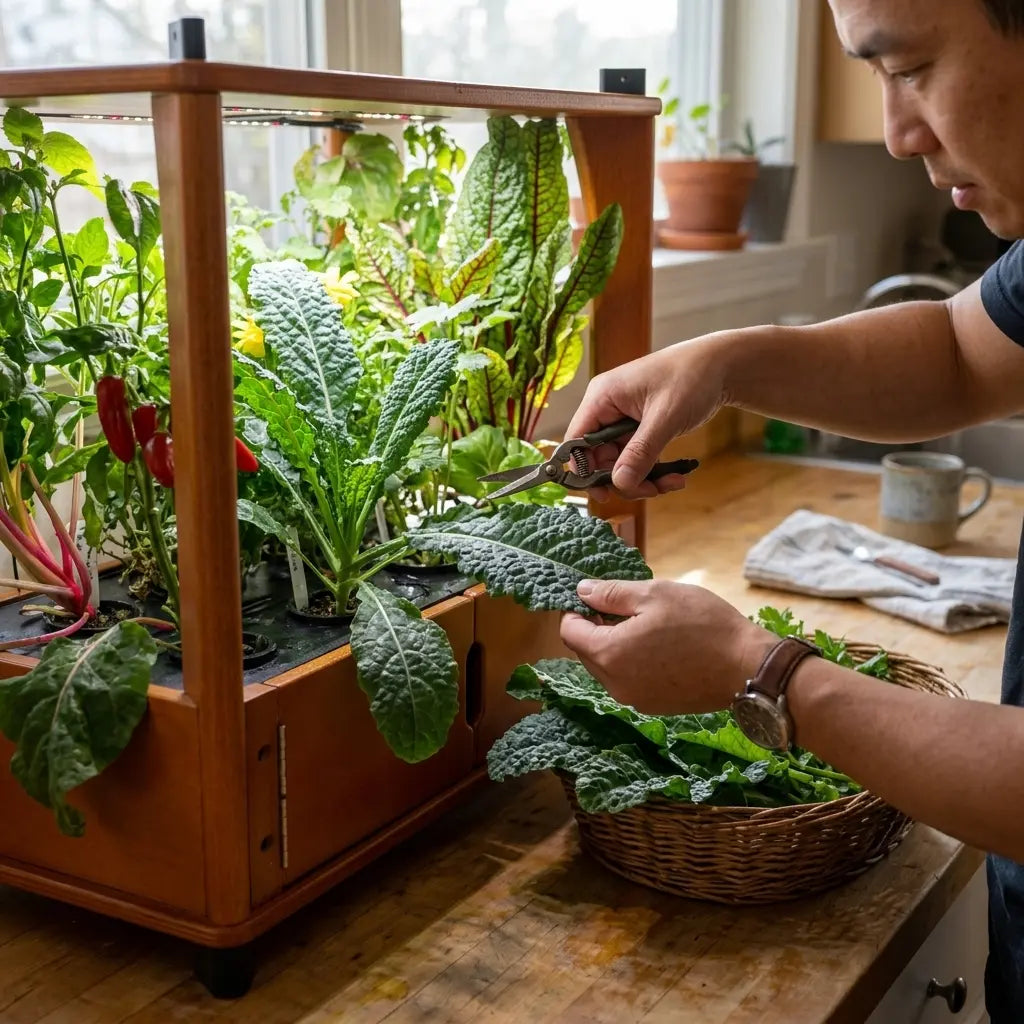
Herbs cut the evening you cook taste brighter than a bunch that has sat in a package, and you cut only what the dish needs. Chives, dill, and parsley regrow after you snip them, so one planting can cover several dinners. A home farm keeps the water, light, and nutrients steady while they grow.
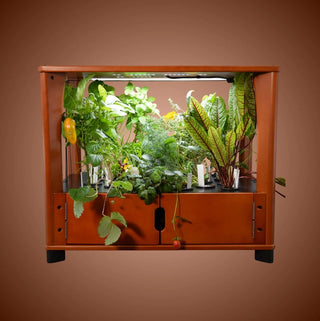
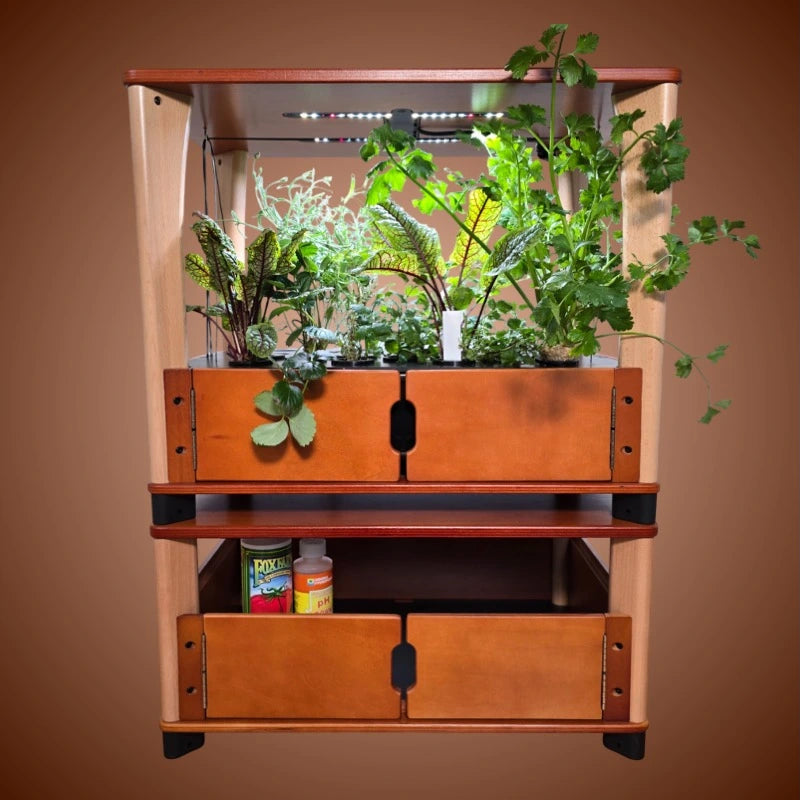
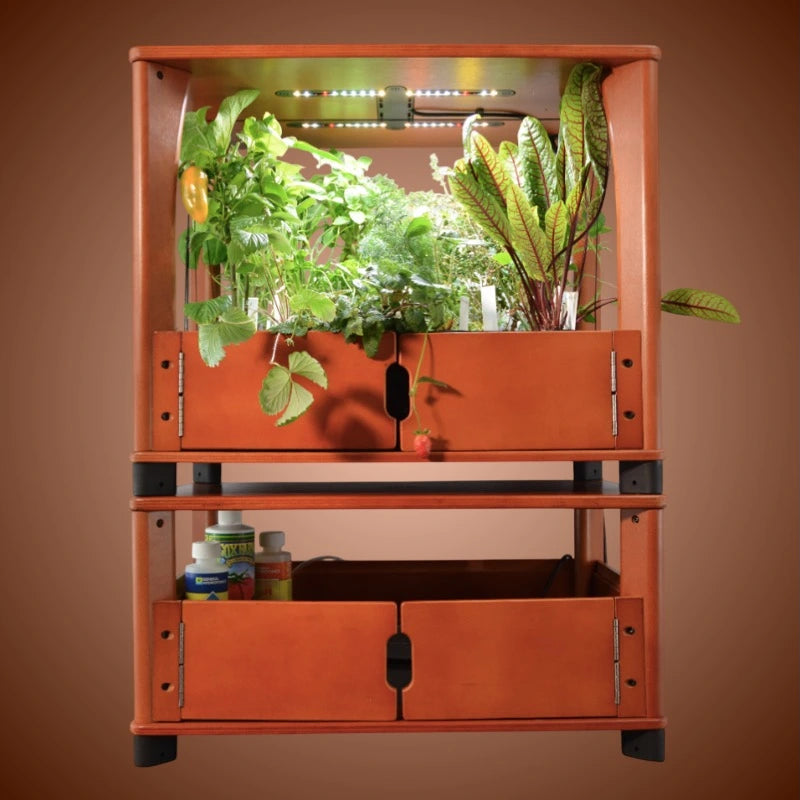
The Chef’s Organic Set ($199.99) is the full setup. It includes the home farm, the matching storage unit, lights, nutrients, a pH kit, and 24 plants (chard and basil), with first sprouts in 6 to 9 days. Herb seed packs for your Hanukkah dishes are sold separately, so you can add the herbs from the table above.
Frequently Asked Questions
When does Hanukkah start in 2026?
Hanukkah 2026 begins at sundown on Friday, December 4, and ends at nightfall on Saturday, December 12. The first candle is lit on the evening of December 4, and the eighth candle on the evening of Friday, December 11.
Do all eight herbs need to be planted at the same time?
No. Each herb has its own grow time, so each has its own seed-by date, as the table above shows. Of the herbs that fit this year, thyme needs the earliest start, and chives and dill follow. Mint is the exception, because we do not sell mint seeds.
What if I only have room for three or four herbs?
Choose chives, dill, and thyme. They have the shortest grow times on this list, 50 to 60 days, and they cover latkes, soup, kugel, and brisket. Add parsley as a fourth if you have space, and buy rosemary and sage fresh for this year.
Can I use the same herbs for Christmas cooking as well?
Yes. Rosemary, thyme, sage, parsley, dill, and chives all show up in Christmas cooking. Seeded on October 10, chives, dill, and thyme are ready before Christmas, parsley arrives around Christmas Eve, and rosemary and sage arrive in early January.
How much does one herb seed pack cover?
Each herb pack has 30 seeds and 12 compostable grow mats, enough to seed 12 cups of the Aquager Home Farm. Packs are $17.99 each, and the farm ships with 10 cup covers.
Is Growing Hanukkah Herbs at Home Worth It?
Yes, if you plant the right herbs on time. Chives, dill, and thyme fit this year's calendar and cover latkes, soup, kugel, and brisket. The slower herbs start paying off in January and at every Hanukkah after that. Start with the herbs you can cut within 60 days.
Fresh herbs do not change the tradition. They make the food taste more like itself, from the chives on the latkes to the dill in the soup. Once the seeds are in, the farm handles the rest, and you can cook the way the holiday deserves.
Author: Aquager Team · Published: June 8, 2026 · Updated: October 10, 2026 · Reviewed: October 10, 2026 (Phase 2 and 3)












0 comments