
A lot of people ask whether hydroponic food is really organic. It’s a fair question — and one that deserves a real answer rather than a marketing talking point.
The short version: yes, Aquager’s growing approach is genuinely clean, and in several important respects it’s significantly cleaner than conventionally grown produce you’ll find at a grocery store. But the longer version is more interesting, because it explains why — and because understanding the mechanism makes the claim credible rather than just asserted.
This post goes through the actual facts: what “organic” means under USDA standards, what’s in the growing mediums, why pesticides aren’t used, and how the carbon footprint of home-grown indoor produce compares to field-grown, shipped, refrigerated, plastic-packaged grocery store produce.
What “Organic” Actually Means
The USDA National Organic Program (NOP) defines organic production as a system that integrates cultural, biological, and mechanical practices that foster cycling of resources, promote ecological balance, and conserve biodiversity. Specifically, certified organic producers must avoid synthetic fertilizers, pesticides, and herbicides; use approved natural inputs; and submit to third-party inspection and certification.
Aquager is not a certified organic food producer, and doesn’t claim to be. What we do claim — and what this post substantiates — is that our growing approach uses organic materials, avoids synthetic chemicals, and produces food that in most respects is cleaner than certified-organic field-grown produce that has been shipped and stored before reaching you.
The distinction matters: “certified organic” is a verified regulatory status. “Grown organically” describes a practice. We’re being precise about which one applies here.
The Growing Medium: Organic Coco Coir with Mycorrhizal Fungi
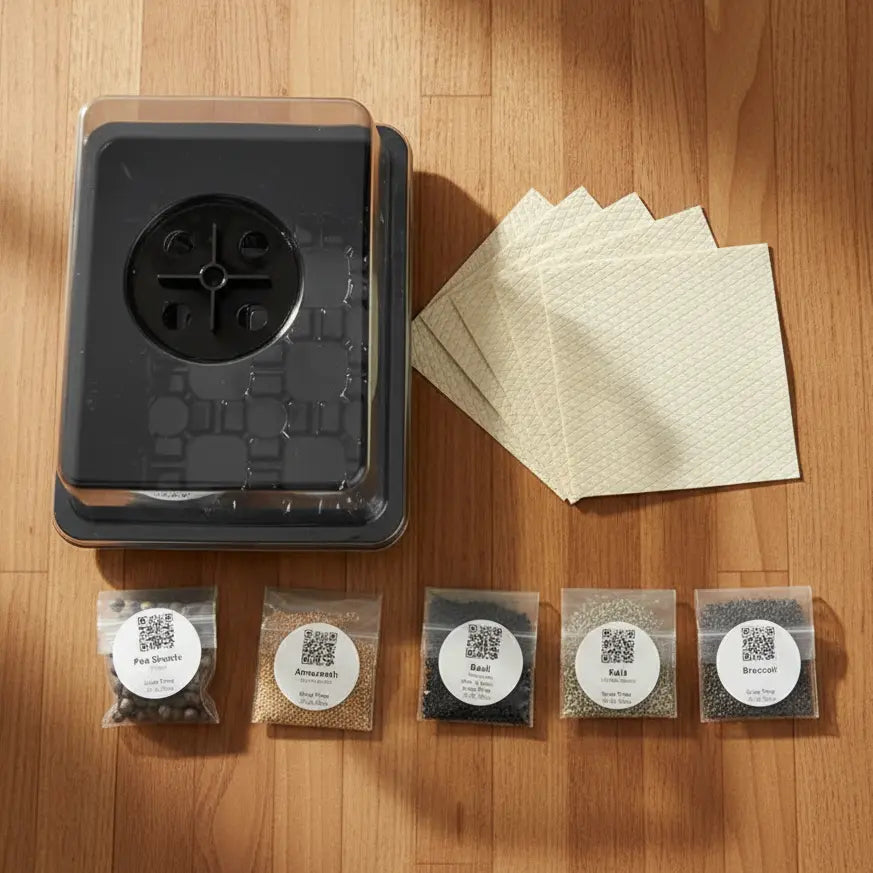
The foundation of the Aquager growing system is the organic grow medium — coco coir pucks inoculated with mycorrhizal fungi.
Coco coir is the fibrous material extracted from coconut husks. It’s a byproduct of coconut processing that would otherwise be discarded, making it a genuinely sustainable growing medium. Coco coir is naturally sterile (no fungal spores, weed seeds, or pest eggs), pH-neutral, biodegradable, and free from synthetic additives.
Mycorrhizal fungi are the microorganisms that make the coco coir mediums particularly effective as an organic growing platform. In natural ecosystems, virtually all plants form symbiotic relationships with mycorrhizal fungi — the fungal network extends the plant’s root system, dramatically increasing the surface area available for nutrient and water absorption.
The Organic Grow Mediums 12-Pack are inoculated with beneficial mycorrhizal species that establish this symbiosis within days of seed germination. Plants that grow with an active mycorrhizal network access nutrients more efficiently, require lower input concentrations to thrive, and are more resilient to mild stress. This is how nature grows plants — the mycorrhizal relationship is one of the most fundamental mechanisms in plant biology.
Why Pesticides Aren’t Needed in a Controlled Indoor Environment
One of the most significant advantages of indoor hydroponic growing is the absence of pest pressure. In field farming, pesticides are applied because outdoor crops are exposed to insects, soil-dwelling larvae, mites, and fungal spores from the surrounding environment, with no barriers and no natural predator diversity.
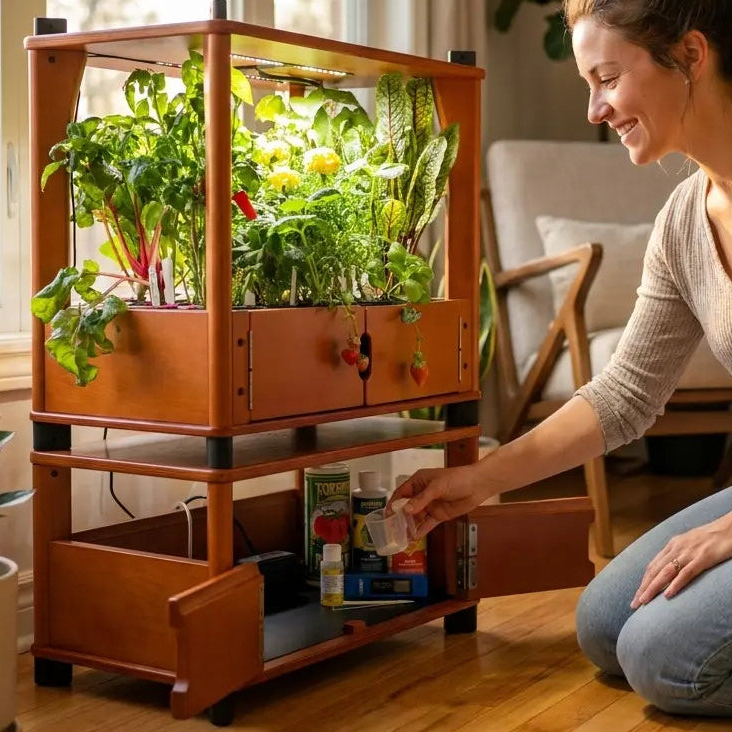
None of these conditions apply to indoor hydroponic growing. Plants growing on the Aquager farm are fully enclosed (physically separated from outdoor pest populations), not in monoculture (multiple herb species growing simultaneously disrupts species-specific pest dynamics), and on a short grow cycle (herbs are harvested within 3–8 weeks, before most pest populations have time to establish).
The practical result: the Aquager farm requires no pesticides under normal conditions. There’s no need for them — the controlled indoor environment eliminates the conditions that require their use in the first place.
In the rare case that a pest issue does appear (usually fungus gnats), Neem Oil Spray — a naturally derived, USDA-approved organic pest control — handles it without synthetic chemical application.
This is the core of the honest answer: Aquager’s produce isn’t pesticide-free because we made a principled choice not to use pesticides. It’s pesticide-free because the growing environment structurally doesn’t require them. That’s a meaningfully different and stronger claim than a “pesticide-free” marketing label on field-grown produce.
The Carbon Footprint Comparison
Here’s the part of the organic conversation that rarely gets discussed: what happens to produce between harvest and the point where you eat it.
Certified-organic grocery produce’s actual journey: Grown on a certified farm (often in California, Mexico, or further for specialty items). Harvested, packed in plastic. Refrigerated and transported by truck (average 1,500+ miles for US produce). Stored at a distribution center. Transported again to a grocery store. Displayed under refrigeration for 2–7 days. By the time it reaches your kitchen, it has been refrigerated for 3–10 days, traveled hundreds to thousands of miles, and lost significant vitamin C content and aromatic compounds.
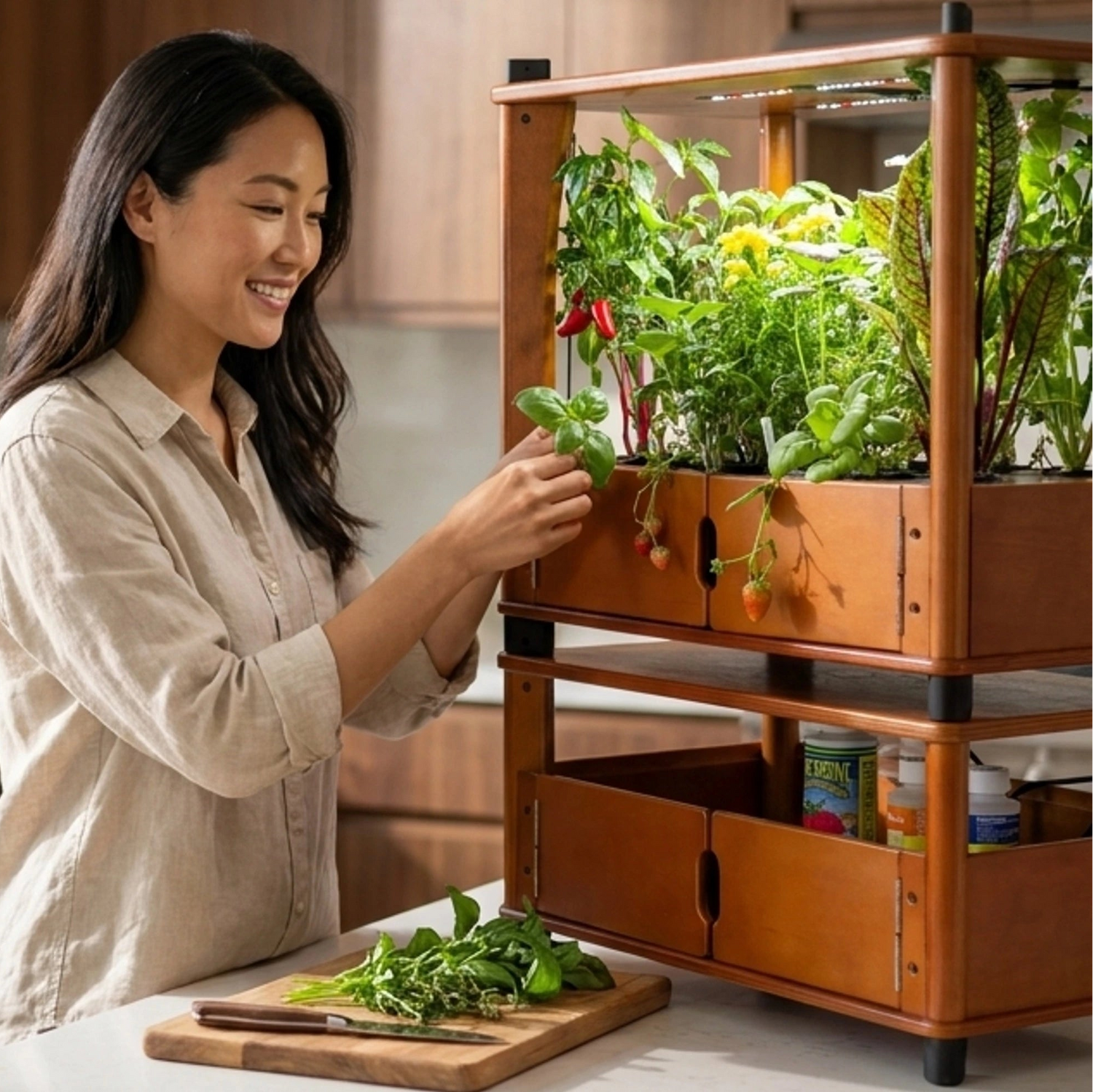
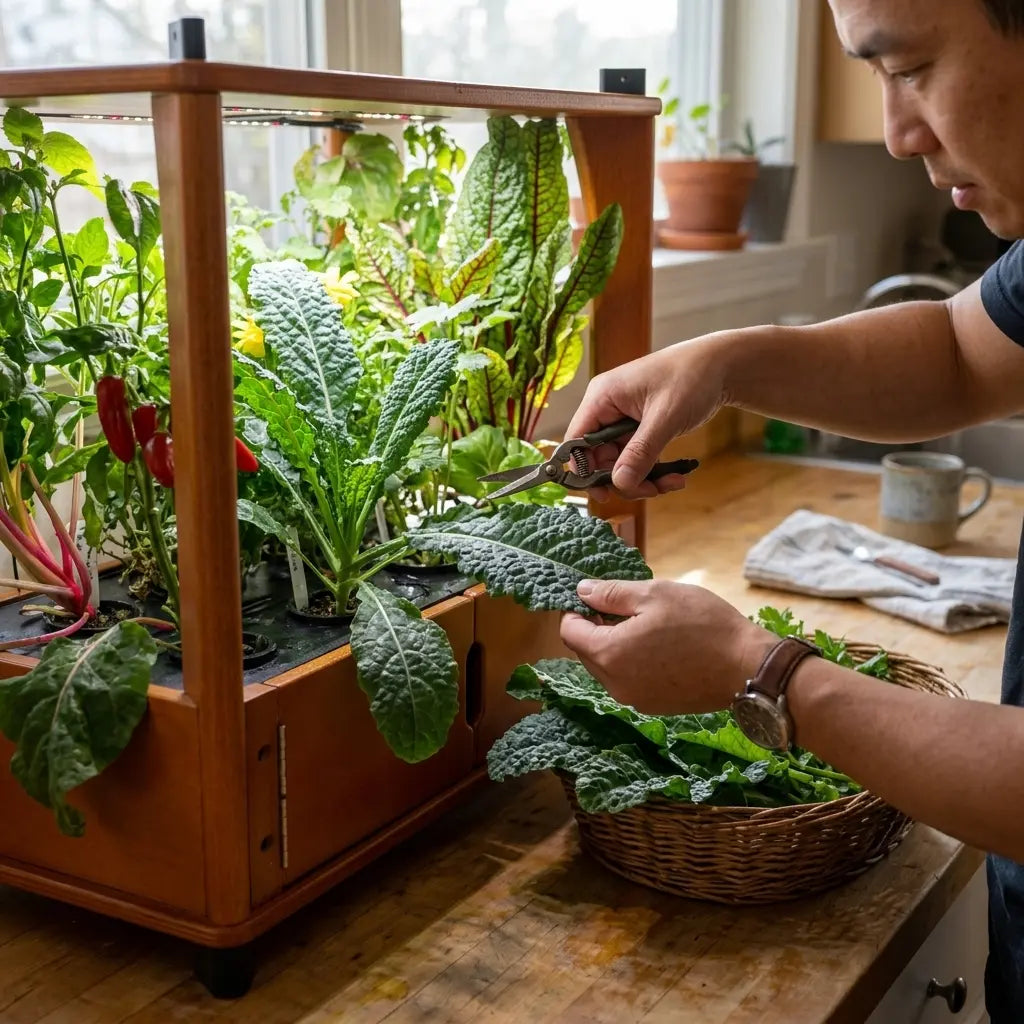
Aquager indoor produce’s journey: Grown in your kitchen. Harvested minutes before you cook with it. No packaging, no transport, no refrigeration. Peak nutritional value and flavor at the moment of consumption.
A study by Weber and Matthews (2008) in Environmental Science & Technology found that food transport represents 11% of total US food system greenhouse gas emissions — before counting refrigeration energy at every stage of the chain. Home-grown produce eliminates every one of these transport, refrigeration, and packaging stages. Our post on organic gardening vs. indoor growing covers this comparison in more detail.
What Makes Aquager’s Approach Clean
We use: Organic coco coir growing medium (byproduct, biodegradable, naturally sterile). Mycorrhizal fungi inoculant (the same symbiotic relationship plants have with soil in nature). Water and natural-source nutrient solution. Supplemental grow lighting.
We don’t use: Synthetic pesticides (not needed). Synthetic herbicides (no weeds in a controlled indoor environment). Synthetic fertilizer pellets embedded in growing media.
The produce you harvest: Was never in contact with field soil that may carry pesticide residues from prior seasons. Has never been stored in a warehouse or transported in a truck. Has never been packaged in plastic. Is at peak nutritional value and flavor at the moment you eat it.
Is Aquager’s produce “certified organic”? No — that requires a regulatory certification process designed for farm operations. Is it grown organically, with organic inputs, in a clean controlled environment that doesn’t require any of the synthetic chemicals that certified organic status verifies the absence of? Yes. Our comparison of hydroponics vs. soil growing explores these differences further.
Frequently Asked Questions
Is Aquager certified organic?
No. The USDA certified organic designation is a regulatory certification for farm operations, not applicable to home growing systems. What we can accurately say is that our growing approach uses organic materials, requires no synthetic pesticides or herbicides, and produces food that in practical terms is cleaner than most grocery store produce by the time it reaches your kitchen.
Are the nutrients added to the water organic?
The nutrients we use (Fox Farm Grow Big) are derived from natural sources including fish meal and kelp — not from synthetic chemical fertilizers. The nutrient solution is what the plant takes up through its roots, so the quality of the nutrient source is relevant to the quality of the food produced.
If I don’t add neem oil, is the system completely pesticide-free?
Under normal operating conditions, yes. The indoor controlled environment doesn’t create the conditions that require pesticide use. Neem oil is available as an option for the rare pest situation that may arise, but it’s a natural, organically approved input — not a synthetic chemical.
Why does coco coir produce better results than soil for indoor growing?
Coco coir is sterile, pH-neutral, and has excellent water retention and drainage characteristics. Unlike field soil, it has no existing fungal or bacterial populations that compete with the mycorrhizal inoculant. The mycorrhizal fungi in our grow mediums can establish without competition, forming a more effective root symbiosis. Our year-round herb growing guide covers growing medium selection in depth.
Final Thoughts
The organic question deserves an honest answer, not a marketing claim. The honest answer for Aquager is: organic materials, organic growing approach, no synthetic inputs required, and produce that reaches you at peak quality without the transport, refrigeration, and packaging that define the conventional food chain.
If you’re someone who makes purchasing decisions based on how food is actually grown and where it actually comes from, growing your own on the Aquager farm is one of the clearest answers available. You know exactly what went into it — because you put it there.
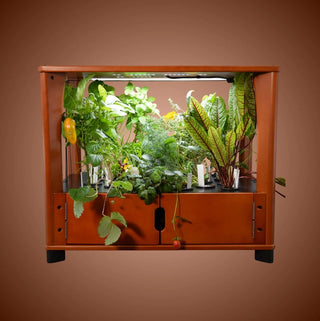
Start with the Organic Grow Mediums 12-Pack for your growing medium. Add the Hydroponic Home Farm for the growing system. Start with any herb seeds from the catalog — basil, thyme, chives, oregano — and have your first pesticide-free, organically grown herbs within 3–4 weeks.
Author: Aquager | Published: June 4, 2026 | Updated: June 4, 2026












0 comments