
You plan the menu weeks out. You source the turkey carefully. And then, four days before Thanksgiving, you grab a $4 bundle of sage at the grocery store — already yellowing at the edges.
Fresh herbs are the difference between a Thanksgiving dinner that's good and one that's extraordinary. Sage that actually smells like sage. Thyme that perfumes the whole kitchen when it hits a hot pan. Rosemary that crisps into the potatoes instead of going limp. Store-bought herbs can deliver that — if you catch them on a good day. But growing your own means you harvest the morning you cook, at peak freshness, every time.
This guide gives you the herb-by-dish pairing guide you actually need for Thanksgiving, plus the exact growing timeline to have all four holiday herbs ready by the third week of November — starting from your kitchen counter.
The Herb-by-Dish Pairing Guide for Thanksgiving
These four herbs — rosemary, sage and thyme, and parsley — appear in nearly every Thanksgiving recipe. Here's where each one earns its keep on the table.
Sage: Stuffing, Turkey Butter, and Brown Butter Sauce
Sage is the defining flavor of Thanksgiving stuffing. Fresh sage leaves are more pungent and complex than dried, with a slightly camphor-forward note that mellows beautifully when fried in butter or folded into sausage stuffing. Plan on 12–16 fresh leaves for a standard stuffing recipe.
Fresh sage also makes an exceptional compound butter for rubbing under turkey skin. Blend softened butter with 8 chopped fresh leaves, garlic, and lemon zest — slide it under the breast skin the night before and the flavors penetrate all the way to the meat. A brown butter sage sauce over gnocchi or squash is a 10-minute side that tastes like it took all day.
For Thanksgiving cooking, plan to harvest 20–25 fresh sage leaves per person at the table.
Thyme: Turkey Brine, Gravy, and Roasted Vegetables
Thyme is the background note in almost every savory Thanksgiving dish — rarely the star, always essential. Add 8–10 fresh sprigs to a wet turkey brine overnight. Strip the leaves from 4 sprigs directly into pan drippings before you build the gravy. Toss a handful of whole sprigs with Brussels sprouts and shallots before roasting at high heat.
Harvesting thyme is simple: cut stems back to just above a leaf node and the plant regrows within two weeks. A single pot of thyme will produce enough for the full holiday season if you start it in late September.
Rosemary: Roasted Potatoes, Focaccia, and Compound Butter
Rosemary and hot fat are one of the great flavor combinations in cooking. Strip the leaves from two or three woody stems, chop them finely, and toss with olive oil, garlic, and potato wedges before roasting at 425°F until crispy. The rosemary resin essentially fries in the hot fat around each potato — the result is something you can't replicate with dried.
Rosemary is also the easiest herb to use in Thanksgiving bread. A simple focaccia pressed with rosemary sprigs and flaky salt takes about 90 minutes start to finish and transforms any dinner roll situation. Two tablespoons of chopped fresh rosemary is enough for a standard 9x13 pan.
Parsley: Finishing, Gremolata, and Everywhere Else
Parsley is the utility herb — the one that goes on everything at the end. A handful of roughly chopped parsley freshens heavy dishes like turkey with gravy, stuffing, and mashed potatoes. A simple gremolata (parsley + lemon zest + garlic, finely chopped) is the fastest way to brighten the richness of a roasted meal.
Plan to have parsley available through the entire holiday season. It grows fast, harvests continuously, and is genuinely hard to overuse in November cooking. If you only grow one herb indoors, parsley is the one that earns its counter space every single week.
Growing Timeline: Fresh Herbs Ready by Thanksgiving Week
Thanksgiving falls on the fourth Thursday of November — roughly November 27. Working backward from a harvest target of November 20–24, here's the timeline that gets all four herbs to full harvest by the time you need them.
Start date: September 15–30
Plant sage, thyme, rosemary, and parsley by late September. This gives each herb 7–9 weeks to establish before heavy harvesting begins — exactly the window you need for a first full harvest in late November.
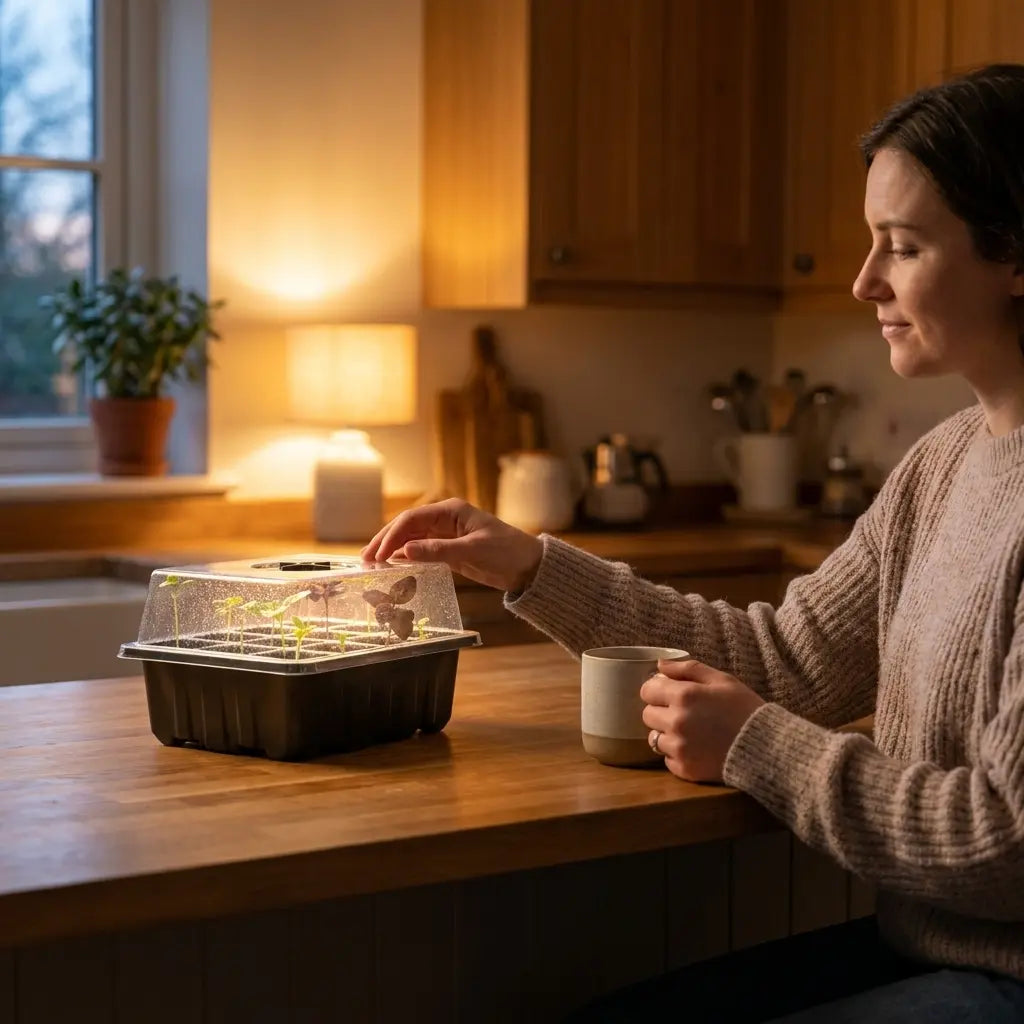
Seed germination takes 7–14 days. Within 3–4 weeks you'll have established seedlings. By week 6–8, all four herbs will be producing harvestable growth on a weekly cycle.
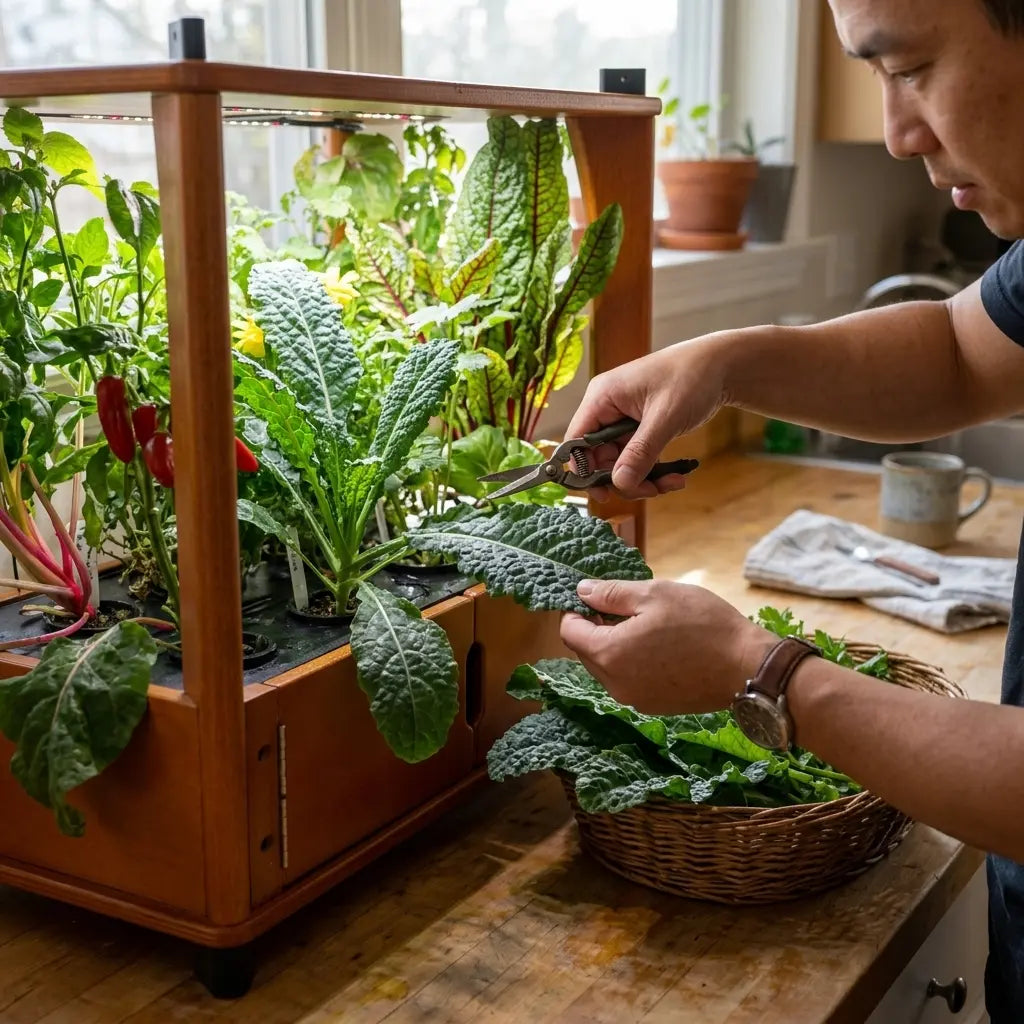
What harvesting thyme and sage looks like in practice
Thyme: harvest the top third of each stem, just above a leaf node. Cut every 10–14 days and the plant produces new growth continuously. A single plant provides 2–3 tablespoons of fresh leaves per harvest cycle.
Sage: pick individual leaves from the outer growth first, always leaving the center stems intact. By November, a well-established sage plant will hold 30–40 harvestable leaves at any time — more than enough for a full Thanksgiving spread.
Rosemary is slower to establish than the others — it's the one herb where starting in mid-September rather than late September makes a real difference. Once established, it's the most durable: you can harvest small amounts weekly without stressing the plant at all.
For additional guidance on getting established herbs through the fall season indoors, see our complete guide to growing herbs indoors year-round.
The Real Cost of Store-Bought Herbs Over the Holidays
A fresh herb bundle at a grocery store averages $3–4. Most recipes use a third of the bundle. The rest goes into the crisper drawer and turns yellow within five days.
Over a typical Thanksgiving and Christmas holiday season — six weeks of holiday cooking — a serious home cook buys 3–4 herb bundles per week across sage, thyme, rosemary, and parsley. That's $48–96 in herbs, with easily a third of it going to waste.
Each Aquager herb seed pod costs $7.99 and produces a full season of continuous harvests. One sage plant harvested properly gives you 30+ fresh leaves every two weeks through November and December. One thyme plant provides weekly trimmings for months. The math shifts completely once you're harvesting rather than buying.
If you want a deeper look at harvest yields by plant, our guide to the easiest herbs to grow indoors breaks down which herbs produce the most per square foot of counter space.
The Easiest Way to Have All Four Herbs Ready by Thanksgiving
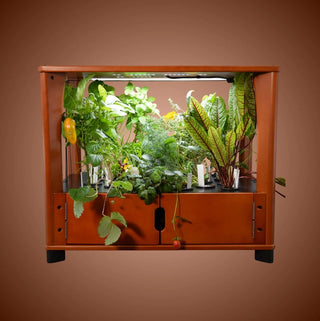
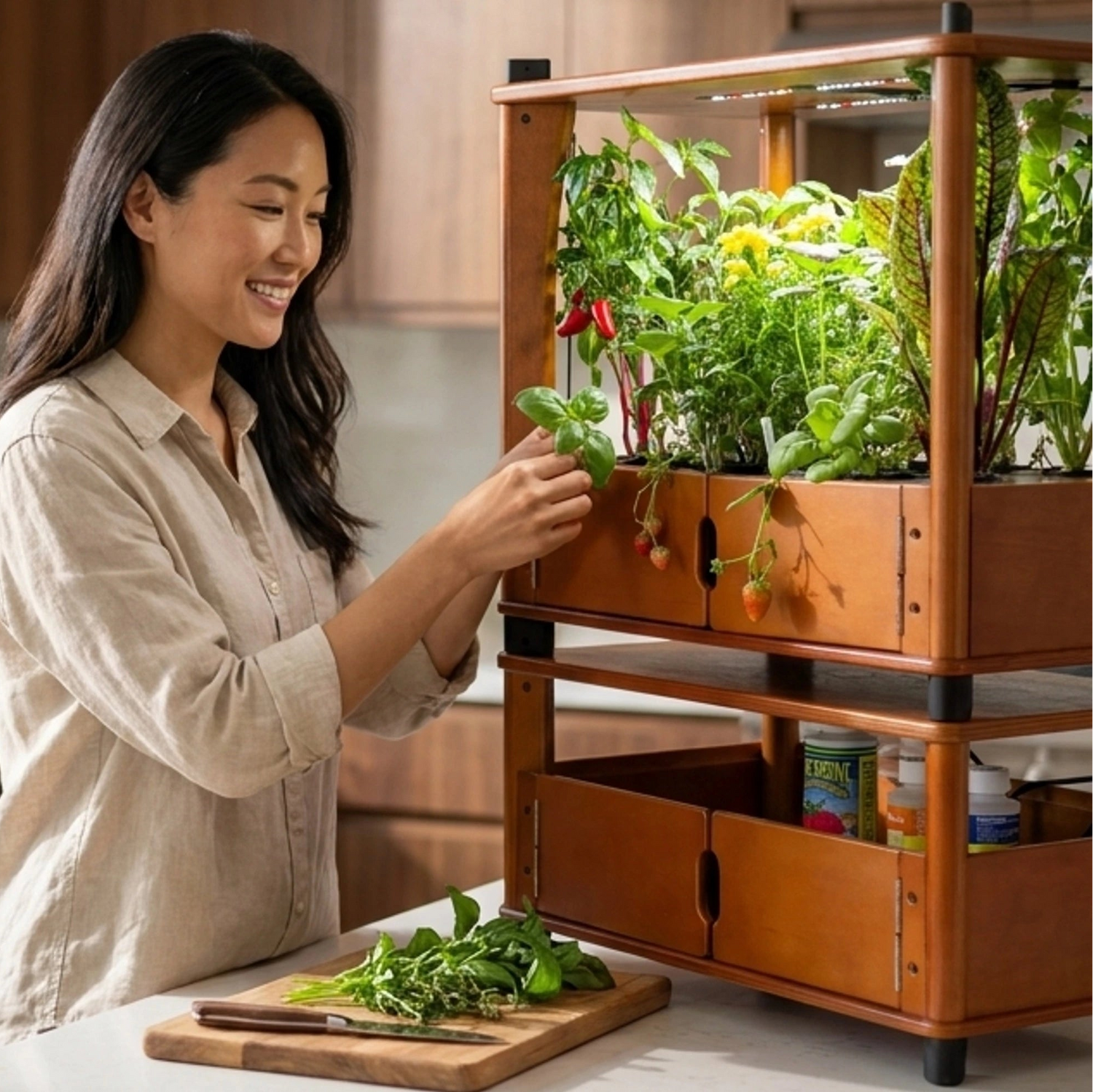
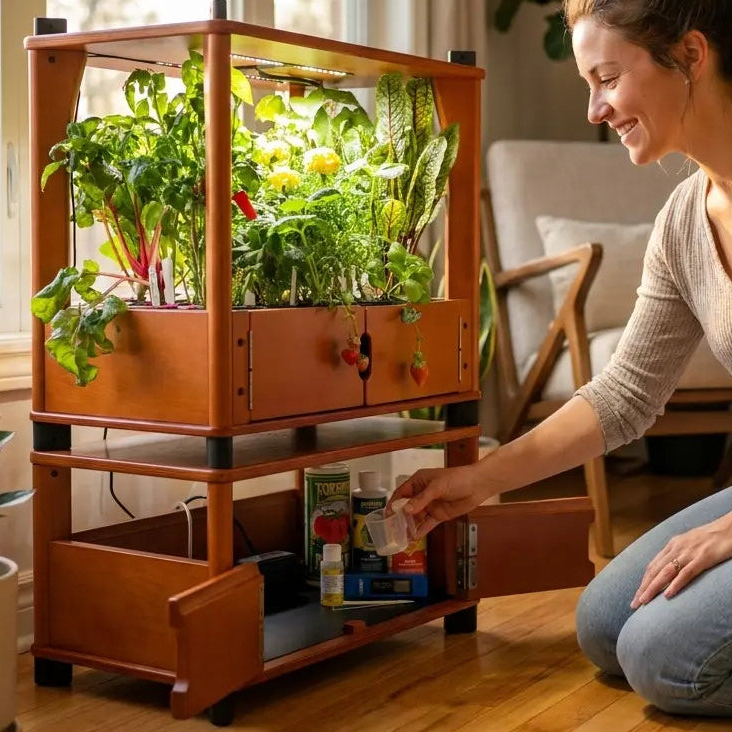
Starting four separate herb plants individually works — but the Chef's Organic Set is built for exactly this situation. It includes the full Aquager Home Farm (24-plant capacity) pre-loaded with an organic herb collection, so you can start sage, thyme, rosemary, and parsley at the same time, in the same system, with a single setup.
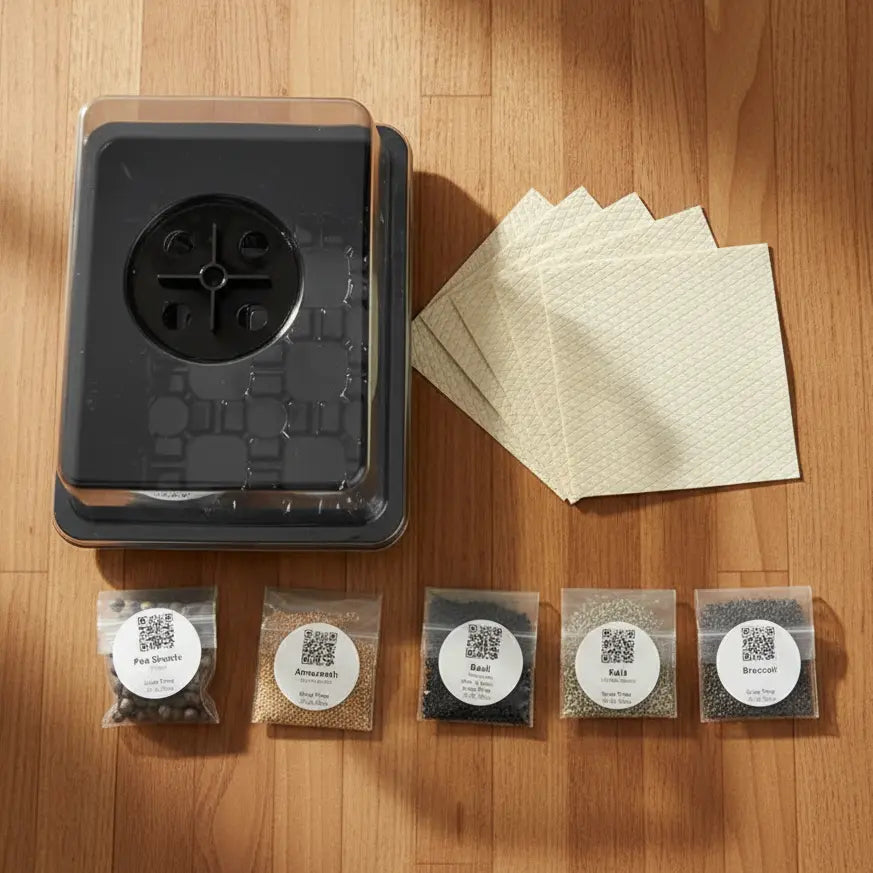
The farm runs on a built-in lighting cycle calibrated for herb growth — no south-facing window required. You fill the reservoir, place the pre-seeded grow mediums, and herbs start within a week. By Thanksgiving week, you'll have more fresh herbs than any one meal needs.
Prefer to start with individual herbs? Each variety is available separately: Sage (Common), Thyme (Summer), Rosemary, and Parsley (Giant of Italy) — each $7.99. Start with the two or three herbs you use most and expand from there.
Frequently Asked Questions
When should I start growing herbs for Thanksgiving?
Mid-to-late September is the ideal start window. This gives sage, thyme, rosemary, and parsley 7–9 weeks to establish before Thanksgiving week — enough time for all four herbs to reach full harvest size.
Can I grow fresh herbs indoors without a south-facing window?
Yes. Hydroponic herb farms with built-in grow lights eliminate the sunlight dependency entirely. The Aquager Home Farm runs a timed lighting cycle designed for herb and vegetable growth — it works in any room, regardless of natural light availability.
How many herb plants do I need for Thanksgiving dinner?
One plant each of sage, thyme, rosemary, and parsley is sufficient for most households cooking for 6–10 people. If you're hosting a large gathering or cooking multiple herb-heavy dishes, consider starting two sage plants — sage gets used the most heavily and is the hardest to over-harvest from a single plant.
How do I store fresh herbs after harvesting?
Thyme and rosemary store well wrapped loosely in a damp paper towel in the refrigerator for 5–7 days. Sage keeps 3–4 days the same way. Parsley lasts longest stored stems-down in a glass of water in the fridge. For the best flavor, harvest the morning you cook.
What's the difference between growing sage hydroponically versus in soil?
Hydroponic sage grows 30–50% faster than soil-grown sage and produces more consistent leaf size and flavor. Because nutrients are delivered directly to the root zone in measured amounts, there's no feast-or-famine nutrient cycle — which is the main cause of flavor variability in soil-grown culinary herbs.
Start Now, Harvest by Thanksgiving
The herb situation every Thanksgiving — last-minute grocery run, wilted sage, half a bunch of thyme you'll throw away — is solvable with a single September setup. The fresh herbs you grow on your kitchen counter will be better than anything you can buy. The cost per use will be a fraction of bundled grocery herbs. And the experience of clipping fresh sage directly over a hot pan the morning of Thanksgiving is genuinely hard to replicate any other way.
If you want more thanksgiving dinner menu ideas built around fresh ingredients you grow yourself, our seasonal herb recipe guide covers herb pairings for every major cooking occasion through the year.
Author: Aquager · Published: June 7, 2026 · Updated: June 7, 2026












0 comments