
The cleanest detox water you'll drink this January costs almost nothing and takes two minutes to make — if you already have the herbs. Mint, lemon, and cucumber in cold water. Cilantro in your grain bowl. Thyme in your soup. Rosemary on your roasted vegetables. Fresh herbs are the lowest-effort, highest-impact upgrade to any clean-eating protocol.
This guide gives you six specific recipes for a January fresh start — each built around a fresh herb you can grow on your kitchen counter. No expensive supplements, no meal delivery subscriptions. Just food that tastes good, made from herbs you grew yourself.
These aren't "detox" in the medical sense — no herb or food actually accelerates your liver's natural filtration processes. But they are genuinely nutrient-dense, anti-inflammatory, and flavored in a way that makes clean eating feel like a reward rather than a restriction.
Why Fresh Herbs Are the January Kitchen Upgrade That Actually Matters
The problem with January clean eating isn't motivation — it's flavor. Steamed vegetables and plain grains are genuinely boring. Boredom kills protocols faster than cravings do.
Fresh herbs are the answer to the flavor problem. Cilantro brightens a grain bowl with zero calories and genuine antioxidant compounds. Thyme turns a simple white bean soup from institutional to something you'd cook again. Rosemary on roasted vegetables makes a 400-calorie sheet pan dinner taste like a restaurant dish.
Dried herbs don't do this. The essential oil compounds that make fresh herbs flavorful — the ones that also carry the nutritional benefits — degrade significantly in the drying process. The difference between fresh and dried isn't just intensity; it's a different category of ingredient.
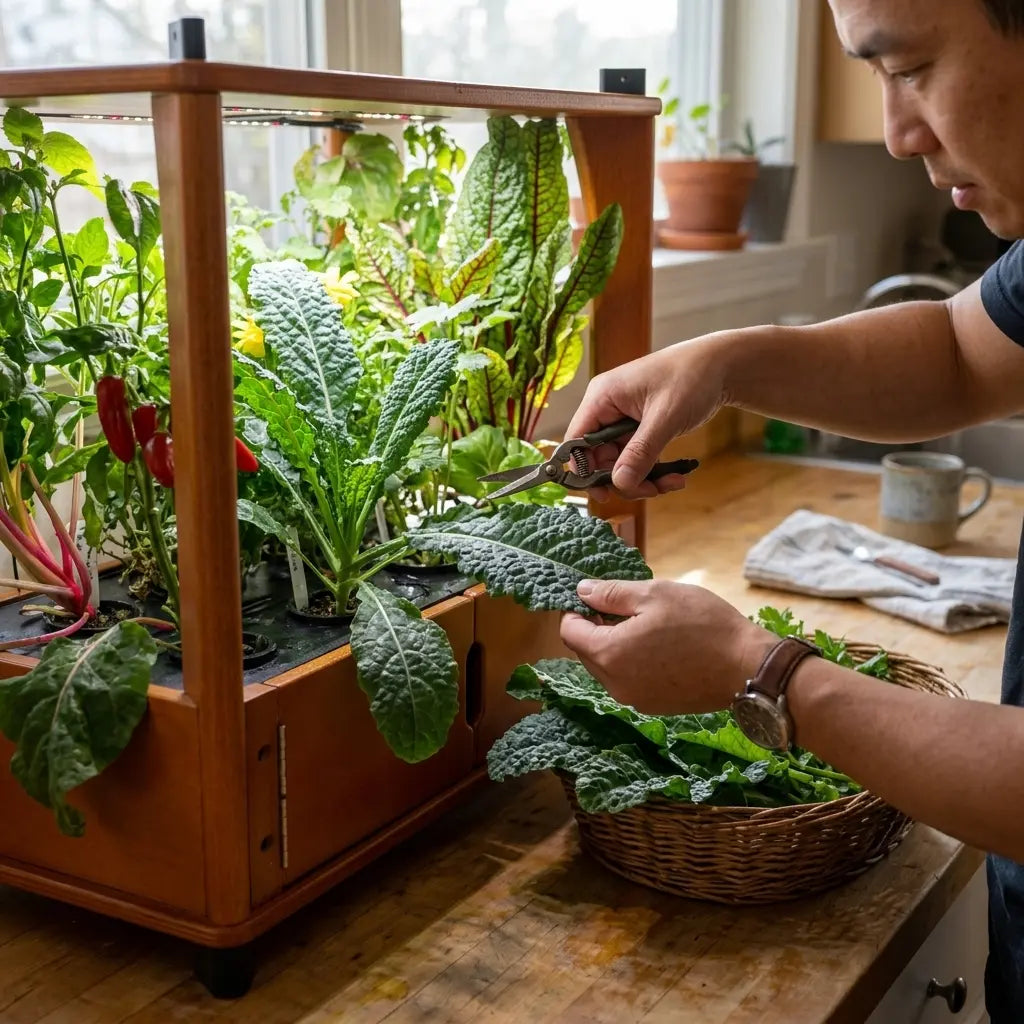
Growing your own fresh herbs indoors year-round means you never reach for a bunch at the grocery store that's going to wilt in four days. You harvest what you need, when you need it.
Six January Detox Recipes Using Herbs from Your Farm
1. Herb-Infused Detox Water
Herb used: Lemon Balm — the Aquager Lemon Balm pod has a clean mint-lemon flavor that makes it the ideal herb for cold-infused water.
The simplest recipe on the list: add sliced cucumber, lemon rounds, and a handful of fresh lemon balm leaves to a pitcher of cold water. Let it infuse in the refrigerator for at least an hour. Drink throughout the day.
Why it works: Cold-infused water is an easy way to increase daily water intake, which most people underestimate in January. The lemon balm adds a mild, pleasant flavor that makes drinking a liter actually enjoyable. Lemon provides vitamin C. The ritual of preparing it each morning is part of the habit-building value.
Recipe: 1 liter cold water · 6–8 lemon balm leaves · ½ cucumber, sliced · 1 lemon, sliced · a few ice cubes. Infuse 1–3 hours in the refrigerator.
2. Cilantro and Lemon Grain Bowl
Herb used: Cilantro microgreens — harvested 7–10 days after planting, these go directly on the bowl raw.
The grain bowl is January's most reliable clean-eating format — filling, customizable, and infinitely variable. What transforms it from boring to genuinely good is the fresh herb finish.
Recipe: 1 cup cooked farro, quinoa, or brown rice · ½ cup roasted chickpeas (olive oil, cumin, salt, 400°F for 25 min) · ½ avocado · 4 cherry tomatoes, halved · juice of ½ lemon · 2 tbsp tahini thinned with water · generous handful of cilantro microgreens scattered over the top.
The cilantro microgreens go on last, raw and uncooked. They add a peppery, bright flavor and a visual freshness that makes the bowl look intentional. Nutritionally, cilantro microgreens are denser in antioxidants than full-grown cilantro by weight — more from less.
3. Thyme and White Bean Soup
Herb used: Thyme pod — fresh sprigs simmered in broth and removed before serving.
White bean soup is a January staple — protein-rich, filling, and genuinely warming on a cold night. The difference between a mediocre version and a great one is almost entirely the herbs.
Recipe: Sauté 1 diced onion, 3 garlic cloves, and 2 celery stalks in olive oil until soft. Add 2 cans white beans (drained), 4 cups vegetable broth, 1 can diced tomatoes, and 6 fresh thyme sprigs. Simmer 25 minutes. Remove thyme sprigs. Finish with a squeeze of lemon, salt, pepper, and a drizzle of good olive oil. Serves 4.
Fresh thyme has a woody, earthy depth that dried thyme approximates but never matches. The essential oils in fresh thyme — thymol and carvacrol — are genuinely antimicrobial compounds with documented health properties. Whether that makes it a detox soup recipe in the clinical sense is debatable; whether it makes the soup taste significantly better is not.
4. Rosemary Roasted Vegetables
Herb used: Rosemary pod — leaves stripped from fresh sprigs, roughly chopped, and tossed with the vegetables before roasting.
Sheet pan roasted vegetables are the most effortless clean-eating dinner format. Rosemary is what makes them worth eating again the next day.
Recipe: Cube 2 medium sweet potatoes, 1 head of cauliflower, and 2 medium beets. Toss with 3 tbsp olive oil, salt, pepper, and 3 sprigs of fresh rosemary (leaves stripped, roughly chopped). Spread on a sheet pan. Roast at 425°F for 35–40 minutes, turning once. Finish with a splash of balsamic vinegar.
This dish works as a side, as a base for a grain bowl, or as a make-ahead meal prep item that stays good for four days in the refrigerator. Rosemary's oils hold up well to high heat — better than most fresh herbs. Start a rosemary pod in the first week of January and you'll have enough for continuous harvesting throughout the month.
5. Mint and Cucumber Salad
Herb used: Lemon Balm as the fresh mint alternative (same botanical family, similar cool flavor profile), or fresh mint started from a nursery cutting placed in your Aquager farm to root.
This is the palate cleanser of clean eating — cool, crunchy, barely a recipe, and genuinely refreshing in the middle of a January full of heavier warming dishes.
Recipe: 2 English cucumbers, thinly sliced · 2 tbsp rice wine vinegar · 1 tsp sesame oil · pinch of sugar and salt · generous handful of fresh lemon balm or mint leaves, torn · optional: a pinch of red pepper flakes. Toss, rest 10 minutes, serve.
Done in under 5 minutes and keeps for two days covered in the refrigerator. It pairs with the grain bowl, goes alongside the roasted vegetables, and functions as an instant upgrade to any otherwise plain lunch.
6. Green Herb Smoothie
Herbs used: Parsley and Cilantro microgreens — both go in raw and blend smooth.
The green smoothie is January's signature health commitment. Most people make them with spinach; most smoothies would be better with fresh herbs.
Recipe: 1 frozen banana · 1 cup frozen pineapple · 1 cup unsweetened coconut water · large handful of fresh parsley (stems and leaves) · 2 tbsp cilantro microgreens · juice of ½ lime · 1-inch piece fresh ginger. Blend until smooth.
Parsley provides iron, vitamin C, and vitamin K in concentrations that make it one of the most nutrient-dense things you can add to a blended drink. The flavor is mild enough to disappear behind the pineapple and ginger. The cilantro microgreens add a bright, fresh note and a striking flecked green color. This isn't a punishment smoothie — it genuinely tastes good.
What to Grow in January for This Protocol
All six recipes above use herbs that grow well in the Aquager home farm. Start these in the first week of January and have them ready within 1–8 weeks:
- Cilantro microgreens (7–10 days) — start any time; harvest in under two weeks, run continuous cycles
- Lemon Balm (4–5 weeks) — your mint substitute for detox water and the cucumber salad
- Parsley (4–6 weeks) — ready by mid-February, continuous harvest throughout winter
- Thyme (5–7 weeks) — start immediately for mid-February soup nights
- Rosemary (6–8 weeks) — start week one for roasting season; worth the wait
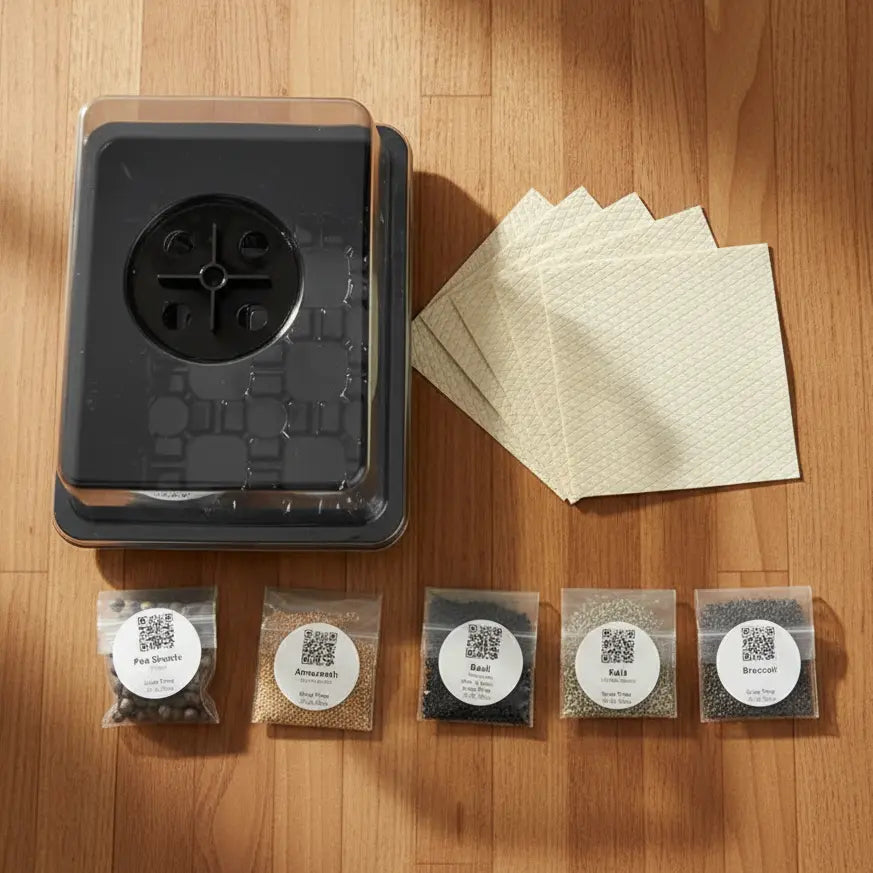
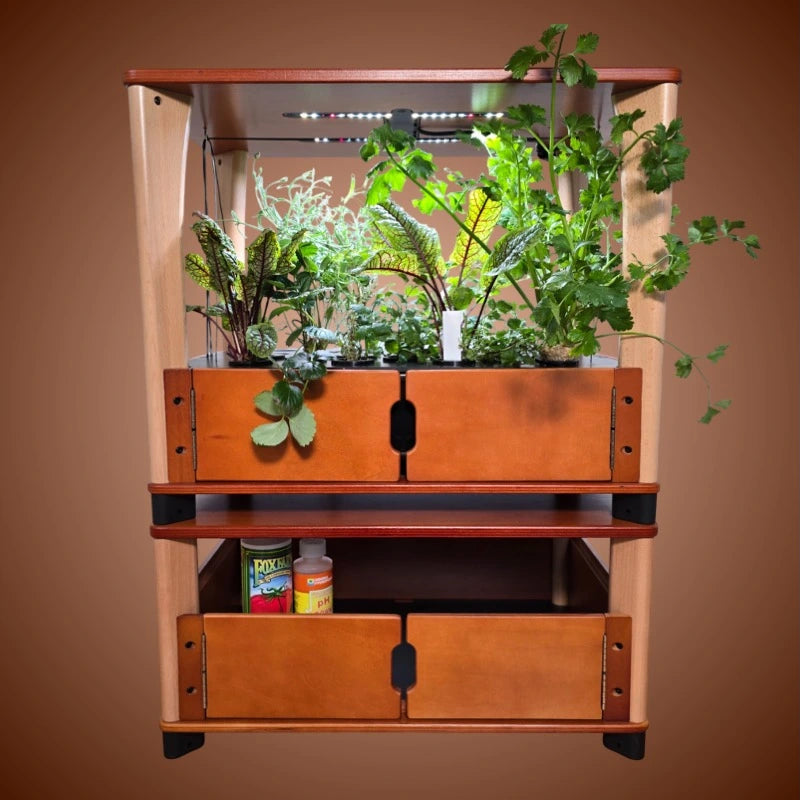
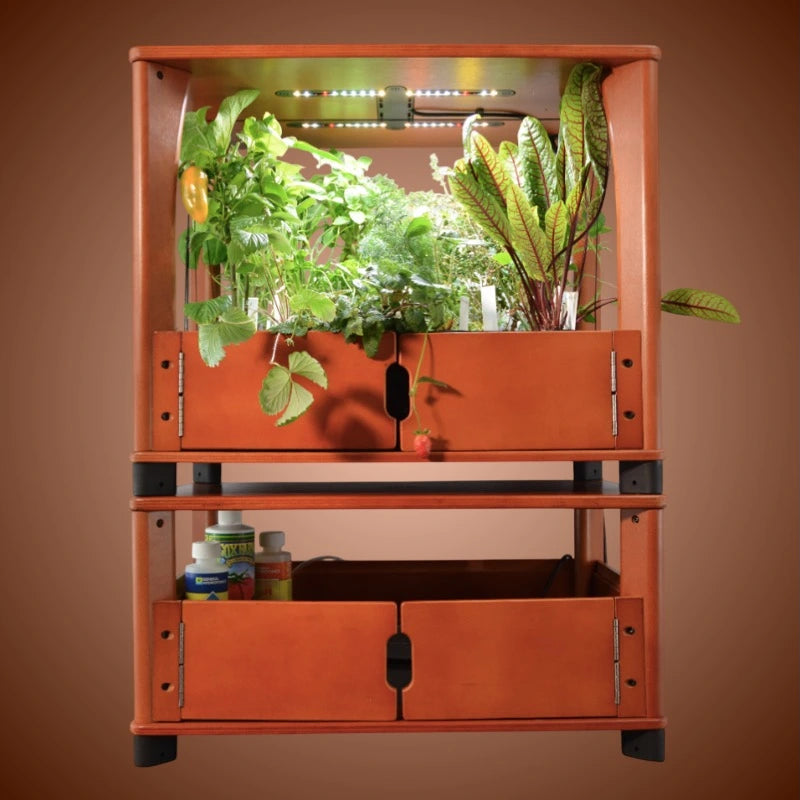
The Chef's Organic Set comes with 24 pod slots — enough to run all five herb varieties simultaneously with room to add more. One setup supports every recipe in this guide.
Frequently Asked Questions
Does detox water actually detox your body?
No supplement, food, or water can "detox" your body in the clinical sense — your liver and kidneys handle that continuously on their own. What herb-infused detox water genuinely does: increase daily water intake, provide trace micronutrients, and make hydration more enjoyable so you actually do it. Those outcomes are real and worth having. The aggressive marketing claims around detoxification are not.
Can I use dried herbs in these recipes?
For the infused water and the cucumber salad, no — fresh herb flavor is essential and cannot be replicated with dried. For the soup and roasted vegetables, dried herbs will work in a reduced quantity (typically one-third the amount of fresh), but the result will be noticeably less vibrant. The smoothie can use either. For the grain bowl, cilantro microgreens have no dried equivalent — they are a fresh-only ingredient.
How long do fresh herbs last after harvesting?
Herbs harvested fresh from the farm and used the same day have full flavor and nutritional density. Cut herbs stored in a glass of water in the refrigerator stay fresh for 3–5 days. Our guide to growing herbs indoors covers harvesting techniques that encourage the plant to keep producing after each cut.
Do I need to start all five herb varieties at once?
No — but starting thyme and rosemary as early as possible makes sense since they take the longest (6–8 weeks). Parsley and lemon balm can follow in week two. Cilantro microgreens can start any time since they're ready in 7–10 days, and you can run continuous cycles from the same tray set.
Are these recipes actually filling enough for a clean-eating month?
The grain bowl, white bean soup, and rosemary roasted vegetables are all genuinely filling meals — high in fiber, protein, and complex carbohydrates. The detox water and cucumber salad are supplements, not meals. Used together across a week, these six recipes cover breakfast (smoothie), lunch (grain bowl or salad), and dinner (soup or roasted vegetables) with variety enough to avoid monotony.
January Eating, Actually Made Good
January clean eating doesn't have to mean boring food. These six recipes are genuinely satisfying — filling, flavorful, and flexible enough to rotate throughout the month without eating the same thing twice. The fresh herbs are what make that possible.
Grow them on your kitchen counter, harvest what you need, and put them directly into the food. That's the whole system.
Author: Aquager · Published: June 8, 2026 · Updated: June 8, 2026













0 comments