
Two kinds of people are reading this in January. One: you received an Aquager farm as a Christmas gift and it's sitting on the counter, half unpacked, waiting for a clear first step. Two: you bought it yourself as a genuine January intention — a real change, not a gesture. Either way, you're in exactly the right place.
Growing indoors in January is one of the best decisions you can make for the month. The farm is simple to set up, the first herbs are ready in three weeks, and the process is genuinely satisfying — visible progress every single day. This guide gives you a specific plan: which plants to start, what to expect each week, and what to do when something looks off.
The Six Best Plants to Grow Indoors in January
Not every plant is equally well-suited to January growing. These six are: they germinate reliably, grow well under LED grow lights without natural sunlight, and produce harvests within the first-month window that makes the habit stick. Our guide to growing herbs indoors year-round covers the full seasonal calendar — but January is one of the best months to start.
Basil Genovese
Basil is the benchmark plant for a new indoor farm. The Basil Genovese pod germinates in 5–7 days, produces its first small leaves in week two, and is ready for a first harvest in 3–4 weeks. The aroma starts before you even cut it — you'll smell fresh basil every time you pass the counter. For most new growers, basil is the plant that confirms this is actually working.
Chives
Fresh chives are one of the easiest herbs in the farm. Thin green shoots emerge within a week, grow tall quickly, and can be snipped and added to eggs, potatoes, or salads within 3–4 weeks. Unlike most herbs, chives continue growing from the same plant after you cut them — snip the tops and new growth replaces them within days.
Kale (Frisé Rouge)
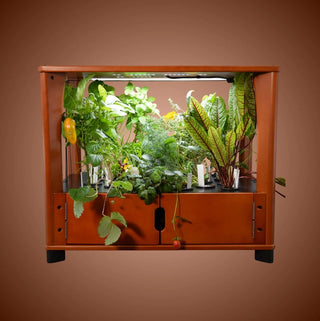
The Frisé Rouge kale pod produces dramatic dark purple-tinged curly leaves that look striking in the farm. Ready in 4–5 weeks, kale works in smoothies, sautéed as a side, or torn raw into salads. It's a visual statement plant — guests notice it immediately.
Rainbow Chard
Rainbow Chard grows quickly and tolerates a range of light levels, making it one of the most forgiving options for first-time growers. The bright pink, yellow, and orange stems are genuinely beautiful in the farm. Ready in 4–5 weeks, chard works well in grain bowls, stir-fries, or sautéed with garlic and olive oil.
Cilantro Microgreens
Cilantro microgreens are the fastest win in the entire catalog: ready in 7–10 days. If you want to harvest something in your first week, this is it. They go directly on grain bowls, tacos, eggs, or soups — raw, uncooked, bright and peppery. Start a cilantro tray on day one and you'll be harvesting before you've even seen your first basil seedling emerge.
Winter Herbs: Thyme and Rosemary
If you want winter herbs that take longer but reward patience, start Thyme (5–7 weeks) and Rosemary (6–8 weeks) alongside your faster plants. They'll be ready in February just as your basil and chives are in continuous production — giving you a full herb shelf from a single January start.
Your First Month: Week by Week
Here's what to expect across January so nothing surprises you along the way.
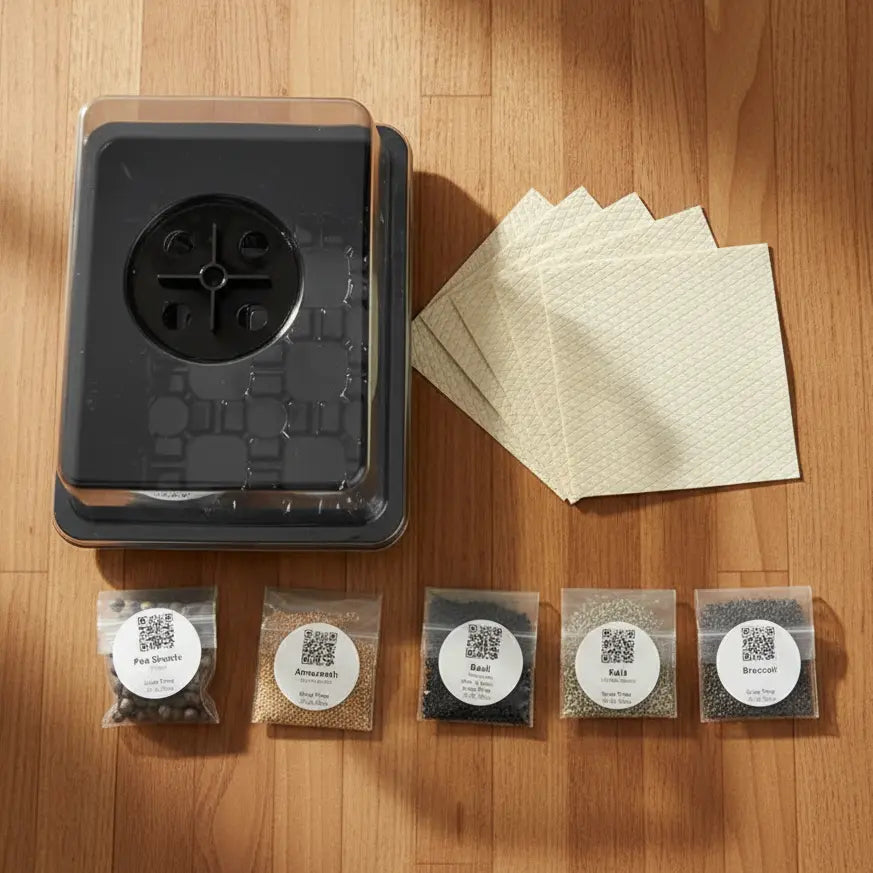
Days 1–7 (Setup and germination): Insert pods, fill the water reservoir, add nutrients according to the included guide, and set the light timer to 16 hours on / 8 hours off. Nothing visible will happen for the first 3–5 days — the seeds are absorbing water and swelling underground. By day 5–7, basil and chives will show first sprout tips. Cilantro microgreens will be fully sprouted and showing tiny green shoots by day 7.
Days 8–14 (First leaves): Basil seedlings will have their first set of seed leaves (cotyledons) — small, round, bright green. Chives will be thin green shoots 1–2 inches tall. Kale and chard will show their first true leaves. Cilantro microgreens are ready to harvest by day 10. Adjust the light height: for seedlings this small, keep it 2–3 inches above the plant tops and raise it progressively as plants grow.
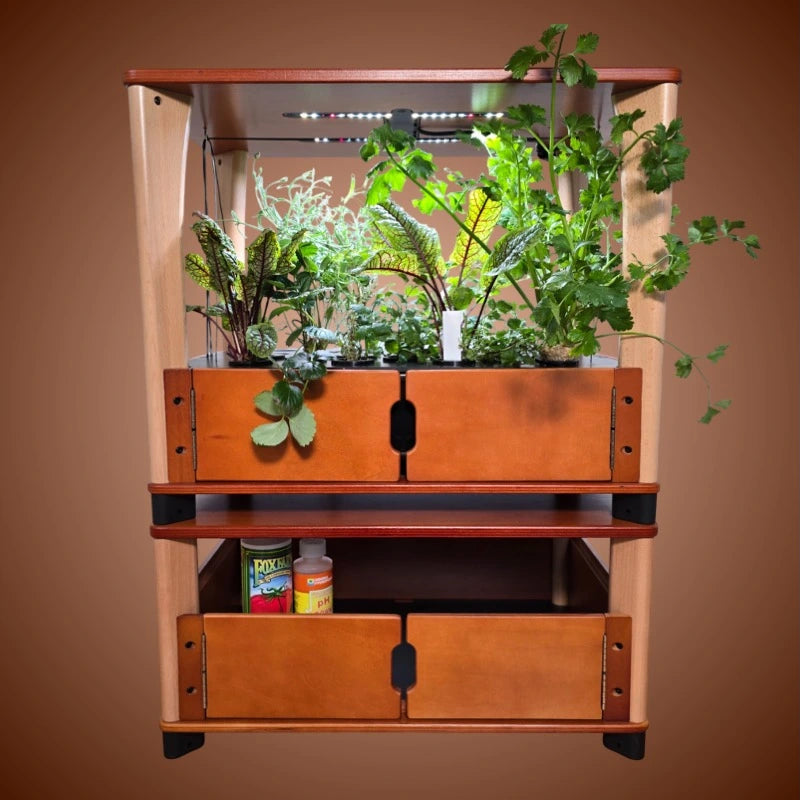
Days 15–21 (Rapid growth): The basil plant doubles in size visibly between days 15 and 21. First true basil leaves appear — the familiar pointed oval shape with a visible midrib. Chives are 4–6 inches tall. Kale and chard are lush and full in their pods. The farm looks genuinely green now. This is the week most new growers take their first photo.
Days 22–31 (First harvest): Basil is ready when it reaches 6–8 inches with at least 3 sets of true leaves. Chives can be snipped at any point — trim to an inch above the pod and new growth follows immediately. Kale leaves are large enough to tear into salads or blend into smoothies. Rainbow chard stems are colorful and crisp. You're harvesting food from your kitchen counter less than a month after starting.
Week-One Questions
These are the most common things new growers notice in the first week — most are completely normal.
Nothing is sprouting after 5 days. Normal for most herbs. Basil and chives typically show first signs between days 5–7. Kale and chard may take 7–10 days. Thyme and rosemary can take 10–14 days. If you're past day 14 with no germination on a specific pod, gently remove the pod cover and check that the seed made contact with the grow medium.
The seedlings look stretched and thin. This means the light is too far away. Leggy seedlings (long thin stems, small leaves) are a classic sign of insufficient light. Lower the light to 2–3 inches above the plant tops. The Aquager grow light is strong enough to produce compact, stocky plants when positioned correctly.
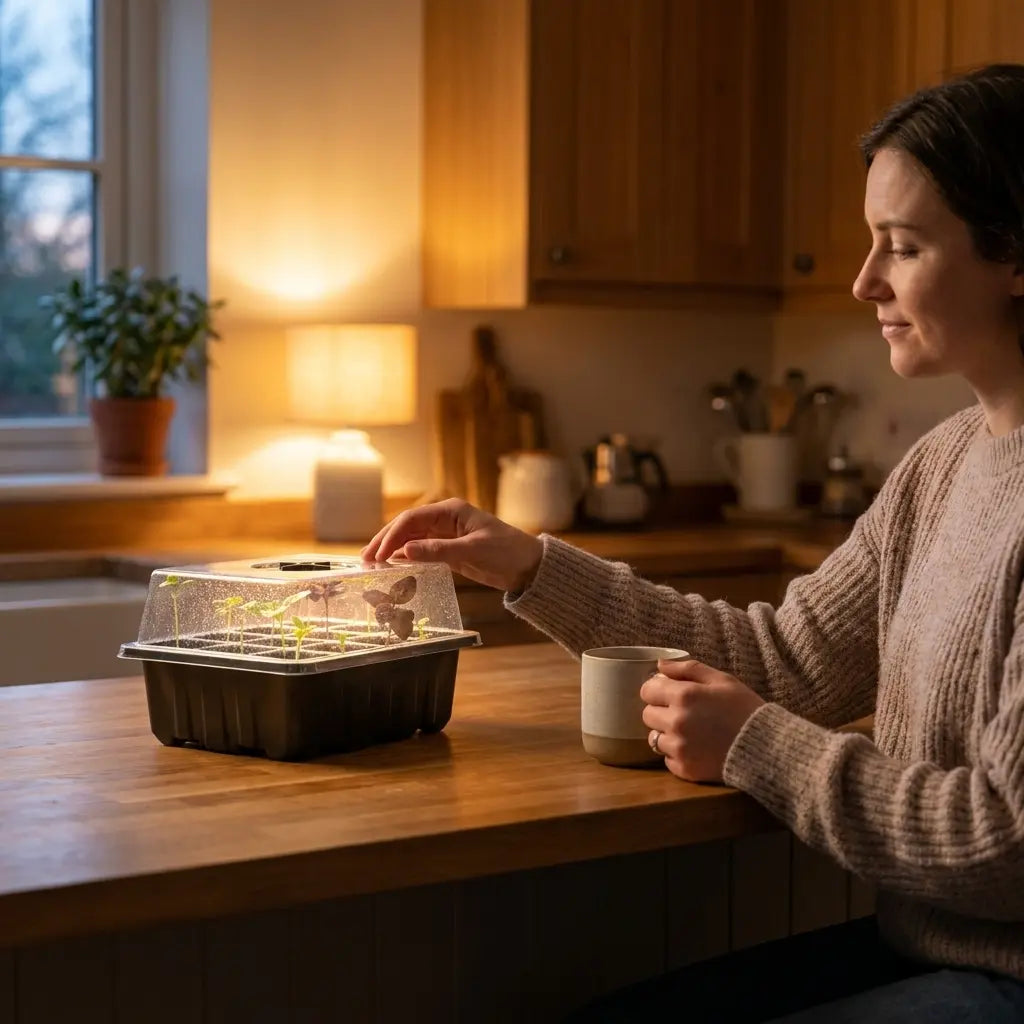
The pod cover is lifting off. Good — germination is happening. Remove the pod cover once you see the first green shoot breaking through. Leave it on until then to retain moisture during germination.
One pod looks behind the others. Seeds germinate at slightly different speeds. A pod that looks slow at day 7 will often catch up by day 14. Give it time before concluding it has failed.
Your First Harvest: What, When, and How
The first harvest is the moment this becomes real. Here's how to do it right so the plant keeps producing afterward.
Harvesting basil: Wait until the plant is 6–8 inches tall with at least 3 sets of true leaves. Always cut just above a leaf node — the point where a pair of leaves meets the stem. This triggers two new branches to grow from that point, doubling the plant's productivity with each cut. Our complete guide to growing basil indoors covers the technique in detail, including how to prevent the plant from bolting.
Harvesting chives: Any time the shoots are 4+ inches tall. Snip the tops, leaving an inch of growth above the pod. New shoots emerge within days.
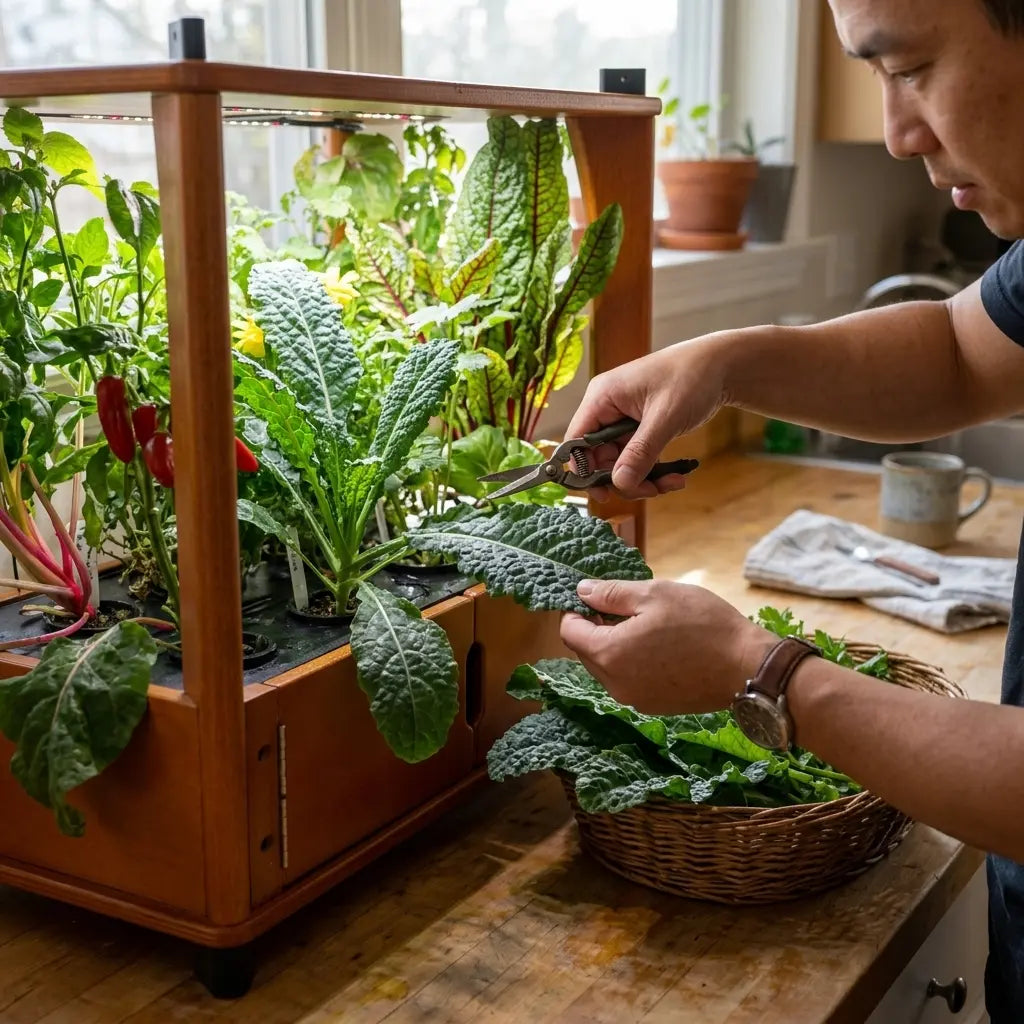
Harvesting kale and chard: Take outer leaves first, leaving the center growing point intact. Both plants can be harvested continuously this way for weeks.
Take a handful of freshly harvested basil, tear it over pasta or scatter it on a pizza. That's it. That's the moment. Everything else follows from there.
Frequently Asked Questions
How often should I top up the water?
Check the reservoir every 2–3 days and top up when it drops below the midpoint. Add a small amount of nutrients with each top-up — the dilution approach works better than saving nutrient additions for full water changes. Do a full reservoir clean every 2–3 weeks to prevent algae buildup.
How many pods should I start at once?
For a first month: start 4–6 pods. This gives you enough variety to learn what different plants look like at each stage without overwhelming the maintenance rhythm. Once you're comfortable, fill more slots. The farm supports up to 24 plants simultaneously.
What if I'm traveling in January?
The 13-liter water reservoir supports plants for 7–10 days without topping up, depending on how many pods are active and how fast plants are growing. For trips under a week, the farm is genuinely self-sufficient. See our guide to the easiest herbs to grow indoors for low-maintenance varieties suited to periods away.
When should I order more pods?
When your plants hit continuous harvest mode — typically around week 4–5 for fast growers — order replacement pods before you run out. Having new seeds ready prevents the gap between harvests that breaks the habit.
Can I mix vegetables and herbs?
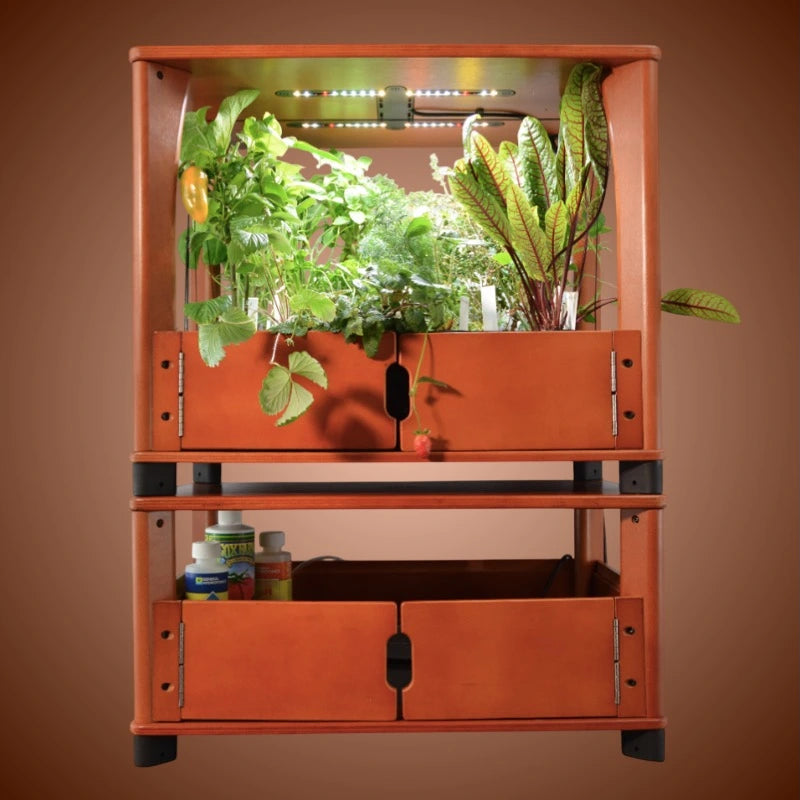
Yes — kale and chard are vegetables, and both grow excellently in the farm alongside herbs. You can mix any combination across your 24 pod slots. The farm also supports microgreens trays, peppers, strawberries, and edible flowers.
The Month That Changes Your Kitchen
By the end of January, you'll have a counter full of living plants, a rhythm of daily 5-minute checks, and the first fresh herbs you've ever grown yourself. Basil that smells extraordinary when you walk past it. Chives that regrow after every cut. A kale plant you watched go from a seed to something genuinely beautiful.
Most people who get through their first month never stop growing. The habit is established, the results are visible, and the next seed order feels obvious rather than aspirational. Start the pods this week.
Author: Aquager · Published: June 8, 2026 · Updated: June 8, 2026












0 comments