
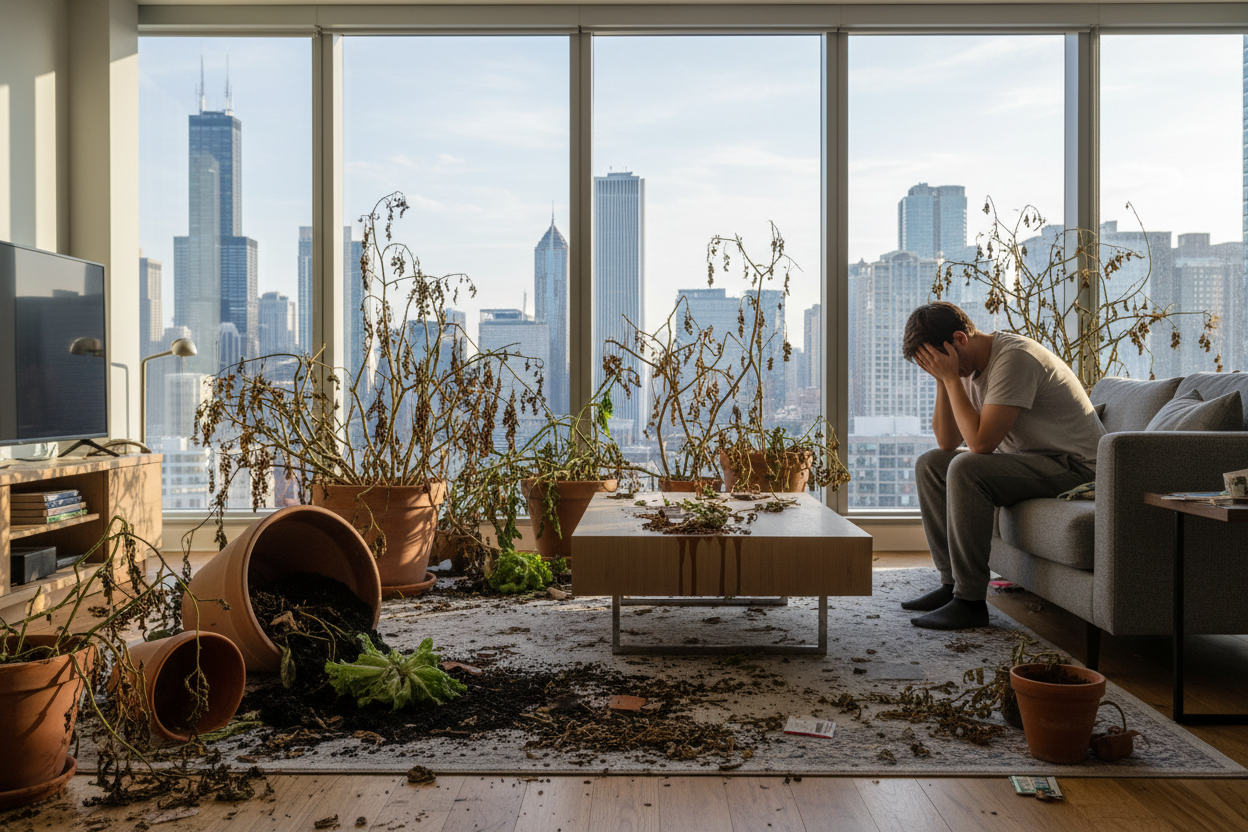
Starting an indoor garden in an apartment comes down to five things: enough light, moving air, careful watering, a manageable plant count, and starter plants suited to indoor conditions. Get those five right and the gnats, drooping leaves, and abandoned pots that trip up most beginners never show up in the first place.
Most beginners assume indoor gardening fails because they lack a green thumb. In reality, it fails for five predictable, structural reasons, and once you understand them, starting becomes much easier.
If you've tried before and given up, or never tried because you're worried about failing, this step-by-step guide walks through exactly what to do differently this time.

What You'll Need to Start an Indoor Apartment Garden
A first apartment garden needs four things: a light source, a container or growing system, a small number of easy starter plants, and a way to check soil moisture before watering.
- A bright window or a dedicated grow light running 12 to 16 hours a day
- Containers with drainage, or a self-contained growing system
- 2 to 4 easy starter plants (see Step 5 below)
- A finger or moisture meter to check the soil before every watering
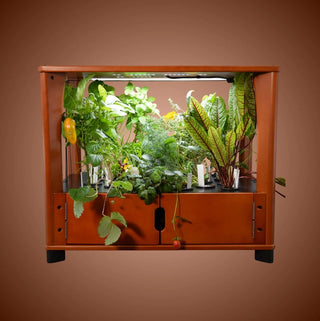
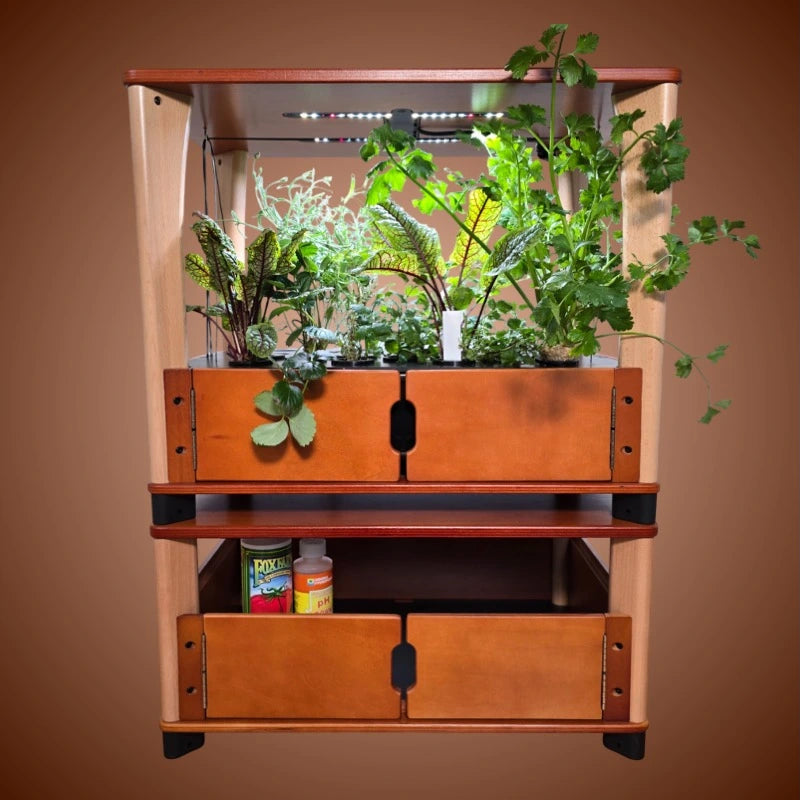
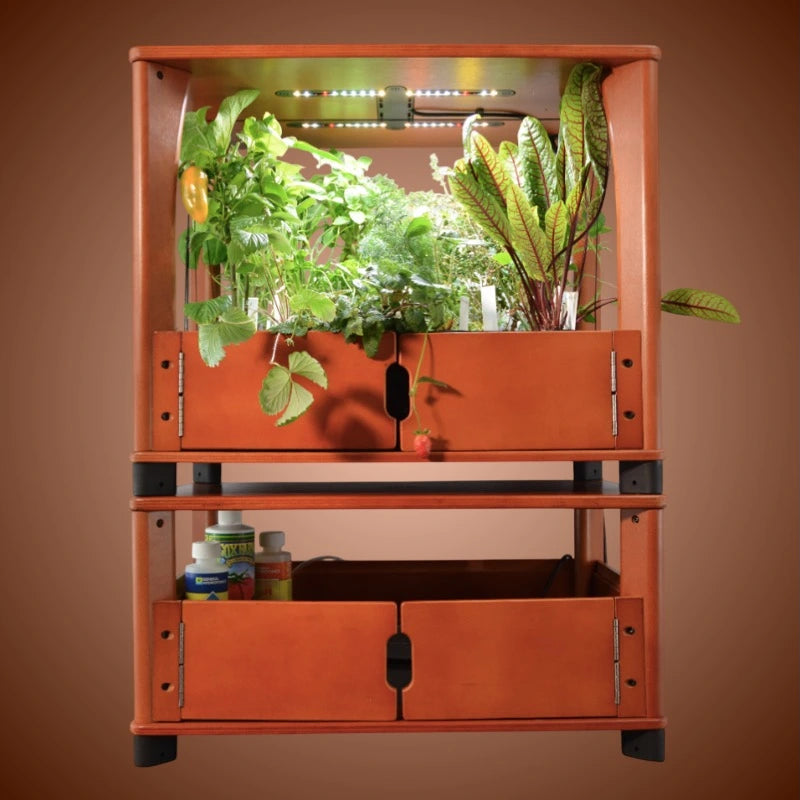
Buying a grow light and a container separately is where a lot of first-time apartment gardeners get the setup wrong, since the two rarely get matched for the same plant's needs. A hydroponic system like the Aquager Home Farm bundles both into one setup, so the light and the growing container are already sized correctly for each other: Aquager Home Farm.
The Step-by-Step Process
These five steps cover the parts of apartment gardening that actually determine whether plants thrive or struggle.
Step 1: Give Your Plants Real Light, Not Just Brightness
A spot that looks bright to you can still be too dark for a plant, since usable light drops fast just a few feet back from a window. Give your plants a bright window or a dedicated grow light for 12 to 16 hours a day, and watch for stretching, leaning growth as the first sign the current spot isn't providing enough.
Step 2: Keep Air Moving Around Your Plants
Still air is one of the fastest ways to lose an otherwise healthy plant, since trapped humidity around leaves and soil creates ideal conditions for mold, mildew, and pests. Run a small fan nearby for a few hours a day, or crack a window when weather allows, to keep moisture from lingering on the leaves and soil surface.
Step 3: Water Less Than You Think You Should
Overwatering is the single most common reason apartment indoor gardens fail, and it rarely looks dramatic since it just looks like being attentive. Water only when the top inch of soil feels dry to the touch, and let excess water drain fully so roots get oxygen along with the water they need.

Fungus gnats are usually the first visible sign that a plant is getting watered too often. For the full breakdown of why they show up and how to get rid of them for good, see Fungus Gnats in Indoor Plants: Why They Happen and How to Stop Them.
Why a Hydroponic Home Farm Removes the Guesswork
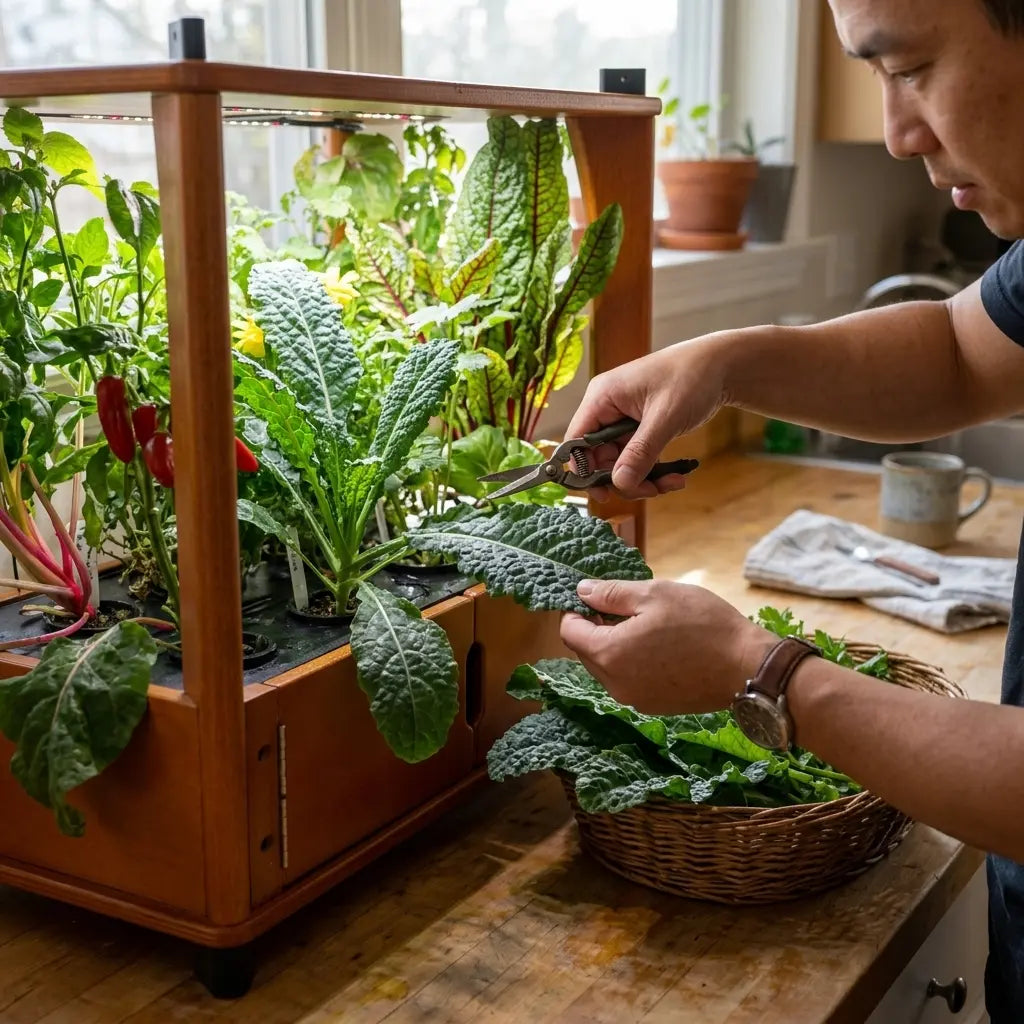
Steps 1 through 3 above are the three places apartment gardens most often go wrong, and they're also the three things a hydroponic system is built to solve for you. Instead of guessing at light intensity, air movement, or watering timing, a self-contained system like the Aquager Home Farm handles all three automatically.
The built-in grow light replaces the guesswork from Step 1, the water reservoir replaces the manual watering judgment call from Step 3, and the compact footprint means you don't need a separate fan setup to solve Step 2. It isn't a requirement for apartment gardening, but it removes the three most common points of failure in one setup.

Step 4: Start With Fewer Plants Than You Want
Crowded containers compete for light and air, which usually means slower growth for every plant instead of a fuller harvest. Start with 2 to 4 plants in your first round, and add more only once you've confirmed your spot can support what you already have.
Step 5: Pick Easy Starter Plants
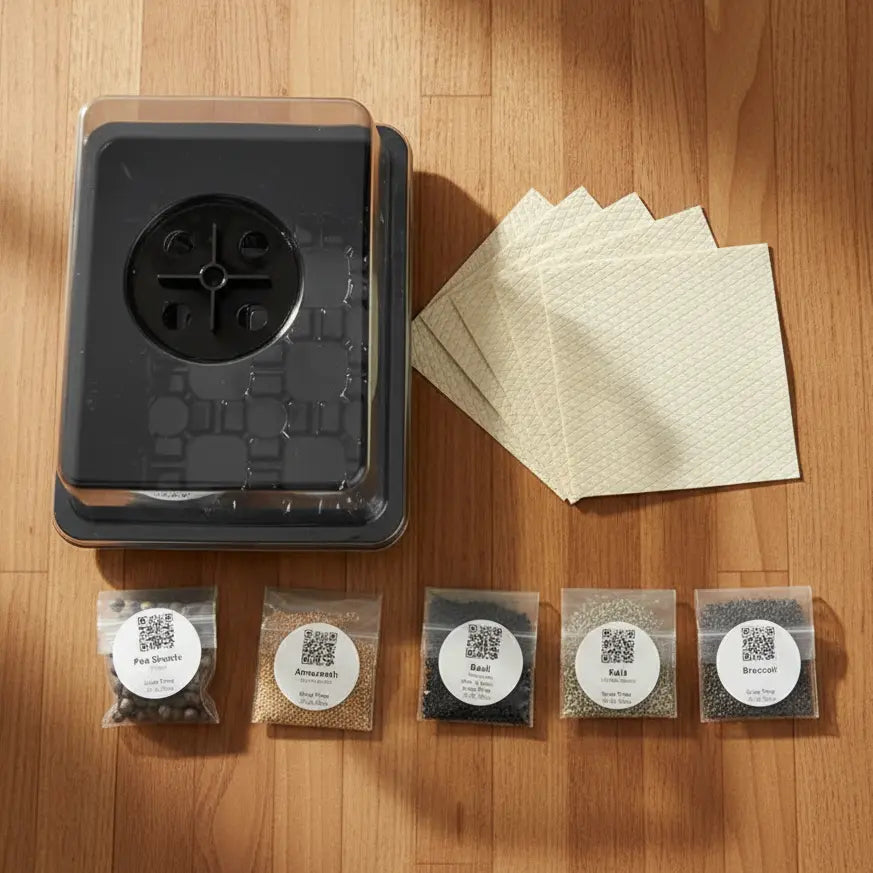
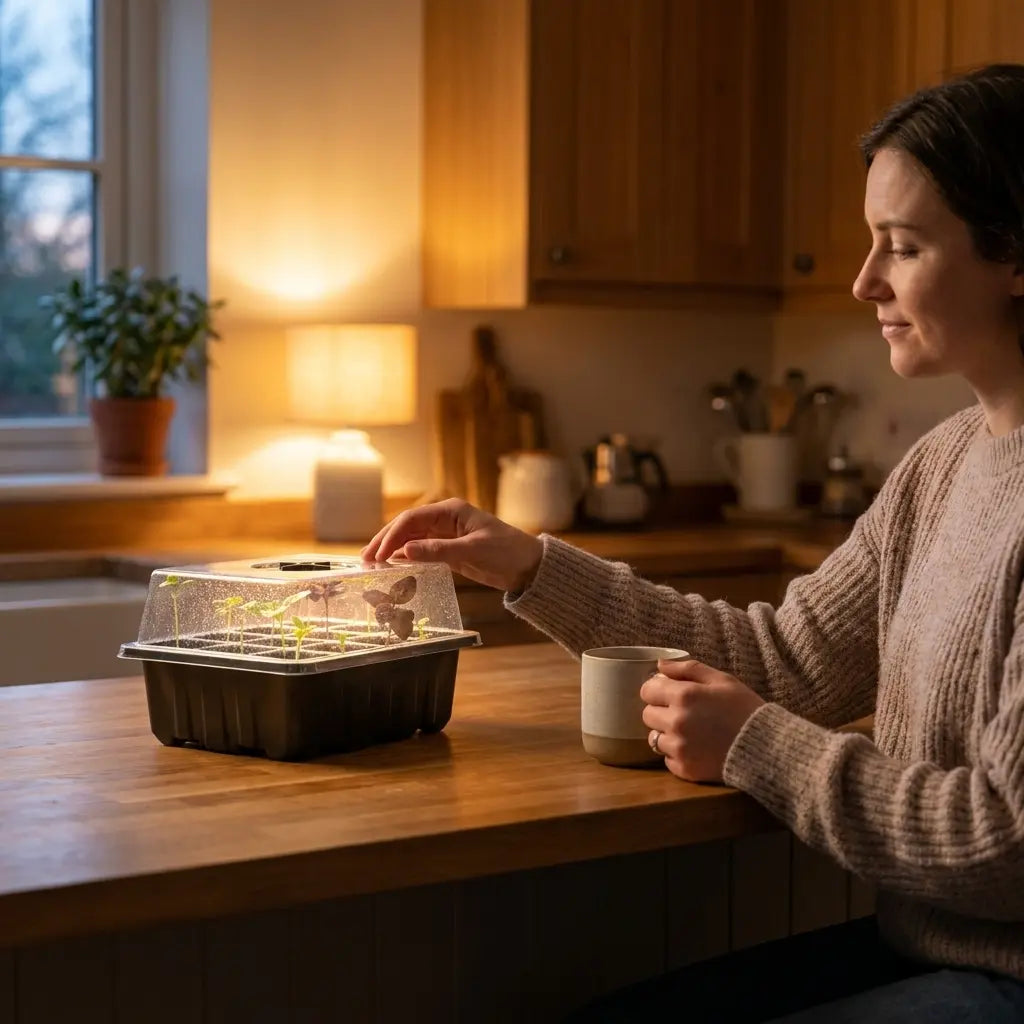
Microgreens, basil, mint, lettuce, and arugula are the easiest food plants for a first apartment garden, since all five tolerate the lower light levels typical of indoor spaces and grow well in small containers. Microgreens are the fastest, ready in 7 to 14 days, while basil and lettuce take closer to 3 to 6 weeks.
Common Mistakes That Stop Apartment Gardens Before They Start
Most apartment gardens that fail run into one of five predictable mistakes, not bad luck or a missing green thumb.
- Watering on a schedule instead of checking the soil first
- Choosing plants bred for full outdoor sun
- Placing plants where they look good instead of where light actually reaches
- Adding more plants before confirming the current ones are thriving
- Expecting outdoor timelines from an indoor environment

None of these mean you're bad at gardening, they mean the advice you followed was written for houses and yards, not apartments. For the deeper breakdown of why indoor gardens fail even when you follow instructions carefully, see Why Your Indoor Garden Keeps Failing, and How to Finally Fix It. And for a broader look at what apartments change and how beginners should adapt, see Indoor Gardening for Beginners.
Frequently Asked Questions About Starting an Indoor Apartment Garden
How long does it take to start an indoor apartment garden?
Most apartment gardens are set up within a single afternoon, with visible growth showing up in 1 to 2 weeks. Fast crops like microgreens and lettuce are ready to harvest in 3 to 4 weeks, while herbs like basil take closer to 6 to 8 weeks to reach a usable size.
Do I need direct sunlight for an indoor apartment garden?
No, direct sunlight is not required. Most apartment windows don't provide enough usable light a few feet back from the glass, which is why a dedicated grow light or a hydroponic system with built-in lighting works more reliably than relying on a window alone.
What is the easiest plant to grow first in an apartment?
Microgreens are the easiest first plant for an apartment garden. They tolerate lower light, grow in shallow containers, and are ready to harvest in 7 to 14 days, giving beginners a fast result before committing to slower crops like basil or lettuce.
Why do apartment indoor gardens fail more often than outdoor ones?
Apartment gardens fail more often because indoor environments remove the natural signals plants rely on outdoors, including overhead sun, moving air, and rainfall cycles. Without those cues, plants respond to overwatering, poor light, and still air with slow growth, mold, or sudden leaf drop, not because the grower did anything wrong.
In Short: Starting Strong in a Small Space
Starting an indoor garden in an apartment comes down to five steps: real light, moving air, careful watering, a manageable plant count, and starter plants suited to indoor conditions.
Once those five pieces are in place, an apartment garden holds up just as well as one grown anywhere else.
Author: Aquager Team · Published: February 3, 2026 · Updated: August 16, 2026 · Reviewed: August 16, 2026 (Phase 3)












0 comments