
Hanukkah food is already good. The latkes come out of the oil golden and hot, the brisket has been braising since morning, the table smells like everything December should smell like. What microgreens add isn't flavor correction — these dishes don't need fixing. They add a fresh, living counterpoint: something bright and just-grown alongside food that is rich, warm, and slow-cooked.
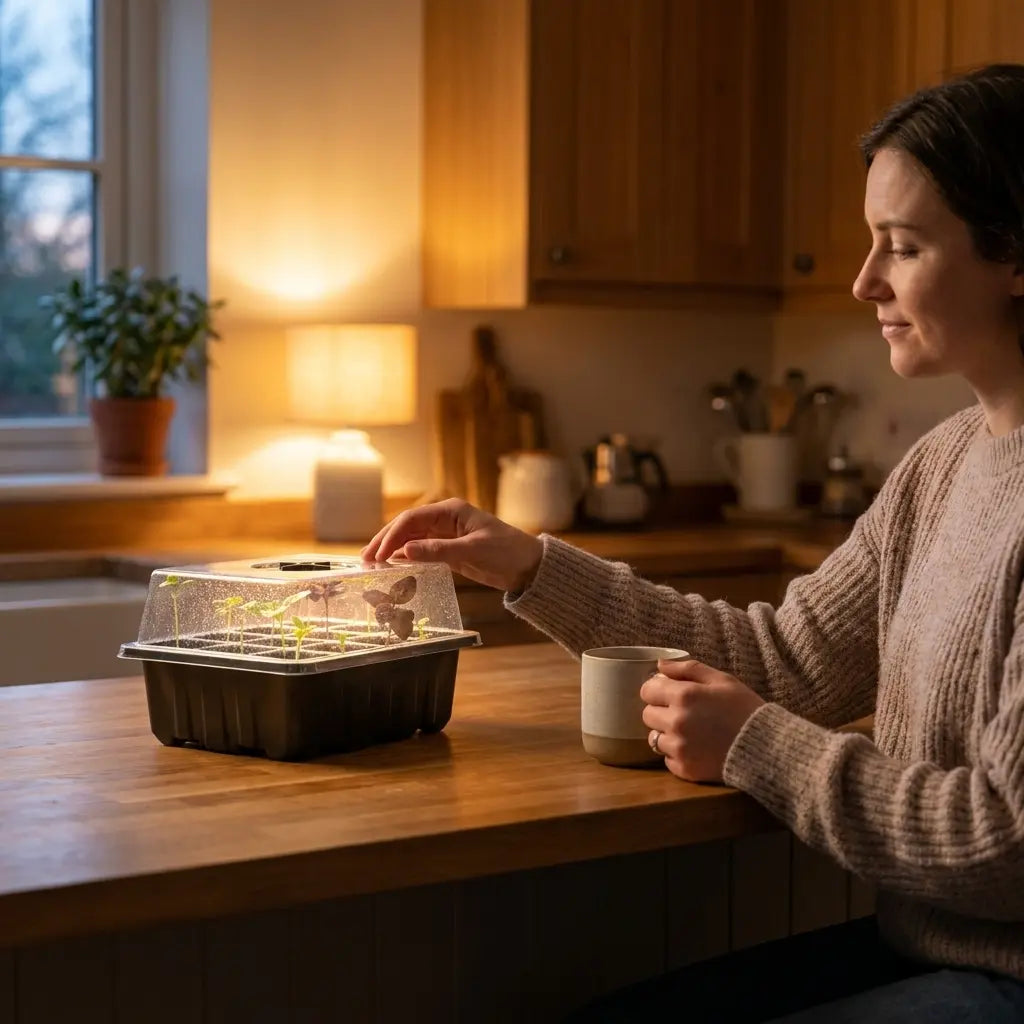
One tray of microgreens takes ten minutes to set up and needs a single misting each morning. Planted a week before the first candle is lit, it's ready to harvest on Night 1. A second tray planted on Night 1 carries you through the final nights. That's the whole system.
What follows is a pairing for each of the eight nights — one microgreen variety matched to one traditional dish, with a brief note on why the combination works. Use it as a guide, not a prescription. The point is to add something fresh and living to a table that already knows how to celebrate.
Growing for All Eight Nights
Before the pairings, the practical question: how do you have fresh microgreens on hand across the full week of Hanukkah without managing eight separate trays?
The answer is overlap and refrigeration. Most microgreens are harvest-ready in 7–10 days and keep well in the refrigerator for 4–5 days after cutting. Plant your first tray about 9 days before Hanukkah begins. Harvest it on Night 1 or 2. Refrigerate cut greens in an airtight container with a dry paper towel — they'll stay vibrant through Night 4 or 5. Plant your second tray on Night 1, and it'll be ready for Night 8. For a nightly twist, read about eight microgreens for the eight nights of Hanukkah.
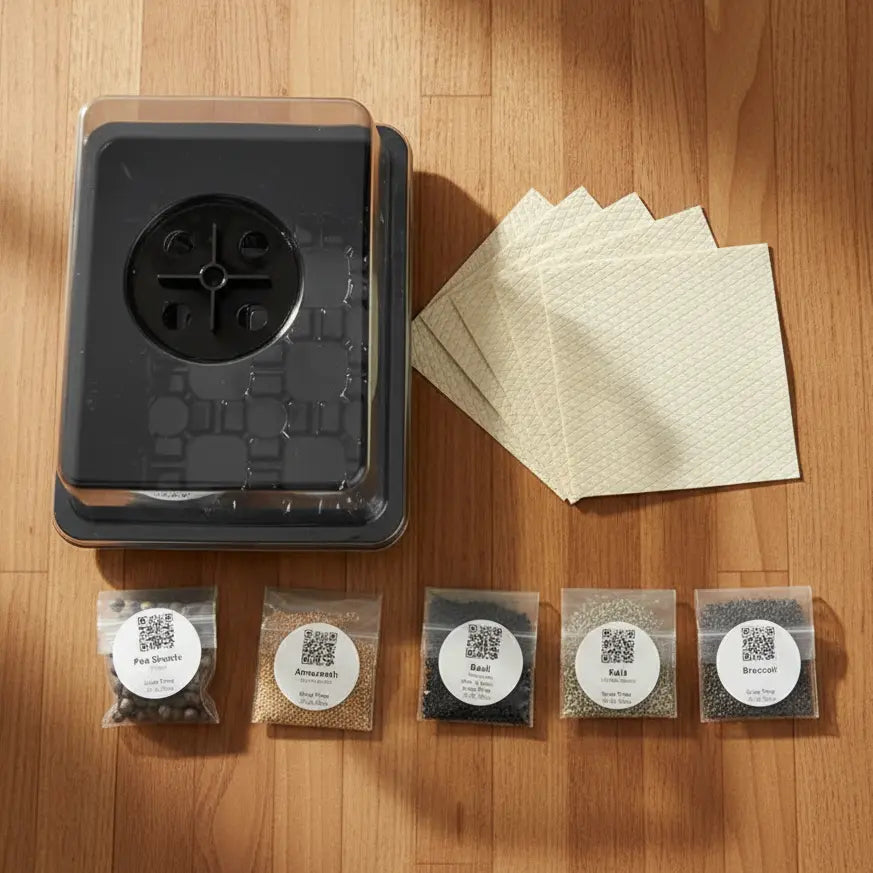
Two trays, two rounds, one kit. The Microgreens Starter Kit has everything needed to start the first tray. Add individual seed packs for each variety you want — or grow one or two versatile varieties across all eight nights rather than matching each pairing exactly.
For a smooth holiday table, radish, pea shoots, and sunflower cover most of the pairings below and are the three most approachable varieties for anyone new to growing.
The 8 Nights: Hanukkah Food Pairings
Night 1 — Latkes with Radish Confetti Mix
The classic Hanukkah dish and the most intuitive pairing. Latkes come out of the oil crispy, rich, and unambiguously indulgent. Radish Confetti Mix microgreens — a blend of pink, purple, and red stems with a genuine peppery bite — cut through that richness exactly the way sour cream does, but with texture and color that makes the plate look intentional.
Lay a small handful of shoots alongside the latkes rather than on top, so they stay crisp. The color contrast against the golden potato is the kind of thing guests notice before they take a single bite. Radish Confetti Mix Microgreens Seeds.
Night 2 — Brisket with Pea Shoots
Braised brisket is deeply savory — hours of low heat, rendered fat, wine and onion. Pea shoots are its quiet opposite: long, curling tendrils that are sweet, grassy, and genuinely delicate. The combination works because neither competes with the other.
Place a small cluster of pea shoots across the top of each brisket slice just before serving, stems slightly tucked under the meat so they arch upward. This is the garnish that makes a home-cooked Hanukkah main dish look like restaurant food. Pea Shoots Field Microgreens Seeds.
Night 3 — Matzo Ball Soup with Sunflower Microgreens
The standard matzo ball soup garnish is a sprig of dill. Sunflower microgreens are a step up: nutty, substantial, with thick stems and pale-yellow leaves that float on the surface of the broth without wilting immediately. They add both texture and a mild savory note that reinforces the richness of a good chicken stock.
Scatter six or eight shoots across the surface of each bowl right before bringing it to the table. They hold for the full length of a course. Sunflower Black Oil Microgreens Seeds.
Night 4 — Schnitzel with Mustard Microgreens
Crispy schnitzel — whether chicken, veal, or turkey — needs something that cuts through the fried breading without being acidic. Mustard microgreens do exactly this: sharp, forward heat that sits between horseradish and wasabi at the microgreen stage, mellowing slightly as it hits the palate.
A small pile of mustard microgreens alongside the schnitzel, with a wedge of lemon, balances the plate. For anyone who wants more detail on how mustard compares to other spicy varieties, the spicy microgreens comparison ranks radish, mustard, and arugula side by side. Mustard Microgreens Seeds.
Night 5 — Smoked Salmon Board with Kale Kalefetti Mix
The Hanukkah smoked salmon spread — salmon, cream cheese, capers, red onion, crackers — is a table centerpiece that usually looks good. Kale Kalefetti Mix microgreens make it look better. The variety is a blend of red, green, and frilled kale shoots with a mild, slightly earthy flavor that complements the smokiness of the fish without competing with the briny elements.
Scatter a handful across the board between the salmon and the cream cheese. The color variation in Kalefetti (deep red, bright green, ruffled edges) is visually dramatic next to the orange of the salmon. Kale Kalefetti Mix Microgreens Seeds.
Night 6 — Shakshuka with Broccoli Microgreens
Shakshuka — eggs poached in spiced tomato sauce — is Sephardic in origin and has become a staple on Israeli Hanukkah tables. It's bright, assertive, and acid-forward. Broccoli microgreens have a mild, clean flavor that provides contrast without clash: a small handful scattered across the surface just before serving adds a fresh green note that lifts the whole dish.
Broccoli microgreens are also among the most nutritionally dense varieties available. To learn more, see Microgreens Benefits: The 7 Most Nutritious Varieties, Ranked by Science. Broccoli Microgreens Seeds.
Night 7 — Roasted Beet Salad with Amaranth Garnet Red
Roasted beet salad — beets, walnuts, maybe goat cheese or feta, a sharp vinaigrette — is already one of the most visually striking dishes on a Hanukkah table. Amaranth Garnet Red microgreens are the only garnish that can match it: deep magenta-to-burgundy stems that look jeweled alongside the beet's ruby surface.
The flavor is mild and slightly earthy, so it doesn't disrupt the vinaigrette balance. The visual effect — layers of red, magenta, and orange on a plate — is the kind of thing people photograph before they eat. Amaranth Garnet Red Microgreens Seeds.
Night 8 — Potato Kugel with Arugula Microgreens
Potato kugel is the Hanukkah dish that doesn't get enough credit. Crispy-edged, dense, and satisfying in a way that's difficult to describe to anyone who hasn't had it — somewhere between a frittata and a hash brown baked in a cast-iron pan. Arugula microgreens are the right finish: genuinely peppery, bright green, with a clean bitterness that cuts through the starchy richness.
The final night of Hanukkah deserves a finish that feels complete. Fresh arugula microgreens on potato kugel — a bold ending to eight nights of good food. Arugula Microgreens Seeds.
Start Your Hanukkah Kitchen Garden
All eight varieties above are available individually — each pack includes an organic grow mat and is ready to plant the day it arrives. For a first Hanukkah growing project, the three most versatile varieties are radish (Night 1, fast and foolproof), pea shoots (Night 2, beautiful and forgiving), and sunflower (Night 3, best texture for soup and salad). These three cover the most dishes and are among the easiest microgreens to grow reliably.
Start with the Microgreens Starter Kit — tray, dome, and grow mat included — then add whichever seed packs match the dishes you're making. You won't need all eight on the table simultaneously; two or three varieties staggered across the week covers every night.
Frequently Asked Questions
How many trays do I need for all 8 nights?
Two trays running in rotation is enough. Plant the first about 9 days before Hanukkah begins and harvest it on Night 1 or 2. Store cut greens refrigerated in an airtight container — they'll keep well through Night 4 or 5. Plant the second tray on Night 1 and it's ready for Night 7 or 8. One kit plus a second tray handles the full holiday.
Can I harvest microgreens in advance and refrigerate them?
Yes. Cut microgreens just above the grow mat, rinse briefly, and store in an airtight container with a dry paper towel to absorb excess moisture. Refrigerated, most varieties stay fresh and vibrant for 4–5 days. Harvest the morning before a big Hanukkah dinner and they'll be perfect by evening.
Which variety is best if I only grow one?
Radish Confetti Mix. It grows in 5–7 days (fastest of the group), holds peak for several days, has the most visual impact with its pink-purple-red color blend, and pairs with almost everything on a Hanukkah table — latkes, brisket, kugel, and salmon boards all work. If you're only trying one variety for the holiday, start here.
Do these microgreens work for a kosher table?
Yes. Microgreens are pareve — they contain no meat or dairy — so they're appropriate alongside any dish regardless of the meal's dairy or meat designation. All seed packs and grow mats are unflavored and contain no additives.
Eight Nights, One Kitchen Counter
The miracle of Hanukkah is oil that lasted longer than it should have. There's something fitting about a fresh thing on the table — something that grew right there in your kitchen, quietly, while you were preparing everything else.
Hanukkah food is already the main event. The microgreens are just the detail that makes the table feel complete: a little color, a little contrast, something living alongside all the rich and slow-cooked things you've been preparing for days. Eight nights, eight chances to add something fresh. Start with Night 1.
Author: Aquager · Published: June 10, 2026 · Updated: October 11, 2026












0 comments