
Every year, the Environmental Working Group publishes the Dirty Dozen — a list of the twelve most pesticide-contaminated fruits and vegetables sold in US grocery stores. Kale has appeared on the list multiple years in a row. So have spinach, strawberries, and bell peppers. These are the same vegetables people eat specifically because they're trying to eat healthier.
It raises a real question: if you're growing organic microgreens at home, are they actually free of pesticides? And is "organic microgreens" a meaningful claim or just marketing?
The answer is yes — home-grown microgreens are genuinely pesticide-free, and this post explains exactly why, what the grow medium is made of, and why the home growing advantage over store-bought produce is more significant than most people realize.
The EWG Dirty Dozen — What the Data Actually Says
The Environmental Working Group's annual Dirty Dozen analysis is based on USDA and FDA pesticide residue data from produce testing. The findings are not alarmist — they're straightforward chemistry: conventional farming uses pesticides, those pesticides leave residues on and in produce, and those residues reach consumers.
Key findings from recent EWG reports:
- More than 70% of non-organic produce sold in US grocery stores carries detectable pesticide residues, even after being washed.
- Kale, collard greens, and mustard greens have tested positive for more than 100 different pesticide residues in some years — including some banned for use in Europe.
- Spinach has tested at some of the highest residue levels of any vegetable, with multiple pesticide residues detected on the same sample.
- Strawberries have topped the Dirty Dozen list for years, averaging more pesticide residues by weight than any other fruit tested.
The produce on the Dirty Dozen list is not dangerous in a single-serving sense. The concern is cumulative exposure — particularly for children, pregnant women, and people with compromised immune function who eat these foods regularly. For people growing their own food with health as the primary motivation, pesticide residues in store-bought produce are exactly what they're trying to avoid.
For more on why microgreens are nutritionally exceptional in this context, see our guide to the most nutritious microgreen varieties.
Where Pesticides Actually Come From — and How Growing Indoors Eliminates All of Them
There are five primary sources of pesticide exposure in commercially grown produce. Home-grown microgreens eliminate all five.
1. Direct field application. Commercial crops are sprayed with pesticides to control insects, fungi, and weeds. Residues remain on leaves, stems, and skin after application — often through multiple spray cycles. Home-grown microgreens receive no pesticide applications because there are no insects, fungi, or weeds in a sealed indoor tray environment.
2. Soil-borne residue accumulation. Conventional farm soil accumulates pesticide residues over years of repeated application. Plants absorb these through their root systems. Microgreens are grown in a fresh growing medium — a coco coir mat that is used once and replaced — with no accumulated pesticide history.
3. Post-harvest chemical treatments. Many commercially sold fruits and vegetables are treated after harvest with fungicides, wax coatings, and preservative sprays to extend shelf life during shipping. These are applied directly to the edible portion of the produce. Home-harvested microgreens go from cut to plate in minutes — no post-harvest treatment of any kind.
4. Transit and cross-contamination. Commercial produce travels an average of 1,500 miles before reaching a US grocery store. Home-grown microgreens have zero transit — harvested from a countertop tray and eaten the same day.
5. Storage facility chemicals. Cold storage facilities use fumigants, ethylene blockers, and other chemicals to slow ripening and prevent spoilage. Produce stored in these environments absorbs trace amounts. Microgreens harvested at home are never stored commercially.
Are Microgreens Organic? Breaking Down the Question
"Organic" in the US has a specific legal definition under the USDA National Organic Program. Certified organic produce must be grown without synthetic pesticides, without synthetic fertilizers, without GMO material, and in a medium with documented organic management history.
For commercial operations, this requires certification and inspection. For home growers, the infrastructure doesn't apply — but the substantive requirements do. Here's what home-grown microgreens achieve against each criterion:
No synthetic pesticides. Correct — no pesticides of any kind are applied. The indoor tray environment provides complete pest exclusion. There's no need for any pesticide intervention at any point in the grow cycle.
No synthetic fertilizers. Also correct, for a specific reason: microgreens don't require added nutrients. They're harvested before the seed's own stored energy is depleted. The cotyledons are powered entirely by the nutrients packed into the seed at germination. No fertilizer is applied because none is needed.
No GMO material. The Aquager microgreens seed catalog does not include genetically modified varieties.
Organic growing medium. This is the most specific claim and the one that matters most for the "organic" designation.
What's in the Aquager Grow Mat
The Aquager Microgreens Grow Mat is made from organic coco coir — compressed coconut husk fiber.
Coco coir is derived from the outer husk of the coconut shell, a natural agricultural byproduct of coconut processing. It has been used in organic horticulture for decades as a growing medium precisely because it is:
- Free of synthetic chemicals. Organic coco coir contains no pesticide residues, no synthetic fertilizers, and no chemical additives.
- Naturally antimicrobial. The natural lignin content of coco coir inhibits surface mold growth, reducing the need for any antifungal treatment during the grow cycle.
- pH-neutral. Naturally neutral pH (5.5–6.5) that doesn't require chemical adjustment to support seed germination.
- Single-use by design. Each grow mat is used once and composted after harvest. There's no accumulation of residues between cycles — each grow starts clean.
When you combine an organic growing medium with zero pesticide use and no synthetic nutrient addition, the result meets the substantive definition of organic growing in every meaningful way.
Home-Grown vs. Store-Bought Microgreens — An Honest Comparison
Some stores now carry pre-cut microgreens in plastic clamshells. For context on what you're comparing against:
Store-bought microgreens may or may not be organically grown (check the packaging). They've typically been cut 1–5 days before purchase, packaged in plastic, and refrigerated in transit. Nutrient levels decline after cutting — some studies show significant vitamin C and antioxidant losses within 24–48 hours of harvest.
Home-grown microgreens are cut and eaten within minutes or hours of harvest. Nutrient levels are at their peak. No packaging, no transit, no cold chain.
For the full safety comparison between microgreens and sprouts — a question many health-conscious buyers have — see our guide on microgreens vs. sprouts, which addresses why microgreens are the lower-risk option.
How to Start Your Own Pesticide-Free Microgreens
The setup is simple and the material costs are low.
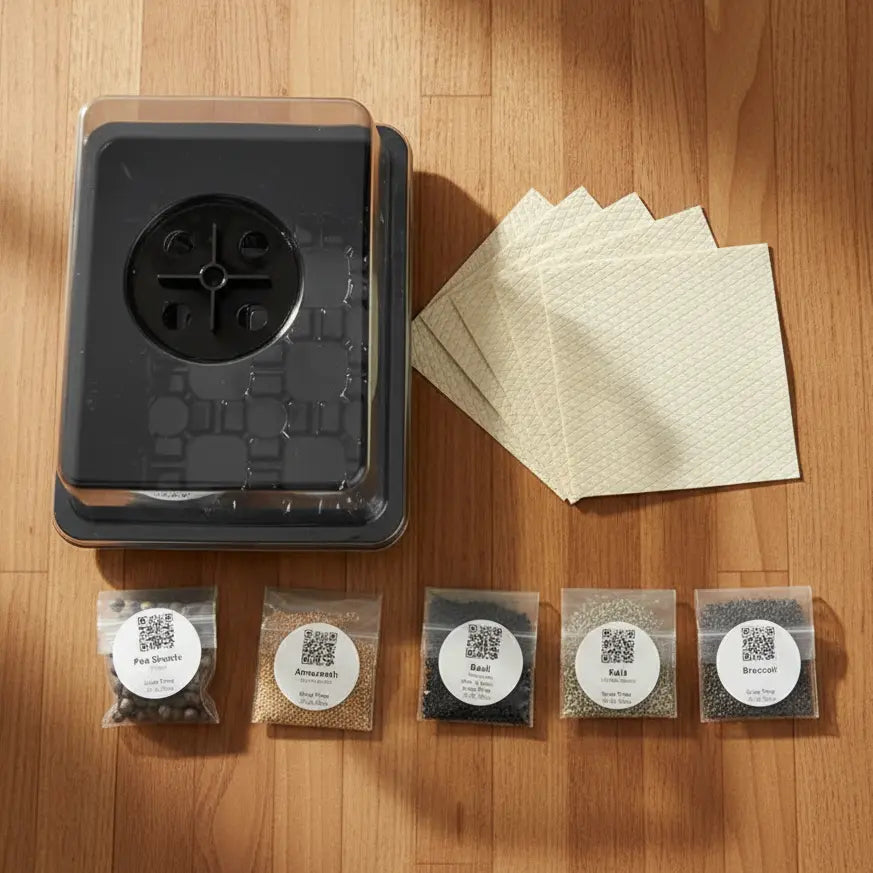
The Microgreens Grow Mat (5-Pack) is $9.99 for five mats — five complete, clean grow cycles using the organic coco coir medium described above. At $2 per growing cycle, it's the most cost-efficient way to run a continuous organic microgreens operation.
For seeds, Broccoli Microgreens Seeds are $3.99 per tray and represent the highest nutritional density in the catalog — up to 40x more sulforaphane than mature broccoli, grown in an organic medium with no additives. See our full breakdown on broccoli microgreens and sulforaphane for the complete nutrition case.
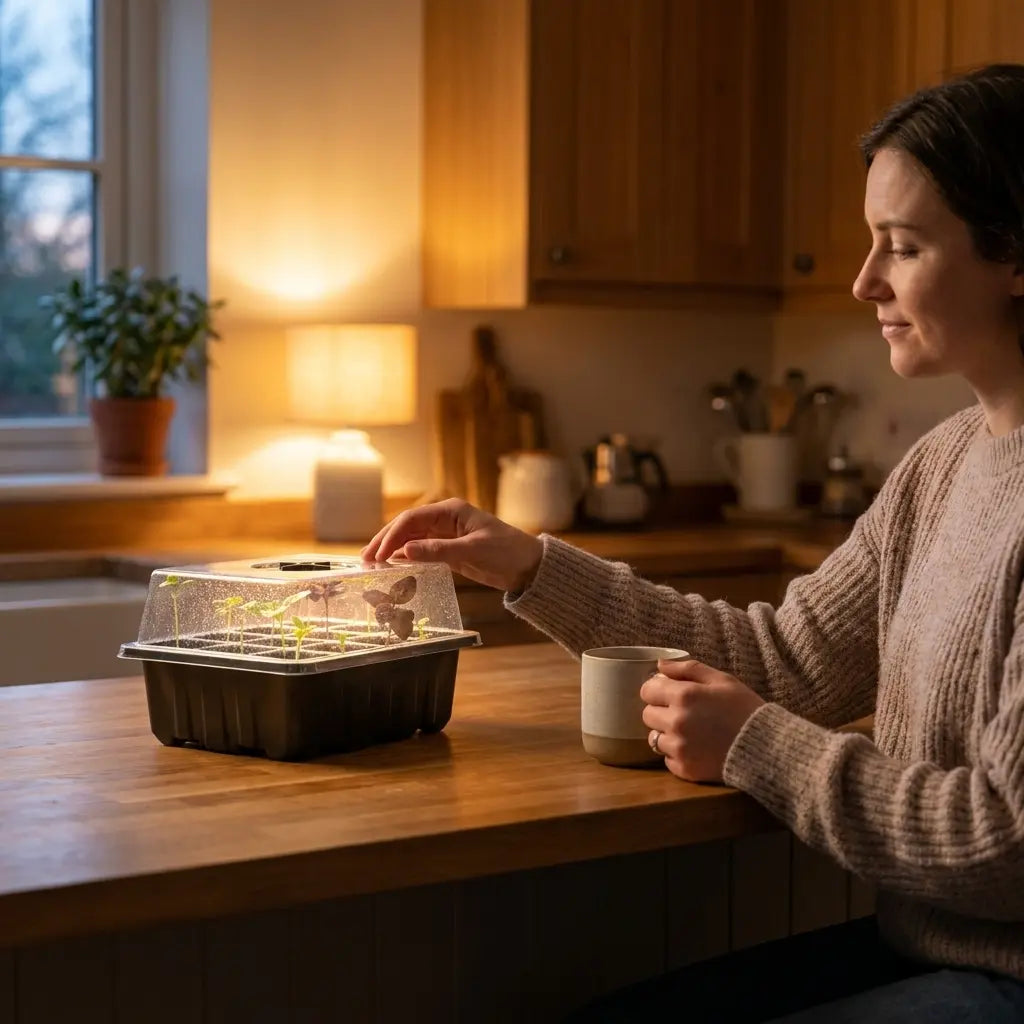
The Microgreens Starter Kit includes the growing tray, humidity dome, and organic coco coir grow mat — everything needed to start the first clean grow cycle for $24.99.
Frequently Asked Questions
Do home-grown microgreens qualify as USDA certified organic?
No — USDA organic certification is a commercial designation requiring documented history, inspection, and record-keeping for operations producing food for sale. Home-grown microgreens can't be certified, but they meet every substantive requirement: no synthetic pesticides, no synthetic fertilizers, organic growing medium. The practical result is the same.
Are Aquager microgreens seeds organic?
Each seed pack includes an organic grow mat. The seeds themselves vary — some varieties are certified organic seed stock, others are not. The growing medium and process are organic; specific seed certification varies by variety. The most important factor for pesticide-free produce is the absence of synthetic pesticide application during growing, which is guaranteed by the indoor home environment.
Does washing store-bought produce remove pesticide residues?
It reduces surface residues but doesn't eliminate them. Systemic pesticides — applied to soil or absorbed through roots — are present inside the plant tissue and cannot be washed off. Contact pesticides on the surface are partially reduced by washing but not fully removed. This is why the EWG recommends organic produce for the Dirty Dozen items regardless of washing.
Can mold grow on the coco coir mat and contaminate the microgreens?
Surface mold on the grow mat is possible if the mat is overwatered or airflow is restricted, but it is surface mold on the growing medium, not contamination of the microgreens. Harvest above the mat surface, rinse well, and the greens are unaffected. The coco coir's natural antimicrobial properties significantly reduce mold risk compared to soil growing.
What's the difference between organic coco coir and regular coco coir?
Regular coco coir may be treated with synthetic buffering agents, rinsing chemicals, or pesticides during processing. Organic coco coir is processed without synthetic chemical inputs. For food-crop growing, organic-grade coco coir is the appropriate specification — which is what the Aquager grow mats use.
The Cleanest Version of the Most Nutritious Food
The case for growing your own microgreens isn't just about nutrition — it's about knowing exactly what's in your food from seed to plate. No pesticide applications. No synthetic fertilizers. No transit contamination. No post-harvest chemical treatments.
The organic coco coir growing medium meets the same material standard as certified organic production. The indoor home environment provides complete pest exclusion without any chemical intervention. And the short grow cycle — 7–14 days — means there's no opportunity for any systemic contamination to develop.
Start with the Microgreens Starter Kit and a seed variety that matters to you. Everything you grow from that tray is genuinely yours — clean, fresh, and pesticide-free.
Author: Aquager Team · Published: May 30, 2026 · Updated: August 8, 2026 · Reviewed: August 8, 2026 (Phase 2)












0 comments