
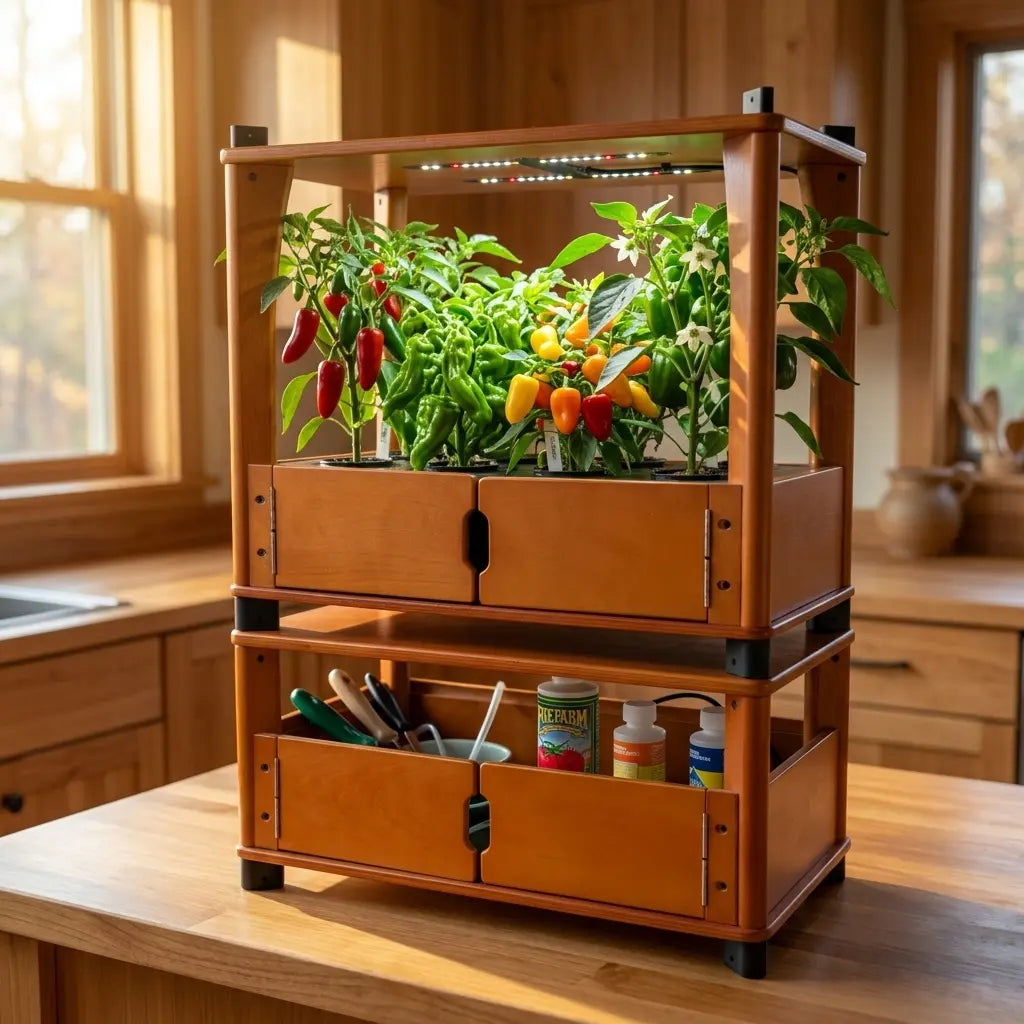
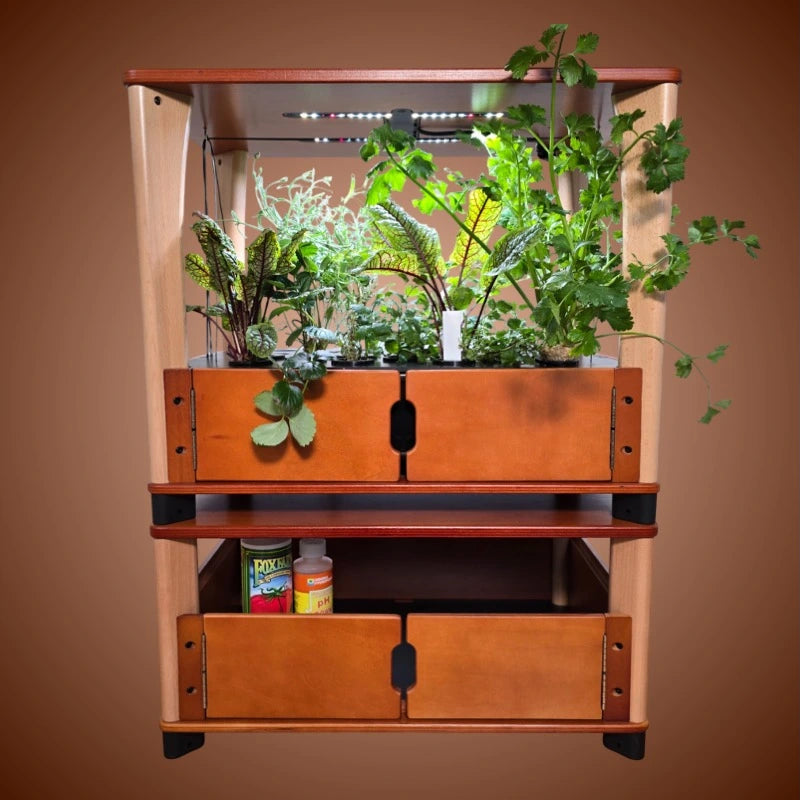
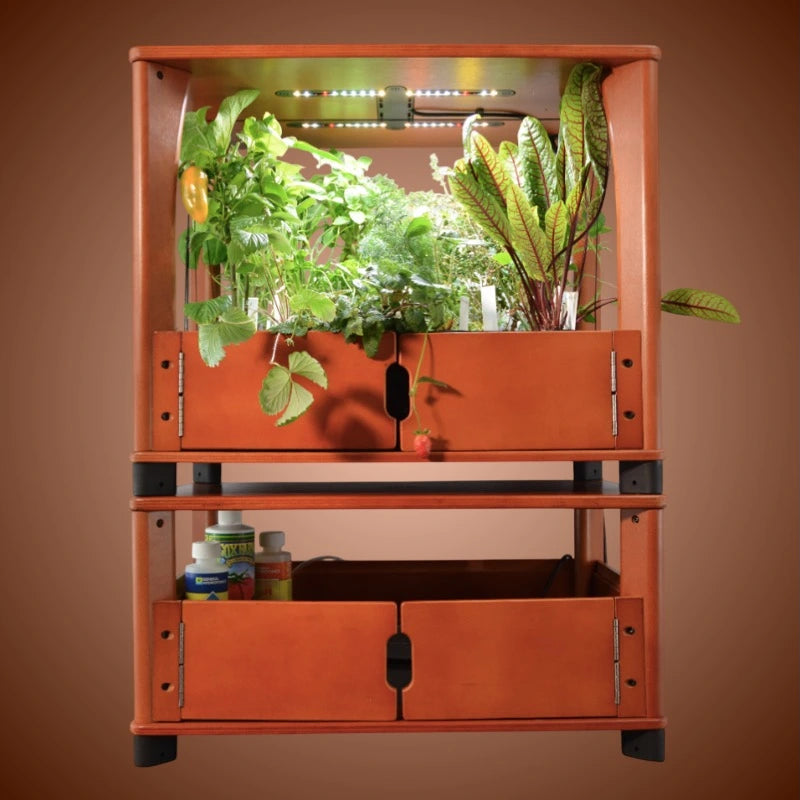
If you have grown basil, kale, or strawberries in a hydroponic Home Farm, peppers are the natural next step. Growing hot peppers indoors takes a little more patience than leafy greens, but the payoff, fresh jalapeños, shishitos, bell peppers, and lunchbox peppers right on your counter, is worth it.
The tricky part is that most guides only cover one pepper variety at a time, or skip the details that matter most indoors: no bees means no pollination unless you do it yourself, and tall pepper plants need support once they start fruiting.
This guide walks through the full seed-to-harvest timeline for all four varieties together, then breaks down exactly what makes each one different, so you know when to expect your first harvest and how much heat to expect on your plate.
By the end, you will know exactly when to start hand-pollinating, when to add a stake, and which variety to harvest first, so nothing catches you off guard between germination and your first homegrown salsa.
Why Hot Peppers Are the Next Step for Your Indoor Garden
Hot peppers reward patience more than almost anything else you can grow indoors. Unlike basil or lettuce, which you can harvest within weeks, peppers need 60 to 90 days from seedling to first ripe fruit, depending on the variety.
The upside is variety. Jalapeños bring classic, manageable heat. Shishitos are mild and blistering-good in a hot pan. Bell peppers add sweetness and crunch. Lunchbox peppers are small, snackable, and barely spicy at all, which makes them an easy way to introduce kids to homegrown peppers.
Growing all four together also means you are never short an ingredient. Salsa, stir-fry, stuffed peppers, and snack trays can all come from the same few square feet of counter space.
Starting Pepper Seedlings: The Shared Growing Timeline
All four pepper varieties follow roughly the same growth stages indoors, just on slightly different schedules. Here is what to expect from seed to first harvest.
- Germination (7 to 21 days): Pepper seeds need warmth, ideally 80 to 85°F, to sprout. Indoors, this usually takes one to three weeks, slower than basil or lettuce.
- Seedling growth (3 to 5 weeks): Once sprouted, pepper seedlings grow slowly at first while they build roots. This stage is naturally unhurried, even when conditions are right.
- Flowering (5 to 8 weeks): Small white or pale purple flowers appear once the plant has six to eight true leaves. This is when hand-pollination becomes essential indoors.
- Fruit set and ripening (2 to 6 weeks after pollination): Green fruit appears first. Ripening to full color, red, orange, or yellow depending on variety, takes additional time and is when peak heat develops.
Plan on 75 to 100 days total for jalapeños and shishitos, and closer to 90 to 120 days for bell peppers, which are naturally slower. Lunchbox peppers tend to ripen fastest of the four.
New to growing peppers indoors? Inconsistent warmth during germination is the most common reason seeds fail to sprout. Early Jalapeño Pepper seeds are a forgiving way to start, since jalapeños germinate reliably across a wider temperature range than shishito or bell pepper seeds, so small swings in room temperature will not derail your first batch.
Plant seeds about a quarter inch deep in a moist growing medium, and keep them covered or in a warm, humid spot until you see the first sprout. Once seedlings have their first set of true leaves, beyond the small rounded seed leaves, they are ready to move into their permanent hydroponic pod.
Avoid transplanting too early. Moving a pepper seedling before its roots are established stresses the plant and can delay flowering by a week or more, which adds up when you are tracking four varieties on different clocks.
Light, Water, and Nutrients Peppers Need Indoors
Pepper plants need more light than leafy greens to flower and set fruit. Inside a hydroponic Home Farm, that usually means 14 to 16 hours of light per day during the flowering and fruiting stages, a few hours more than basil or lettuce need.
Water needs increase once flowering starts and fruit begins to swell. Check the reservoir more often during this stage. A pepper plant that runs dry while holding fruit will often drop blossoms or stall ripening.
Nutrient needs shift too. Early growth wants more nitrogen for leafy structure, but once flowers appear, peppers do better with a feed weighted toward phosphorus and potassium, the nutrients that support flowering and fruit development. If your hydroponic system uses a single all-purpose nutrient blend, this shift happens automatically, but it helps to know what is happening underneath.
Temperature matters more for peppers than for most herbs. Daytime temperatures of 70 to 85°F keep growth steady, while anything below 60°F can stall flowering altogether, even indoors near a drafty window.
- Light: 14 to 16 hours a day once flowering starts.
- Water: check the reservoir more often during fruiting and never let it run dry while fruit is forming.
- Nutrients: prioritize a phosphorus and potassium-rich feed during flowering and fruiting.
- Temperature: keep above 60°F, ideally 70 to 85°F during the day.
Hand-Pollinating Your Peppers Indoors (Because There Are No Bees)
Outdoors, bees and wind move pollen between pepper flowers without any help. Indoors, that job falls to you. Skip it, and flowers will drop without ever forming fruit.
The good news is that hand-pollination takes seconds per flower. Pepper flowers are self-fertile, meaning each flower has both the pollen and the structure needed to receive it. You just have to move the pollen around.
- Wait until flowers are fully open and the small center structure, the stigma, looks slightly sticky.
- Use a small, soft-bristled brush, or even a cotton swab, to gently swirl inside each open flower.
- Move to two or three more open flowers with the same brush before stopping. This spreads pollen between blossoms.
- Repeat every other day while plants are flowering, ideally in the late morning when pollen is most active.
Do this for all four varieties the same way. Jalapeño, shishito, bell, and lunchbox peppers all rely on the same basic pollination process indoors.

Staking and Supporting Your Pepper Plants
Pepper plants get top-heavy once fruit starts forming, especially bell peppers and heavily loaded jalapeño plants. Without support, stems can snap right when you are closest to harvest.
A simple bamboo stake pushed into the growing medium next to the main stem, secured loosely with a soft tie or twine, solves this in under a minute per plant. Add the stake early, around the start of flowering, so you are not disturbing established roots later.
Lunchbox and shishito peppers carry lighter fruit and often need less support, but a stake rarely hurts and makes the whole setup more stable if you bump the counter.
Pepper Varieties Compared: Harvest Windows and Heat Levels
Once your peppers are pollinated and supported, harvest timing and heat level are what set each variety apart. Here is what to expect from each one.
Jalapeño: Classic Heat, Reliable Timing
Jalapeños are ready to harvest 70 to 85 days after transplanting, once they reach two to three inches and turn from glossy dark green to a deeper, slightly dull green. Letting them ripen further to red adds sweetness and increases the heat. On the Scoville scale, jalapeños run 2,500 to 8,000 units, noticeable but approachable.
Early Jalapeño Pepper seeds are the variety most home growers start with, and for good reason: a few green jalapeños are usually all a salsa recipe needs.
Shishito: Mild, Wrinkled, and Made for Blistering
Shishitos mature in 60 to 75 days and are harvested green, before they fully ripen to red, for their signature mild flavor, around 50 to 200 Scoville units, barely spicy at all. The wrinkled skin is normal, not a sign of a problem.
Shishito Pepper seeds produce heavy yields per plant, which matters since shishitos are best blistered whole in a hot, dry pan, a dish that calls for a generous handful at once.
Bell Pepper: Slow, Sweet, and Worth the Wait
Bell peppers take the longest of the four, typically 90 to 120 days, and are the only variety with zero heat, 0 Scoville units. Harvest green for a crisp, slightly bitter bite, or wait for full color, red, yellow, or orange, for maximum sweetness.
Bell Pepper seeds reward the extra patience with a thicker-walled fruit that holds up well in stuffed pepper recipes.
Lunchbox Mix: Small, Sweet, and Fastest to Ripen
Lunchbox peppers are ready in as little as 60 to 70 days and stay small, just two to three inches, even at full maturity. Heat is minimal, under 100 Scoville units, making them closer to a sweet snacking pepper than a hot one.
Lunchbox Mix Pepper seeds are the variety most growers underestimate, since the mixed colors, red, orange, and yellow, make them as much a snack as a recipe ingredient.
If you want a closer side-by-side on which of these is easiest to grow, our guide on Jalapeño vs. Shishito vs. Bell Pepper: Which Is Easiest to Grow Indoors? breaks down the differences in more depth. For a deeper dive into jalapeño-specific timing and troubleshooting, see How to Grow Jalapeños Indoors: A Complete Growing Guide.
Common Problems When Growing Peppers Indoors
Even with a good setup, pepper plants run into a few predictable issues indoors. Here is what is normal and what needs a fix.
- Flowers dropping without fruit: almost always a missed hand-pollination cycle, or temperatures that spiked above 90°F or dropped below 60°F during flowering.
- Leggy, stretched seedlings: usually means light is too far away or too dim during early growth. Move the light closer or increase daily hours.
- Slow ripening near harvest: common with bell peppers specifically, since they are the slowest variety. Patience is the fix, not more water or fertilizer.
- Wrinkled or oddly shaped shishito peppers: completely normal. Wrinkling is a natural trait of the variety, not a sign of stress.
- Yellowing lower leaves: often just the plant redirecting energy to fruit production as it matures. Remove yellowed leaves so the plant is not wasting energy on them.
Most issues trace back to one of three things: inconsistent pollination, inconsistent temperature, or impatience with bell peppers specifically, which simply need more time than the other three varieties.
How Many Plants to Start for a Salsa Garden
One plant per variety is enough to taste the difference, but it is not enough for a real salsa batch. Jalapeño and shishito plants typically produce 10 to 20 fruits per plant over a season, while bell peppers produce fewer, larger fruits, often just 4 to 8 per plant.
For a salsa-sized harvest, two jalapeño plants and one shishito plant cover most recipes, since shishitos are used more for char and garnish than volume. One bell pepper plant adds enough body for a few batches, and a single lunchbox plant is plenty since the fruit is mostly eaten fresh rather than cooked down.
Starting more than one plant per variety also gives you a buffer. If one seedling stalls during germination or a flower cycle gets missed, you still have a backup plant on the same timeline instead of starting over weeks behind.
Build a Complete Indoor Salsa Garden
Growing one pepper variety is satisfying. Growing all four together is what actually gets you to a finished dish, since most pepper recipes call for more than one type and more heat range than a single plant can provide.
A jalapeño alone makes a one-note salsa. Add shishito for char and smokiness when you blister it first, bell pepper for body and sweetness, and lunchbox peppers for a snackable contrast on the side, and you have ingredients for an entire late-summer salsa spread without a single grocery trip.
Starting all four at once also means your harvest windows overlap less than you would expect. Lunchbox and shishito peppers ripen first, bell peppers follow a few weeks later, giving you a rolling harvest instead of one overwhelming batch.
Buying the seed packs together also keeps your indoor garden organized from day one, since you are tracking four germination dates and four flowering windows instead of staggering separate purchases over weeks.
Frequently Asked Questions
Can you grow hot peppers indoors year-round?
Yes. Pepper plants are perennial in the right conditions, and an indoor hydroponic setup keeps temperature and light consistent enough to flower and fruit outside of the normal outdoor season. Many growers get two or three harvest cycles per plant before swapping in new seedlings.
Do indoor pepper plants need to be pollinated by hand?
Almost always, yes. Without wind or pollinating insects indoors, pepper flowers will not reliably set fruit on their own. A few seconds with a small brush per flower, every other day while plants are flowering, is enough.
How long does it take to harvest peppers grown indoors?
It depends on the variety. Lunchbox and shishito peppers are ready in 60 to 75 days, jalapeños in 70 to 85 days, and bell peppers in 90 to 120 days, measured from the seedling stage.
Which pepper variety is easiest to start with indoors?
Jalapeño and lunchbox peppers are the most forgiving for first-time growers. Both germinate reliably and tolerate small swings in temperature and watering better than bell peppers, which are more sensitive to inconsistent conditions.
Do pepper plants need staking indoors?
Most benefit from it once fruit starts forming, especially bell peppers and heavily loaded jalapeño plants. A simple bamboo stake added at the start of flowering prevents stems from snapping under the weight of ripening fruit.
How many pepper plants do I need for homemade salsa?
Two jalapeño plants and one shishito plant cover most salsa recipes for a household. Add one bell pepper plant for body and sweetness, and a single lunchbox plant for fresh snacking on the side.
Conclusion
Growing hot peppers indoors is a longer process than herbs or greens, but the shared timeline makes it manageable: germinate, support the stems, hand-pollinate every other day, then watch four very different harvest windows roll in one after another.
If you already have a Home Farm running, peppers are the most natural way to put that setup to use beyond basil and lettuce. Starting jalapeño, shishito, bell, and lunchbox peppers together, with hand-pollination built into your routine, gives you everything a late-summer salsa garden needs.
The biggest mistake new pepper growers make indoors is treating all four varieties like one plant. Jalapeños forgive a missed watering, bell peppers will not forgive impatience, and shishitos forgive almost everything except a missed pollination cycle. Once you know which variety needs what, the rest of the season runs on a routine instead of guesswork.
Once the harvest comes in, our guide on How to Grow a Salsa Garden Indoors (Jalapeños, Cilantro & More) covers what to pair your peppers with for a complete spread.

Author: Aquager Team · Published: June 28, 2026 · Updated: September 12, 2026 · Reviewed: September 12, 2026 (Phase 2)











0 comments